
Career Change From Nursing: Hands-On Careers That Use Your Skills
November 24, 2026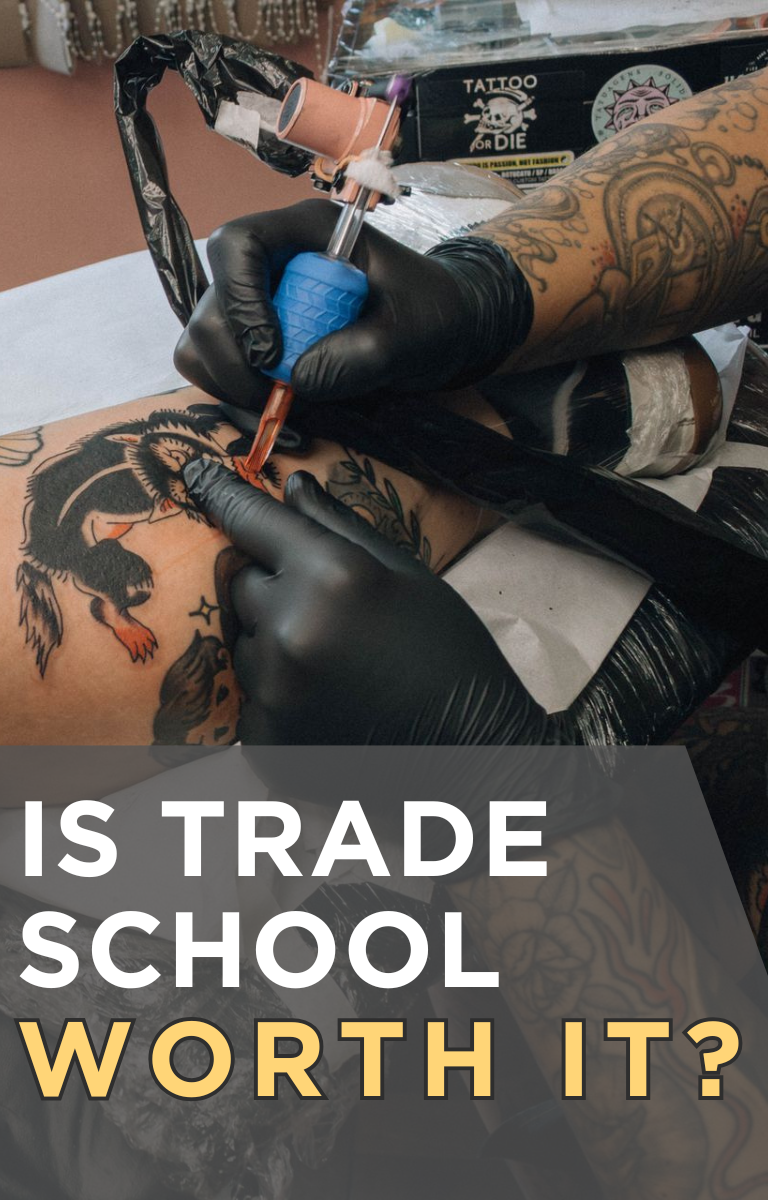
In This Article
- Key Takeaways
- What Is Trade School, Really?
- Is Trade School Worth It in 2026?
- How Does Trade School Compare to College?
- Who Should Consider Trade School?
- Why Is Tattooing One of the Best Trade Paths?
- How Do You Choose the Right Trade School Path?
- What Can You Expect From Our Traditional Tattoo Apprenticeship?
- What Is the Master Mentorship Program?
- Ready to Trade Uncertainty for a Real Craft?
- FAQ
For many people, yes. Trade school is usually cheaper and faster than a four-year degree and leads straight into hands-on, in-demand work. Average published tuition and fees at public two-year colleges were $4,150 in 2025-26, compared with $11,950 a year for in-state students at public four-year colleges, according to the College Board. Whether it’s worth it for you depends on the trade, the quality of the training and whether it leads to licensing and real work.
More people are choosing this route. Enrollment at public two-year colleges with a heavy vocational focus grew 11.7% in spring 2025, according to the National Student Clearinghouse Research Center. Below, we weigh the benefits and trade-offs, compare trade school with college and look at where tattooing fits.
Key Takeaways
- Lower cost: Two-year public college tuition averages about a third of in-state four-year tuition, according to the College Board.
- Faster: Many trade programs take two years or less, compared with about four years for a bachelor’s degree.
- Strong outcomes in many trades: Electricians earned a median of $62,350 in May 2024, according to the BLS.
- Quality varies: A program is worth it only if it teaches real skills and supports licensing.
- Tattooing: Ink Different’s Traditional Tattoo Apprenticeship takes 18 to 24 months, with in-person mentorship and licensing support.
What Is Trade School, Really?
Trade school is career-focused training that teaches a specific, hands-on skill, usually in far less time than a traditional degree.
Instead of general education courses, you focus on the work itself, whether that’s welding, plumbing, electrical work, cosmetology or HVAC. Many trades, including tattooing, are also learned through apprenticeships that combine instruction with supervised, on-the-job practice.
If you’re new to the idea, this plain-English look at trade school covers the basics, from program types to credentials.

Is Trade School Worth It in 2026?
For hands-on careers, trade school is often worth it, because it builds job-ready skills faster and usually with less debt than a four-year degree. But it isn’t the right fit for every person or every career.
Here’s how the main factors stack up:
- Earnings: Many trades pay well above the national median of $49,500 for all occupations, according to the BLS. Plumbers earned a median of $62,970 and electricians $62,350 in May 2024. Some of the highest-paying trade school jobs go well beyond that.
- Job demand: The BLS projects electrician employment to grow 9% from 2024 to 2034, much faster than average.
- Job retention: According to Apprenticeship.gov, 93% of apprentices keep their jobs after completing an apprenticeship.
- Cost: Lower than four-year college in most cases, though trade school costs vary widely by program and region.
The downsides are real too. Some programs are low quality, some trades are physically demanding and switching fields later can mean retraining. Weighing the pros and cons of trade school against your goals is the best way to decide.
Reality check: A program is worth your money only if it teaches the actual craft and helps you meet licensing requirements. The Federal Trade Commission recommends researching outcomes and getting any promises in writing.
How Does Trade School Compare to College?
Trade school focuses on one job-ready skill, usually in two years or less, while college combines general education with a major over about four years at a higher cost.
College is the right road for many careers, like medicine and law. For hands-on work, though, a degree can be a long, expensive detour.
- Time: Many trade programs take a few months to two years, and how long trade school takes depends on the field. A bachelor’s degree typically takes four years.
- Cost: $4,150 a year at public two-year colleges versus $11,950 a year in-state at public four-year colleges, according to the College Board.
- Focus: You train for a specific job rather than a broad range of subjects.
- Outcome: You finish with a usable skill and, in many trades, a path to licensing.
Some shorter options move even faster, like six-month programs in fields such as phlebotomy and welding.
Who Should Consider Trade School?
Trade school suits people who learn by doing, want to avoid heavy debt and are drawn to hands-on, technical or creative work.
That might be someone stuck in a job that doesn’t use their talents, a recent graduate unsure about four more years of classes or a trained artist whose skills aren’t being used.
Ink Different apprentices come from all of these backgrounds. Ashley Breaux moved from art school and the military into tattooing, and art school graduate David Johnston chose tattooing over graphic design.

Why Is Tattooing One of the Best Trade Paths?
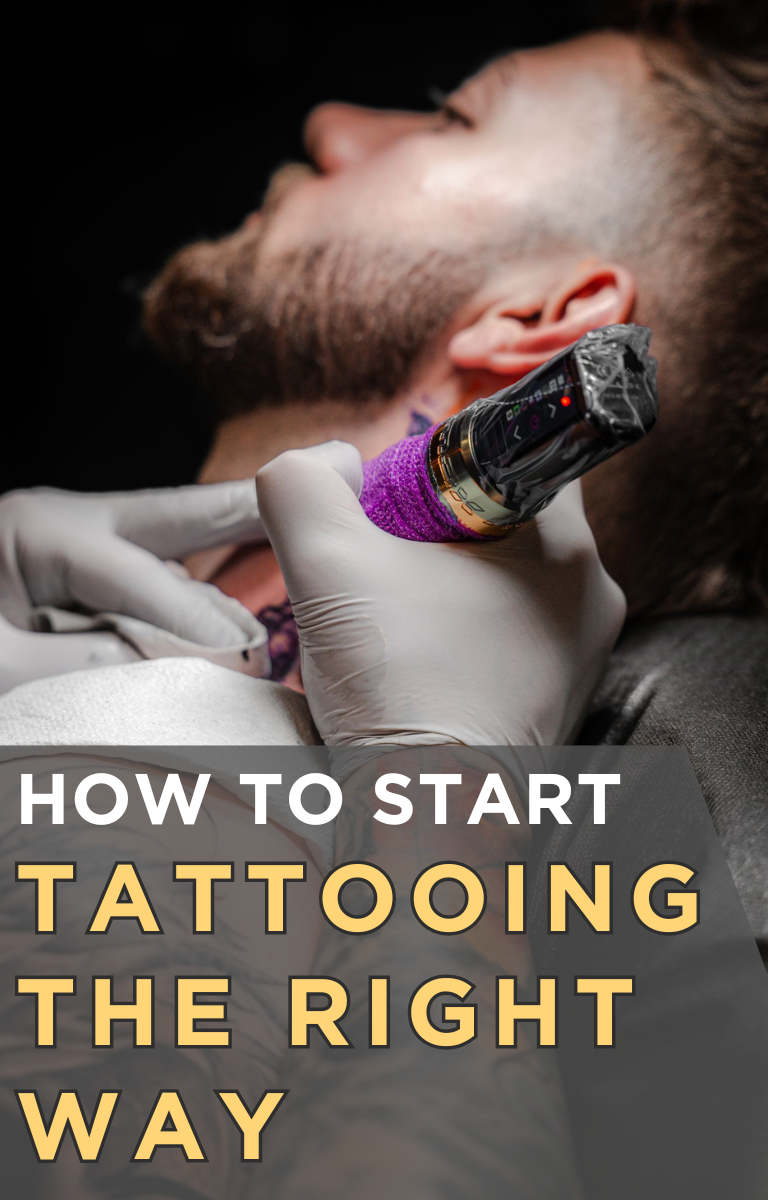
Tattooing combines creative work with hands-on skill and direct client relationships, and it’s learned through a tattoo apprenticeship rather than a degree.
A tattoo depends on trust, artistry, steady hands and a solid understanding of skin, safety and design. That human, person-to-person element is a big reason Tattoo Artists remain essential, even as technology changes other fields.
It’s also a trade with real responsibility. Tattoo Artists follow strict safety practices, including the OSHA Bloodborne Pathogens Standard. The earning potential can be strong once you’re established: ZipRecruiter puts the average Tattoo Artist salary at $106,858 a year, though income varies with skill, location and client base.
Some Tattoo Artists even turn down the college path to pursue the craft. Ink Different Master Mentor Jordi Pla gave up an aerospace scholarship to become a Tattoo Artist.
How Do You Choose the Right Trade School Path?
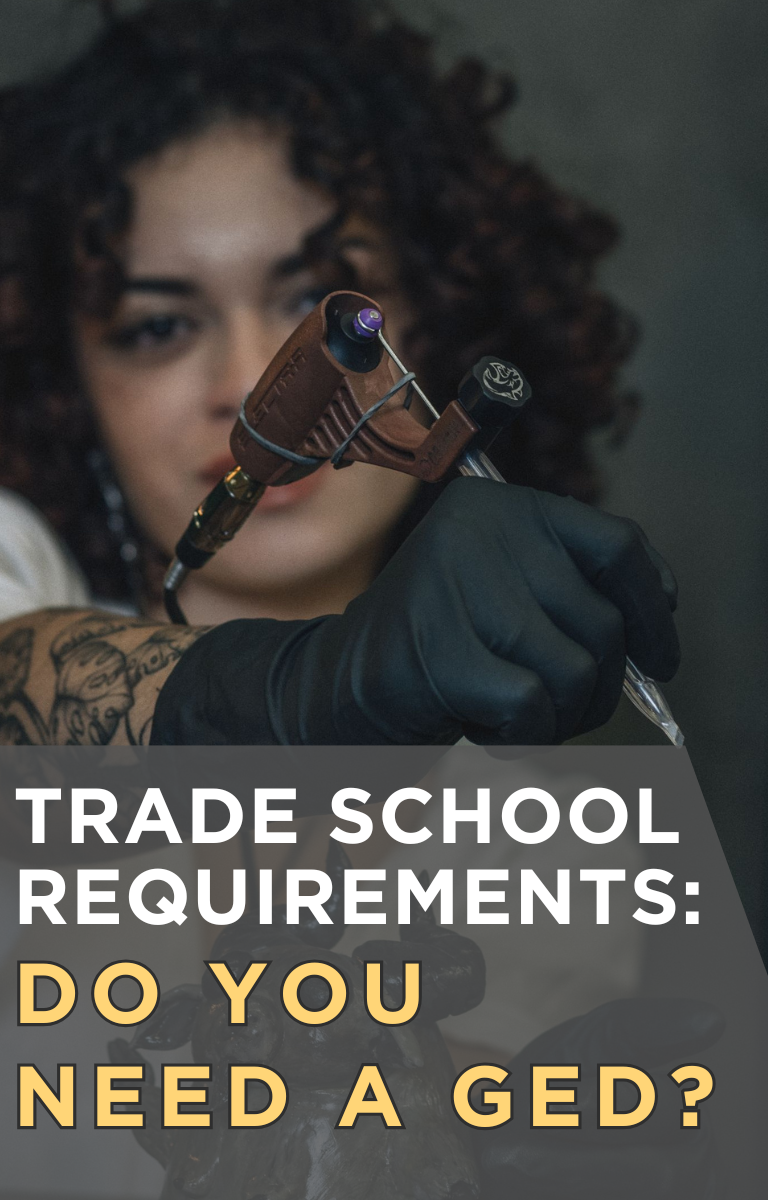
Match your interests to in-demand skills, make sure the training is truly hands-on and confirm it supports licensing.
- Identify your calling. Choose a trade you’d be proud to do for years, not just one that pays well today.
- Check the training format. Hands-on, in-person practice beats passive lectures for skill-based work, and some skills simply can’t be learned online.
- Confirm licensing support. Requirements vary by state, as this state-by-state tattoo licensing map shows.
- Vet the instructors. Look for experience, reputation and a track record of training working professionals.
- Look at the culture. Choose a community that supports your growth.
Rushing through training or skipping fundamentals are among the most common apprentice mistakes, and both can cost you months.
What Can You Expect From Our Traditional Tattoo Apprenticeship?
Ink Different’s Traditional Tattoo Apprenticeship runs 18 to 24 months across four phases. It takes beginners to job-ready through in-person mentorship and licensing support.
For 15 years, Ink Different has trained aspiring Tattoo Artists as a college alternative. You train with a Mentor at one of 60+ tattoo studios nationwide, and no prior art experience is required.
- Phase 1, Art and Design Principles: Drawing, shading, digital design and building a portfolio.
- Phase 2, Machine Mastery and Practice Tattooing: Hand-control exercises, machine operation, lining, shading and color packing.
- Phase 3, Supervised Tattoos: Tattooing real skin under a Mentor’s direct supervision.
- Phase 4, Junior Artist Externship: Building client relationships and refining your skills while you start earning.
- Interest-free payment plans: Flexible payments make training more accessible.
- “Good Humans” culture: A supportive, family-like community.
You’ll finish with job-ready skills, licensing support and a guaranteed job offer at one of Ink Different’s own tattoo studios. Each Mentor takes just two tattoo apprentices per tattoo studio, so seats fill up quickly.
What Is the Master Mentorship?
Ink Different’s Master Mentorship is a one-year, in-person program for beginners and experienced Tattoo Artists who want to sharpen a signature style, build their brand and move toward owning a tattoo studio.
You train directly with celebrity and award-winning Master Mentors like Jordi Pla, who has built an award-winning career since choosing tattooing over aerospace.
We also offer Spanish-speaking locations in Denver, Orange County, New York City, Miami, San Antonio and San Diego.

Ready to Trade Uncertainty for a Real Craft?
For a hands-on, creative career like tattooing, trade-style training can be well worth it. You build real skills, avoid heavy debt and step into work with a clear path forward. Just choose training that teaches the craft properly and supports your license.
Ready to become a Tattoo Artist? Apply now to Ink Different’s Traditional Tattoo Apprenticeship and start building a skilled, hands-on career with licensing support along the way.
Frequently Asked Questions
Is trade school worth it compared to college?
For hands-on careers, it often is. Trade school usually costs less and takes less time than a four-year degree, and many trades pay above the national median.
How much does trade school cost?
It varies by program. The College Board reports average tuition and fees of $4,150 at public two-year colleges in 2025-26.
How long does trade school take?
Many programs take a few months to two years. Ink Different’s Traditional Tattoo Apprenticeship takes 18 to 24 months across four phases.
What are the downsides of trade school?
Program quality varies, some trades are physically demanding and changing fields later may mean retraining. Research outcomes before you enroll.
Do I need prior art experience to start a tattoo apprenticeship?
No. The Traditional Tattoo Apprenticeship is built for beginners and starts with art and design principles.
Does a tattoo apprenticeship lead to a professional license?
Ink Different’s Traditional Tattoo Apprenticeship includes licensing support to help you meet your state’s requirements.
Sources (all checked November 20, 2026)
- College Board: Trends in College Pricing highlights
- National Student Clearinghouse Research Center: spring 2025 enrollment
- U.S. Bureau of Labor Statistics: May 2024 occupational employment and wages
- U.S. Bureau of Labor Statistics: Electricians
- Apprenticeship.gov
- Federal Trade Commission: Choosing a vocational school or certificate program
- OSHA: Bloodborne Pathogens Standard
- ZipRecruiter: Tattoo Artist Salary