Boneface: Ink Master, Style and Teaching
November 18, 2026
Tattooing 101: Terms Every New Artist Should Know
November 19, 2026
In This Article
- Key Takeaways
- What is an online trade school?
- What can you actually learn remotely?
- What can’t you learn online?
- How does this apply to becoming a Tattoo Artist?
- Why is a hybrid model the smartest path?
- How do you get started step by step?
- What makes Ink Different different?
- What is the Master Mentorship program?
- Ready to take the first step?
- FAQ
An online trade school teaches career skills through video lessons, live virtual classes and digital coursework. You can learn a lot remotely, including safety standards, theory, design and business skills. But the hands-on parts of most trades, from wiring and welding to tattooing, still require in-person practice, often under supervision and to meet licensing rules.
Online learning is now mainstream. According to the National Center for Education Statistics, in fall 2022 about 53% of postsecondary students (10.1 million) took at least one distance education course, and 26% took classes exclusively online. Below, we break down what works online, what doesn’t and how that applies to becoming a Tattoo Artist.
Key Takeaways
- Theory works online: Safety, design, drawing fundamentals and business skills can be learned remotely.
- Hands-on skills don’t: Needle depth, pressure and machine control require in-person practice.
- Licensing requires real hours: Many trades, including tattooing, require supervised, in-person training to get licensed.
- Hybrid learning helps: Combining online study with hands-on training gives you flexibility and real skill.
- Mentorship matters: Live feedback from an experienced Mentor turns knowledge into craft.
What is an online trade school?
An online trade school delivers career-focused training remotely. It often combines digital coursework with required in-person components for the hands-on parts of a trade.
The best programs treat the screen as a starting point, not the finish line. Even trades known for apprenticeships mix the two. Most electricians, for example, learn through an apprenticeship that combines classroom instruction with on-the-job training, according to the U.S. Bureau of Labor Statistics.
Before enrolling anywhere, check what’s really included. The Federal Trade Commission’s guide to choosing a vocational school or certificate program recommends researching outcomes and getting promises in writing.

What can you actually learn remotely?
You can learn much of a trade’s knowledge base remotely, including safety standards, design theory, color theory, business basics and industry vocabulary.
A screen works well for this kind of learning. You can pause, rewatch and study at your own pace.
For tattooing, these areas lend themselves to remote study:
- Bloodborne pathogens safety: You can study the OSHA Bloodborne Pathogens Standard and cross-contamination basics before touching a machine. Some states also require an approved bloodborne pathogens course.
- Drawing fundamentals: Line weight, shading and composition can be practiced on paper or a tablet and reviewed digitally.
- Design and stencil skills: Digital design and flash creation translate well to remote learning.
- Client aftercare: You can learn guidance like the American Academy of Dermatology’s tips for caring for tattooed skin.
- Business and branding: Client communication, pricing and marketing are great for online study. These platforms to help new and aspiring Tattoo Artists build their brand are a good place to start.
What can’t you learn online?
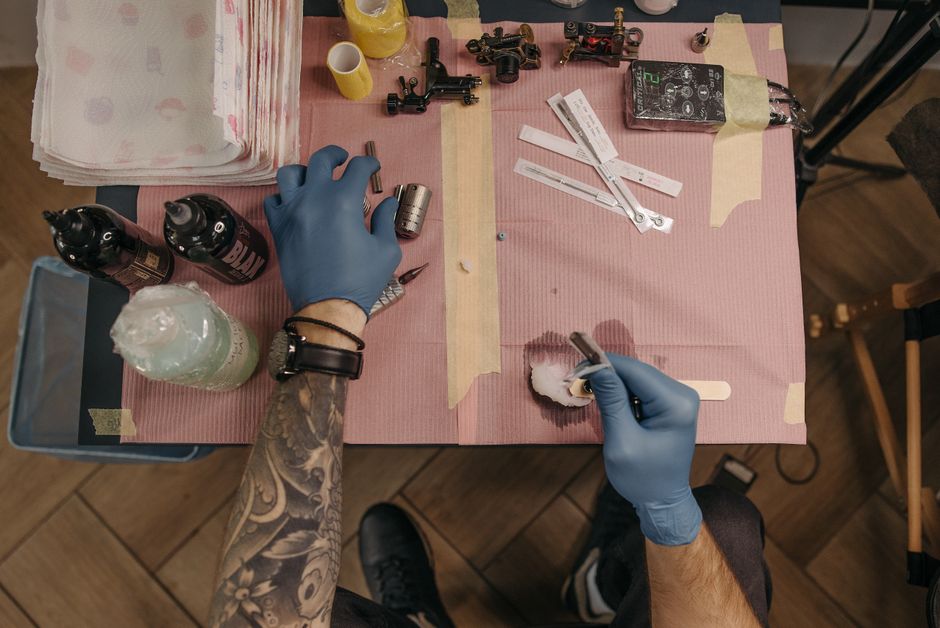
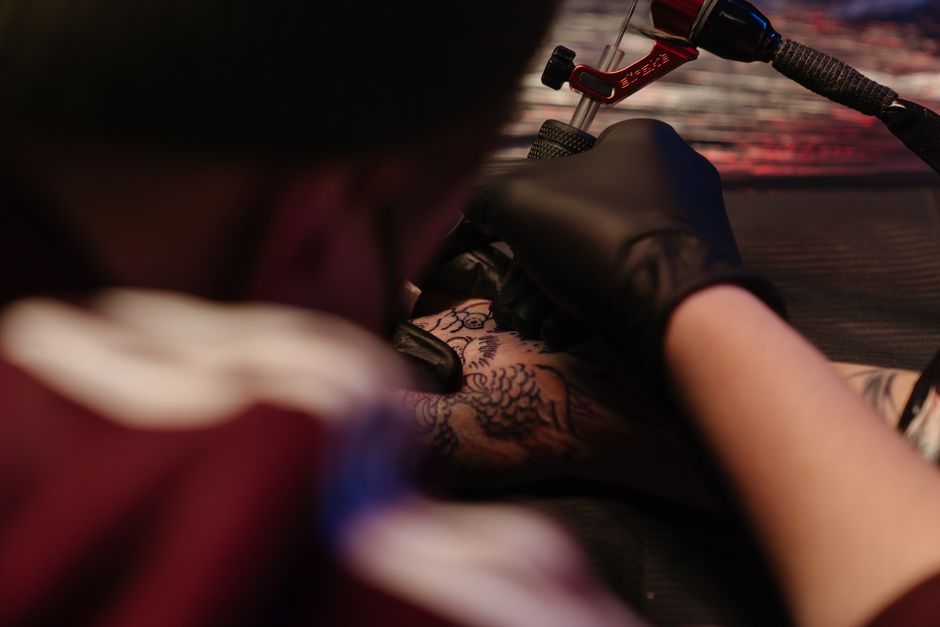
You can’t learn the physical, sensory side of a trade online: the feel of needle depth, the pressure of your hand and the muscle memory that only comes from real repetition.
No video can teach your fingers how much pressure to use when the needle meets skin, or how skin stretches and reacts under your hand.
- Needle depth and pressure: Go too shallow and ink may not hold. Go too deep and lines can blow out. This takes hands-on practice.
- Machine handling: A tattoo machine has a weight and rhythm you need to feel, not just watch.
- Working on living skin: Skin moves, stretches and reacts. A Mentor beside you can catch mistakes before they become permanent.
- Real-time problem-solving: When something goes wrong mid-session, you need an experienced Tattoo Artist on hand.
Pro Tip: Be cautious of any program promising you can become a fully licensed Tattoo Artist entirely online. Tattooing a real person requires hands-on training and meeting your state’s licensing rules.
How does this apply to becoming a Tattoo Artist?
Becoming a Tattoo Artist requires both knowledge and hands-on practice. Licensing rules make the in-person part essential.
Many states require supervised, in-person training hours. Oklahoma, for example, requires 1,500 apprenticeship hours completed in no less than one year and no more than two years, according to the Oklahoma State Department of Health. Those hours only count when you work for your approved sponsoring Tattoo Artist at the listed establishment.
Tattooing is also a craft that’s hard to automate. Software can’t calm a nervous client or translate their story into art on living skin. Read more in why Tattoo Artists are still essential.
Shortcuts are tempting, but skipping the foundation can cost you time. Read about the mistakes aspiring tattoo apprentices should avoid.
Why is a hybrid model the smartest path?
A hybrid approach lets you build knowledge on your own schedule while getting the hands-on training that real skill requires.
For many people, that flexibility makes it possible to start learning while still working a current job. Online study keeps you moving forward, and in-person training is where you build the skills clients pay for.
How do you get started step by step?
Set your goals, choose training that includes real hands-on mentorship, build your foundation and work toward licensing.
- Get clear on your goals. Decide whether you want a hobby or a career. A career means committing to structured, hands-on training.
- Choose training with real mentorship. Look for in-person, supervised practice and licensing support, not just videos.
- Build your foundation. Study safety, drawing and design, and learn the tools every beginner Tattoo Artist should know.
- Train hands-on. Practice on synthetic skin, then tattoo real clients under a Mentor’s direct supervision.
- Get licensed. Complete your state’s requirements. See how to get your tattoo license in Texas, tattoo license requirements in California and how long it takes to get a tattoo license in Colorado.
What makes Ink Different different?
Ink Different’s Traditional Tattoo Apprenticeship pairs structured training with in-person mentorship at one of 60+ tattoo studios nationwide. For 15 years, Ink Different has trained aspiring Tattoo Artists as a college alternative.
The Traditional Tattoo Apprenticeship runs 18 to 24 months across four phases. No prior art experience is needed.
- Phase 1, Art and Design Principles: Drawing, shading, digital design and building a portfolio.
- Phase 2, Machine Mastery and Practice Tattooing: Hand-control exercises, machine operation, lining, shading and color packing.
- Phase 3, Supervised Tattoos: Tattooing real skin under a Mentor’s direct supervision.
- Phase 4, Junior Artist Externship: Building client relationships and refining your skills while you start earning.
You’ll finish with job-ready skills, licensing support and a guaranteed job offer at one of Ink Different’s own tattoo studios. Interest-free payment plans help make training more accessible. Our “Good Humans” culture means you join a supportive, family-like community.
What is the Master Mentorship?
The Master Mentorship is one year of in-person training for beginners and experienced Tattoo Artists who want to master a specific style, grow their career and move toward business ownership.
You’ll train directly with celebrity and award-winning Master Mentors, including Al Fliction, Liz Cook, Kyle Dunbar, Boneface, Jordi Pla and Marcel Oliveira.
We also offer Spanish-speaking locations in Denver, Orange County, NYC, Miami, San Antonio and San Diego.
Ready to take the first step?
Online learning can teach you a lot, but your hands learn by doing. Real skill comes from in-person practice with an experienced Mentor guiding you. Each Mentor takes just two tattoo apprentices per tattoo studio, so seats fill up quickly.
Ready to become a Tattoo Artist? Apply now to Ink Different’s Traditional Tattoo Apprenticeship and start building an AI-proof career with licensing support along the way.
Frequently Asked Questions
Can you become a tattoo artist completely online?
No. You can learn theory, safety and design online, but tattooing real people requires hands-on training and meeting your state’s licensing requirements.
What parts of tattoo training can be done remotely?
Safety standards, drawing fundamentals, design, color theory, aftercare knowledge and business skills can all be studied remotely.
Are online trade schools legitimate?
Many are, but quality varies. Check what hands-on training is included, whether it meets licensing requirements and what graduates go on to do. The FTC recommends getting promises in writing.
How many students take classes online?
According to NCES, about 53% of postsecondary students took at least one distance education course in fall 2022, and 26% studied exclusively online.
How long is Ink Different’s Traditional Tattoo Apprenticeship?
It runs 18 to 24 months across four phases, with in-person training at a working tattoo studio.
Do I need art experience to start a tattoo apprenticeship?
No. The Traditional Tattoo Apprenticeship is built for beginners and starts with art and design principles.