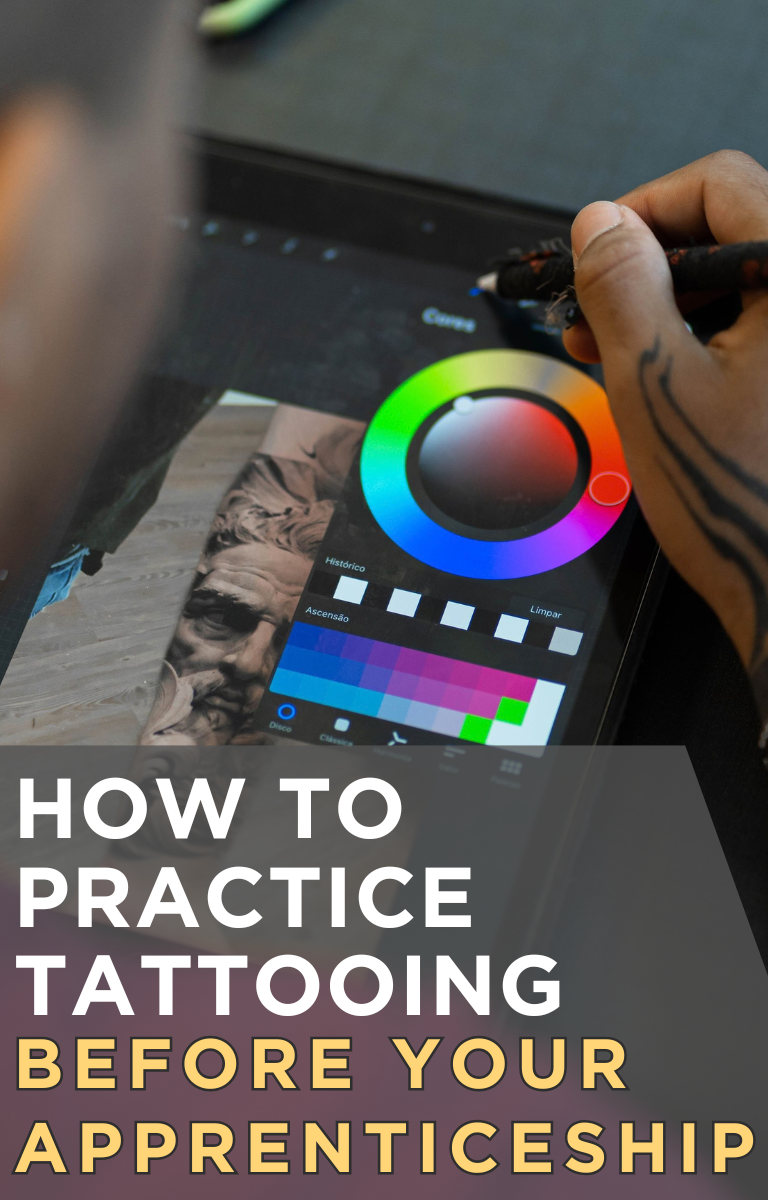
How to Practice Tattooing Before Your Apprenticeship
November 18, 2026
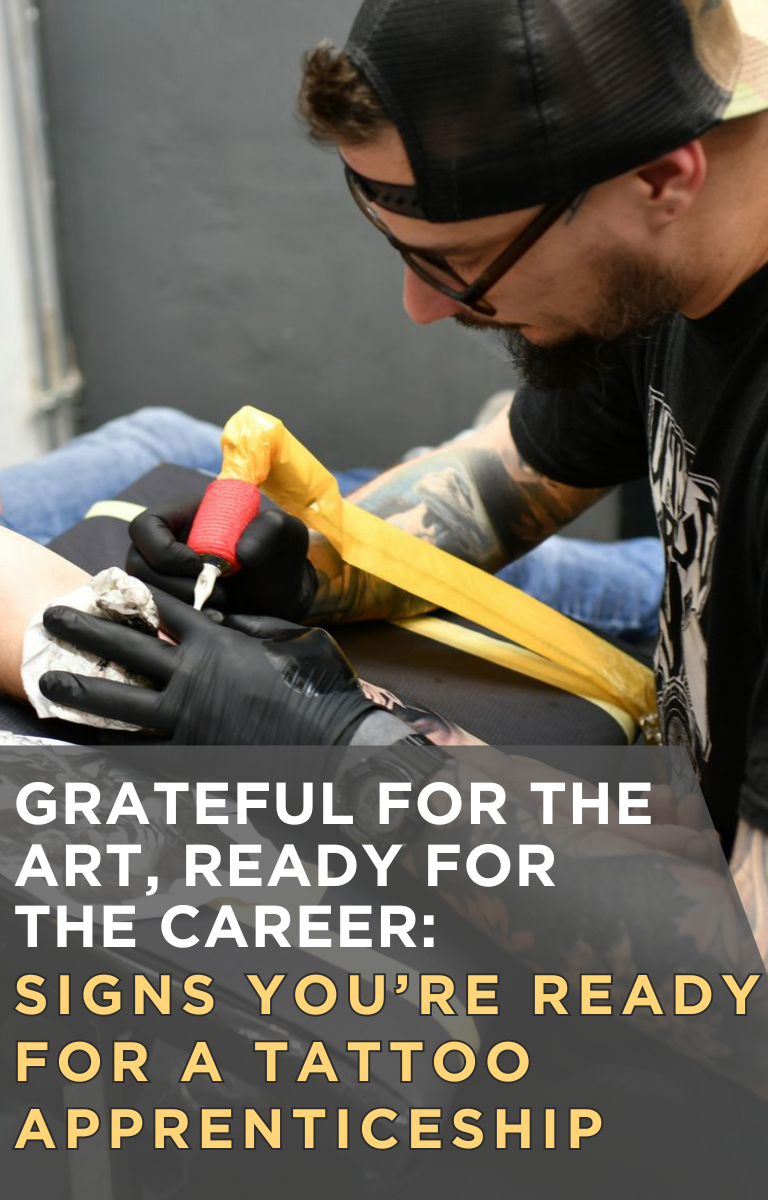
Grateful for the Art, Ready for the Career: Signs You’re Ready for a Tattoo Apprenticeship
November 18, 2026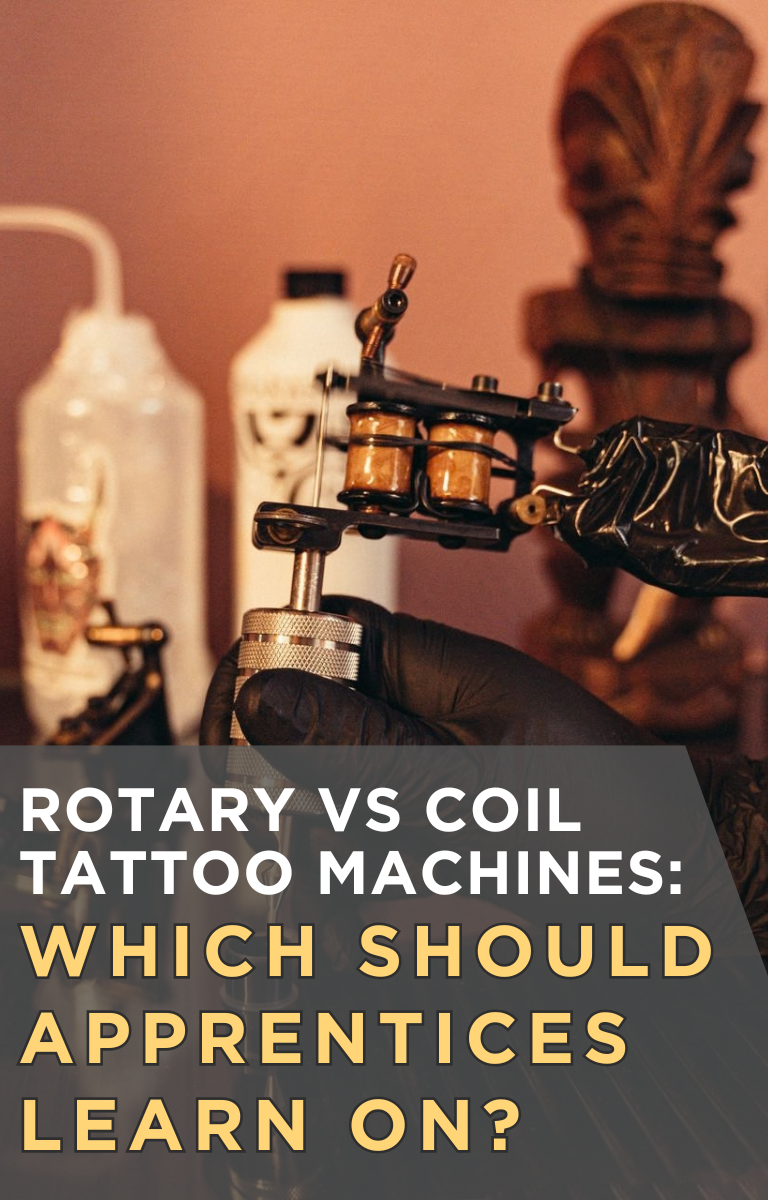
In This Article
- Key Takeaways
- What is the difference between rotary and coil tattoo machines?
- How does a rotary tattoo machine work?
- How does a coil tattoo machine work?
- Which tattoo machine is easier for beginners to learn on?
- What are the pros and cons of each machine?
- How do you choose your first tattoo machine step by step?
- Why does mentorship matter more than the machine?
- How Ink Different trains you on real tattoo machines
- Ready to pick up your first machine?
- FAQ
The main difference between rotary and coil tattoo machines is how they move the needle. A rotary machine uses a small motor for smooth, consistent motion. A coil machine uses electromagnetic coils that pull an armature bar up and down, creating its classic buzz and punchy feel. Many beginners find rotary machines, especially pen-style ones, easier to start on because they’re lighter, quieter and need less tuning.
Both have deep roots in tattoo history. Samuel O’Reilly patented the first electric tattoo machine in 1891, adapting Thomas Edison’s electric pen, a rotary design. Coil machines followed soon after. Below, we break down how each works, their pros and cons and how to choose your first machine.
Key Takeaways
- The difference: Rotary machines use a motor, while coil machines use electromagnetic coils to move the needle.
- Easier to start: Many beginners find rotary machines lighter, quieter and more forgiving.
- Coil strengths: Coil machines offer tactile feedback many Tattoo Artists prefer for bold lining.
- Industry shift: Pen-style rotary machines have become hugely popular in modern tattooing.
- What matters most: A skilled Mentor matters far more than which machine you start with.
What is the difference between rotary and coil tattoo machines?
It comes down to the engine. Rotary machines use a spinning motor to drive the needle, while coil machines use electromagnets that rapidly pull and release an armature bar.
Think of two cars that reach the same destination with different engines. Both machines drive needles into the skin to deposit ink. The difference is in the feel, the sound and the maintenance.
Rotary machines tend to be lighter and smoother. Coil machines deliver the classic buzz and a tactile hit that many traditional Tattoo Artists love. Neither is objectively better. It depends on your hand, your style and what you’re tattooing.

How does a rotary tattoo machine work?
A rotary tattoo machine uses a small electric motor that turns spinning motion into a smooth up-and-down needle movement, with consistent speed and low vibration.
Because the motion is steady, rotary machines feel gentle in the hand. Less vibration can mean less fatigue during long sessions, which helps when you’re still building muscle memory and stamina.
Pen-style rotary machines, which use needle cartridges, have become extremely popular. Many Tattoo Artists now use them for lining, shading and color packing. They’re quiet, light and versatile.
Ink Different Master Mentor Boneface has watched the shift firsthand. “Everybody was like loyal to the coil,” he said on Tattoo Shop Tango. “And before you know it, all the loyal to the coil people are working on pen style machines.”
Pro Tip: If hand fatigue is a worry, a rotary machine lets you focus on technique instead of managing your tool.
How does a coil tattoo machine work?
A coil tattoo machine sends electric current through electromagnetic coils that rapidly pull and release an armature bar, driving the needle up and down and creating the signature buzz.
Many traditional Tattoo Artists love the feedback coil machines give. You feel the rhythm of the stroke, which some say gives them more control over how the needle hits the skin.
Coil machines are usually tuned for specific jobs. A liner is set up for crisp, fast lines, while a shader runs softer for fills and gradients. Learning to tune a coil machine is a skill of its own.
Historians credit early coil designs to Thomas Riley in London and Alfred Charles South, who developed a two-coil machine, though details of the early history are debated. Read more in our deep dive on coil tattoo machines.
The trade-off is that coil machines are heavier, louder and need more maintenance, which can make the learning curve steeper for a new tattoo apprentice.
Which tattoo machine is easier for beginners to learn on?
Many beginners find rotary machines easier to learn on because they’re lighter, quieter, more consistent and need less tuning. That lets new tattoo apprentices focus on technique.
With fewer variables to manage, you can concentrate on steady hand control, proper depth and clean linework.
“Easier to start” doesn’t mean “the only one you’ll ever use,” though. Plenty of Tattoo Artists start on rotary and later fall in love with coil. Others stay rotary for their whole career.
The bigger beginner mistake isn’t choosing the “wrong” machine. It’s trying to learn alone, without a Mentor correcting your grip, depth and technique. Read about the mistakes aspiring tattoo apprentices should avoid.
What are the pros and cons of each machine?
Rotary machines are known for comfort, versatility and low maintenance. Coil machines are known for tactile feedback, crisp lines and a traditional feel.
What are the pros and cons of rotary tattoo machines?
- Pros: Lightweight, quiet, low vibration, versatile (one machine can handle lining and shading) and easy to maintain.
- Cons: Some Tattoo Artists feel less tactile feedback, and cheaper models may lack power for heavy packing.
What are the pros and cons of coil tattoo machines?
- Pros: Strong tactile feedback, crisp lining, a classic feel and highly customizable tuning.
- Cons: Heavier, louder and more maintenance-heavy, with a steeper learning curve and often separate liner and shader machines.
Whichever you use, safety comes first. Understanding cross-contamination and sterile setup is non-negotiable. The OSHA Bloodborne Pathogens Standard is the baseline every professional learns, and client aftercare should follow guidance like the American Academy of Dermatology’s tips for caring for tattooed skin.

How do you choose your first tattoo machine step by step?
Set a realistic budget, consider a reliable rotary for versatility, test the grip and weight, prioritize quality and ask your Mentor.
- Set your budget. You don’t need the most expensive machine to learn. You need a reliable one.
- Consider a quality pen-style rotary. It’s a forgiving starting point that can handle both lining and shading.
- Check the grip and weight. A machine that feels wrong in your hand can hold back your technique.
- Get the right supporting gear. Power supply, cartridges and a clean workstation all matter. See the tools every beginner Tattoo Artist should know.
- Ask your Mentor. An experienced Tattoo Artist can watch how you work and recommend what fits.
- Try coil once your fundamentals are solid. With good hand control, you’ll be able to feel the difference a coil machine makes.
Why does mentorship matter more than the machine?
A skilled Mentor can correct your technique, depth and safety in real time. Even the best machine can’t teach you how to use it well.
The machine is only one part of the equation. Technique, consistency, safety and judgment make the biggest difference, and those are taught person to person.
It’s also part of why tattooing is so hard to automate. Software can’t read a client’s skin, adapt to how it stretches or build the trust that keeps someone comfortable through a long session.
How does Ink Different train you on real tattoo machines?
Ink Different’s Traditional Tattoo Apprenticeship teaches machine skills through structured, in-person mentorship as part of a college alternative.
What can you expect from Ink Different’s Traditional Tattoo Apprenticeship?
For 15 years, Ink Different has trained aspiring Tattoo Artists. The Traditional Tattoo Apprenticeship runs 18 to 24 months across four phases, with in-person training at one of 60+ tattoo studios nationwide. No prior art experience is required.
- Phase 1, Art and Design Principles: Drawing, shading, digital design and building a portfolio.
- Phase 2, Machine Mastery and Practice Tattooing: Machine operation, hand-control exercises, lining, shading and color packing on practice surfaces.
- Phase 3, Supervised Tattoos: Tattooing real skin under a Mentor’s direct supervision.
- Phase 4, Junior Artist Externship: Building client relationships and refining your skills while you start earning.
How does Ink Different ensure you graduate with confidence?
You’ll finish with job-ready skills, licensing support and a guaranteed job offer at one of Ink Different’s own tattoo studios. Interest-free payment plans help make training more accessible. For licensing details, see how to get your tattoo license in Texas, tattoo license requirements in California and how long it takes to get a tattoo license in Colorado.
According to ZipRecruiter, the average Tattoo Artist in the United States earns $106,858 a year as of November 2026.
Who Are the Master Mentors in Ink Different’s Master Mentorship?
Our one-year, in-person Master Mentorship is for beginners and experienced Tattoo Artists. You’ll train alongside celebrity and award-winning Master Mentors, including Al Fliction, Liz Cook, Kyle Dunbar, Boneface, Jordi Pla and Marcel Oliveira. It’s built for mastering a specific style, growing your career and owning your own business.
How does Ink Different make tattoo training accessible?
Our “Good Humans” culture means you join a supportive, family-like community. We offer Spanish-speaking locations in Denver, Orange County, NYC, Miami, San Antonio and San Diego.
Ready to pick up your first machine?
Rotary or coil, the machine is just the starting point. The skills you build with a Mentor are what turn it into a career. Each Mentor takes just two tattoo apprentices per tattoo studio, so seats fill up quickly.
Ready to become a Tattoo Artist? Apply now to Ink Different’s Traditional Tattoo Apprenticeship and start building an AI-proof career, with licensing support along the way.

Frequently Asked Questions
Should beginners learn on a rotary or coil tattoo machine first?
Many beginners start on a rotary machine because it’s lighter, quieter and more forgiving. Ask your Mentor what fits your hand and goals.
What’s the main difference between rotary and coil tattoo machines?
Rotary machines use a motor for smooth, consistent needle movement. Coil machines use electromagnetic coils and an armature bar, creating a buzzing sound and more tactile feedback.
Are coil tattoo machines still used?
Yes. Many Tattoo Artists, especially in traditional styles, still prefer coil machines for crisp lining and their classic feel, even as pen-style rotary machines have grown popular.
Do I need prior art experience to learn tattoo machine operation?
No. Ink Different’s Traditional Tattoo Apprenticeship starts with art and design principles, and machine operation is covered in Phase 2.
How long does it take to learn to use a tattoo machine well?
It takes consistent practice over months. Ink Different’s Traditional Tattoo Apprenticeship takes 18 to 24 months across four phases.