Creative Careers That Pay Well
November 18, 2026
Rotary vs Coil Tattoo Machines: Which Should Apprentices Learn On?
November 18, 2026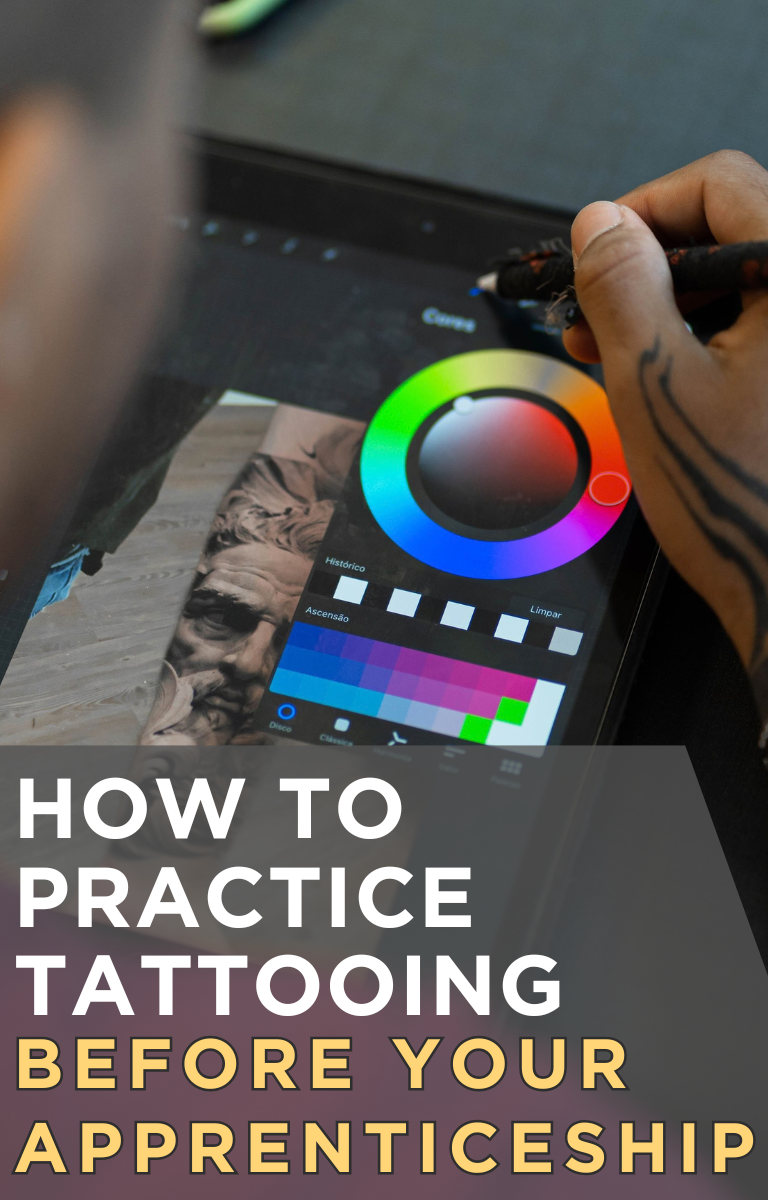
In This Article
- Key Takeaways
- What Does It Mean to Practice Tattooing Before an Apprenticeship?
- Why Should You Practice Before You Ever Pick Up a Machine?
- What Skills Should You Practice First?
- How Do You Practice Tattooing Safely at Home?
- What Should You Practice On Before Real Skin?
- What Mistakes Should You Avoid While Practicing?
- How Ink Different Turns Practice Into a Career
- Frequently Asked Questions
The best way to practice tattooing before an apprenticeship is to build your fundamentals without tattooing anyone. Draw every day, practice linework, shading and lettering, learn to make stencils, study bloodborne pathogens safety and, when you’re ready, practice on synthetic skin. Tattooing a real person is different. In most states, it requires a license, and as a tattoo apprentice you work under an approved, licensed Tattoo Artist.
The rules are specific. In Virginia, tattooing apprenticeship sponsors must hold a current Virginia tattooer license and ensure compliance with the state’s 1,500-hour tattooing apprenticeship program, according to the Virginia Administrative Code. This guide shows you how to practice safely and productively, so you show up to your tattoo apprenticeship ready to grow.
Key Takeaways
- Start with drawing: Daily linework, shading and lettering practice builds the hand control every tattoo needs.
- Learn safety early: Study the OSHA Bloodborne Pathogens Standard and your state’s training requirements.
- Synthetic skin only: Practice on fake skin, never on yourself or another person.
- Tattooing people needs a license and supervision: States set licensing rules, and tattoo apprentices train under approved, licensed Tattoo Artists.
- Build a portfolio: Strong drawings and consistent fundamentals help you stand out when you apply.
What Does It Mean to Practice Tattooing Before an Apprenticeship?
It means building core skills (drawing, linework, stencils and safety knowledge) so you start formal training with a strong foundation.
You’re not trying to tattoo anyone at home. You’re working on the fundamentals every Tattoo Artist relies on: a steady hand, confident lines and a trained eye.
This kind of practice also shows a Mentor that you’re serious. A sketchbook full of consistent linework and clean designs says a lot more than simply saying you want to tattoo.
Why Should You Practice Before You Ever Pick Up a Machine?
Fundamentals separate beginners from professionals, and people who prepare before their tattoo apprenticeship tend to progress faster and with more confidence.
Practice is also how you find out whether you truly enjoy the work. Consistent, focused drills build skill. A 2019 review in Royal Society Open Science describes “deliberate practice” as activities designed by a skilled teacher specifically to improve performance. Your solo drills lay the groundwork, and a Mentor makes them deliberate.
Tattooing is a hands-on skill that’s hard to automate. Read more in why Tattoo Artists are still essential.
Pro Tip: Treat your sketchbook like a gym membership. A daily 20-minute drawing session builds more skill over a month than one long weekend session.
What Skills Should You Practice First?
Start with drawing fundamentals: straight and curved lines, shading, dotwork, lettering and basic composition. These skills carry into every tattoo you’ll do.
- Line control: Draw long, smooth lines without lifting your pen. Repeat until they’re steady.
- Shading and gradients: Practice smooth transitions from dark to light.
- Dotwork (stippling): Build texture and depth with dots, which trains precision and patience.
- Lettering and script: Clean, readable lettering is a skill clients request often.
- Stencil creation: Learn to turn a drawing into a clean stencil and transfer it to a surface.
To understand the equipment you’ll eventually use, read about the tools every beginner Tattoo Artist should know.
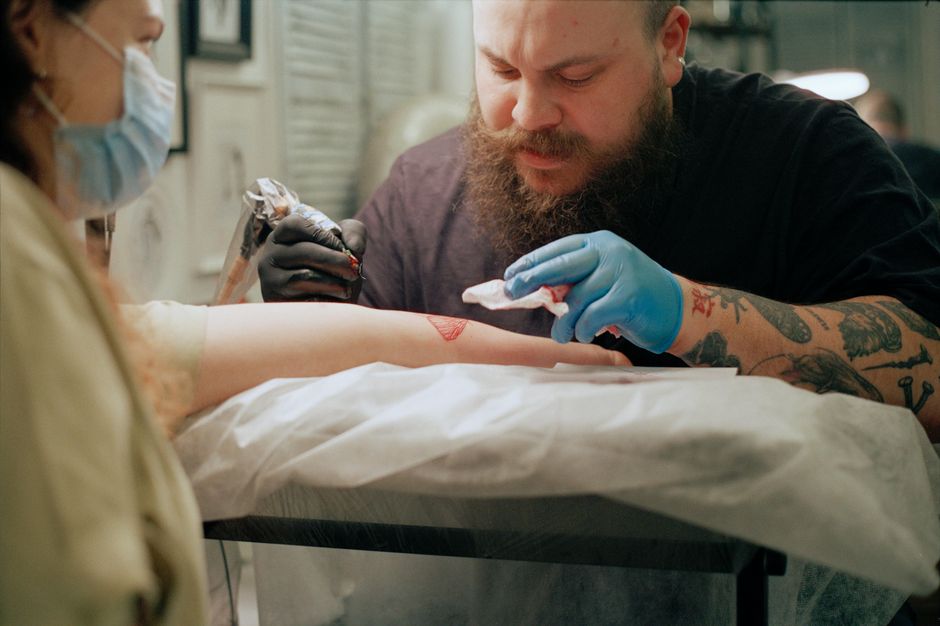
How Do You Practice Tattooing Safely at Home?
Start with drawing, learn hygiene and safety standards and use synthetic skin only. Tattooing real people waits until you’re licensed or training under an approved, licensed Tattoo Artist.
- Master the pen first. Fill sketchbooks with tracing, freehand drawing and redrawing. Give yourself daily drawing challenges.
- Learn safety and hygiene. Study the OSHA Bloodborne Pathogens Standard and how professionals prevent cross-contamination. Learn client aftercare from resources like the American Academy of Dermatology’s tips for caring for tattooed skin.
- Learn your state’s rules. Requirements vary. Florida, for example, requires tattoo artist license applicants to complete a Department-approved Bloodborne Pathogen and Communicable Diseases course, according to the Florida Department of Health.
- Practice stencils and transfers. Turn your drawings into clean stencils and practice transferring them.
- Move to synthetic skin. Once your lines are steady, practice on synthetic skin to feel how pressure and angle affect your lines, with no risk to anyone.
- Build your portfolio and apply. Collect your best work. Before applying, read about the mistakes aspiring tattoo apprentices should avoid.
What Should You Practice On Before Real Skin?
Practice on synthetic tattoo skin and practice sheets. Never practice on yourself or another person.
Synthetic skin gives you a feel for how depth and speed affect your lines, without risking anyone’s health.
Here’s the clear line: tattooing a real person requires a license in most states, and tattoo apprentices work under approved, licensed Tattoo Artists. In Oklahoma, for example, apprentice hours only count when you work for your approved sponsoring Tattoo Artist at the listed establishment, according to the Oklahoma State Department of Health.
The health risks are real too. Mayo Clinic notes that tattoos can cause skin infections and other complications, especially when equipment isn’t sterilized properly. The CDC has also linked tattoo infections to inks diluted with nonsterile water.
Warning: Home practice can’t replace licensed, supervised training. Tattooing a living person carries real health, safety and legal responsibilities.
What Mistakes Should You Avoid While Practicing?
The biggest mistakes are rushing to real skin, skipping drawing fundamentals, ignoring hygiene and practicing without feedback.
- Tattooing yourself or friends: It skips the foundation, risks infection and scarring and can break your state’s licensing laws.
- Neglecting linework: Color and detail can’t fix shaky lines.
- Practicing without feedback: You can’t see your own blind spots. Mentorship speeds up your progress.
- Treating it as a hobby: Serious, consistent practice leads to serious opportunities.
While you practice, you can also start sharing your drawings and designs. Explore these platforms to help new and aspiring Tattoo Artists build their brand.

How Ink Different Turns Practice Into a Career
Ink Different’s Traditional Tattoo Apprenticeship takes the skills you build at home and develops them through in-person mentorship and real tattoo studio experience. For 15 years, Ink Different has trained aspiring Tattoo Artists as a college alternative.
Home practice gives you a head start. A Mentor beside you, correcting your angle and technique in real time, takes it further.
What You Can Expect from Our Traditional Tattoo Apprenticeship
The Traditional Tattoo Apprenticeship runs 18 to 24 months across four phases. You train in person with a Mentor at one of 60+ tattoo studios nationwide. No prior experience is required, so any practice you do now puts you ahead.
- Phase 1, Art and Design Principles: Drawing, shading, digital design and building a portfolio.
- Phase 2, Machine Mastery and Practice Tattooing: Hand-control exercises, machine operation, lining, shading and color packing on practice surfaces.
- Phase 3, Supervised Tattoos: Tattooing real skin under a Mentor’s direct supervision.
- Phase 4, Junior Artist Externship: Building client relationships and refining your skills while you start earning.
A Career That Comes With Confidence
You’ll finish with job-ready skills, licensing support and a guaranteed job offer at one of Ink Different’s own tattoo studios. Interest-free payment plans help make training more accessible. For licensing details, see how to get your tattoo license in Texas, tattoo license requirements in California and how long it takes to get a tattoo license in Colorado.
According to ZipRecruiter, the average Tattoo Artist in the United States earns $106,858 a year as of November 2026.
Mentorship That Pushes Your Brand and Skills Further
Our one-year, in-person Master Mentorship lets you train with celebrity and award-winning Master Mentors, including Al Fliction, Liz Cook, Kyle Dunbar, Boneface, Jordi Pla and Marcel Oliveira. It’s built for mastering a specific style, growing your career and owning your own business.
Making Tattoo Training Accessible for Everyone
We offer Spanish-speaking locations in Denver, Orange County, NYC, Miami, San Antonio and San Diego. Our “Good Humans” culture means you join a supportive, family-like community.
Ready to Turn Practice Into a Profession?
Practicing before your tattoo apprenticeship shows you, and future Mentors, that you’re ready to put in the work. Keep drawing, learn the safety basics, practice on synthetic skin and leave real skin for licensed, supervised training. Each Mentor takes just two tattoo apprentices per tattoo studio, so seats fill up quickly.
Ready to become a Tattoo Artist? Apply now to Ink Different’s Traditional Tattoo Apprenticeship and start building an AI-proof career, with licensing support along the way.
Frequently Asked Questions
Can I practice tattooing on myself before a tattoo apprenticeship?
No. Tattooing yourself or others without proper training risks infection and scarring, and tattooing people generally requires a license. Practice drawing and use synthetic skin instead.
Do I need a license to tattoo people?
In most states, yes. Rules vary, but tattoo apprentices typically train under an approved, licensed Tattoo Artist, and some states require registration or sponsorship before apprentice hours count.
Do I need art experience to start practicing tattooing?
No. You can start with simple line and shading drills today. Ink Different’s Traditional Tattoo Apprenticeship is built for beginners and starts with art and design principles.
What is the best thing to practice tattooing on at home?
Synthetic practice skin, because it mimics the resistance of real skin. Practice sheets work for drawing and stencils, but never practice on real skin.
How long should I practice before applying for a tattoo apprenticeship?
There’s no set timeline. Focus on building a strong drawing portfolio and clean fundamentals. Consistency and commitment matter more than a set number of months.
How long is Ink Different’s Traditional Tattoo Apprenticeship?
It takes 18 to 24 months across four phases, with in-person training at a working tattoo studio.