
What Mike Rowe Gets Right About Trade School
November 23, 2026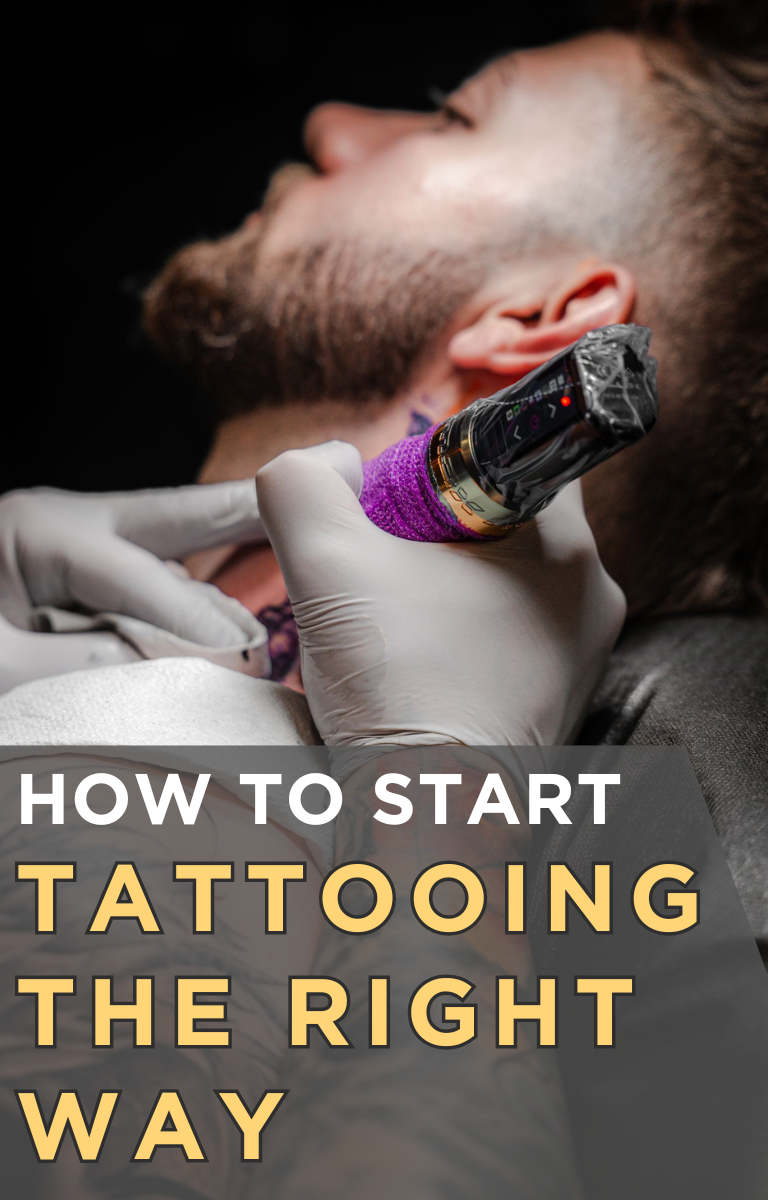
In This Article
- Key Takeaways
- What does it mean to start tattooing the right way?
- Why do strong foundations matter more than talent?
- What are the first steps to start tattooing?
- Why is safety and sanitation the non-negotiable first skill?
- What tools do you need to start tattooing?
- Why is live, in-person mentorship the right way to learn?
- What can you expect from our Traditional Tattoo Apprenticeship?
- How does Master Mentorship push your skills further?
- Ready to become a Tattoo Artist?
- FAQ
To start tattooing the right way, build your skills in order. Learn safety and sanitation first, then drawing fundamentals, then machine control on practice skin. Only then tattoo real clients under an experienced Mentor’s supervision, while meeting your state’s licensing rules. For most people, the most reliable way to get into tattooing is a structured tattoo apprenticeship.
Many states set clear training requirements. Oklahoma, for example, requires tattoo apprentices to be at least 18 and complete 1,500 apprenticeship hours, according to the Oklahoma State Department of Health. Below, we walk through the right order to learn, the tools you’ll need and how to find quality training.
Key Takeaways
- Order matters: Learn safety, drawing and machine handling before tattooing anyone.
- Mentorship beats self-teaching: Real-time feedback helps you avoid habits that take years to fix.
- Timeline: Most tattoo apprenticeships take one to three years. Ink Different’s takes 18 to 24 months.
- No experience needed: Beginners with no formal art background can start from scratch.
- Licensing counts: The right path includes safety training and meeting your state’s licensing rules.
What does it mean to start tattooing the right way?
It means learning in the correct order: safety and sanitation, then drawing fundamentals, then machine control and finally supervised client work.
Some people start backwards. They buy a cheap kit online and practice on friends at home. That can lead to infections, scarring and legal trouble, since tattooing people generally requires meeting your state’s licensing rules. Mayo Clinic notes that tattoos can cause skin infections, especially when equipment isn’t sterilized properly.
The right way takes longer, but it’s the way that lasts. You’re learning to protect clients, run a clean station and build a reputation that keeps your schedule full.
Pro Tip: Be wary of any course that promises to make you a Tattoo Artist in a weekend. Real skill takes time and supervised practice.
Why do strong foundations matter more than talent?
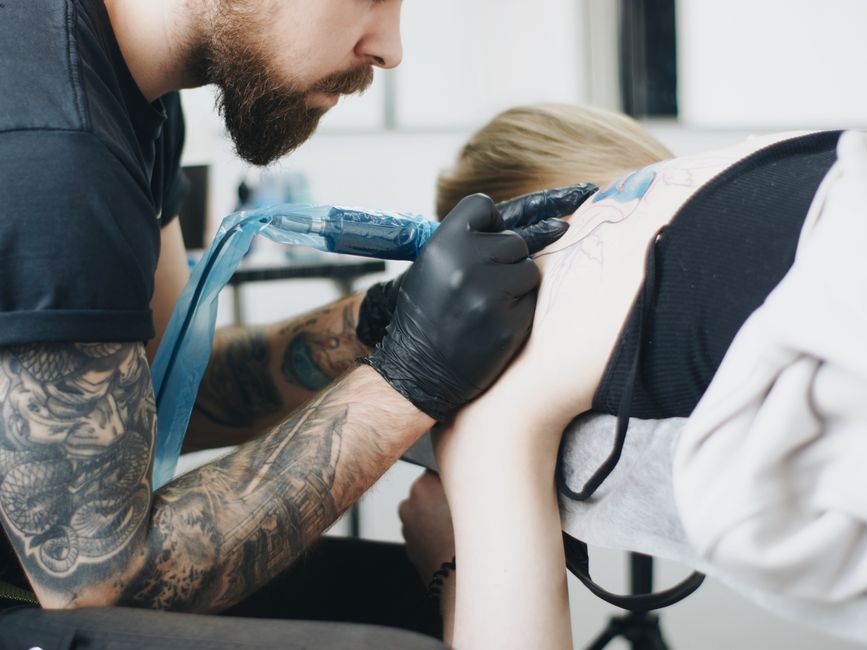
Tattoos are permanent, so technique, consistency and safety matter more than natural ability.
Talent helps, but it isn’t enough. Research on skill-building supports focused practice: a 2019 review in Royal Society Open Science describes “deliberate practice” as activity designed by a skilled teacher specifically to improve performance. That’s exactly what structured tattoo training provides.
Think of it like a house. A great design means little if the foundation is cracked. Linework, shading, skin stretching and depth control are your foundation.
If you’re worried you’re too far into another career to start, it may help to read about why tattooing works for career changers. It’s rarely too late.
What are the first steps to start tattooing?
Learn safety, draw every day, understand the skin, practice machine handling on practice skin and find an experienced Mentor before tattooing anyone.
- Learn safety first. Study bloodborne pathogens and cross-contamination basics, starting with the OSHA Bloodborne Pathogens Standard.
- Draw every day. You don’t need to be a born artist, but you do need practice. Linework, contrast and composition improve with repetition.
- Study the skin. Learn how tattoos heal and how clients should care for them, using guidance like the American Academy of Dermatology’s tips for caring for tattooed skin.
- Practice machine handling. Get comfortable with a tattoo machine on practice skin. Learn hand speed, angle and depth.
- Find an experienced Mentor. This ties everything together, and it’s the step many people try to skip.
- Learn your state’s rules. Requirements vary, from Texas licensing to California’s requirements to how long licensing takes in Colorado.
Knowing the mistakes beginners often make ahead of time can save you a lot of frustration.
Why is safety and sanitation the non-negotiable first skill?
Tattooing breaks the skin, so poor hygiene can spread serious bloodborne diseases. That’s why safety training comes before anything else.
No client will trust you, and no tattoo studio will hire you, if you can’t keep a clean, safe station. The OSHA standard requires workplace training when you start and at least once a year after that. It also requires employers to offer the hepatitis B vaccine to workers with occupational exposure within 10 working days of their initial assignment.
Many states also require bloodborne pathogens training to get licensed. Florida, for example, requires license applicants to complete a Department-approved course, according to the Florida Department of Health. Check with your state or local health department for your requirements.
Ink matters too. The CDC has linked tattoo infections to contaminated ink, including ink diluted with nonsterile water.
Remember: A tattoo studio’s reputation depends on cleanliness, and so will yours.
What tools do you need to start tattooing?
You’ll need a quality tattoo machine, sterile needles, professional inks, practice skin, good lighting and single-use protective gear. But tools only help once you know how to use them.
Beginners often focus too much on gear. The best machine won’t fix a shaky hand or a weak understanding of depth. Start simple and learn what each piece does. When you’re ready to invest, this rundown of the tools beginners actually need covers the essentials.
Why is live, in-person mentorship the right way to learn?
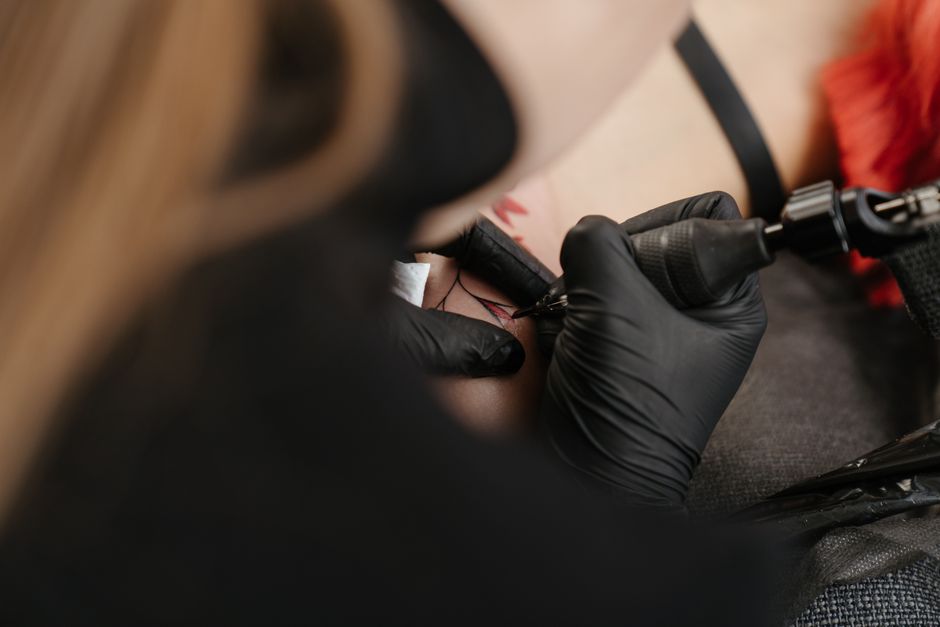
A Mentor can correct your hand pressure, angle and technique in real time, which videos can’t do. That feedback speeds up your progress.
You can watch countless tutorials and still not know why your lines are blowing out. A Mentor beside you can spot the problem right away and help you fix it before it becomes a habit.
Mentors also teach the business side: how to talk to clients, price your work and build a client base. That kind of knowledge is easiest to learn from someone who’s done it.
What can you expect from our Traditional Tattoo Apprenticeship?
Ink Different’s Traditional Tattoo Apprenticeship runs 18 to 24 months across four phases. You learn hands-on under experienced Mentors, with licensing support along the way.
For 15 years, Ink Different has trained aspiring Tattoo Artists. You train in person with a Mentor at one of 60+ tattoo studios nationwide, and no prior experience is needed. For many people, it’s a practical path into a creative career, which is why tattoo apprenticeships are gaining ground as an alternative to college.
- Phase 1, Art and Design Principles: Drawing, shading, digital design and building a portfolio.
- Phase 2, Machine Mastery and Practice Tattooing: Hand-control exercises, machine operation, lining, shading and color packing.
- Phase 3, Supervised Tattoos: Tattooing real skin under a Mentor’s direct supervision.
- Phase 4, Junior Artist Externship: Building client relationships and refining your skills while you start earning.
Our “Good Humans” culture means you join a supportive, family-like community. Interest-free payment plans help make training more accessible.
A career built on skill and human trust
You’ll finish with job-ready skills, licensing support and a guaranteed job offer at one of Ink Different’s own tattoo studios. Once you’re working, income grows with your skill and reputation. ZipRecruiter puts the average Tattoo Artist salary at $106,858 a year as of November 2026. Demand is strong: according to Pew Research Center, 32% of Americans have a tattoo.
How does Master Mentorship push your skills further?
Our one-year, in-person Master Mentorship is for beginners and experienced Tattoo Artists who want to master a specific style, grow their career or own a tattoo studio.
You’ll train with celebrity and award-winning Master Mentors, including Al Fliction, Liz Cook, Kyle Dunbar, Boneface, Jordi Pla and Marcel Oliveira. Pair that training with a plan for building your brand online, and you’ll be ready for the business side too.
Making tattoo training accessible for everyone
We offer Spanish-speaking locations in Denver, Orange County, NYC, Miami, San Antonio and San Diego.

Ready to become a Tattoo Artist?
Starting tattooing the right way means building skills in order, with safety first and a Mentor guiding you. Each Mentor takes just two tattoo apprentices per tattoo studio, so seats fill up quickly.
Ready to become a Tattoo Artist? Apply now to Ink Different’s Traditional Tattoo Apprenticeship and start building a hands-on career with licensing support along the way.
Frequently Asked Questions
How do I get into tattooing?
Learn safety and drawing fundamentals, then find structured training, usually a tattoo apprenticeship under an experienced Mentor. Meet your state’s age, training and licensing requirements along the way.
How long does it take to start tattooing the right way?
Most tattoo apprenticeships take one to three years. Ink Different’s Traditional Tattoo Apprenticeship takes 18 to 24 months across four phases.
Do I need art experience to start tattooing?
No. The Traditional Tattoo Apprenticeship is built for beginners and starts with art and design principles.
Can I teach myself to tattoo at home?
You can practice drawing and work on practice skin, but tattooing real people without training risks infection and scarring and can break your state’s licensing rules.
What is the first skill I should learn?
Safety and sanitation. Learn bloodborne pathogens safety, guided by the OSHA standard, before working on anyone.
What equipment do beginners need?
A quality tattoo machine, sterile needles, professional inks, practice skin, good lighting and single-use protective gear.