
Jobs That Pay $30 an Hour Without a Degree
November 20, 2026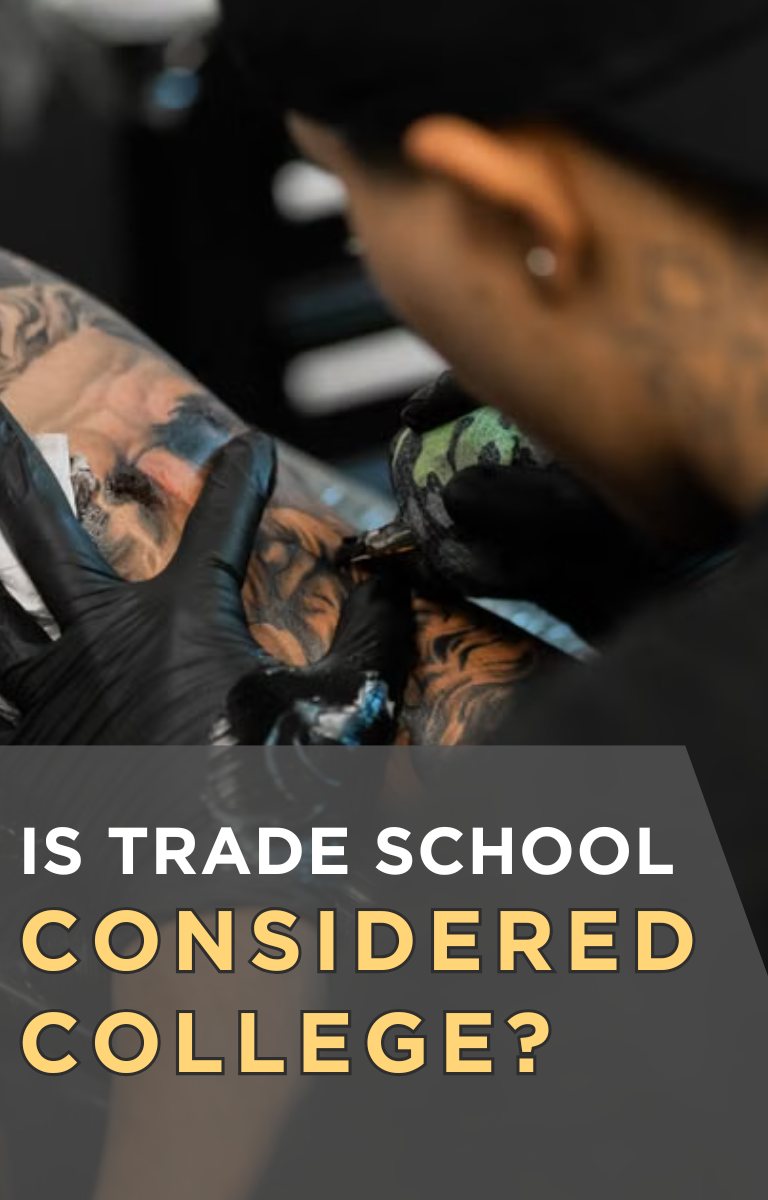
In This Article
- Key Takeaways
- What Is Trade School, and Is It College?
- How Is Trade School Different From College?
- Why Do People Confuse Trade School With College?
- Does the “College” Label Even Matter for Your Career?
- Where Does Tattoo Training Fit In?
- How Do You Choose the Right Path?
- Get Serious About Your Future With Become A Tattoo Artist
- FAQ
- Ready to Become a Tattoo Artist?
Trade school usually isn’t considered college in the traditional sense, but both are forms of postsecondary education. Colleges award degrees, like associate or bachelor’s degrees. Trade schools typically award certificates or diplomas that prepare you for a specific skilled job, often in two years or less. Some community colleges offer both, which is why the line can feel blurry.
The federal government recognizes trade training as its own category. The U.S. Bureau of Labor Statistics lists a “postsecondary nondegree award” as the typical entry-level education for careers like HVAC technicians. Below, we explain how trade school and college differ, why people mix them up and where tattoo training fits.
Key Takeaways
- Short answer: Trade school generally isn’t “college,” though both are postsecondary education.
- The difference: Trade schools award certificates for a specific skill, while colleges award academic degrees.
- Time: Many trade programs take two years or less, compared with about four years for a bachelor’s degree.
- What matters most: For hands-on careers, skill and licensing usually matter more than the label.
- Tattooing: It’s usually learned through a tattoo apprenticeship, not a trade school or college program.
What Is Trade School, and Is It College?
Trade school is postsecondary training focused on one skilled trade. It isn’t college in the traditional sense, but both fall under higher education.
“College” usually refers to schools that award degrees. Trade schools, also called career, technical or vocational schools, focus on certificates and diplomas tied to specific jobs. Federal Student Aid describes career schools as typically offering programs of two years or less, combining classes with hands-on experience.
Think of it as two roads out of the same town. College is the broader route, covering general education plus a major. Trade school is the direct route to a specific job, like welding, plumbing, electrical work or cosmetology.

How Is Trade School Different From College?
Trade school and college differ in length, cost, focus and credential.
- Length: Many trade programs run from a few months to two years. A bachelor’s degree usually takes about four years.
- Cost: The College Board reports average published tuition and fees of $4,150 at public two-year colleges and $11,950 a year at public four-year colleges for in-state students in 2025-26.
- Focus: Trade school teaches one job-ready skill. College combines general education with a chosen major.
- Credential: Trade schools award certificates, diplomas or preparation for a license. Colleges award associate, bachelor’s or graduate degrees.
Neither path is better in every case. The right choice depends on where you want to end up.
Pro Tip: Ask yourself whether you want to study a subject or master a skill. That question usually points you toward the right path.
Why Do People Confuse Trade School With College?
Both are options after high school, and the lines overlap. Many community colleges offer trade programs, and some trade schools offer associate degrees.
Trade-focused community colleges are also growing. In spring 2025, public two-year colleges with a heavy vocational focus grew enrollment by 11.7%, according to the National Student Clearinghouse Research Center.
Financial aid adds to the confusion too. Eligible trade schools can take part in the same federal student aid programs as colleges, so students fill out the same FAFSA for both.
Does the “College” Label Even Matter for Your Career?
For hands-on careers, the label usually matters less than your skills, licensing and portfolio.
In creative trades, your work often speaks louder than your transcript. The BLS notes that craft and fine artists improve their skills through practice and repetition. Tattooing is similar. Clients choose Tattoo Artists based on their portfolio and reputation, not where they went to school.
It also helps that hands-on work is hard to automate. Software can summarize a textbook, but it can’t build trust with a nervous client or tattoo living skin, which is a big part of why Tattoo Artists remain essential. And the earning potential is real: ZipRecruiter puts the average Tattoo Artist salary at $106,858 a year as of November 2026, with pay tied to skill and client base rather than a degree.
Where Does Tattoo Training Fit In?
Tattoo training usually follows the apprenticeship model. It’s a hands-on, skill-first path, rather than a trade school or college program.
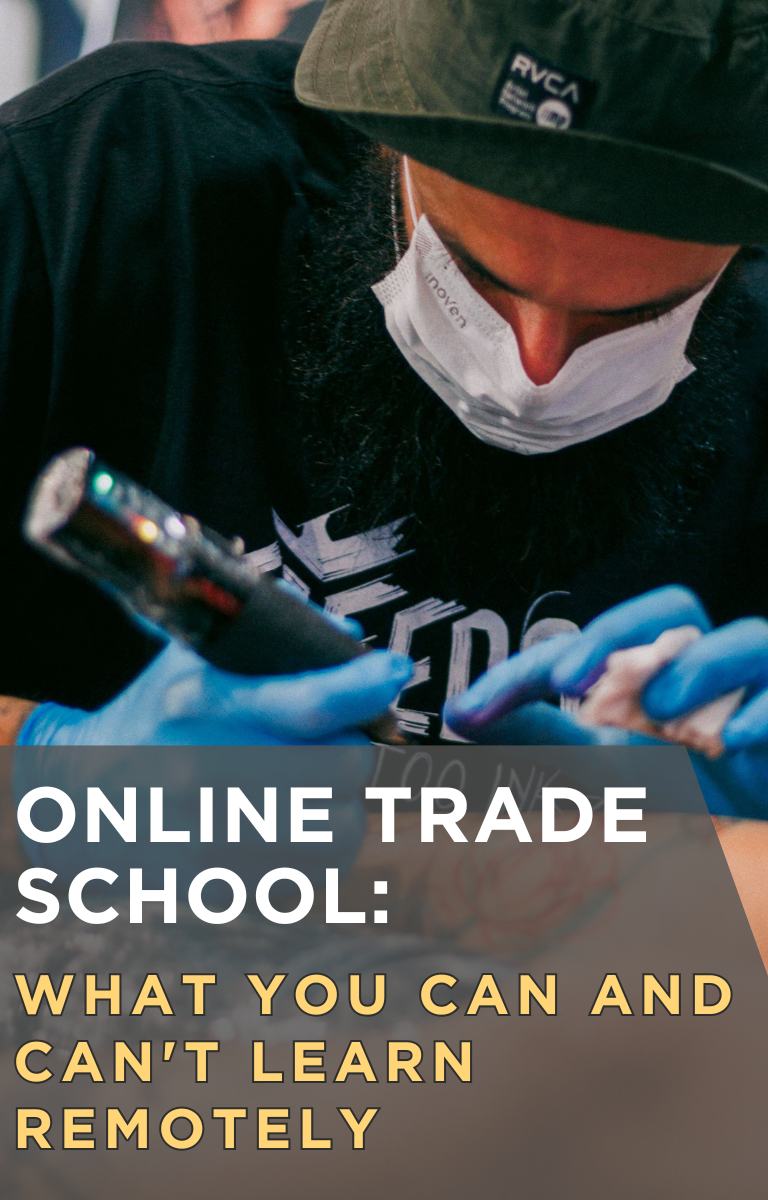
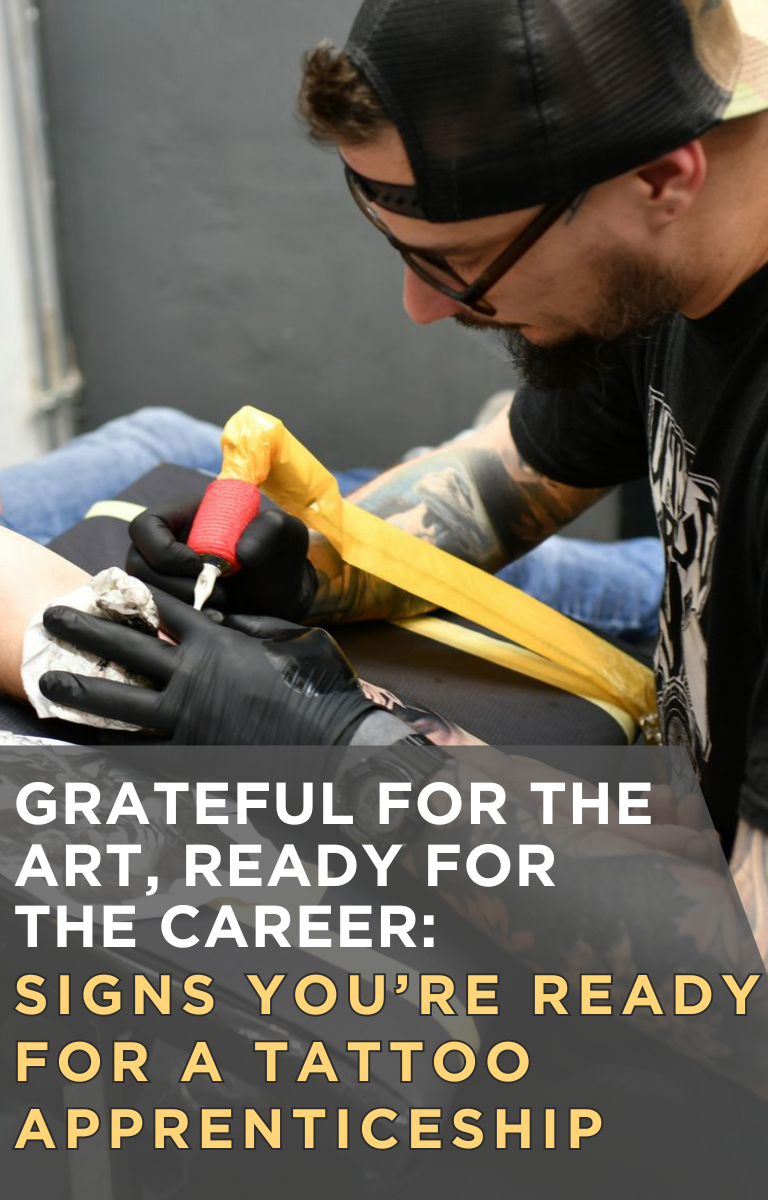
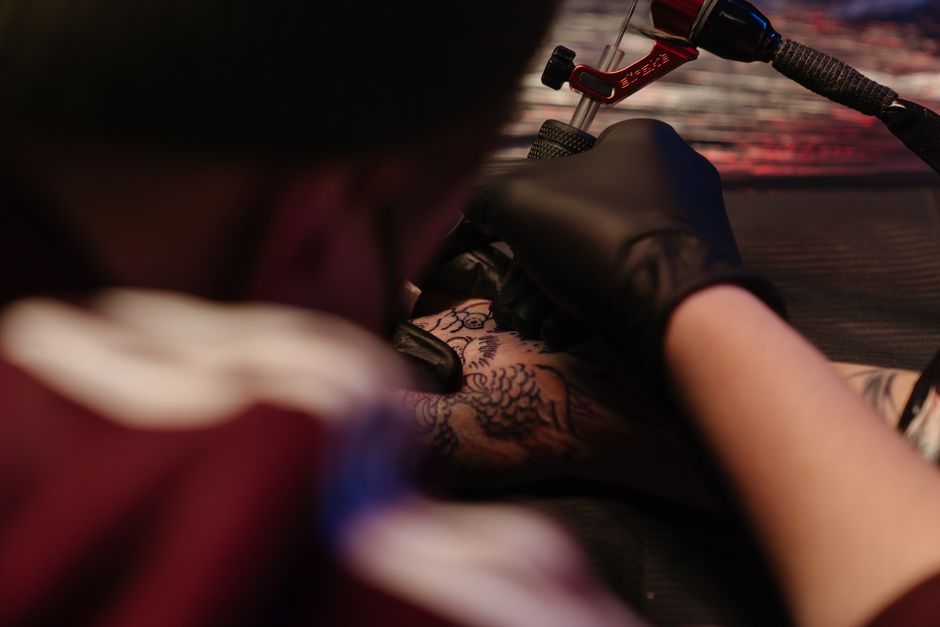
A tattoo apprenticeship is built on practice: linework, shading, machine handling, sanitation and client care, learned under a Mentor in a real tattoo studio. It’s the same model trades have used for generations, which is why many people see it as a practical alternative to college.
Safety is a core part of professional training, including the OSHA Bloodborne Pathogens Standard. If you’re starting from scratch, knowing the common beginner mistakes ahead of time can save you a lot of frustration.

How Do You Choose the Right Path?
Match your goals to the training. College suits broad academic careers, while trades and apprenticeships suit specific hands-on careers.
Step 1: Picture the career you want
Think about your workday five years from now. Are you at a desk, on a job site or at a tattoo station building a client base?
Step 2: Compare time and cost with the outcome
Weigh how long each path takes and what it costs against the career it leads to.
Step 3: Check the real-world requirements
Find out whether the path leads to licensing and job-ready skills. For tattooing, licensing is state-specific, from getting licensed in Texas to California’s requirements to how long licensing takes in Colorado.
Step 4: Decide, then take the first step
Once the path is clear, act on it, whether that’s applying to a program or reaching out to learn more.
Get Serious About Your Future With Ink Different Tattoos
Ink Different’s Traditional Tattoo Apprenticeship is a hands-on college alternative that teaches tattooing through in-person mentorship. For 15 years, Ink Different has trained professional Tattoo Artists.
If college never felt like the right fit, you’re not alone. Many people simply want a path built around skill.
What You Can Expect from Our Traditional Tattoo Apprenticeship
The Traditional Tattoo Apprenticeship runs 18 to 24 months across four phases, with in-person training at one of 60+ tattoo studios nationwide. It’s built for beginners, so no prior art experience is required.
- Phase 1, Art and Design Principles: Drawing, shading, digital design and building a portfolio.
- Phase 2, Machine Mastery and Practice Tattooing: Hand-control exercises, machine operation, lining, shading and color packing.
- Phase 3, Supervised Tattoos: Tattooing real skin under a Mentor’s direct supervision.
- Phase 4, Junior Artist Externship: Building client relationships and refining your skills while you start earning.
- Interest-free payment plans: Flexible payments make training more accessible.
A Career That Comes With Confidence
You’ll finish with job-ready skills, licensing support and a guaranteed job offer at one of Ink Different’s own tattoo studios.
Mentorship That Pushes Your Brand and Skills Further
Our one-year, in-person Master Mentorship offers training with celebrity and award-winning Master Mentors, including Al Fliction, Liz Cook, Kyle Dunbar, Boneface, Jordi Pla and Marcel Oliveira. It suits beginners and experienced Tattoo Artists working toward a specific style, career growth or owning a tattoo studio.
Making Tattoo Training Accessible for Everyone
We offer Spanish-speaking locations in Denver, Orange County, NYC, Miami, San Antonio and San Diego. Our “Good Humans” culture means you join a supportive, family-like community.
Frequently Asked Questions
Is trade school considered college?
Usually not in the traditional sense. Both are postsecondary education, but colleges award degrees, while trade schools typically award certificates or diplomas for specific jobs.
Can you use FAFSA for trade school?
Yes, if the trade school is accredited and participates in federal student aid programs. Check each school’s eligibility.
Do community colleges offer trade programs?
Many do. Community colleges often offer both academic degrees and career-focused certificates, which is one reason the terms get mixed up.
Is a tattoo apprenticeship a trade school or college?
Neither. A tattoo apprenticeship is hands-on training under an experienced Tattoo Artist, usually in a working tattoo studio.
How long does a tattoo apprenticeship take?
Most take one to three years. Ink Different’s Traditional Tattoo Apprenticeship takes 18 to 24 months across four phases.
Do I need prior art experience to start?
No. The Traditional Tattoo Apprenticeship is built for beginners and starts with art and design principles.
Ready to Become a Tattoo Artist?
So, is trade school considered college? Not quite, and if you want a hands-on career, that’s good news. You don’t need four years of lectures to build a career you’re proud of. You need real skill, a Mentor and a clear plan. Each Mentor takes just two tattoo apprentices per tattoo studio, so seats fill up quickly.
Ready to become a Tattoo Artist? Apply now to Ink Different’s Traditional Tattoo Apprenticeship and start building an AI-proof career with licensing support along the way.