
Tattoo Shop Tango: How Boneface Went From a Jailhouse Machine to 20 Years as a Tattoo Shop Owner
November 9, 2026
Highest Paying Jobs Without a Degree
November 9, 2026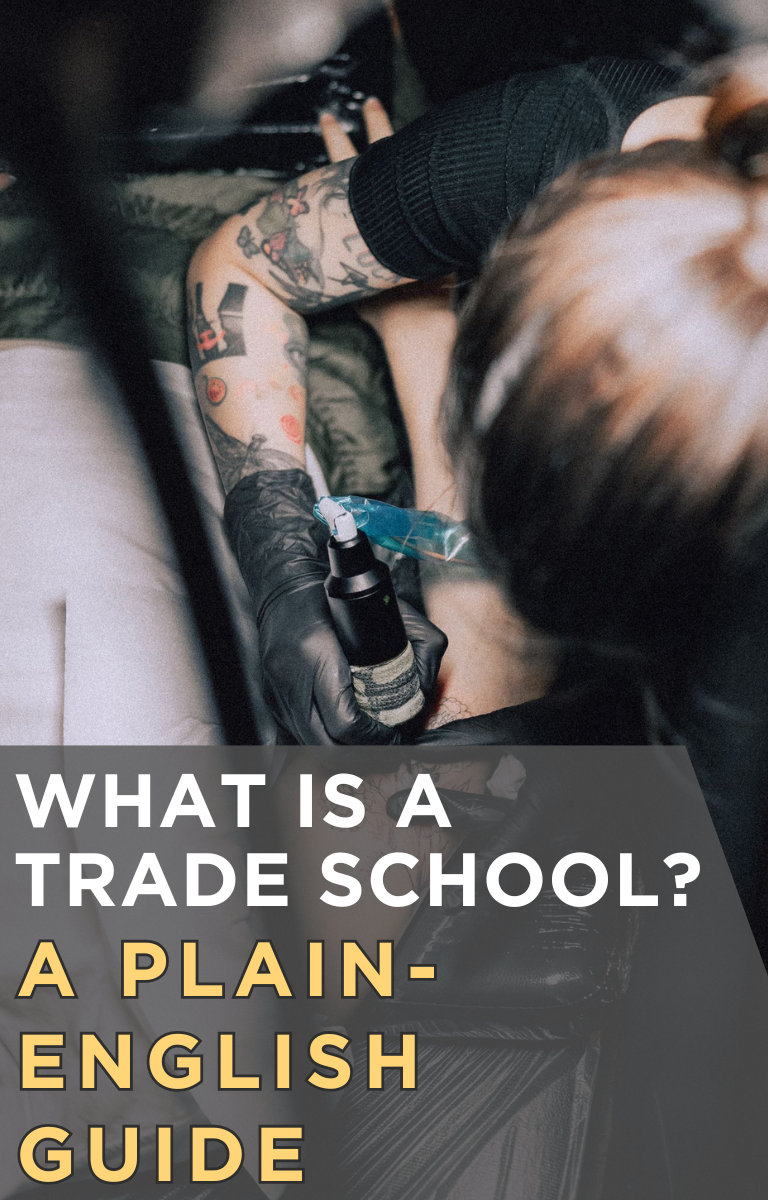
In This Article
- Key Takeaways
- What is a trade school?
- How is trade school different from college?
- Who should consider a trade school?
- How long does trade school take?
- Why are trade careers AI-proof?
- Is a tattoo apprenticeship like a trade school?
- How do you start with Ink Different?
- What is Master Mentorship?
- Making tattoo training accessible for everyone
- Ready to Take the First Step?
- FAQ
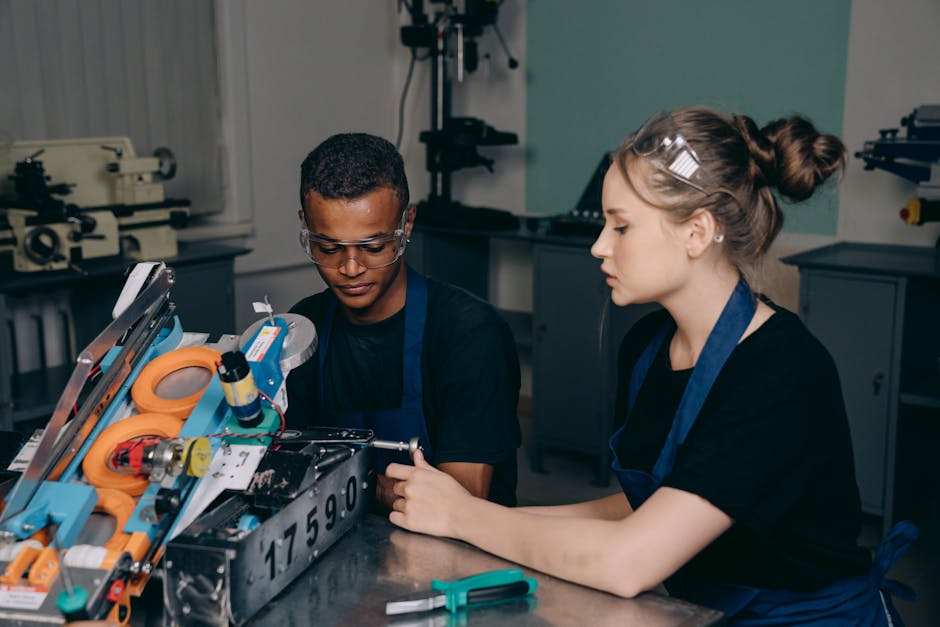
A trade school is a school that trains you for one specific skilled job through hands-on practice. Think electrician, welder, HVAC technician or cosmetologist. Instead of years of general classes, you learn the exact skills the job requires and head straight into the workforce.
Trade schools are also called vocational, technical or career schools. And they’re having a moment. In spring 2025, public two-year colleges with a heavy vocational focus grew enrollment by 11.7%, or about 91,000 students, for the third straight year of strong growth, according to the National Student Clearinghouse Research Center. studentclearinghouse
This guide explains what a trade school is, how it compares to college, who it fits and how long it takes. We’ll also cover a skilled trade that works a little differently: tattooing, which is learned through a structured tattoo apprenticeship. At Ink Different Tattoos, we’ve spent 15 years training Tattoo Artists through that hands-on model.
Key Takeaways
- Definition: A trade school trains you for a specific skilled job through hands-on practice instead of general academics.
- Speed: Most trade school paths take a few months to two years, far shorter than a four-year degree.
- Cost: Trade training usually costs less than a bachelor’s degree, especially once you count the extra years of tuition and living costs.
- Who it fits: Career changers, hands-on learners and creative people who’d rather build a skill than sit through lectures.
- The tattoo connection: Tattooing is a skilled trade, but most Tattoo Artists learn it through a structured tattoo apprenticeship like Ink Different’s Traditional Tattoo Apprenticeship.
What is a trade school?
A trade school is a focused training school that teaches the practical skills of one profession, so you can start working in that field quickly. Common trades include electrical work, welding, plumbing, HVAC, auto repair, cosmetology and culinary arts.
The big difference is focus. At a four-year college, your first two years usually go to general requirements. At a trade school, you start on your trade right away, often learning from people who’ve done the job for years.
Federal Student Aid describes career schools as places that typically offer programs taking two years or less, combining formal classes with hands-on experience tied to a specific career. That’s the heart of the trade model: real skill over abstract theory.

How is trade school different from college?
Trade school is faster, usually more affordable and focused on a single career. College spreads your time across general education before you dig into your chosen field.
College is the right call for many careers, like medicine, law or engineering. But for practical, hands-on people, it can feel like paying a lot to postpone the work you actually want to do.
Here’s how the two compare:
- Time: Trade school paths usually run a few months to two years, compared with four or more years for a bachelor’s degree.
- Cost: The College Board reports that average published tuition and fees for in-state students at public four-year colleges reached $11,950 in 2025-26. That’s per year, before housing, food and books. collegeboard
- Focus: Nearly every hour of trade training goes toward the skill you’ll use on the job.
- Outcome: You finish ready to work in your field, not just holding a degree.
We dig deeper into this comparison in our guide on why tattoo apprenticeships are gaining ground as a solid alternative to college.
Who should consider a trade school?
Trade school fits anyone who learns best by doing, wants a career change without years of debt, or wants work that feels hands-on and meaningful.
You don’t need straight A’s or a background in art or engineering. You need curiosity, consistency and a willingness to show up and improve.
Trade school tends to fit three kinds of people especially well:
- The career changer: You’re in a job with no room to grow and want a skill that’s yours.
- The creative: You want to make things with your hands, not just manage spreadsheets.
- The young adult: You’re weighing a four-year degree against a faster, more focused path.
If you’re changing careers, read why a tattoo apprenticeship is perfect for career changers starting over.
How long does trade school take?
Most trade school paths take anywhere from a few months to two years, depending on the trade and how intensive the training is.
A basic certificate might take a single semester. A licensed trade often takes one to two years of classroom learning plus hands-on practice. Some trades continue with on-the-job apprenticeships after school.
Hands-on crafts that involve skin, safety and client care usually sit at the longer end, and for good reason. It takes time to become genuinely skilled, not just technically finished.
Pro Tip: Length isn’t the problem. Training that’s too short to make you skilled is. Before you enroll anywhere, ask exactly what each stage teaches you and what you’ll be able to do at the end.
Why are trade careers AI-proof?
Many trade careers resist automation because they depend on physical skill, human judgment and being there in person. Software and robots struggle to replicate that combination.
As more office tasks get automated, skilled hands are becoming more valuable. A machine can’t read a client’s nerves, adjust a design on the spot or build the trust it takes to put permanent art on someone’s body.
Tattooing is one of the clearest examples. We wrote a full piece on why Tattoo Artists are still essential as automation spreads. The craft lives in the connection between the Tattoo Artist and the person in the chair.

Is a tattoo apprenticeship like a trade school?
Yes. A tattoo apprenticeship follows the same trade model: you learn through hands-on practice under experienced Mentors until you’re ready for a licensed, working career.
Tattooing is a skilled trade, but in most places you won’t find it in a typical trade school catalog. Most Tattoo Artists learn through a tattoo apprenticeship inside a working tattoo studio. That’s the classic apprentice-to-professional model trades have used for centuries.
A few states do run tattoo training through licensed schools. Oregon, for example, lists graduating from an Oregon licensed tattoo career school as a main pathway, according to the Oregon Health Licensing Office. Elsewhere, the structured tattoo apprenticeship is the standard route.
At Ink Different Tattoos, our Traditional Tattoo Apprenticeship runs 18 to 24 months across four phases. It treats you as a professional in training, with hands-on work from the start.
How do you start a tattoo apprenticeship with Ink Different?
You start by applying, getting matched with a Mentor and moving through four structured phases. Those phases take you from foundations to supervised work on real clients in a tattoo studio.
Here’s how the path works:
- Step 1: Apply and connect. Fill out our quick questionnaire so we can understand your goals and tell you if it’s the right fit.
- Step 2: Build your foundation. Learn drawing fundamentals, machine handling and safety, including practices aligned with the OSHA Bloodborne Pathogens Standard.
- Step 3: Practice and progress. Move into supervised practice, refining linework and technique with your Mentor watching closely.
- Step 4: Tattoo live clients. Work on real clients under direct supervision and prepare for licensing in your state.
Tools matter in any trade, so get familiar with these tools every beginner Tattoo Artist should know. When you’re ready to work professionally, we help you through licensing. Depending on where you’ll work, start with how to get your tattoo license in Texas, the tattoo license requirements in California or how long it takes to get a tattoo license in Colorado.
What makes us different: in-person mentorship, award-winning Master Mentors and our “Good Humans” culture, a family-like community that has your back from day one.
What does a career built on real skill look like?
Our Traditional Tattoo Apprenticeship gives you job-ready skills, licensing support and a guaranteed job offer at one of Ink Different’s own tattoo studios.
You finish with the technical skill, safety knowledge and professional habits to build an AI-proof career. Your confidence comes from competence, and competence is what we train. Interest-free payment plans also help make training more accessible.
What is Master Mentorship?
Master Mentorship is Ink Different’s intensive one-year, in-person training for beginners and experienced Tattoo Artists. It’s built for mastering a specific style, accelerating your career or opening your own tattoo studio.
You’ll train with celebrity and award-winning Master Mentors, including Al Fliction, Liz Cook, Kyle Dunbar, Boneface, Jordi Pla and Marcel Oliveira. If the Traditional Tattoo Apprenticeship builds your foundation, Master Mentorship takes your skills and business further.
How does Ink Different make tattoo training accessible for everyone?
Ink Different offers the Traditional Tattoo Apprenticeship at 60+ tattoo studios nationwide, so you can train closer to home.
We also offer Spanish-speaking locations in Denver, Orange County, NYC, Miami, San Antonio and San Diego. Each Mentor takes just two tattoo apprentices per tattoo studio, so seats fill up quickly.
Ready to Take the First Step?
Now you know what a trade school is and why a hands-on, skill-first path can lead to a real career faster than a traditional degree. If the trade that pulls at you is tattooing, a structured tattoo apprenticeship is how you learn it.
Ready to become a Tattoo Artist? Apply now to Ink Different’s Traditional Tattoo Apprenticeship and start building an AI-proof career, with licensing support along the way.
Frequently Asked Questions
What is a trade school in simple terms?
A trade school is a school that trains you for one specific skilled job, like welding, HVAC or cosmetology, through hands-on practice. The goal is to get you working in that field quickly.
What’s the difference between a trade school and a vocational school?
Usually nothing. Trade school, vocational school, technical school and career school are different names for the same type of hands-on, career-focused training.
Is a tattoo apprenticeship considered a trade school path?
It follows the same trade model. You learn by doing under experienced Mentors and build real skill toward a licensed career. Most Tattoo Artists train through a tattoo apprenticeship rather than a traditional trade school.
How long does it take to become a Tattoo Artist through Ink Different?
Ink Different’s Traditional Tattoo Apprenticeship takes 18 to 24 months across four structured phases. You move from foundations to supervised work on real clients.
Do I need art experience to start a tattoo apprenticeship?
No. Our Traditional Tattoo Apprenticeship is built for beginners. It teaches drawing fundamentals, machine handling and safety from day one.
What makes Ink Different different from other options?
Ink Different offers in-person mentorship, award-winning Master Mentors, 15 years of experience, a “Good Humans” community, Spanish-speaking locations, interest-free payment plans and a guaranteed job offer at one of its own tattoo studios.