
Tattoo Artist Chairs and Stools: Setting Up an Ergonomic Station
November 24, 2026
In This Article
- Key Takeaways
- What Are Tattoo Needles?
- How Are Tattoo Needles Grouped and Coded?
- What Are Liner Needles Used For?
- What Are Shader Needles Used For?
- What Are Magnum Needles Used For?
- How Do You Choose the Right Needle?
- Why Does Needle Safety Matter So Much?
- Get Serious About Needle Mastery With Ink Different
- FAQ
Tattoo needles come in three main families. Liners are tight round groupings for outlines, shaders are looser round groupings for soft fills and gradients and magnums are flat, wide rows for packing color and large black areas. Each needle’s code tells you its diameter, how many points it has and its configuration, so a 1205RL is a 0.35 mm, 5-point round liner. If you’ve searched for “tattoo gun needles,” this is the same topic, though professionals call the device a tattoo machine.
Needles are where your design meets skin, so safety comes first. Under the OSHA Bloodborne Pathogens Standard, contaminated sharps must be discarded in closable, puncture-resistant, leakproof containers. Below, we break down each needle type, how to read needle codes and how to choose the right needle for the job.
Key Takeaways
- Three main types: Liners draw outlines, shaders create soft gradients and magnums pack color and large black areas.
- Reading codes: Labels list diameter, needle count and configuration, like 1203RL (0.35 mm, 3-point round liner).
- Configurations: RL, RS, M1, M2 and RM (curved magnum) each create a different effect on skin.
- Safety first: Needles are sterile, single-use and disposed of in sharps containers.
- Skill takes practice: Needle choice becomes instinct through supervised, hands-on work.
What Are Tattoo Needles?
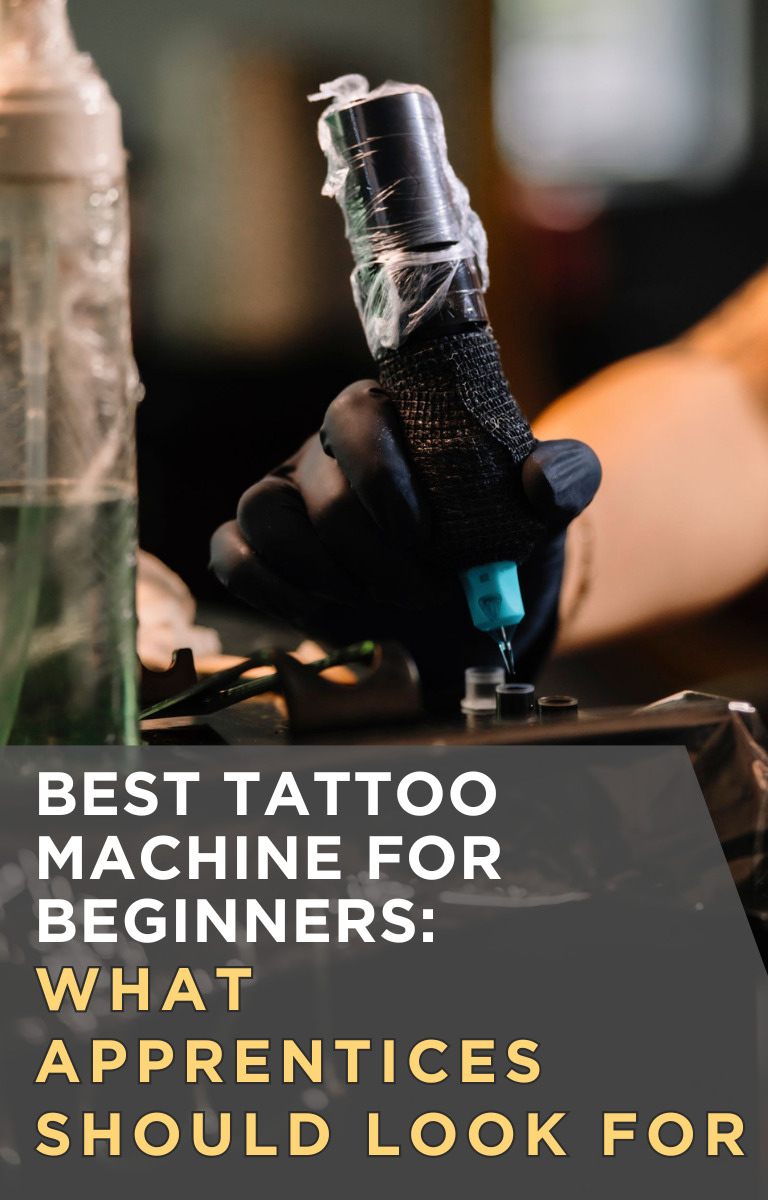
Tattoo needles are groups of fine stainless steel points soldered together and mounted on a bar or inside a cartridge. They carry ink into the skin in a controlled pattern.
Think of your needles like a painter’s brushes. You wouldn’t paint a wide sky with a detail brush, and you wouldn’t sign your name with a roller. Each grouping gives you a different stroke on skin.
Many Tattoo Artists now use needle cartridges that click in and out of pen and rotary machines, which makes swapping fast and clean. Others still use traditional needle bars with tubes, especially on coil machines.

How Are Tattoo Needles Grouped and Coded?
A needle code tells you three things, read left to right: the diameter of each point, how many points are in the grouping and the configuration.
- Diameter: The first two digits show the gauge. #08 is about 0.25 mm, #10 is about 0.30 mm and #12 is about 0.35 mm, the most common standard size.
- Count: The next digits show how many needles are grouped, such as 03, 07 or 15.
- Configuration: The letters name the type: RL (round liner), RS (round shader), M1 (magnum), M2 (stacked magnum) and RM (curved or round magnum).
So a 1207RS is a 0.35 mm, 7-point round shader. Once you know the pattern, you can read any label in seconds. You’ll also hear terms like “bugpin” (an extra-thin needle) and “taper” (how gradually each point narrows), which affect how ink flows. These come up often in a Tattoo Artist’s everyday vocabulary.
What Are Liner Needles Used For?
Liner needles are tightly grouped round configurations for clean outlines and fine detail. They give a tattoo its structure.
Because the points sit close together, ink goes in as a single sharp line. Smaller groupings, like a 1RL or 3RL, handle fine linework and delicate lettering. Larger groupings, like a 9RL or 14RL, lay bold outlines in one pass.
Bold, confident outlines are the foundation of styles like old school tattooing and American Traditional. Ink Different Master Mentor James Vaughn is known for exactly that, with solid black lines and bold color in American Traditional work with Japanese influence.
Pro Tip: Shaky lines usually aren’t the needle’s fault. Machine speed, hand stability and skin stretch play a big role, and that’s exactly what a Mentor helps you fix.
What Are Shader Needles Used For?
Shader needles use a looser round grouping to blend ink into soft gradients, small fills and smooth light-to-dark transitions.
Round shaders sit slightly farther apart than liners, so ink spreads and blends instead of forming a hard line. They’re useful for small fills, soft black and gray work and adding depth to detailed areas.
Shading is where many beginners realize how much pressure, angle and ink dilution affect the result. Getting those wrong can lead to patchy healing or blowouts, which is why learning how to avoid needle cross-lines and blowouts is part of building clean technique.
What Are Magnum Needles Used For?
Magnum needles arrange points in flat, wide rows to pack color and fill large black areas quickly and evenly.
- M1 (standard magnum): A single flat row for general shading and color.
- M2 (stacked magnum): Two tightly stacked rows for dense, saturated fills.
- RM (curved magnum): A curved edge that follows the skin and blends softly, reducing harsh row lines.
Magnums are essential for larger pieces and smooth, blended color, from realism to bright new school designs with heavy color packing.

How Do You Choose the Right Needle?
Match the needle type to the job, whether that’s lines, shading or fill, then choose the size and count based on the design’s detail and scale.
- Read the design. Identify where you need crisp lines, soft shading and solid fill.
- Choose your liner. Use a small round liner for fine detail and a larger one for bold outlines.
- Choose your shader. Use a round shader for small blends and detailed gradients.
- Choose your magnum. Use a magnum for color packing and large black areas.
- Match diameter to the detail. Finer diameters suit detail work, and larger ones suit bold coverage.
- Test on practice skin. Check your machine setup and hand speed before working on a client.
Charts help, but needle choice becomes instinct through repetition with feedback. Ink Different apprentice David Johnston describes working on depth, stability and one line at a time during Phase 2 of his training, and skipping that kind of patient practice is one of the most common apprentice mistakes.
Why Does Needle Safety Matter So Much?
Tattooing breaks the skin, so sterile, single-use needles and strict cross-contamination controls are essential for client safety and legal compliance.
Professional tattoo studios use sterile, single-use needles, never reuse them and dispose of them in sharps containers, following the OSHA Bloodborne Pathogens Standard. Barrier protection on machines and cords, careful station setup and safe disposal are all part of everyday practice.
Ink quality goes hand in hand with needle safety. The CDC has documented tattoo infections linked to contaminated ink, including ink diluted with nonsterile water. The FDA has also issued alerts about contaminated tattoo inks.
Licensing and hygiene rules vary by state, as this state-by-state tattoo licensing map shows, so it’s important to know the requirements where you plan to work.
Get Serious About Needle Mastery With Ink Different Tattoos
You can learn the names from a chart, but you learn the feel of each needle by tattooing under an experienced Mentor’s eye. Ink Different’s Traditional Tattoo Apprenticeship is built around that kind of hands-on learning.
For 15 years, Ink Different has trained aspiring Tattoo Artists as a college alternative.
What You Can Expect From Our Traditional Tattoo Apprenticeship
The Traditional Tattoo Apprenticeship runs 18 to 24 months across four phases, with in-person training at one of 60+ tattoo studios nationwide. No prior art experience is required.
- Phase 1, Art and Design Principles: Drawing, shading, digital design and building a portfolio.
- Phase 2, Machine Mastery and Practice Tattooing: Hand-control exercises, machine operation, lining, shading and color packing, where needle choice comes into play.
- Phase 3, Supervised Tattoos: Tattooing real skin under a Mentor’s direct supervision.
- Phase 4, Junior Artist Externship: Building client relationships and refining your skills while you start earning.
A Career That Comes With Confidence
You’ll finish with job-ready skills, licensing support and a guaranteed job offer at one of Ink Different’s own tattoo studios. Interest-free payment plans help make training more accessible, and our “Good Humans” culture means you join a supportive, family-like community.
Mentorship That Pushes Your Brand and Skills Further
The one-year, in-person Master Mentorship lets you train with celebrity and award-winning Master Mentors like James Vaughn, with a focus on mastering a specific style and building toward owning a tattoo studio.
Making Tattoo Training Accessible for Everyone
We offer Spanish-speaking locations in Denver, Orange County, NYC, Miami, San Antonio and San Diego.

Ready to Become a Tattoo Artist?
Liners build structure, shaders add depth and magnums pack color and cover large areas. Knowing them is a start. Using them with control takes supervised practice. Each Mentor takes just two tattoo apprentices per tattoo studio, so seats fill up quickly.
It’s never too late to start, either. Army paratrooper Daniel Mercedes came back to tattooing seven years later to become a Tattoo Artist.
Ready to become a Tattoo Artist? Apply now to Ink Different’s Traditional Tattoo Apprenticeship and start building a career with licensing support along the way.
Frequently Asked Questions
What is the difference between a liner and a shader needle?
Liner needles are grouped tightly for crisp outlines. Shader needles sit slightly looser, so ink blends into soft gradients and fills.
When should I use a magnum needle?
For packing color and filling large black areas. Its flat, wide rows cover more skin per pass than round groupings.
How do I read a tattoo needle code?
Read it left to right: diameter, needle count, then configuration. A 1205RL is a 0.35 mm, 5-point round liner.
What does RM mean on a tattoo needle?
RM stands for a curved or round magnum, which has a curved edge that blends softly and follows the skin.
Are tattoo needles reused between clients?
Never. Needles are sterile and single-use, and they’re disposed of in sharps containers, following OSHA’s Bloodborne Pathogens Standard.
Are “tattoo gun needles” different from tattoo needles?
No. They’re the same thing. Professionals call the device a tattoo machine, not a gun.
Sources (all checked November 20, 2026)