
Tattoo Shop Tango: Why Jordi Pla Gave Up an Aerospace Scholarship to Become a Tattoo Artist
November 9, 2026
Start Your Tattoo Career Before 2027: Why November Is the Perfect Time
November 10, 2026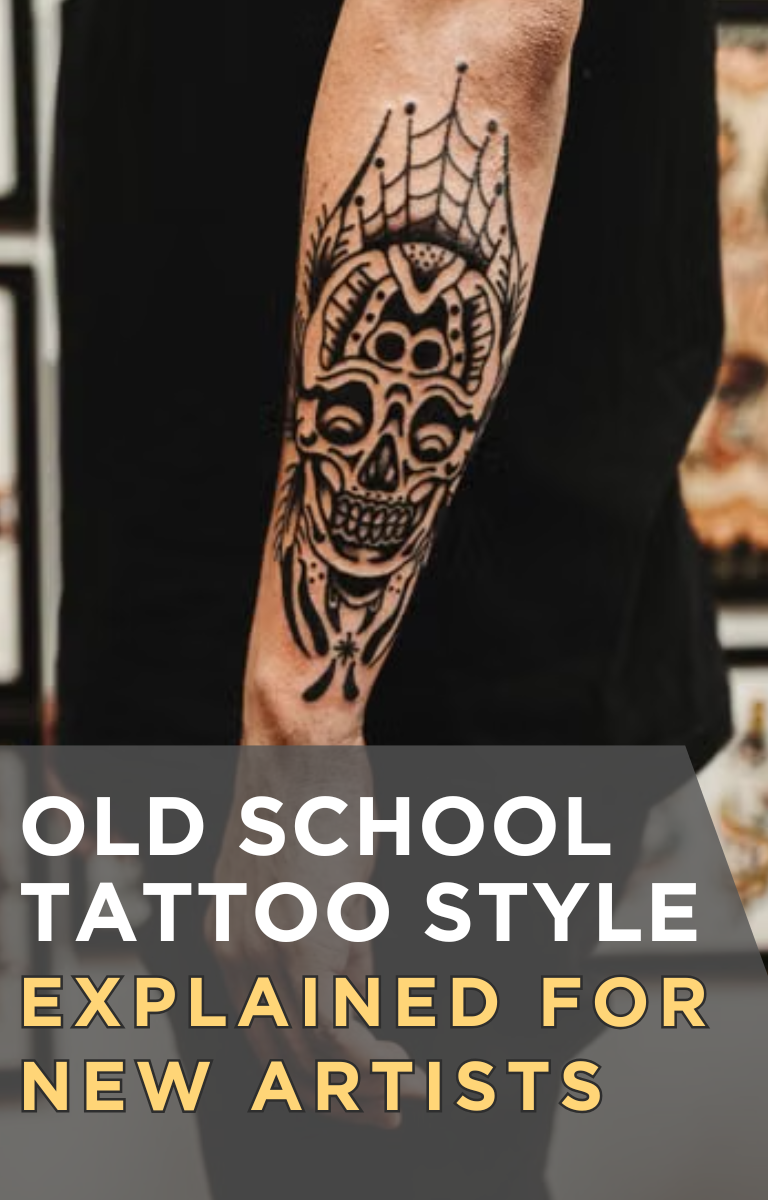
In This Article
- Key Takeaways
- What Is Old School Tattoo Style?
- Where Did American Traditional Tattooing Come From?
- What Makes a Tattoo “Old School”?
- What Are the Classic Old School Tattoo Designs?
- Why Should New Tattoo Artists Learn This Style First?
- How Do You Learn to Tattoo Old School Style?
- How Ink Different Trains You in the Classics
- Ready to Build Your Foundation?
- FAQ
Old school tattoo style, also called American Traditional, is defined by bold black outlines, a limited palette of saturated colors and iconic imagery like swallows, anchors, roses and daggers. It’s built to read clearly and hold up for decades. For new Tattoo Artists, it’s also the best place to start, because it trains the core skills every other style depends on.
This guide is written for aspiring and new Tattoo Artists. We’ll cover where the style came from, what makes a tattoo “old school,” the classic designs you need to know and how to learn it properly. At Ink Different Tattoos, we’ve spent 15 years teaching tattoo apprentices to master these fundamentals before branching out.
Key Takeaways
- Definition: Old school (American Traditional) tattooing uses bold outlines, limited saturated color and iconic imagery built to last.
- Origin: The style grew out of sailor and military tattooing and was refined by Tattoo Artists like Norman “Sailor Jerry” Collins.
- Why learn it first: It teaches line weight, color packing and composition, the foundation for every style.
- How to start: A structured tattoo apprenticeship with an in-person Mentor is the most reliable path.
- Career outlook: Tattooing is a hands-on craft with real income potential and steady client demand.
What Is Old School Tattoo Style?
Old school tattoo style, also called American Traditional, is built on thick black outlines, a tight palette of saturated colors and bold imagery designed to stay readable and striking for a lifetime.
Think of it as the foundation of Western tattooing. Newer styles chase photorealism or watercolor softness. Old school leans into clarity and permanence. The heavy lines and solid color aren’t just a look. They’re built to age well as skin changes over the years.
For new Tattoo Artists, this style is the alphabet before the poetry. You learn how ink behaves, how lines hold and how color saturates, skills you’ll use in any style you eventually specialize in.
Where Did American Traditional Tattooing Come From?
American Traditional tattooing grew out of sailor and military tattooing in American port cities. Tattoo Artists like Norman “Sailor Jerry” Collins refined the bold look and techniques still used today.
Sailors wore tattoos as badges of experience and symbols of safe passage. These weren’t random designs. They were a visual language tied to life at sea.
Sailor Jerry, born in 1911, settled in Hawaii and tattooed in Honolulu for decades, according to the Tattoo Archive. He reworked 1920s and 1930s designs with influences from Japanese artists, creating American Traditional designs with wider appeal.
He also pushed the craft forward technically. According to the profile of Sailor Jerry, he expanded the range of tattoo ink colors by developing his own pigments and created custom needle formations that put in pigment with less trauma to the skin. He was also one of the first Tattoo Artists to use single-use needles, and his tattoo studio was one of the first to sterilize equipment with an autoclave.
What Makes a Tattoo “Old School”?
A tattoo is old school when it has bold black outlines, a limited palette, heavy color saturation, simple shading and iconic, easy-to-read subject matter.
Once you know the markers, you’ll spot them instantly:
- Bold outlines: Thick, confident black lines that frame every element.
- Limited color: A small palette, traditionally red, yellow, green and black, packed in solid, saturated blocks.
- Simple shading: Minimal gradients, often black shading for depth, never photorealistic transitions.
- Iconic imagery: Recognizable symbols over intricate detail. Clarity beats clutter.
- Negative space: Open skin used on purpose for contrast and breathing room.
Pro Tip: If a design still reads clearly from across the room, it honors old school principles. That clarity is why traditional tattoos still look good decades later.
What Are the Classic Old School Tattoo Designs?
Classic old school designs include swallows, anchors, roses, daggers, hearts, panthers, pin-ups, eagles and nautical stars. Each carries traditional meaning rooted in sailor and military culture.
These motifs are a storytelling toolkit. As you learn them, you also learn the meanings clients connect with:
- Swallow: Loyalty, returning home and safe travels. In sailor lore, swallows marked long distances traveled at sea.
- Anchor: Stability, staying grounded and connection to home.
- Rose: Love and beauty, often paired with a dagger to suggest protection or heartbreak.
- Panther: Strength and fearlessness.
- Nautical star: Guidance and finding your way home.
- Eagle: Freedom, power and patriotism.
Drawing these teaches composition within tight limits, which sharpens every design skill you have. As you build your foundation, read up on the mistakes aspiring tattoo apprentices should avoid.

Why Should New Tattoo Artists Learn This Style First?
Old school’s focus on clean lines, solid color packing and strong composition builds the technical foundation every other tattoo style depends on.
You can’t run before you walk. Bold outlines teach needle control and hand stability. Packing solid color teaches saturation, speed and consistency. Those fundamentals carry into realism, blackwork, geometric work and everything else.
There’s a practical side too. Traditional work tends to heal predictably and hold up well, which builds trust with your early clients. Good aftercare guidance, like the American Academy of Dermatology’s tips for caring for tattooed skin, helps that bold work stay crisp.
Traditional work also has a loyal following, so mastering it gives you a style many clients actively seek out.
How Do You Learn to Tattoo Old School Style?
You learn old school tattooing in a structured tattoo apprenticeship: studying flash, drilling linework, practicing color packing and then tattooing under the direct supervision of an experienced Mentor.
There are no shortcuts. Here’s the step-by-step path:
- Step 1: Study the classics. Learn traditional flash and the history behind each motif. Understand why each design works.
- Step 2: Draw every day. Redraw flash by hand to build line weight, proportion and composition into muscle memory.
- Step 3: Learn safety and sanitation. Master the OSHA Bloodborne Pathogens Standard before you touch skin.
- Step 4: Practice on synthetic skin. Drill bold outlines and solid color fills until they’re second nature. Start with these tools every beginner Tattoo Artist should know.
- Step 5: Tattoo under a Mentor. Move to client work with an experienced Tattoo Artist guiding you.
- Step 6: Get licensed. Meet your state’s requirements to work legally. See how to get your tattoo license in Texas, tattoo license requirements in California or how long it takes to get a tattoo license in Colorado.
Learning alone from videos is where many aspiring Tattoo Artists stall. A Mentor who watches your hand, corrects your technique in real time and helps you solve problems mid-session is hard to replace.
How Ink Different Trains You in the Classics
Ink Different’s Traditional Tattoo Apprenticeship teaches fundamentals first, pairing you with an experienced Mentor over 18 to 24 months and four phases.
For 15 years, our approach has been simple: real skills over shortcuts. The Traditional Tattoo Apprenticeship is a genuine college alternative built for people who want to earn a living doing work that fulfills them.
What You Can Expect from Our Traditional Tattoo Apprenticeship
It meets you where you are, even if you’ve never held a tattoo machine:
- Beginner-friendly: No prior art experience is required. We teach drawing and linework basics alongside tattoo theory.
- In-person training: Learn with a Mentor at one of 60+ tattoo studios nationwide.
- Personalized mentorship: Real-time guidance from Mentors who’ve built careers in this craft.
- Licensing support: We help you meet your state’s requirements and build job-ready skills.
- Interest-free payment plans: Flexible payments make training more accessible.
A Career That Comes With Confidence
When you finish, you’ll know how to run a session, keep a client safe, read their skin and comfort level and build a body of work that gets you booked. You’ll also receive a guaranteed job offer at one of Ink Different’s own tattoo studios.
The income potential is real. According to ZipRecruiter, the average Tattoo Artist in the United States earns $106,858 a year as of November 2026.
Mentorship That Pushes Your Brand and Skills Further
Ready to go deeper? Our one-year, in-person Master Mentorship puts you alongside celebrity and award-winning Master Mentors, including Al Fliction, Liz Cook, Kyle Dunbar, Boneface, Jordi Pla and Marcel Oliveira. It’s built for mastering a specific style, growing your career and learning the business side of owning a tattoo studio.
Making Tattoo Training Accessible for Everyone
We offer Spanish-speaking locations in Denver, Orange County, NYC, Miami, San Antonio and San Diego, so language never stands in your way. Each Mentor takes just two tattoo apprentices per tattoo studio, so seats fill up quickly.

Ready to Build Your Foundation?
The classics aren’t just a style. They’re the roots of a career where your hand and your judgment matter. Every Tattoo Artist you admire started by learning these fundamentals.
Ready to become a Tattoo Artist? Apply now to Ink Different’s Traditional Tattoo Apprenticeship and start building an AI-proof career, with licensing support along the way.
Frequently Asked Questions
What is old school tattoo style in simple terms?
Old school, or American Traditional, is a tattoo style with bold black outlines, a limited palette of saturated colors and iconic imagery like anchors, swallows and roses, built to stay clear for decades.
Is old school the same as American Traditional?
Mostly, yes. The terms are often used interchangeably for bold, classic Western tattooing with heavy outlines and a limited palette.
Who is Sailor Jerry?
Norman “Sailor Jerry” Collins was a Honolulu-based Tattoo Artist who shaped American Traditional tattooing. He developed his own pigments and was among the first to use single-use needles and autoclave sterilization.
Do I need art experience to learn old school tattooing?
No. Ink Different’s Traditional Tattoo Apprenticeship is built for beginners. It teaches drawing, linework and color packing from day one.
How long does it take to become a Tattoo Artist?
Most tattoo apprenticeships take one to three years. Ink Different’s Traditional Tattoo Apprenticeship takes 18 to 24 months across four phases.
Why learn old school style before other styles?
Old school teaches line weight, color saturation, composition and needle control. Those foundations make realism, blackwork and every other style easier to learn.