Highest Paying Jobs Without a Degree
November 9, 2026
Trade School Careers List: Skilled Trades and What They Pay
November 9, 2026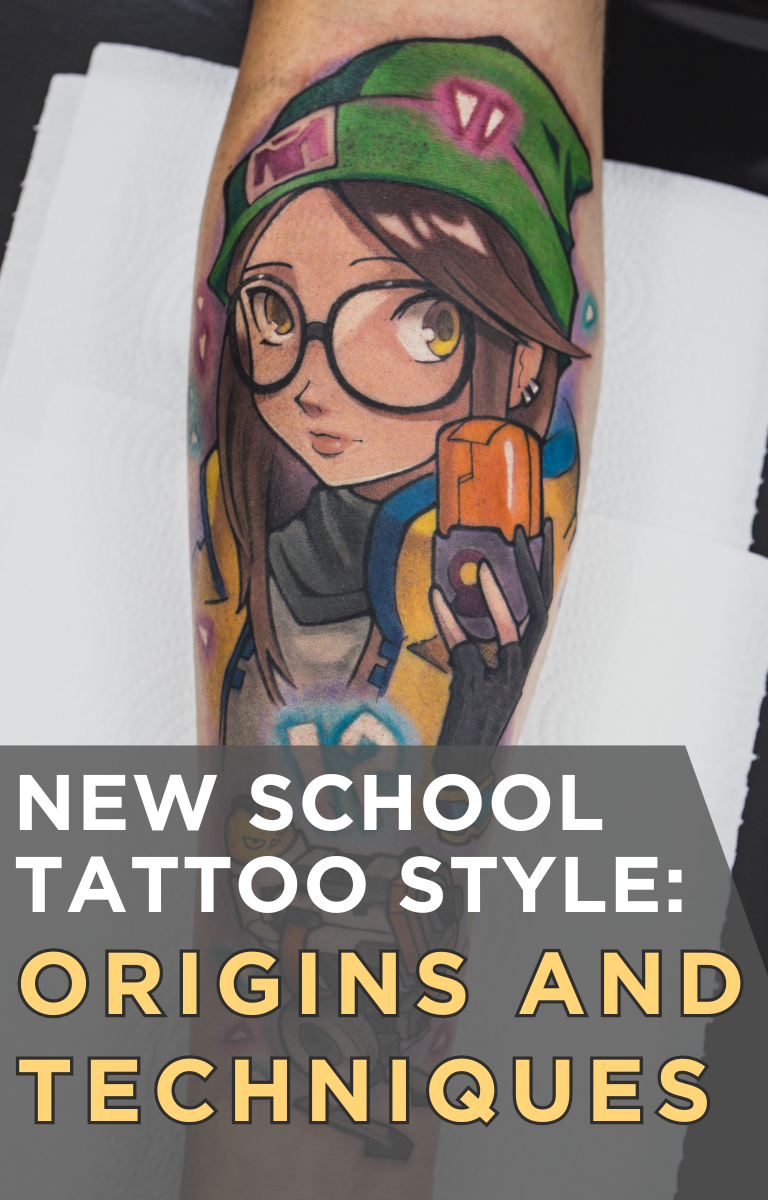
In This Article
- Key Takeaways
- What Is New School Tattoo Style?
- Where Did New School Tattooing Come From?
- What Makes New School Tattoos Instantly Recognizable?
- What Techniques Define New School Tattooing?
- How Can You Start Learning New School Tattooing?
- Why Does New School Style Demand Real Mentorship?
- Get Serious About New School Tattooing With Become A Tattoo Artist
- Ready to Become a Tattoo Artist?
- Frequently Asked Questions
New School tattoo style is a bold, cartoon-inspired genre built on heavy outlines, saturated color and exaggerated subjects. For Tattoo Artists, it’s one of the most technically demanding color styles out there. Every line, blend and highlight has to be clean, because the style exposes every mistake.
This guide is written for aspiring and working Tattoo Artists, not clients. We’ll cover where New School came from, the pioneers who shaped it, what makes it recognizable and the core techniques you need to tattoo it well. At Ink Different Tattoos, we’ve spent 15 years training Tattoo Artists, and New School is a style that rewards solid fundamentals more than almost any other.
Key Takeaways
- Definition: New School is a bold, cartoon-inspired tattoo style with thick outlines, saturated color and exaggerated subjects.
- Origins: Its roots trace back as early as the 1970s, but it took off in the late 1980s and 1990s, popularized early on by Marcus Pacheco in the San Francisco Bay Area.
- Core techniques: Heavy black linework, solid color packing, smooth blending and well-placed highlights that create a 3D, “bubbled” look.
- Learning path: Master fundamentals through a structured tattoo apprenticeship before tackling advanced New School color work.
- Where to train: Ink Different’s Traditional Tattoo Apprenticeship runs 18 to 24 months with in-person mentorship and licensing support.
What Is New School Tattoo Style?
New School tattoo style is a high-energy genre defined by exaggerated proportions, cartoon characters, graffiti influence and intensely saturated color. It takes everyday subjects and pushes them further: bigger eyes, wilder angles, brighter palettes.
Where American Traditional plays by strict rules, New School bends them on purpose. A koi fish becomes a grinning cartoon. A rose grows teeth. The goal is personality and motion.
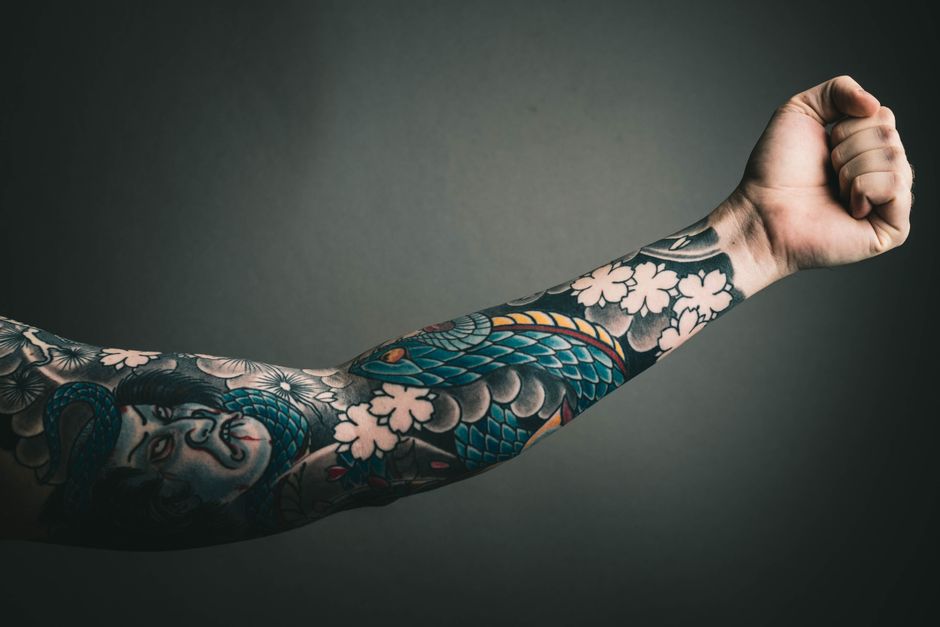
According to the overview of the style, New School borrows from many tattooing traditions, including irezumi, old school and folk art. If you grew up on comic books, animation, skate graphics or street art, you already know its visual language. That gives you a head start as a Tattoo Artist.
Where Did New School Tattooing Come From?
New School tattooing has roots going back to the 1970s, but most accounts place its real emergence in the late 1980s and 1990s in the United States. Tattoo Artists wanted more freedom, more color and more attitude than strict traditional rules allowed.
Some sources trace the style as early as the 1970s, with influences from American old school tattooing, while other accounts place its emergence in the late 1980s and 1990s. One name comes up again and again. Inked Magazine describes Marcus Pacheco of the San Francisco Bay Area as one of the earliest pioneers, helping solidify the style’s bold outlines, colorful palettes and exaggerated subject matter.
From there, the style came into its own during the 1990s and became one of the decade’s biggest tattoo trends. Interestingly, it wasn’t only Tattoo Artists pushing the change. Tattoodo notes that some tattoo historians see the shift as driven partly by changing client tastes, not just artistic evolution.
The style kept growing through new generations of Tattoo Artists. Joe Capobianco is known for revolutionizing pin-ups within New School, alongside prominent names like Jime Litwalker, Jesse Smith and Cleen Rock One. Studying their work is one of the best ways to see how far the style can go.
Quick Tip: Study Old School before you chase New School. You can’t break the rules with confidence until you understand why they exist. Classic Old School and the work of artists like Sailor Jerry laid the foundation New School later bent.
What Makes New School Tattoos Instantly Recognizable?
New School tattoos stand out for their thick outlines, saturated color, cartoon exaggeration and rounded, “bubbled” depth. Once you know the signs, you can spot one from across the room.
Here are the traits that set a New School piece apart:
- Bold outlines: Heavy black contours frame the design and separate it from the skin.
- Saturated color: Loud, blended palettes that skip subtlety on purpose.
- Exaggerated form: Oversized features, warped perspective and playful distortion.
- Depth and dimension: Smooth gradients and highlights that make subjects look rounded and raised.
- Narrative humor: Characters with attitude, often funny, dark or surreal.
The trap for beginners is thinking bright color does all the work. It doesn’t. A sloppy New School tattoo falls apart fast, because shaky lines and muddy blends have nowhere to hide.
What Techniques Define New School Tattooing?
New School tattooing relies on four core skills: confident heavy linework, even color packing, smooth blending and smart highlight placement. Master those and the style opens up.
Here’s what each one demands from your hands.
How Do You Execute Clean Linework?
Your outlines carry the whole composition. In New School, they’re thicker and bolder than in most styles, so there’s no room for shaky lines. Many Tattoo Artists build these outlines with larger round liner groupings and a steady, consistent hand speed. Clean linework is the foundation everything else sits on.
What Is Color Packing in New School Tattooing?
Saturated color needs to go in solid and even, with no patchy spots or blowouts. Many Tattoo Artists pack color with magnum groupings, working in tight overlapping passes. It takes machine control, correct needle depth and an understanding of how different pigments heal over time.
Why Are Blending and Gradients Critical?
That 3D look comes from smooth transitions between tones. Pushing one color into another without creating mud takes hundreds of repetitions. Highlights, often added last, sell the final sense of shine and dimension.
How Do You Stay Safe While Doing Heavy Color Work?
Heavy color work means more trauma to the skin, so technique and hygiene matter enormously. Follow the OSHA Bloodborne Pathogens Standard and give clients solid aftercare guidance based on the American Academy of Dermatology’s tips for caring for tattooed skin. Doing both protects your clients and your reputation.

How Can You Start Learning New School Tattooing?
You learn New School by mastering fundamentals first through structured training. Then you layer on advanced color and composition skills under a Mentor who can correct your technique in real time. There are no shortcuts, but there is a clear path.
Here’s the realistic road from “I love this style” to “I tattoo this style for a living”:
- Build your drawing foundation. Sketch cartoons, study proportion and exaggeration, and fill sketchbooks before you touch a machine.
- Learn machine fundamentals. Practice line weight, needle depth and control on fake skin until the basics feel automatic. Start with these tools every beginner Tattoo Artist should know.
- Master color theory. Understand how pigments blend, saturate and heal so bright palettes stay bright for years.
- Train under a Mentor. Get in-person feedback from an experienced Tattoo Artist who can correct your habits as they form.
- Develop your own voice. Once your technique is solid, push the exaggeration, humor and color that make your work yours.
- Earn your license and build your brand. Get job-ready, then grow your client roster and online presence.
Trying to self-teach this style from videos is one of the biggest mistakes aspiring tattoo apprentices should avoid. Once your skills are solid, these platforms to help new and aspiring Tattoo Artists build their brand will help your work find an audience.
Why Does New School Style Demand Real Mentorship?
New School demands in-person mentorship because heavy color and bold lines expose every technical flaw. Real-time feedback from an experienced Mentor catches bad habits before they end up permanent in a client’s skin.
In this style, the gap between amateur and professional is obvious. A rushed gradient turns muddy. A nervous line wobbles. Poorly packed color heals patchy. You need a Mentor beside you saying “slower, deeper, steadier” while it still matters.
There’s a bigger picture too. Tattooing is a career that can’t be automated away. Software can generate a flat image, but it can’t read living skin, adjust in the moment or collaborate with a person. We dig into that in our post on why Tattoo Artists are still essential.
Get Serious About New School Tattooing With Ink Different
Ink Different’s Traditional Tattoo Apprenticeship takes 18 to 24 months across four phases. It takes you from complete beginner to job-ready Tattoo Artist through in-person mentorship, hands-on practice and licensing support.
You don’t need prior art experience to start. The Traditional Tattoo Apprenticeship meets beginners where they are and builds skills step by step.
What You Can Expect From Our Traditional Tattoo Apprenticeship
- Four structured phases: A clear progression from fundamentals to live client work.
- In-person training: Learn with a Mentor at one of 60+ tattoo studios nationwide.
- Personalized, hands-on training: Real-time feedback from Mentors who’ve done the work.
- Beginner-friendly: No prior experience required.
- Interest-free payment plans: Flexible payments make training more accessible.
A Career That Comes With Confidence
You’ll finish with job-ready skills, licensing support and a guaranteed job offer at one of Ink Different’s own tattoo studios. Licensing rules vary by state, so we help you understand your local path.
Mentorship That Pushes Your Brand and Skills Further
Our Master Mentorship is a one-year, in-person training path for mastering a specific style. It’s built for beginners who want to specialize and experienced Tattoo Artists ready for a career leap. You’ll train alongside celebrity and award-winning Master Mentors, including Al Fliction, Liz Cook, Kyle Dunbar, Boneface, Jordi Pla and Marcel Oliveira.
Making Tattoo Training Accessible for Everyone
We offer Spanish-speaking locations in Denver, Orange County, NYC, Miami, San Antonio and San Diego, so language is never a barrier to your craft.
Good Humans Culture: When you join Ink Different, you join a family-like community that has your back. You never figure this out alone.
Ready to Become a Tattoo Artist?
If bold, colorful, cartoon-driven art is what you want to make, New School is a style worth chasing. But it’s built on fundamentals, and those come from structured, hands-on training. Each Mentor takes just two tattoo apprentices per tattoo studio, so seats fill up quickly.
Ready to become a Tattoo Artist? Apply now to Ink Different’s Traditional Tattoo Apprenticeship and start building an AI-proof career, with licensing support along the way.
Frequently Asked Questions
What is New School tattoo style?
New School is a bold, cartoon-inspired tattoo style with thick outlines, saturated color and exaggerated subjects. Its roots go back to the 1970s, and it took off in the United States in the late 1980s and 1990s.
Who started New School tattooing?
No single Tattoo Artist invented it, but Marcus Pacheco of the San Francisco Bay Area is widely credited as one of its earliest pioneers. Joe Capobianco, Jime Litwalker, Jesse Smith and Cleen Rock One helped push it further.
What needles are used for New School tattoos?
Many Tattoo Artists use larger round liners for the heavy outlines and magnum groupings for packing and blending color. Exact setups vary by Tattoo Artist and design.
Do I need art experience to learn New School tattooing?
No. Ink Different’s Traditional Tattoo Apprenticeship is built for beginners. It teaches drawing fundamentals, machine control and color theory from day one.
How long does it take to become a New School Tattoo Artist?
Ink Different’s Traditional Tattoo Apprenticeship takes 18 to 24 months across four phases. Mastering advanced New School color and blending keeps developing well beyond that foundation.
Where can I train in New School tattooing near me?
Ink Different offers the Traditional Tattoo Apprenticeship at 60+ tattoo studios nationwide, including Spanish-speaking locations in Denver, Orange County, NYC, Miami, San Antonio and San Diego.