How to Start Tattooing the Right Way
November 23, 2026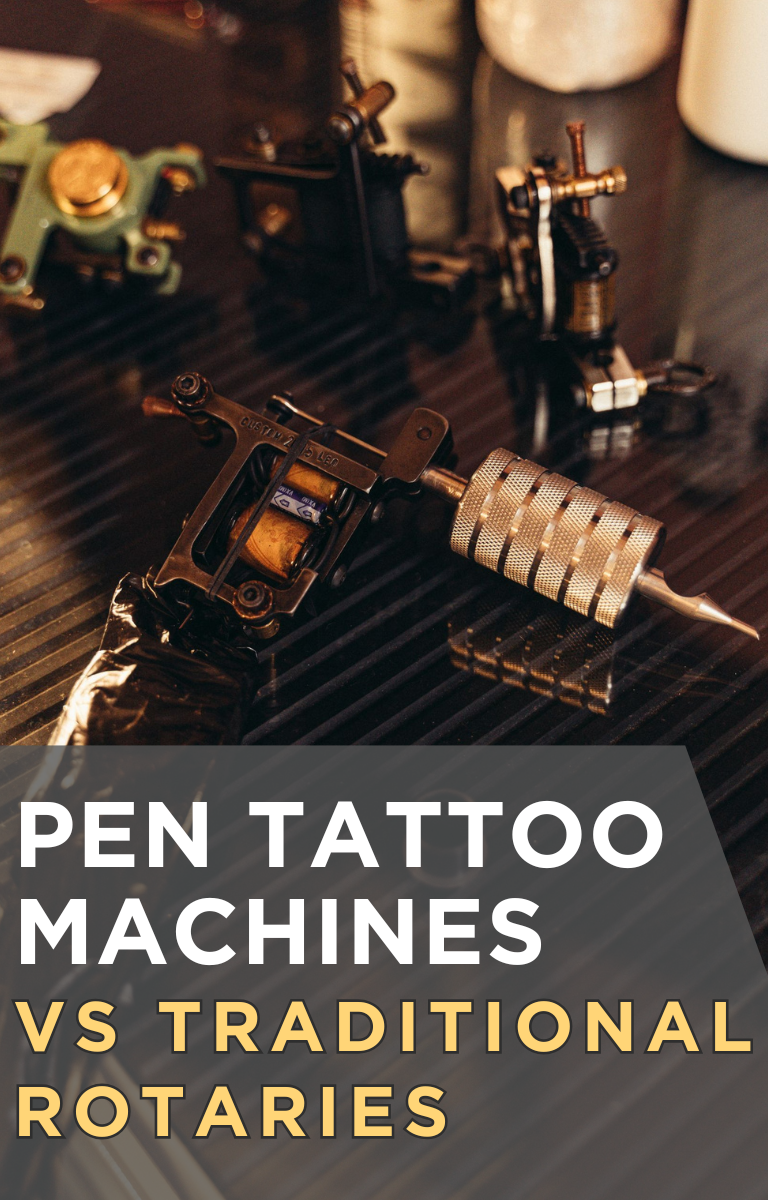
In This Article
- Key Takeaways
- What is a pen tattoo machine?
- What is a traditional rotary tattoo machine?
- What are the main differences between pen and rotary machines?
- Which machine is easier for beginners to learn on?
- How do you choose your first tattoo machine?
- Does the machine matter more than the training?
- How Ink Different helps you master your machine
- Ready to become a Tattoo Artist?
- FAQ
A pen tattoo machine is a rotary machine built into a slim, pen-shaped body, so you hold it much like a thick marker or pencil. A traditional rotary has a more classic tattoo machine shape, with a separate grip and a frame. Both use a motor to move the needle, and both can produce professional work. The real differences come down to grip, weight, feel and personal preference.
Comfort matters more than many beginners realize. In a study published in Applied Ergonomics, researchers found that more than half of the Tattoo Artists studied reported discomfort over a 12-month period in their neck, shoulders, hands and wrists, and back, according to the study as archived by the CDC. Below, we compare pen machines and traditional rotaries and explain how to choose your first one.
Key Takeaways
- Pen machines: Slim and pen-shaped, with a grip that feels familiar if you draw a lot.
- Traditional rotaries: A classic tattoo machine shape that many Tattoo Artists like for its feel and balance.
- Both are rotaries: Each uses a motor for smooth, consistent needle movement.
- Comfort counts: Tattoo Artists often deal with neck, back and hand strain, so ergonomics matter.
- Training matters most: Technique and mentorship make a far bigger difference than the machine itself.

What is a pen tattoo machine?
A pen tattoo machine is a rotary machine housed in a slim, cylindrical body shaped like an oversized pen. It uses needle cartridges, and you hold it much like a drawing tool.
Because the motor sits inside the body, there are no exposed moving parts. Many people find the grip intuitive, especially if they’ve spent years holding pencils, pens or brushes. That familiar feel is a big reason pen machines have become so popular.
Many pen machines are also available in wireless versions, powered by battery packs instead of a cord. Ink Different Master Mentor Boneface has watched the shift toward pen machines firsthand. “Everybody was like loyal to the coil,” he said on Tattoo Shop Tango. “And before you know it, all the loyal to the coil people are working on pen style machines.”
What is a traditional rotary tattoo machine?
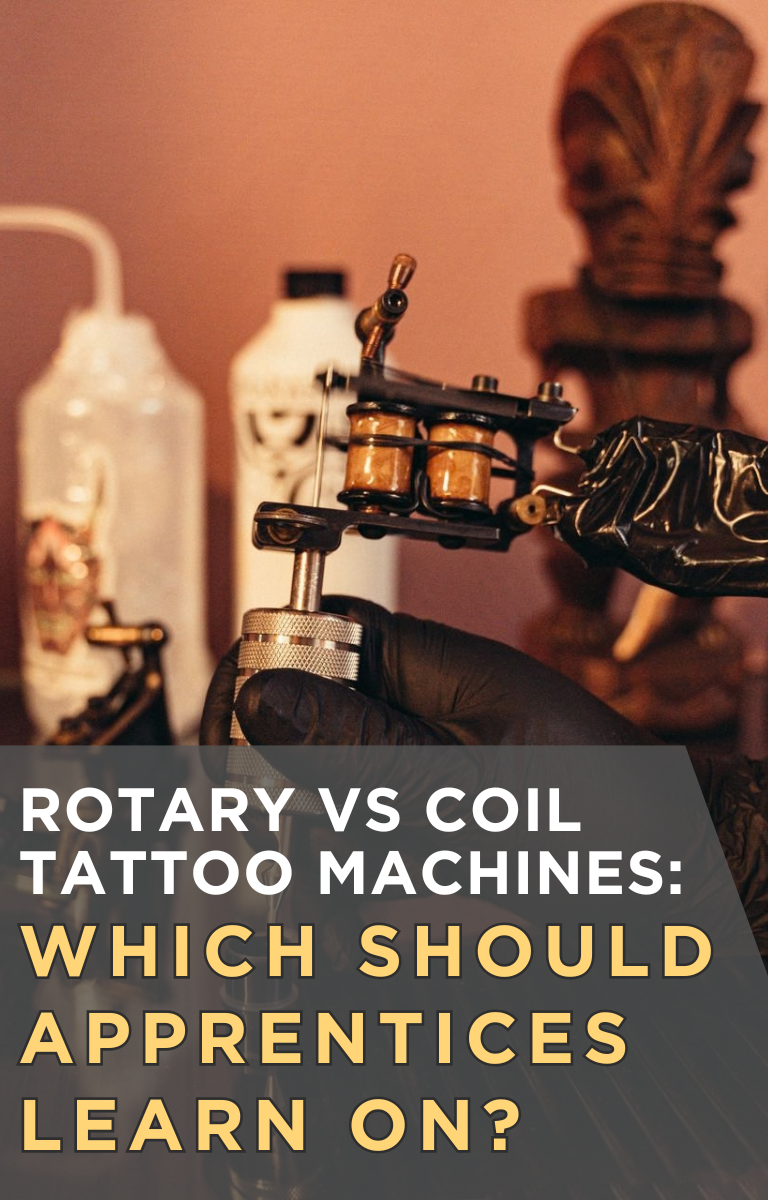
A traditional rotary tattoo machine also uses a motor to drive the needle smoothly up and down, but it has a more classic tattoo machine shape, with a frame and a separate grip.
Many Tattoo Artists like traditional rotaries for their balance and the way they sit in the hand. They’re known for being smooth and relatively quiet, and many can handle lining, shading and color packing.
You’ll also see coil machines in many tattoo studios. These work differently, using electromagnetic coils to move an armature bar. Many Tattoo Artists still choose coils for crisp linework and the classic feel.
What are the main differences between pen and rotary machines?
The main differences are grip, weight, feel and how quickly beginners adjust.
- Grip and ergonomics: Pen machines feel like holding a thick marker. Traditional rotaries feel more like a classic tattoo machine, with more surface to grip.
- Weight and balance: It varies by model, but many pen machines are designed to be light and evenly balanced. Always check the specific machine.
- Versatility: Both can handle lining and shading. Some Tattoo Artists prefer setting up separate machines for different jobs.
- Learning curve: People with a drawing background often find pen machines easier to adjust to.
- Cleaning: Enclosed pen bodies have fewer exposed parts, though every machine needs proper barrier protection and cleaning.
Pro Tip: Don’t buy the most expensive machine first. Hold both types if you can, and choose the one that feels right in your hand. Comfort helps you practice longer and more consistently.
Which machine is easier for beginners to learn on?
Many beginners find pen machines easier to start with, because the grip feels familiar and lets them focus on depth, speed and angle instead of the tool.
If you’ve spent years drawing, a pen machine can make the jump from paper to practice skin feel more natural. That said, “easier” doesn’t mean “better.” Many Tattoo Artists build great careers on traditional rotaries and coils.
What separates beginners from professionals is practice, feedback and mentorship, not the brand of machine. Beginners make the same common mistakes whether they use a pen or a rotary.

How do you choose your first tattoo machine?
Match the machine to your comfort, your goals and your budget, and focus on practice over premium gear.
- Hold both types in person. Comfort is personal, and you can’t judge it from photos.
- Consider your background. If you draw a lot, a pen machine may feel natural right away.
- Think about session length. Long sessions put real strain on your body. Researchers at Ohio State University found that all 10 Tattoo Artists they monitored exceeded recommended exertion limits in at least one muscle group, so choose a machine that feels comfortable for you.
- Set a realistic budget. A reliable mid-range machine is plenty for learning.
- Decide between corded and wireless. Think about your workspace and how you like to work.
- Learn safety first. Any machine must be used with sterile, single-use needles and safe practices, guided by the OSHA Bloodborne Pathogens Standard.
For the rest of your setup, this rundown of the tools beginners actually need covers the essentials. And when you start tattooing clients, point them to guidance like the American Academy of Dermatology’s tips for caring for tattooed skin.
Does the machine matter more than the training?
No. The machine is a tool, but training teaches you how to use it. Even the best pen machine won’t teach you depth, angle, needle choice or how to read skin.
A high-end chef’s knife doesn’t make someone a chef. Hand a beginner the best machine available, and they can still blow out lines or work too deep without proper guidance. Meanwhile, a well-trained Tattoo Artist can do clean, lasting work on a modest machine because they’ve learned what to feel for.
Many beginners spend months researching gear while their skills stay where they started. The faster path is training with a Mentor who can correct your technique before mistakes become habits.
How Ink Different helps you master your machine
Ink Different’s Traditional Tattoo Apprenticeship teaches machine skills through in-person mentorship, so the tool becomes an extension of your hand.
For 15 years, Ink Different has trained aspiring Tattoo Artists as a college alternative. It’s a practical path into a creative career, which is part of why tattoo apprenticeships are gaining ground as an alternative to college.
What you can expect from our Traditional Tattoo Apprenticeship
The Traditional Tattoo Apprenticeship runs 18 to 24 months across four phases, with in-person training at one of 60+ tattoo studios nationwide. No prior art experience is required.
- Phase 1, Art and Design Principles: Drawing, shading, digital design and building a portfolio.
- Phase 2, Machine Mastery and Practice Tattooing: Hand-control exercises, machine operation, lining, shading and color packing.
- Phase 3, Supervised Tattoos: Tattooing real skin under a Mentor’s direct supervision.
- Phase 4, Junior Artist Externship: Building client relationships and refining your skills while you start earning.
You’ll finish with job-ready skills, licensing support and a guaranteed job offer at one of Ink Different’s own tattoo studios. Interest-free payment plans help make training more accessible. Once you’re working, your income grows with your skill. ZipRecruiter puts the average Tattoo Artist salary at $106,858 a year as of November 2026.
Mentorship that pushes your brand and skills further
Our one-year, in-person Master Mentorship lets you train with celebrity and award-winning Master Mentors, including Al Fliction, Liz Cook, Kyle Dunbar, Boneface, Jordi Pla and Marcel Oliveira. It’s built for mastering a specific style, growing your career and owning your own business.
Making tattoo training accessible for everyone
We offer Spanish-speaking locations in Denver, Orange County, New York City, Miami, San Antonio and San Diego. Our “Good Humans” culture means you join a supportive, family-like community.

Ready to become a Tattoo Artist?
Pen or rotary, the machine is just the beginning. The skills you build with a Mentor are what turn it into a career. Each Mentor takes just two tattoo apprentices per tattoo studio, so seats fill up quickly.
Ready to become a Tattoo Artist? Apply now to Ink Different’s Traditional Tattoo Apprenticeship and start building a real career with licensing support and mentorship.
Frequently Asked Questions
Is a pen tattoo machine better than a rotary?
Neither is better for everyone. Pen machines have a familiar, pen-like grip, while traditional rotaries offer a classic feel. Both produce professional work in skilled hands.
Are pen tattoo machines rotary machines?
Yes. Pen machines use a rotary motor, just built into a slim, pen-shaped body.
Are pen machines good for beginners?
Many beginners like them because the grip feels familiar. Try both types if you can, and choose what feels most comfortable.
Do I need an expensive machine to start tattooing?
No. A reliable mid-range machine is plenty for learning. Skill and mentorship matter far more than price.
Do Tattoo Artists get hand and back pain?
Many do. In one survey of 34 Tattoo Artists, the most common complaints were back pain (94%), headache (88%), neck pain (85%) and eye pain (74%), according to ScienceDaily’s report on the study.
How long does the Traditional Tattoo Apprenticeship take?
It takes 18 to 24 months across four phases.