Tattooing 101: Terms Every New Artist Should Know
November 19, 2026
Body First: How Eva Ronnova Designs Botanical Tattoos Freehand
November 19, 2026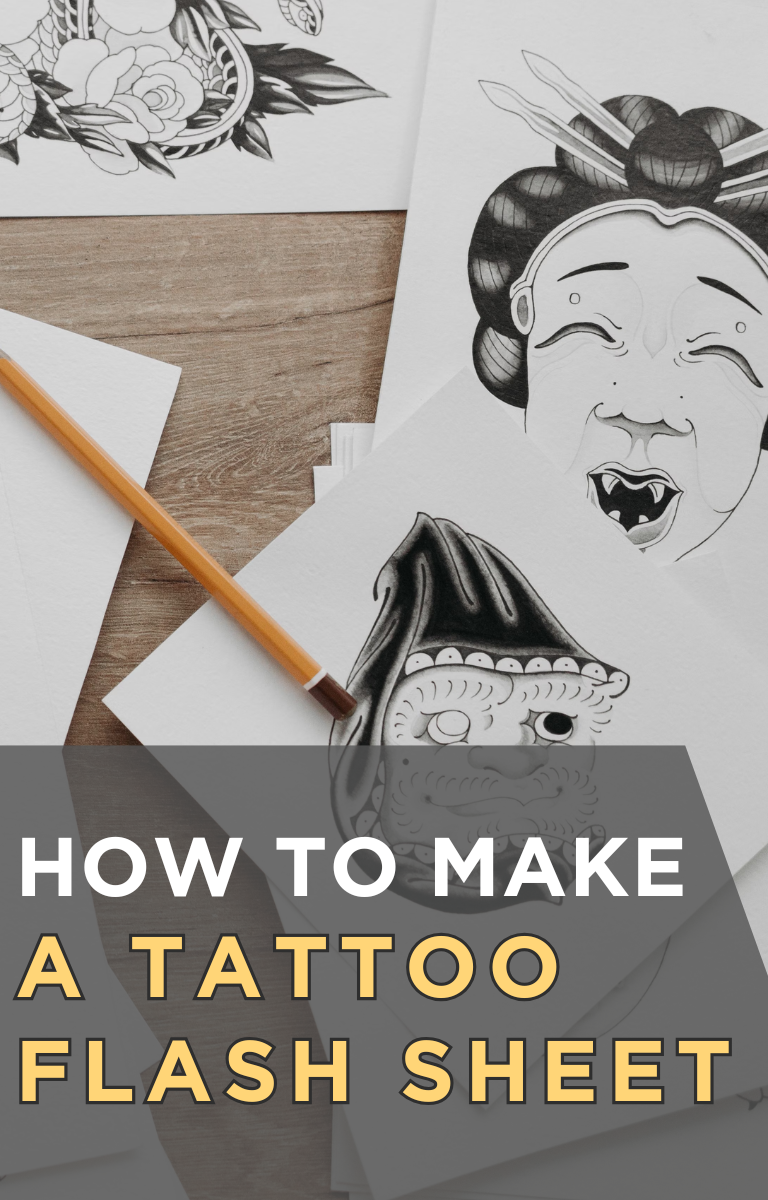
In This Article
- Key Takeaways
- What is a tattoo flash sheet?
- Why does a flash sheet matter for your career?
- What do you need to make a flash sheet?
- How do you make a tattoo flash sheet step by step?
- What mistakes should you avoid?
- Should you make a flash sheet digitally or by hand?
- How do you price and sell your flash?
- Get serious about your flash with Become A Tattoo Artist
- FAQ
To make a tattoo flash sheet, start by choosing one theme. Then sketch loose ideas, refine your five to eight strongest designs and simplify them so they’ll hold up on skin. Finish by inking clean outlines and arranging everything into a balanced page. A flash sheet is a page of ready-to-tattoo designs clients can pick from, and it’s one of the clearest ways to show your style.
Flash has a long history. The Smithsonian describes “flash” as common tattoo designs drawn on paper or cardboard, and its American Art Museum holds examples like a 1914 military tattoo flash painted in enamel on board. Below, you’ll learn how to build your own sheet, what to avoid and how to price and sell your flash.
Key Takeaways
- What it is: A page of repeatable, ready-to-tattoo designs, usually themed and priced.
- Why it matters: Flash shows your style, builds your portfolio and helps you book clients.
- Keep it cohesive: Strong sheets share one theme, consistent line weight and a clear visual identity.
- Design for skin: Simplify fine details so designs stay readable as tattoos age.
- Hand or digital: Both work. Many Tattoo Artists use both.
What is a tattoo flash sheet?
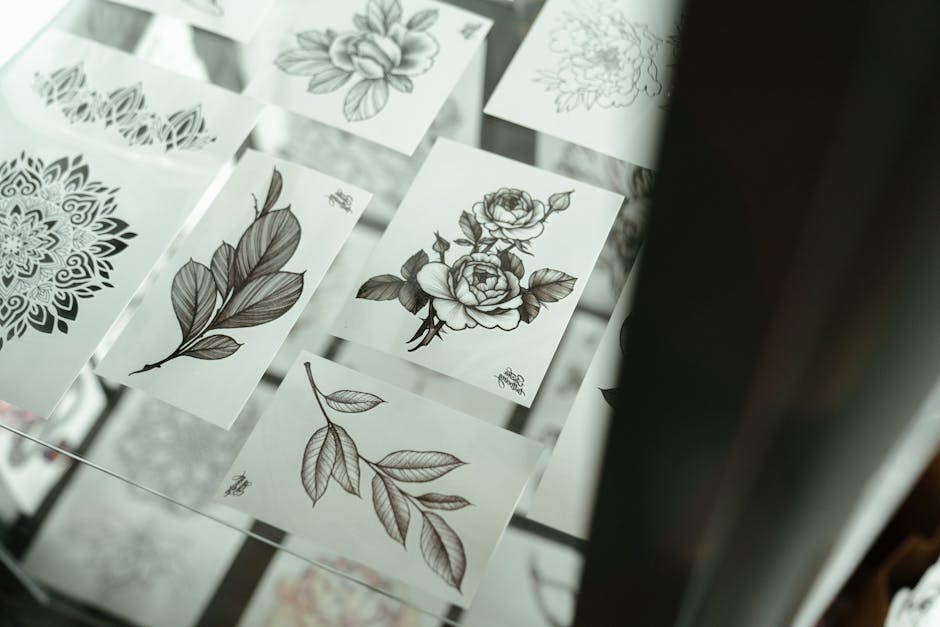
A tattoo flash sheet is a single page of pre-drawn designs ready to be tattooed. It’s usually themed, so clients can pick a piece and often get it done the same day.
Flash has been part of tattoo culture for generations. Tattooists once hung painted sheets on their walls so clients could choose a design. The Smithsonian’s blog on the Lyle Tuttle Tattoo Art Collection highlights World War II-era flash by tattooists like Bert Grimm, Sailor Jerry and Owen Jensen.
Flash still does the same job today. It tells people what you do best. A sheet of bold traditional roses sends a very different message than a page of fine-line botanicals.
Why does a flash sheet matter for your career?
A flash sheet shows you can create repeatable, tattooable designs, which is a key sign you’re ready to work professionally.
It’s also a practical way to earn. Custom clients take time to build, but walk-in-friendly flash can keep your schedule full while you grow your following.
Ink Different Master Mentor Boneface puts it bluntly on Tattoo Shop Tango: “The actual money is in the flash, in the smaller tattoos, for real, for artists.” Over time, steady flash work alongside custom pieces is part of how many Tattoo Artists reach strong incomes. ZipRecruiter puts the average Tattoo Artist salary in the United States at $106,858 a year as of November 2026.
Your flash also becomes part of your portfolio, which is often what Mentors and tattoo studios look at first.
What do you need to make a flash sheet?
You need drawing tools, a clear theme, consistent line weight and an understanding of how designs translate to skin. You don’t need expensive gear to start.
- Paper and pencils: Heavyweight drawing paper and a range of graphite pencils for sketching.
- Fine liners and ink: Technical pens or India ink for clean, bold outlines.
- A digital option: A tablet with drawing software makes edits and resizing easy.
- Reference material: Classic flash collections and your own sketchbook ideas.
As your kit grows into tattooing gear, knowing the tools every beginner Tattoo Artist should know helps you spend wisely. Still, skill and consistency matter more than any tool.
How do you make a tattoo flash sheet step by step?
Choose a theme, sketch, refine, simplify for skin, ink clean outlines, arrange the layout, then scale and save.
- Choose one theme. Pick a single direction, like snakes, roses, daggers or nautical designs. One theme makes your sheet look intentional.
- Sketch loosely. Fill a page with rough thumbnails. You’re looking for the strongest shapes and ideas, not perfection.
- Refine your best picks. Choose five to eight designs that work together and clean them up. Keep line weights consistent so they look like a set.
- Simplify for skin. Remove tiny details that may blur over time.
- Ink your final outlines. Draw clean, confident lines by hand or finalize them digitally. Bold outlines stencil more cleanly and tend to hold up better.
- Arrange the layout. Balance the page so no area feels empty or crowded. Vary sizes while keeping the composition tight.
- Scale and save. Note sizes for each design and save a high-resolution copy for stencils.
Pro Tip: Skin changes with age and sun exposure, and the American Academy of Dermatology notes that UV light can fade some tattoo inks. Ask yourself whether your lines will still read clearly years from now. Bolder usually wins.
What mistakes should you avoid when making flash?
The biggest mistakes are mixing too many styles on one page, using linework that’s too thin for skin and ignoring how a design will heal and age.
- Too many styles: A scattered sheet makes your style harder to recognize.
- Overly fine detail: Lines that look crisp on paper can blur on skin.
- Copying other Tattoo Artists’ flash: Study the greats, but create your own designs. Your own voice is what sets you apart.
- Forgetting the real-world side: Once you move from paper to skin, safety becomes part of the job, starting with standards like the OSHA Bloodborne Pathogens Standard.
Many of these overlap with the broader mistakes aspiring tattoo apprentices make, especially skipping fundamentals and rushing to tattoo too soon.
Should you make a flash sheet digitally or by hand?
Both work. Drawing by hand builds traditional skill, while digital tools make editing, resizing and sharing faster. Many Tattoo Artists use both.
Drawing by hand strengthens your foundation. Without an undo button, you build line control, pressure and composition skills that carry directly into tattooing.
Digital tools make it easy to adjust designs and share your work online. Once your sheets are ready to post, choosing the right platforms to build your brand as a Tattoo Artist helps the right clients find you.

How do you price and sell your flash?
Post themed sheets online, set prices for each design and promote flash days where clients can claim available pieces.
Price designs by size and complexity, and note whether each design is repeatable or a one-of-a-kind piece. Flash days are a classic approach: announce a sheet, open bookings and let clients claim their favorites. It’s a great way to fill your calendar and build word of mouth.
Selling your designs and tattooing them are two different things, though. You can post and sell flash designs anytime, but tattooing paying clients requires meeting your state’s licensing rules. Requirements vary, as you’ll see in how to get your tattoo license in Texas, California’s tattoo license requirements and how long a tattoo license takes in Colorado.
Get Serious About Your Flash With Ink Different
Ink Different’s Traditional Tattoo Apprenticeship builds the design and tattooing skills that great flash depends on, through in-person mentorship.
For 15 years, Ink Different has trained aspiring Tattoo Artists, and flash is just the beginning. The real growth happens when a Mentor shows you, hands-on, how your designs translate to living skin.
What You Can Expect From Our Traditional Tattoo Apprenticeship
The Traditional Tattoo Apprenticeship runs 18 to 24 months across four phases, with in-person training at one of 60+ tattoo studios nationwide. No prior experience is required.
- Phase 1, Art and Design Principles: Drawing, shading, digital design and building a portfolio, where flash work fits right in.
- Phase 2, Machine Mastery and Practice Tattooing: Hand-control exercises, machine operation, lining, shading and color packing.
- Phase 3, Supervised Tattoos: Tattooing real skin under a Mentor’s direct supervision.
- Phase 4, Junior Artist Externship: Building client relationships and refining your skills while you start earning.
A career that comes with confidence
You’ll finish with job-ready skills, licensing support and a guaranteed job offer at one of Ink Different’s own tattoo studios. Interest-free payment plans help make training more accessible. For many people, it’s a practical path into a creative career without the cost of a four-year degree, which is why tattoo apprenticeships are gaining ground as an alternative to college.
Mentorship that pushes your brand and skills further
Our one-year, in-person Master Mentorship lets you train with celebrity and award-winning Master Mentors, including Al Fliction, Liz Cook, Kyle Dunbar, Boneface, Jordi Pla and Marcel Oliveira. It’s built to help you master a specific style, grow your career, and own your business.
Making tattoo training accessible for everyone
We offer Spanish-speaking locations in Denver, Orange County, NYC, Miami, San Antonio and San Diego. Our “Good Humans” culture means you join a supportive, family-like community.

Ready to become a Tattoo Artist?
A flash sheet is often the first time your designs are ready for the world to see. Turning them into tattoos takes training, practice and a Mentor guiding you. Each Mentor takes just two tattoo apprentices per tattoo studio, so seats fill up quickly.
Ready to become a Tattoo Artist? Apply now to Ink Different’s Traditional Tattoo Apprenticeship and start building an AI-proof career, with licensing support along the way.
Frequently Asked Questions
How long does it take to make a tattoo flash sheet?
It can take anywhere from a few hours to a couple of days, depending on how many designs you include and how detailed they are. Focus on quality over speed.
How many designs should a flash sheet have?
A strong sheet usually has five to eight cohesive designs that share one theme and consistent line weight.
Do I need art experience to make a flash sheet?
No. You can start with basic drawing skills and improve with practice. Ink Different’s Traditional Tattoo Apprenticeship starts with art and design principles.
Can I sell my flash designs before I’m licensed?
You can design, post and sell flash designs anytime. Tattooing paying clients, though, requires meeting your state’s licensing requirements.
Should I copy classic flash?
Study classic flash to learn what works, but create your own designs. Original flash shows your style and builds your reputation.
Is making flash part of a tattoo apprenticeship?
Drawing and design work is a big part of building your portfolio. In Ink Different’s Traditional Tattoo Apprenticeship, Phase 1 focuses on art and design principles.