Low-Stress Jobs That Pay Well Without a Degree
November 12, 2026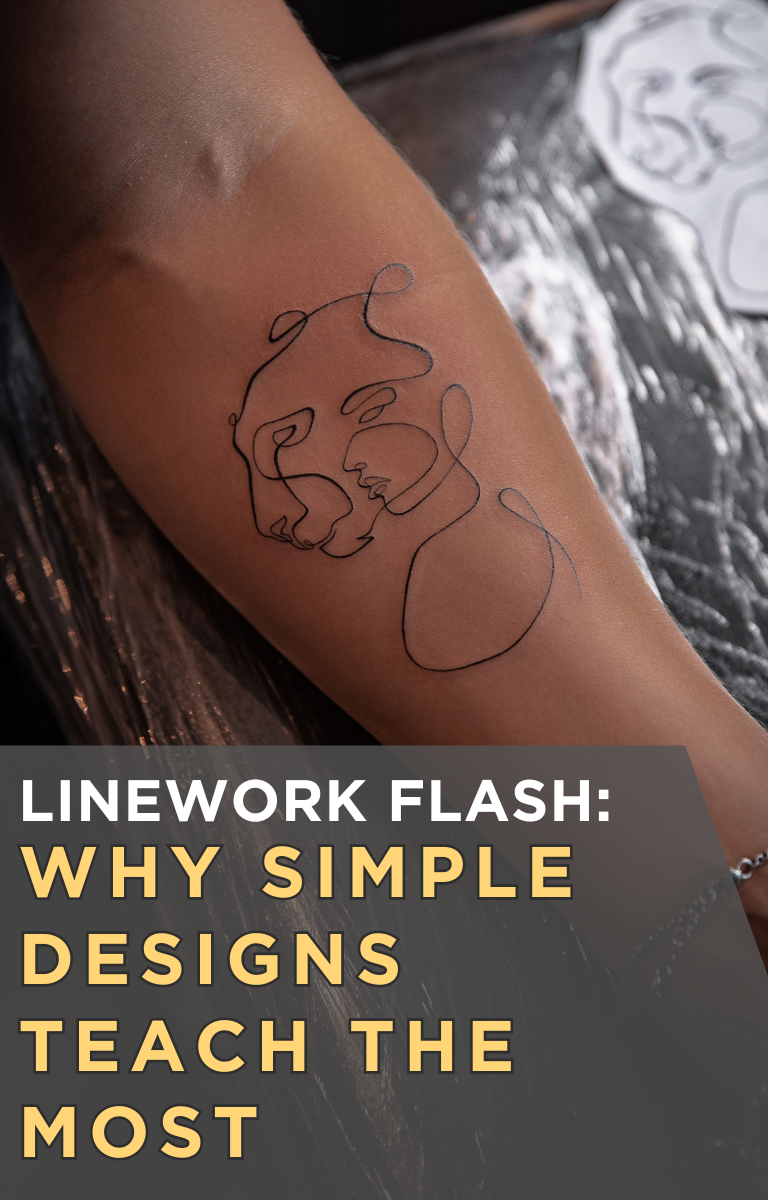
In This Article
- Key Takeaways
- What Is Linework Flash?
- Why Do Simple Designs Teach the Most?
- What Can You Actually Learn From a Single Line?
- How Do You Practice Linework Flash the Right Way?
- What Mistakes Do Beginners Make With Linework?
- Where Does Real Mentorship Fit In?
- What You Can Expect From Our Traditional Tattoo Apprenticeship
- Mentorship That Pushes Your Brand and Skills Further
- Making Tattoo Training Accessible for Everyone
- Ready to Become a Tattoo Artist?
- Frequently Asked Questions
Linework flash is a set of simple, pre-drawn tattoo designs built mostly from lines, with little or no shading or color. For new Tattoo Artists, it’s one of the best training tools there is. With nothing to hide behind, every wobble, uneven line and depth problem shows. That’s exactly why it teaches so much.
This guide covers what linework flash is, the core skills it builds, how to practice it effectively and the mistakes beginners make. At Ink Different Tattoos, we’ve spent 15 years training Tattoo Artists, and clean linework is where strong fundamentals start.
Key Takeaways
- Definition: Linework flash is simple, line-based tattoo designs used to build and show clean line control.
- Why it works: Simple designs expose weaknesses fast, so you know exactly what to fix.
- Core skills: Line weight, hand speed, needle depth, machine angle and consistency.
- Practice with feedback: Research on expert performance highlights practice designed to improve specific skills, often guided by a skilled teacher.
- Who it’s for: Beginners with no art background can start with linework and build from there.
What Is Linework Flash?
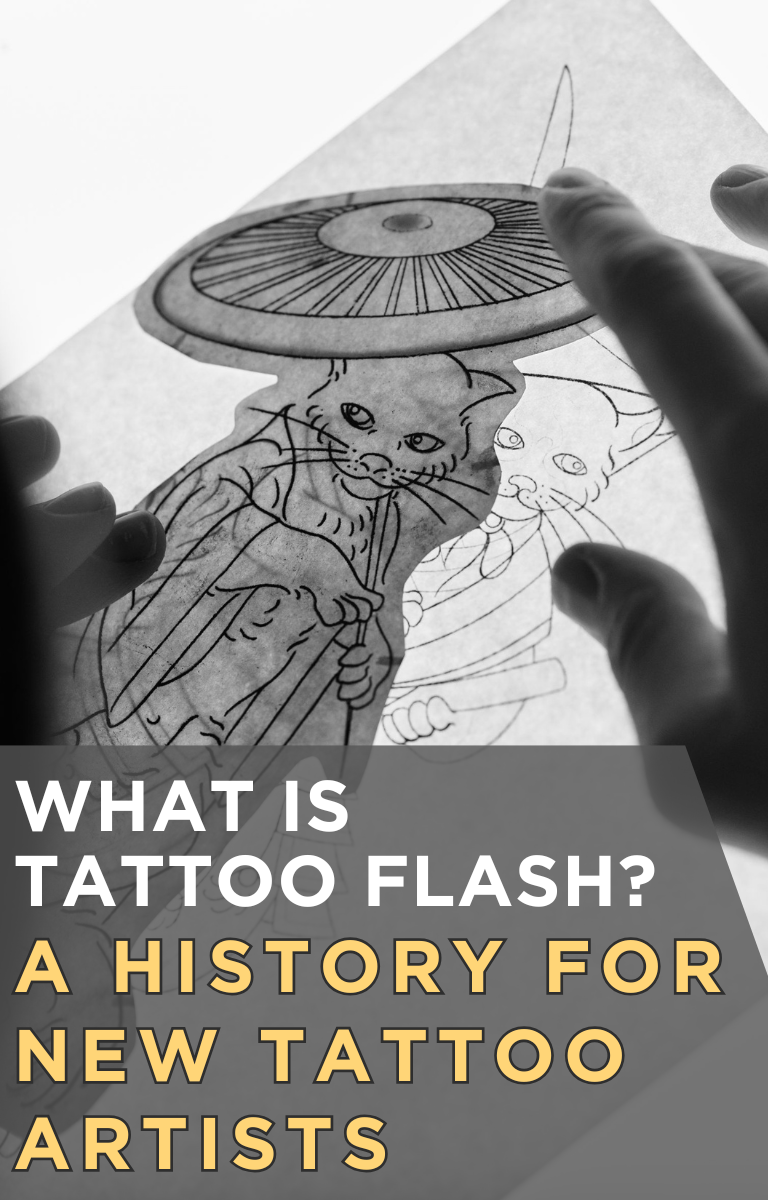
Linework flash is a set of simple, pre-drawn tattoo designs made mostly of lines. Tattoo Artists use it to practice fundamentals, and tattoo apprentices use it to show control of the tattoo machine.
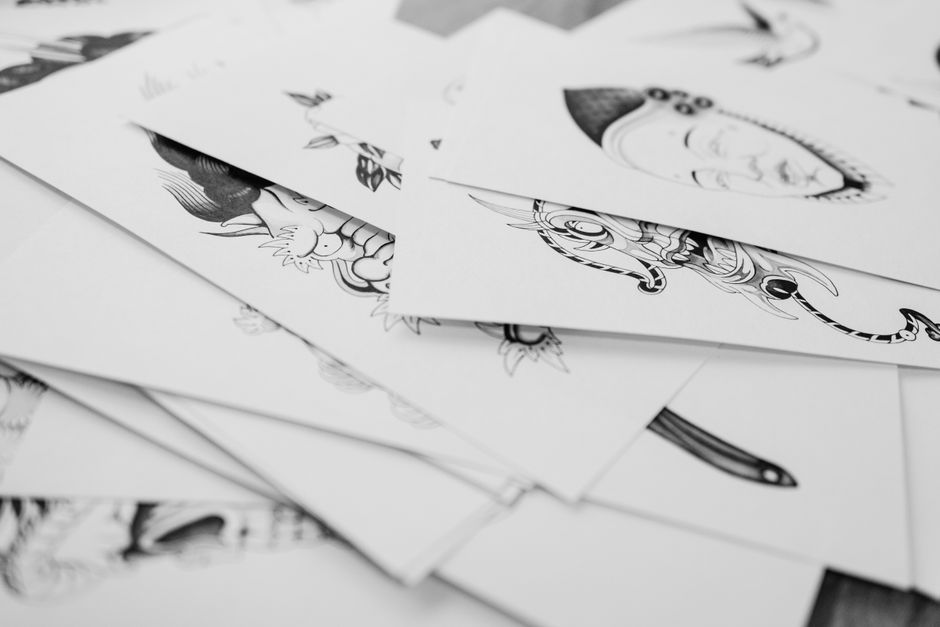
Flash is the classic format for ready-to-tattoo designs. In North America, it’s commonly printed on 11-by-14-inch sheets, according to this overview of tattoo flash. Linework flash is a stripped-down version of that tradition.
Think of it as the scales a musician plays before improvising. Before you take on a full back piece, you learn to lay a line that stays crisp from start to finish. With no shading or color to cover mistakes, the line shows your real skill level.
Why Do Simple Designs Teach the Most?
Simple designs leave nowhere to hide. They force you to deal with your line weight, consistency and machine control before you move on.
A complex design can mask small mistakes. A single clean line can’t. When the design is simple, a shaky hand or uneven depth is obvious.
This lines up with research on how people build expertise. In their 1993 study published in Psychological Review, researchers K. Anders Ericsson, Ralf Krampe and Clemens Tesch-Römer introduced the idea of “deliberate practice.” A 2019 review in Royal Society Open Science notes that Ericsson and colleagues described it as a very specific activity designed for an individual by a skilled teacher explicitly to improve performance. Linework drills fit that definition well: focused, repeatable and easy for a Mentor to evaluate. nih
The research also has limits. The same review found that the link between practice and performance varied, and it doesn’t explain everything. But for a hands-on skill like tattooing, focused practice with feedback is a reliable way to improve.
Pro Tip: If you can’t lay a clean, consistent line yet, you’re not ready to focus on shading. Get the linework right first.
What Can You Actually Learn From a Single Line?
A single line teaches line weight, speed control, needle depth, machine angle and consistency, the fundamentals that advanced techniques are built on.
- Line weight: Controlling thin and bold lines within the same design.
- Speed and flow: Moving at a steady pace so lines stay smooth, not choppy.
- Needle depth: Placing ink at a consistent depth on every pass.
- Machine angle: Holding the machine at a steady angle as you move.
- Consistency: Making your 20th line look as clean as your second.
- Confidence: Committing to a stroke instead of hesitating halfway through.
These fundamentals show up in healed work too. Clean, consistent lines tend to hold up better over time, which is one reason Tattoo Artists spend so much time on them.
How Do You Practice Linework Flash the Right Way?
Draw by hand, build your own flash sheet, practice on synthetic skin, get feedback from a Mentor and repeat with a clear goal each time.
- Step 1: Draw it by hand first. Train your eye and hand with pencil and paper before you pick up a machine. Habits on paper often carry over to skin.
- Step 2: Build your own flash sheet. Design simple shapes like circles, arcs, lettering and small line icons.
- Step 3: Practice on synthetic skin. Transfer your flash and run clean lines. Focus on one fundamental per session.
- Step 4: Review with a Mentor. A Mentor spots problems you can’t see and corrects them before they become habits.
- Step 5: Repeat with intention. Keep your practice sheets, compare them over time and track your progress.

To avoid common traps, read our guide to the mistakes aspiring tattoo apprentices should avoid. Make sure you have the right gear with these tools every beginner Tattoo Artist should know.
What Mistakes Do Beginners Make With Linework?
The most common mistakes are moving too fast, inconsistent depth, hesitating mid-stroke and skipping ahead to complex designs too soon.
Impatience is often the biggest problem. Many beginners want to tattoo a dragon before they can pull a clean line, and that shortcut usually backfires.
Another trap is practicing alone with no feedback. You can repeat a flawed technique many times and only make the flaw stronger. Growth needs an outside eye.
Warning: Self-taught linework without feedback can lock in bad habits that take a long time to unlearn. A Mentor helps you catch them early.
Where Does Real Mentorship Fit In?
Mentorship turns practice into progress with in-person feedback on your linework, something no video tutorial or AI tool can replicate.
You can study flash on your own. But a Mentor beside you, correcting your angle and speed in real time, is what moves you from hobbyist to professional.
Tattooing is a hands-on craft, which is a big part of why it’s hard to automate. Clients want a person who understands their skin, their story and the weight of a permanent line. Read why Tattoo Artists are still essential.
Hygiene is part of the fundamentals, too. Professional Tattoo Artists follow the OSHA Bloodborne Pathogens Standard and teach clients aftercare using guidance like the American Academy of Dermatology’s tips for caring for tattooed skin.
What You Can Expect From Our Traditional Tattoo Apprenticeship?
Ink Different’s Traditional Tattoo Apprenticeship runs 18 to 24 months across four phases. It takes you from your first lines to job-ready skills, with licensing support along the way.
No prior art experience is needed. Here’s how linework fits into the training:
- Phase 1, Art and Design Principles: Drawing lines and shading on paper to build hand control, plus building a portfolio.
- Phase 2, Machine Mastery and Practice Tattooing: Repeated exercises to strengthen hand control, including lining, shading and color packing.
- Phase 3, Supervised Tattoos: Tattooing real skin under a Mentor’s direct supervision.
- Phase 4, Junior Artist Externship: Building client relationships and refining your skills while you start earning.
You’ll train in person with a Mentor at one of 60+ tattoo studios nationwide. You’ll finish with job-ready skills, licensing support and a guaranteed job offer at one of Ink Different’s own tattoo studios. Interest-free payment plans help make training more accessible.
The career can pay off. According to ZipRecruiter, the average Tattoo Artist in the United States earns $106,858 a year as of November 2026.
How Can You Master Advanced Styles With Our Master Mentorship?
Our Master Mentorship is one year of in-person training for beginners and experienced Tattoo Artists who want to master a specific style, grow their career and work toward owning a tattoo studio.
You’ll train with celebrity and award-winning Master Mentors, including Al Fliction, Liz Cook, Kyle Dunbar, Boneface, Jordi Pla and Marcel Oliveira.
Once your fundamentals are solid, building your brand comes next. Explore these platforms to help new and aspiring Tattoo Artists build their brand.
Making Tattoo Training Accessible for Everyone
Ink Different offers Spanish-speaking locations in Denver, Orange County, NYC, Miami, San Antonio and San Diego. Our “Good Humans” culture means you join a supportive, family-like community from day one.

Ready to Become a Tattoo Artist?
Clean linework is the foundation of every strong tattoo. Practicing simple designs with real feedback is one of the fastest ways to build that foundation. Each Mentor takes just two tattoo apprentices per tattoo studio, so seats fill up quickly.
Ready to become a Tattoo Artist? Apply now to Ink Different’s Traditional Tattoo Apprenticeship and start building an AI-proof career, with licensing support along the way.
Frequently Asked Questions
What is linework flash?
Linework flash is simple, pre-drawn tattoo designs made mostly of lines, with little or no shading or color. It’s used to practice and show clean line control.
Why do simple tattoo designs teach more than complex ones?
Simple designs make mistakes easy to see. A single line shows problems with weight, depth and consistency right away, so you know what to fix.
How should beginners practice linework?
Start on paper, then practice on synthetic skin, focusing on one skill at a time. Get regular feedback from a Mentor so you don’t lock in bad habits.
Do I need art experience to start practicing linework flash?
No. Ink Different’s Traditional Tattoo Apprenticeship starts with drawing lines and shading on paper, so beginners can start from scratch.
How long does the Traditional Tattoo Apprenticeship take?
It takes 18 to 24 months across four phases, depending on how quickly you master each one.
Can I train in Spanish?
Yes. Ink Different offers Spanish-speaking locations in Denver, Orange County, NYC, Miami, San Antonio and San Diego.