
Coil Tattoo Machines: Why Some Artists Still Swear by Them
November 12, 2026
Linework Flash: Why Simple Designs Teach the Most
November 12, 2026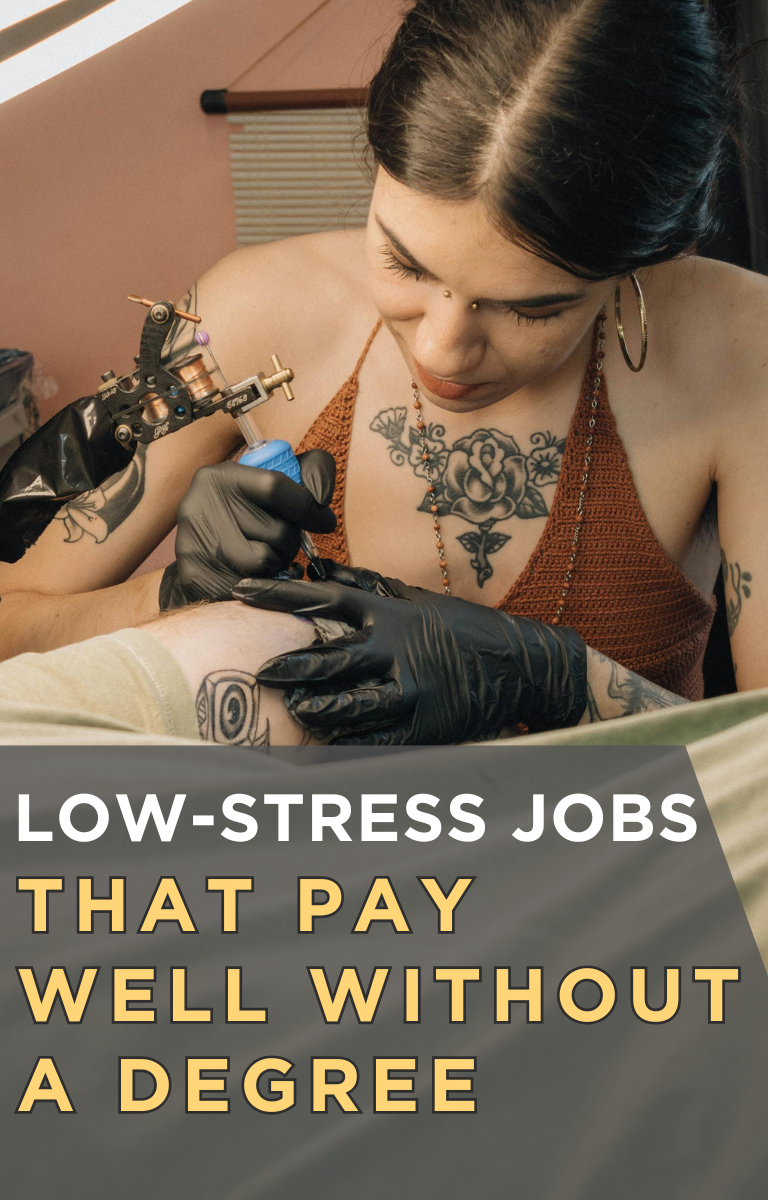
In This Article
- Key Takeaways
- What Are Low-Stress Jobs That Pay Well Without a Degree?
- Why Can You Earn a Good Income Without a Degree?
- What Are the Best Low-Stress, High-Paying Jobs Without a Degree?
- Why Is Tattooing One of the Best Low-Stress Careers Without a Degree?
- How Do You Start a Tattoo Career Without a Degree?
- What Can You Expect From Our Traditional Tattoo Apprenticeship?
- How Does Master Mentorship Push You Further?
- Who Can Access Tattoo Training in Their Language?
- Frequently Asked Questions
Low-stress jobs that pay well without a degree are skilled careers you can enter through hands-on training, apprenticeships or certification. The ones that feel lowest in stress usually share a few traits: control over how you work, work that feels meaningful and skills that stay in demand. Pay is only part of the picture.
That matters, because work stress is widespread. In the American Psychological Association’s 2025 Work in America survey, a majority of U.S. workers (54%) said job insecurity has had a significant impact on their stress levels at work. This guide explains what makes a job less stressful, which degree-free paths fit and why tattooing appeals to so many creative people. apa
Key Takeaways
- Control lowers stress: Lack of control over when, where and how you work is a common stress driver.
- No degree needed: Many skilled trades and creative crafts are learned through hands-on training, not a four-year degree.
- Every job has some stress: The goal is work where the pressure feels manageable and meaningful.
- Tattooing offers autonomy: Established Tattoo Artists often have real say over their schedule, style and clients.
- The path in: Ink Different’s Traditional Tattoo Apprenticeship runs 18 to 24 months, with licensing support and no experience required.
What Are Low-Stress Jobs That Pay Well Without a Degree?
They’re skilled careers you enter through apprenticeships, certifications or hands-on training rather than university. They offer solid income and a good amount of day-to-day control.
The old equation was simple: a degree meant a good income, and no degree meant struggle. That no longer holds for many fields. Plenty of people with degrees are stuck in stressful roles, while skilled tradespeople and craftspeople build careers on their own terms.
What makes a job feel low-stress? Research points to a few common factors:
- Control: In APA’s 2024 Work in America survey, a third of U.S. workers said they do not have enough control over when, where and how they do their work. apa
- Meaning: Work that feels purposeful tends to feel less draining than repetitive tasks you don’t care about.
- Stability: Skills that stay in demand reduce the worry of being replaced.
- Variety: Work that changes from day to day helps prevent burnout.
Reframe it: Stress often comes from a lack of control and meaning, not just from hard work. The right career can give you more of both.
Why Can You Earn a Good Income Without a Degree?
In many hands-on and creative fields, clients and employers pay for proven skill and results, not diplomas.
In creative trades, your portfolio is your resume. Clients don’t ask where you went to school. They ask to see your work.
Skipping a four-year degree also means skipping years of tuition. The College Board reports that average published tuition and fees for in-state students at public four-year colleges reached $11,950 in 2025-26, per year, before housing and other costs. A hands-on path lets you start building real-world experience sooner.
What Are the Best Low-Stress, High-Paying Jobs Without a Degree?
The best options give you skill-based income and real control over your work: skilled trades, creative crafts and self-employed services.
Not every degree-free job fits someone who wants creative freedom. If you’re creative at heart but stuck in repetitive work, look for roles where your skill and ideas matter:
- Creative crafts: Work where your hands and vision create something lasting and personal.
- Skilled trades: Careers learned through apprenticeships, with steady demand.
- Self-employed services: Work where you can shape your schedule and build your own brand.
Before choosing, research pay and outlook in the BLS Occupational Outlook Handbook, and talk to people already doing the work about the day-to-day pressures.
For people who want creativity, income and the satisfaction of making something permanent, tattooing stands out. If you’re thinking about a switch, read why a tattoo apprenticeship is perfect for career changers starting over.
Why Is Tattooing One of the Best Low-Stress Careers Without a Degree?
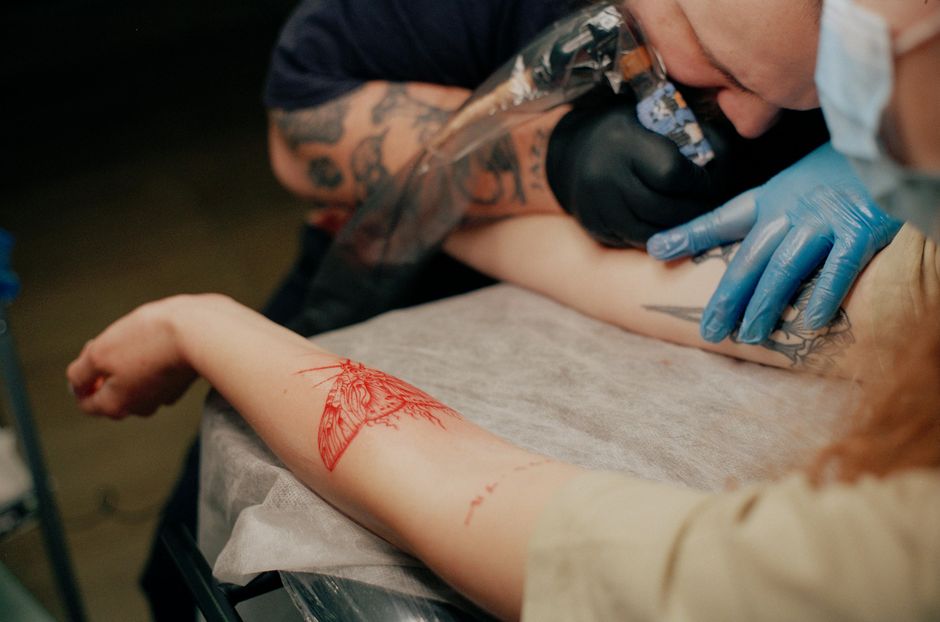
Tattooing combines creative freedom, real income potential, schedule flexibility and work that’s very hard to automate.
Tattooing rewards the things a dead-end job often ignores: your creativity, focus and ability to connect with people. Every client brings a new design and a new story, so the work rarely feels repetitive.
It also offers stability in a changing job market. Software can’t replace the trust and personal touch a Tattoo Artist brings to permanent work. Read more about why Tattoo Artists are still essential.
The income can be strong, too. According to ZipRecruiter, the average Tattoo Artist in the United States earns $106,858 a year as of November 2026, though pay varies widely with skill, reputation and location.
Being honest about stress: Tattooing isn’t stress-free. You’re doing permanent work on real people, sessions can be physically demanding and building a client base takes time. But for many Tattoo Artists, that pressure feels manageable because they have more control over their schedule, style and clients than in a typical 9-to-5.
Good to know: Many states regulate tattooing through licensing or registration. Quality training includes safety standards like the OSHA Bloodborne Pathogens Standard.
How Do You Start a Tattoo Career Without a Degree?
Complete a structured tattoo apprenticeship that teaches drawing, machine handling, safety and client work, then meet your state’s licensing requirements.
Step 1: Commit to the Decision
Decide you’re ready to pursue a creative career, and set a realistic plan for your time and finances.
Step 2: Find Legitimate Training
Avoid “learn overnight” promises. Choose structured training with real mentorship. Our guide to the mistakes aspiring tattoo apprentices should avoid can save you time and money.
Step 3: Build Your Foundations
Learn drawing fundamentals, linework, shading and your equipment. Get familiar with the tools every beginner Tattoo Artist should know.
Step 4: Learn Safety and Get Licensed
Master sanitation, aftercare and bloodborne pathogens protocols, then complete your state’s requirements. See how to get your tattoo license in Texas, tattoo license requirements in California and how long it takes to get a tattoo license in Colorado.
Step 5: Build Your Brand and Client Base
Grow your reputation online and in person. These platforms to help new and aspiring Tattoo Artists build their brand can help.

What Can You Expect From Our Traditional Tattoo Apprenticeship?
Ink Different’s Traditional Tattoo Apprenticeship runs 18 to 24 months across four phases. It’s built for beginners, with hands-on mentorship, licensing support and job-ready skills.
For 15 years, we’ve trained professional Tattoo Artists. The four phases build from art and design principles and machine practice to supervised tattooing. They finish with a Junior Artist Externship, where you start earning an income while you refine your skills. You’ll train in person with a Mentor at one of 60+ tattoo studios nationwide.
- No experience needed: We teach drawing and fundamentals from the start.
- Licensing support and a guaranteed job offer: You finish job-ready, with a guaranteed job offer at one of Ink Different’s own tattoo studios.
- Interest-free payment plans: Flexible payments make training more accessible.
- “Good Humans” culture: A family-like community that has your back.
Learn why tattoo apprenticeships are gaining ground as a solid alternative to college.
How Does Master Mentorship Push You Further?
Ink Different’s Master Mentorship is one year of in-person training for beginners and experienced Tattoo Artists. You train with award-winning Master Mentors to master a style, grow your career and build a business.
You’ll learn from Master Mentors like Al Fliction, Liz Cook, Kyle Dunbar, Boneface, Jordi Pla and Marcel Oliveira. Whether you want to own a tattoo studio or specialize in a style, Master Mentorship is built to push your skills and brand further.
Who Can Access Tattoo Training in Their Language?
Ink Different offers Spanish-speaking locations in Denver, Orange County, New York City, Miami, San Antonio, and San Diego, so language is never a barrier.

Ready to Trade Stress for a Craft You Love?
A low-stress job that pays well without a degree usually comes down to skill, control and meaning. For creative people, tattooing offers all three, along with real income potential. Each Mentor takes just two tattoo apprentices per tattoo studio, so seats fill up quickly.
Ready to become a Tattoo Artist? Apply now to Ink Different’s Traditional Tattoo Apprenticeship and start building an AI-proof career with licensing support along the way.
Frequently Asked Questions
What makes a job low-stress?
Common factors include control over how you work, meaningful tasks, variety and job stability. APA found that a third of U.S. workers feel they lack control over when, where and how they work.
Do I need a degree to become a Tattoo Artist?
No. Tattooing takes skill, training and whatever license or registration your state requires, not a college degree.
Is tattooing really a low-stress job?
It has its own pressures, like permanent work and long sessions. But many Tattoo Artists find it less stressful than repetitive jobs because they have more control over their schedule, style and clients.
How much do Tattoo Artists make?
ZipRecruiter reports an average Tattoo Artist salary of $106,858 a year as of November 2026. Pay varies widely with experience, reputation and location.
How long does the Traditional Tattoo Apprenticeship take?
Ink Different’s Traditional Tattoo Apprenticeship takes 18 to 24 months across four phases.
Do I need art experience to start?
No. The Traditional Tattoo Apprenticeship starts with art and design principles, so beginners can start from scratch.