
What Is Tattoo Flash? A History for New Tattoo Artists
November 12, 2026
Career Change at 50: Is Learning a Hands-On Trade Realistic?
November 12, 2026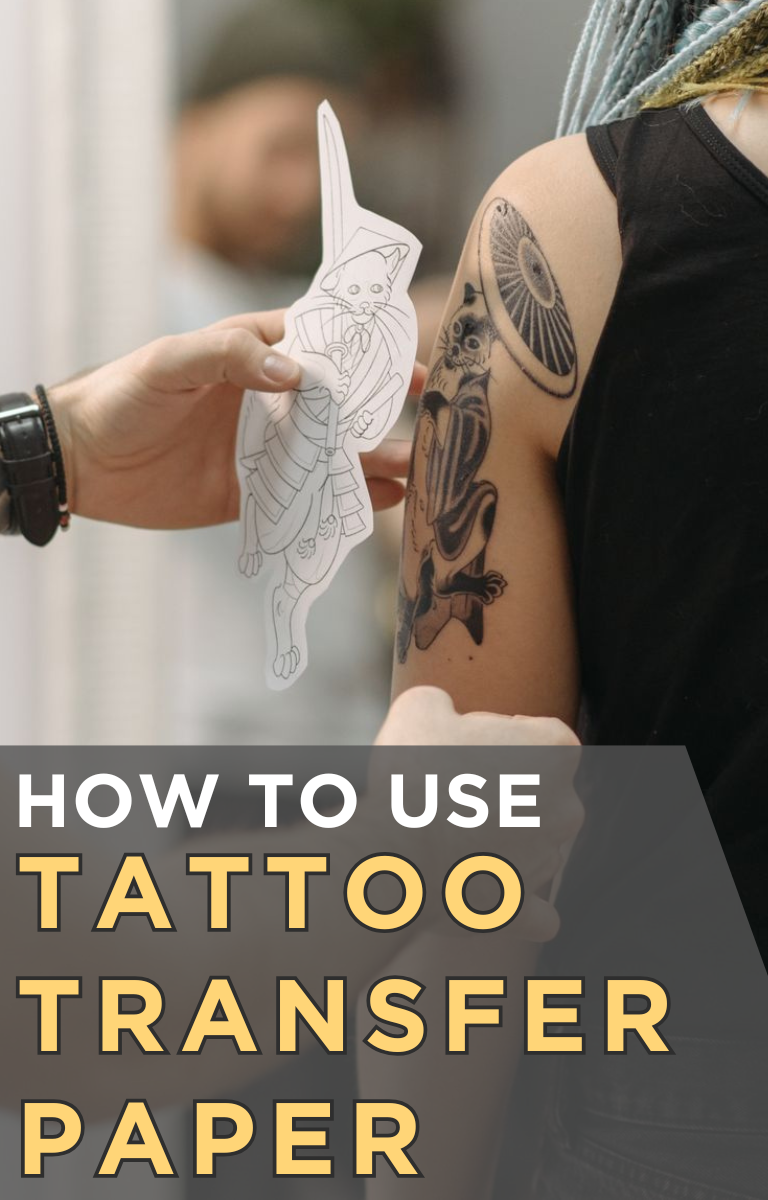
In This Article
- Key Takeaways
- What is tattoo transfer paper?
- Why does the transfer step matter so much?
- What types of tattoo transfer paper are there?
- What supplies do you need before you start?
- How do you use tattoo transfer paper step by step?
- What mistakes should you avoid with stencils?
- Why learning this live matters
- How Ink Different trains you for real studio work
- Ready to become a Tattoo Artist?
- FAQ
To use tattoo transfer paper, you create a stencil of your design, shave and clean the client’s skin and apply a thin layer of stencil solution. Then you press the stencil firmly onto the skin and peel it away slowly, which leaves a purple outline to tattoo over. Once the stencil sets for a few minutes, you’re ready to start.
It’s a step clients rarely think about, but every working Tattoo Artist relies on it. This guide covers the types of transfer paper, what you need, a step-by-step process and the mistakes to avoid.
Key Takeaways
- What it is: Tattoo transfer paper copies your design and leaves a temporary stencil on the skin.
- Two main types: Hand-traced (hectograph) paper and thermal paper used with a stencil printer.
- Skin prep is everything: Shaving, cleaning and drying the skin helps the stencil grip.
- Let it set: Give the stencil a few minutes to dry before tattooing, so the lines don’t wipe away.
- Best way to learn: Stencil work is a feel-based skill best learned with a Mentor watching your hands.
What is tattoo transfer paper?
Tattoo transfer paper is a layered paper that copies a tattoo design and transfers it onto skin as a temporary stencil. It gives you a reliable outline to follow while you tattoo.
The technology goes back to an old office copying method. The hectograph process, developed in 1874, used aniline ink or copy pencils to reproduce images, according to the Museum of Fine Arts, Boston. According to the overview of hectography, purple was the most popular color because of its density and contrast. That’s why tattoo stencils still look purple today.
Most tattoo transfer paper has several layers: a top sheet you draw or print on, a thin protective layer, a dye layer that creates the image and a backing sheet. Used correctly, it leaves a crisp purple outline that holds through the tattoo session.
Why does the transfer step matter so much?
A tattoo is only as straight, balanced and accurate as the stencil it follows. A sloppy stencil usually means a sloppy tattoo.
Even Tattoo Artists who are skilled at freehand work use stencils for placement, symmetry and client approval. The stencil lets your client see exactly where the design will sit before the machine ever starts, which builds trust.
A clean stencil also protects your reputation. Crooked lettering or an off-center piece is hard to hide once it’s posted online. Learn how your work shapes your name in our guide to platforms to help new and aspiring Tattoo Artists build their brand.
What types of tattoo transfer paper are there?
There are two main types: hectograph paper for hand-tracing and thermal transfer paper for use with a stencil printer.
- Hectograph paper: You trace your design by hand onto the top sheet. It’s great for practice and one-off custom work.
- Thermal transfer paper: You run a printed or digital design through a thermal stencil printer, which uses heat to create fast, sharp copies.
- Freehand markers: Not paper, but often used alongside stencils to adjust or add details directly on skin.
Pro Tip: Thermal printers save time in a busy tattoo studio, but every Tattoo Artist should still learn to hand-trace. It sharpens your understanding of the design.
What supplies do you need before you start?
Gather your design, transfer paper, a disposable razor, skin cleanser, stencil solution, gloves and clean paper towels before you begin.
Fumbling for supplies mid-process leads to smudges and stress, so set up your station first:
- Transfer paper: Hectograph or thermal, depending on your workflow.
- Disposable razor: To remove hair so the stencil sits flat.
- Skin cleanser: Used as part of proper hygiene practices under the OSHA Bloodborne Pathogens Standard.
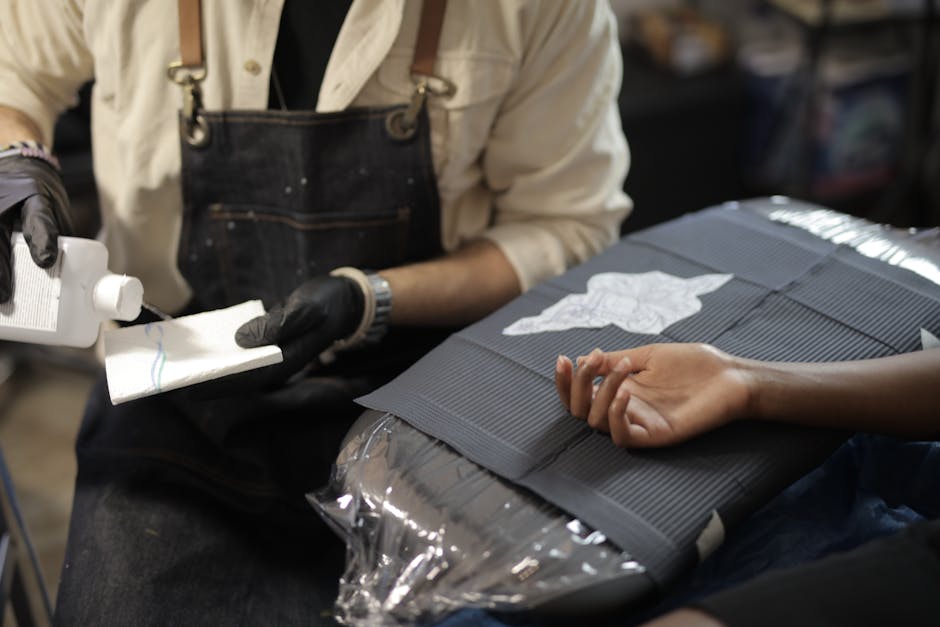
- Stencil solution: A product made for skin that helps the stencil grip and resist smudging.
- Gloves and lint-free paper towels.
For the full station setup, see our post on the tools every beginner Tattoo Artist should know.
How do you use tattoo transfer paper step by step?
Create your stencil, prep the skin, apply stencil solution, position and press the stencil, then peel it away and let it set.
- Step 1: Create your stencil. Hand-trace your design onto hectograph paper, or run it through a thermal stencil printer. Trim away excess paper so it’s easier to position.
- Step 2: Prep the skin. Put on gloves. Shave the area, clean it and dry it completely. Hair or oil will weaken the stencil.
- Step 3: Apply stencil solution. Spread a thin, even layer over the area. Follow your Mentor’s and tattoo studio’s protocol for which product to use and how much.
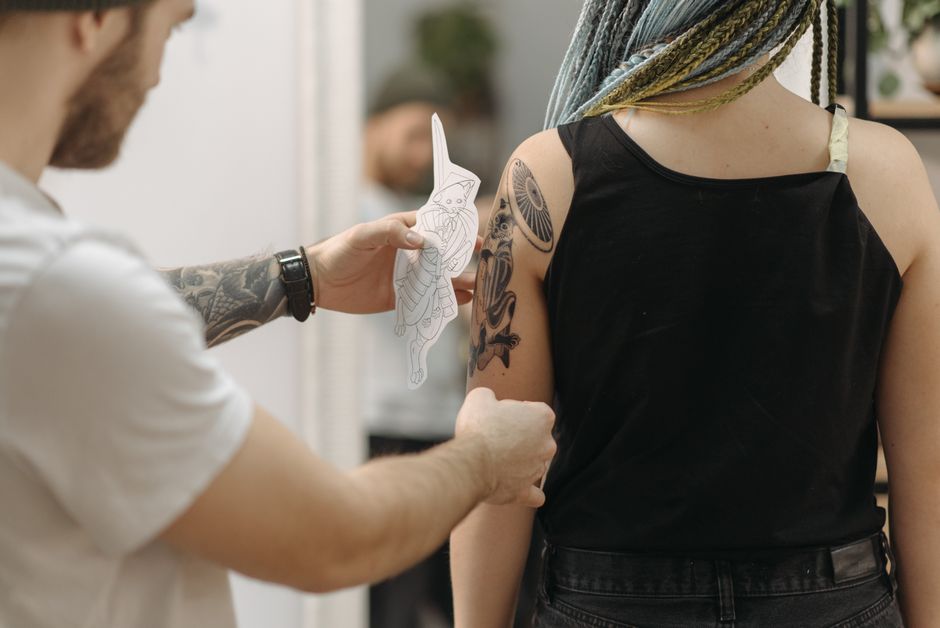
- Step 4: Position the stencil. Line up the design and check placement with your client. This is their last chance to approve, so take your time.
- Step 5: Press firmly and evenly. Hold the paper flat and press from the center outward. Don’t let it slide.
- Step 6: Peel carefully. Lift the paper slowly from one corner to reveal the outline.
- Step 7: Let it set. Wait a few minutes for the stencil to dry before you start tattooing.
What mistakes should you avoid with stencils?
The most common mistakes are poor skin prep, using too much or too little stencil solution, letting the paper slide and tattooing before the stencil has set.
These mistakes often don’t show until you’re already tattooing. Watch for:
- Oily or damp skin: The stencil won’t grip well. Always dry the area thoroughly.
- Too much solution: A thick layer can make the lines blur or spread.
- Sliding the paper: Even a small shift can smear or distort the design.
- Wiping too soon: Touching the stencil before it sets can lift the lines.
- Skipping client approval: Always confirm angle and placement before pressing.
- Ignoring body curves: A design that looks straight flat can distort on curved areas like ribs, forearms and calves, so check placement from several angles.
For a broader look at beginner traps, see our guide to the mistakes aspiring tattoo apprentices should avoid.
Why learning this live matters
Reading about stencils only gets you so far. It’s a tactile skill that clicks when a Mentor watches your hands and corrects you in real time.
You can watch plenty of videos and still struggle with your first stencil on a real person. How much pressure, how tacky the solution should feel and how long to wait are things you learn through repetition and feedback.
It’s also part of why tattooing remains a human craft. Read why Tattoo Artists are still essential.
How Ink Different trains you for real studio work
Ink Different’s Traditional Tattoo Apprenticeship teaches stencil work, machine handling and everything in between through structured, hands-on training. It’s a serious college alternative for aspiring professionals.
For 15 years, we’ve trained Tattoo Artists through in-person mentorship inside working tattoo studios.
What you can expect from our Traditional Tattoo Apprenticeship
The Traditional Tattoo Apprenticeship runs 18 to 24 months across four phases. You train in person with a Mentor at one of 60+ tattoo studios nationwide.
- Beginner-friendly: No prior art experience is required.
- Hands-on training: Personalized coaching on stencils, linework, shading and client care.
- Interest-free payment plans: Flexible payments make training more accessible.
A career that comes with confidence
You’ll finish with job-ready skills, a portfolio, licensing support and a guaranteed job offer at one of Ink Different’s own tattoo studios. According to ZipRecruiter, the average Tattoo Artist in the United States earns $106,858 a year as of November 2026.
Mentorship that pushes your brand and skills further
Our one-year, in-person Master Mentorship is for beginners and experienced Tattoo Artists. You train alongside celebrity and award-winning Master Mentors, including Al Fliction, Liz Cook, Kyle Dunbar, Boneface, Jordi Pla and Marcel Oliveira, focusing on mastering a specific style, growing your career and building a business.
Making tattoo training accessible for everyone
We offer Spanish-speaking locations in Denver, Orange County, NYC, Miami, San Antonio and San Diego. Our “Good Humans” culture means you join a supportive, family-like community from day one. Learn why tattoo apprenticeships are gaining ground as a solid alternative to college.

Ready to become a Tattoo Artist?
A clean stencil is one of the quiet skills that sets professional Tattoo Artists apart. Like every part of the craft, it comes down to training and repetition, not talent you’re born with. Each Mentor takes just two tattoo apprentices per tattoo studio, so seats fill up quickly.
Ready to become a Tattoo Artist? Apply now to Ink Different’s Traditional Tattoo Apprenticeship and start building an AI-proof career with licensing support along the way.
Frequently Asked Questions
How do you transfer a tattoo design onto skin?
Create a stencil with transfer paper, shave and clean the skin, apply a thin layer of stencil solution, press the paper firmly onto the area, then peel it away slowly.
What kind of paper do tattoo artists use for stencils?
Most use hectograph paper for hand-tracing or thermal transfer paper with a stencil printer. Many tattoo studios rely on thermal printers for speed.
Why are tattoo stencils purple?
Tattoo stencils use dye-based transfer methods that date back to the hectograph copying process, where purple was popular for its density and contrast.
Do you need stencil solution to use transfer paper?
Generally, yes. Stencil solution helps the stencil grip the skin and resist smudging. Follow your Mentor’s and tattoo studio’s protocol for which product to use.
How long should a stencil dry before tattooing?
Give it a few minutes to set. Starting too soon can wipe away the lines.
Can you learn to tattoo without prior art experience?
Yes. Ink Different’s Traditional Tattoo Apprenticeship is built for beginners and teaches drawing, stencils and machine fundamentals.