How to Get Into Trade School
November 11, 2026
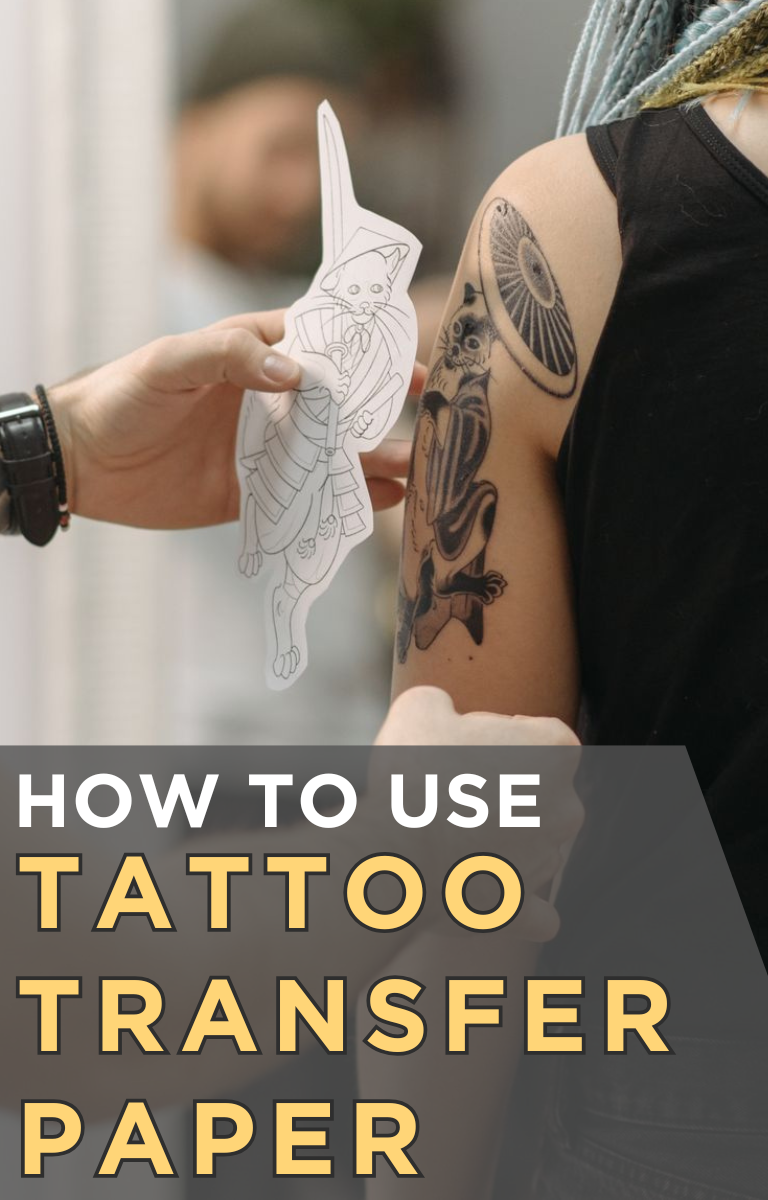
How to Use Tattoo Transfer Paper
November 12, 2026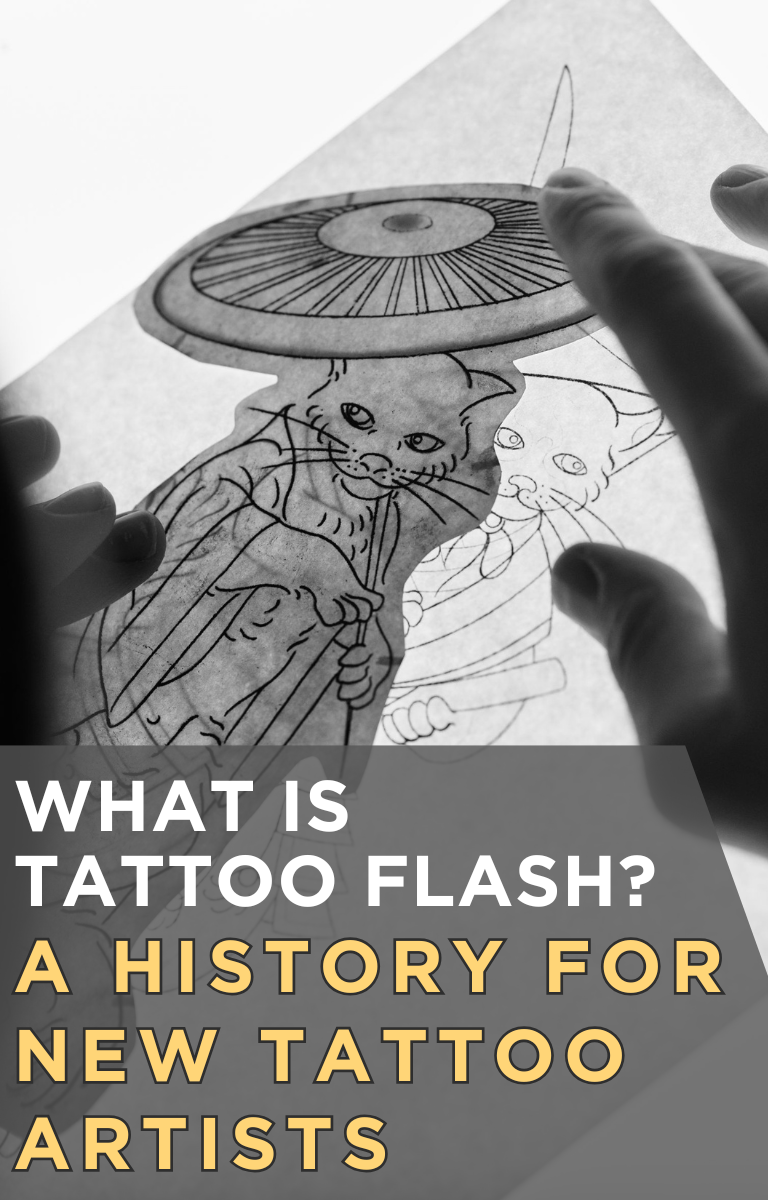
In This Article
- Key Takeaways
- What is tattoo flash?
- Where did tattoo flash come from?
- Why does tattoo flash still matter today?
- How do you read a tattoo flash sheet?
- How do you draw your own tattoo flash?
- What’s the difference between flash and custom work?
- How Ink Different helps you master flash
- Ready to become a Tattoo Artist?
- Frequently Asked Questions
Tattoo flash is pre-drawn tattoo artwork, usually arranged on a sheet, that clients can choose from and get tattooed without a custom design. For Tattoo Artists, flash is more than a menu on the wall. It’s a record of how the craft developed, and one of the best training tools a beginner can study.
This guide covers flash from a Tattoo Artist’s point of view: where it came from, the people and moments that shaped it, how to read a flash sheet and how to start drawing your own. At Ink Different Tattoos, we’ve spent 15 years training new Tattoo Artists, and flash history is one of the best places to start.
Key Takeaways
- Definition: Tattoo flash is ready-made artwork on sheets that clients can pick and get tattooed.
- Where the name came from: “Flash” was carnival slang for anything that drew a crowd.
- Key moments: The first electric tattoo machine patent in 1891, Sailor Jerry’s refinements in Honolulu and New York City’s tattoo ban from 1961 to 1997.
- It’s preserved as art: The Smithsonian American Art Museum holds 20th-century tattoo flash in its collection.
- Why it matters for you: Studying and drawing flash builds line control, composition and speed.
What is tattoo flash?
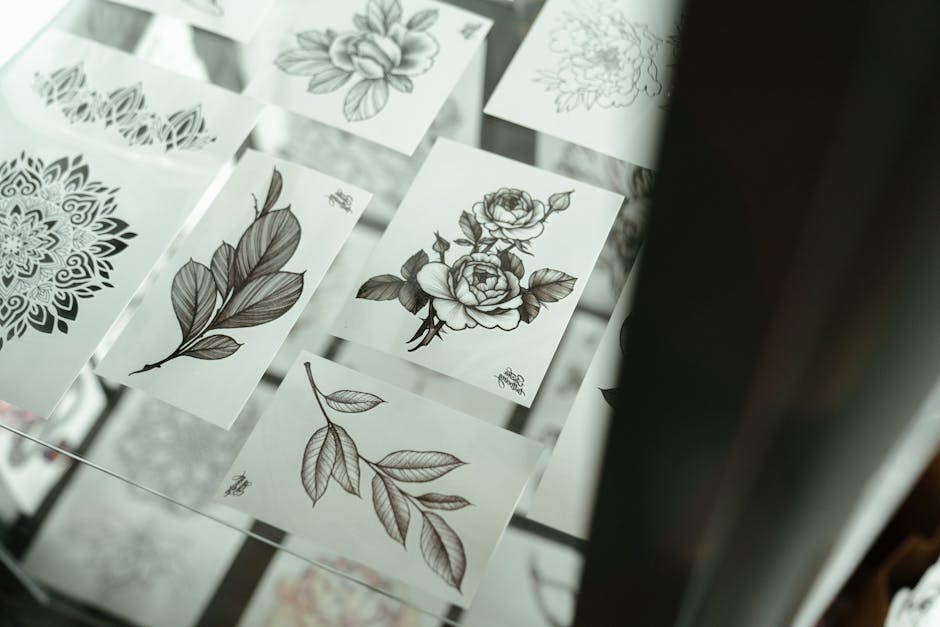
Tattoo flash is a set of pre-designed tattoo images, usually arranged on a single sheet. A client can point to a design and have it tattooed without waiting for a custom drawing.
Each design is drawn with clean lines and clear color choices so it reads well on skin and can be repeated many times. In North America, flash is commonly printed on 11 by 14 inch sheets, according to Wikipedia’s overview of tattoo flash. Today it also shows up in binders, on tattoo studio walls and online.
For a beginner, flash is a visual language. It shows how experienced Tattoo Artists solved problems like composition, readability and flow, long before you pick up a machine.
Where did tattoo flash come from?
Flash grew out of the traveling carnivals and port cities of late-1800s America, where Tattoo Artists needed a fast way to show customers what they could get.
The name came from the carnival.
According to the Motor City Tattoo Museum, “flash” was the word carnival callers used for anything that drew a crowd toward an attraction. Tattoo Artists working those circuits hung their design sheets to pull people in. Many folded their sheets accordion-style so they could pack up and move to the next town.
The electric machine sped things up.
Samuel O’Reilly, a New York Tattoo Artist, patented the first electric tattoo machine in 1891, according to Wikipedia’s profile of O’Reilly. Faster tattooing made ready-made designs even more practical for busy walk-in tattoo studios.
Sailors spread the imagery.
Anchors, swallows, hearts and ships traveled between port cities on sailors’ skin. Early tattooers left behind flash that’s now preserved in museums. New York’s South Street Seaport Museum, for example, holds flash by Augustus “Gus” Wagner, dated roughly 1910 to 1930, as Hyperallergic has covered.
Sailor Jerry refined the style.
Norman “Sailor Jerry” Collins, born in 1911, tattooed in Honolulu for decades, according to the Tattoo Archive. Wikipedia’s profile of Sailor Jerry notes that he developed his own pigments, reworked earlier designs with influences from Japanese artists and was among the first Tattoo Artists to use single-use needles and autoclave sterilization.
Flash survived a long ban.
Tattooing was illegal in New York City for 36 years, from 1961 to 1997, according to the University of Missouri–St. Louis Mercantile Library. The library’s collection of flash from the first decade after the ban shows how traditional imagery carried on.
Today, flash is recognized as art.
The Smithsonian American Art Museum holds 20th-century hand-drawn tattoo flash in its collection.
History Tip: When you study old flash, look at the dates and places. You’ll often see the same motifs redrawn by different Tattoo Artists in different cities, which is how the style spread.
Why does tattoo flash still matter today?
Flash trains your fundamentals, builds speed and connects your work to a tradition clients recognize. It sits underneath many of the styles you admire.
Even with so much custom work today, flash walls and flash events are still common in tattoo studios. They bring in walk-in clients and give newer Tattoo Artists steady, repeatable work.
Flash also shows why tattooing is so hard to automate. Software can generate an image, but it can’t read a nervous walk-in client, adjust a design to their body and apply it by hand. We cover this in our guide on why Tattoo Artists are still essential.
How do you read a tattoo flash sheet?
Study the line weight, color choices, negative space and how the designs are arranged together. Every sheet is a lesson.
Here’s what to look for:
- Outlines: Traditional flash uses thick, confident lines because bold lines tend to stay readable as skin ages.
- Color and shading: Notice how a small palette and black shading create depth without clutter.
- Negative space: See where the Tattoo Artist left skin open so the design can breathe.
- Layout: Look at how designs are grouped, balanced and spaced on the page. That’s composition, one of the hardest skills for new Tattoo Artists to learn.
- Repetition: Compare the same motif across different sheets and eras to see how Tattoo Artists put their own spin on it.
How do you draw your own tattoo flash?
Study classic designs, practice bold linework and build a personal library of repeatable images in your own style.
- Step 1: Study the classics. Look at historic flash in museum collections and books. Figure out why each line and layout works.
- Step 2: Master bold outlines. Fill pages with clean, confident lines. Shaky lines are the fastest way to spot a beginner.
- Step 3: Build a design vocabulary. Draw roses, daggers, panthers, swallows and lettering until you can produce them from memory.
- Step 4: Develop your voice. Take familiar motifs and push them toward your own style.
- Step 5: Arrange your sheet. Compose several designs on one page with balance and flow, the way you’d display them on a tattoo studio wall.
Before you start, get familiar with the tools every beginner Tattoo Artist should know.

What’s the difference between flash and custom work?
Flash is pre-drawn artwork meant to be tattooed on many clients. Custom work is a one-of-a-kind design made for one person. Strong Tattoo Artists do both.
Flash is fast, proven and often more affordable for clients. Custom work is personal and usually takes more time. Neither is better. They’re different tools for different clients.
As a beginner, flash is where you build the repetitions and confidence that custom work later requires. Skipping straight to complex custom pieces is one of the mistakes aspiring tattoo apprentices should avoid.
How Ink Different helps you master flash
The drawing and design skills behind great flash are built into Ink Different’s Traditional Tattoo Apprenticeship. You learn them from experienced Mentors, not on your own.
A tattoo apprenticeship is a hands-on alternative to college. Learn why tattoo apprenticeships are gaining ground as a solid alternative to college.
What you can expect from our Traditional Tattoo Apprenticeship
The Traditional Tattoo Apprenticeship runs 18 to 24 months across four phases. Phase 1, Art and Design Principles, focuses on drawing, shading, design and building a portfolio, the same skills flash depends on. You’ll later train in person with a Mentor at one of 60+ tattoo studios nationwide.
- Beginner-friendly: No prior art experience is required.
- Hands-on mentorship: In-person guidance from Mentors who know the craft.
- Interest-free payment plans: Flexible payments make training more accessible.
A career that comes with confidence
You’ll finish with job-ready skills, licensing support and a guaranteed job offer at one of Ink Different’s own tattoo studios. According to ZipRecruiter, the average Tattoo Artist in the United States earns $106,858 a year as of November 2026.
Mentorship that pushes your brand and skills further
Our one-year, in-person Master Mentorship connects you with celebrity and award-winning Master Mentors, including Al Fliction, Liz Cook, Kyle Dunbar, Boneface, Jordi Pla and Marcel Oliveira. It’s built for mastering a specific style, growing your career and owning your own business.
Making tattoo training accessible for everyone
We offer Spanish-speaking locations in Denver, Orange County, NYC, Miami, San Antonio and San Diego. Each Mentor takes just two tattoo apprentices per tattoo studio, so seats fill up quickly.

Ready to become a Tattoo Artist?
Flash has been part of tattooing for well over a century, from carnival booths to museum collections. Learning its history and drawing it yourself is one of the best ways to build a strong foundation as a new Tattoo Artist.
Ready to become a Tattoo Artist? Apply now to Ink Different’s Traditional Tattoo Apprenticeship and start building an AI-proof career, with licensing support along the way.
Frequently Asked Questions
What is tattoo flash in simple terms?
Tattoo flash is pre-drawn tattoo artwork on sheets or walls that clients can choose from and get tattooed. It’s a ready-made menu of designs.
Why is it called flash?
The name traces back to carnival slang. “Flash” meant anything eye-catching that drew a crowd, and Tattoo Artists borrowed it for their design sheets.
When did tattoo flash start?
Flash took hold in late-1800s America, as traveling and port-city Tattoo Artists displayed design sheets. The first electric tattoo machine patent came in 1891.
What size is a flash sheet?
In North America, tattoo flash is commonly printed on 11 by 14 inch sheets.
Do I need art experience to learn tattoo flash?
No. Ink Different’s Traditional Tattoo Apprenticeship is built for beginners. Phase 1 focuses on drawing and design fundamentals.
Will AI replace Tattoo Artists who do flash?
Software can generate images, but it can’t read a client, adapt a design to their body or tattoo by hand. That keeps the craft firmly human.