
Is Cosmetology a Trade School? Beauty and Body Art Careers Explained
November 26, 2026
In This Article
- Key Takeaways
- What is fake skin for tattooing?
- Why should you practice on fake skin first?
- What are the best types of fake skin for tattooing?
- How do you choose the best fake skin for your level?
- How do you practice tattooing on fake skin step by step?
- What mistakes should you avoid when practicing on fake skin?
- When do you move beyond fake skin?
- Get serious about your craft with Become A Tattoo Artist
- Frequently Asked Questions
The best fake skin for tattooing depends on your skill level. Beginners usually start with flat silicone practice sheets, which are affordable and good for linework and shading drills. As you improve, 3D practice limbs teach you to work around curves, and thicker multi-layer skins help you practice depth. Fake skin is for building fundamentals. Tattooing real people requires proper training and meeting your state’s licensing rules.
Structured repetition is what makes practice pay off. A 2019 review in Royal Society Open Science describes “deliberate practice” as activities designed by a skilled teacher specifically to improve performance. Below, we compare the main types of fake skin, explain how to choose and walk through a step-by-step practice session.
Key Takeaways
- What it is: Synthetic practice skin made from silicone or rubber that mimics the feel of human skin.
- Best for beginners: Flat silicone sheets are an affordable, practical starting point.
- Level up: 3D limbs teach curves, and thicker skins help with depth.
- Practice like it’s real: Run your full hygiene routine every session to build good habits.
- Feedback beats repetition alone: A Mentor can catch mistakes practice skin won’t show you.
What is fake skin for tattooing?
Fake skin is a synthetic practice surface, usually silicone or rubber, that mimics the texture and resistance of human skin so you can practice without risk to anyone.
It’s a bit like a flight simulator. Pilots log hours in simulators before flying passengers, and new Tattoo Artists log early practice on surfaces that forgive mistakes. Fake skin lets you feel how the machine moves, how depth changes your lines and how ink settles.
Fake skin comes as flat sheets, sheets with printed outlines and molded 3D shapes like arms, hands and legs. Each type fits a different stage of learning.

Why should you practice on fake skin first?
Fake skin builds muscle memory, machine control and confidence before you’re ever ready to work on a real person.
Clean lines come from thousands of repetitions. Fake skin is where those repetitions can happen safely. It’s also a place to practice your hygiene routine. Professional tattoo studios follow the OSHA Bloodborne Pathogens Standard, and practicing your setup on fake skin helps make those habits automatic.
Tattooing real people is a different matter. Most states regulate it. Oklahoma, for example, requires tattoo apprentices to be at least 18 and complete 1,500 supervised apprenticeship hours, according to the Oklahoma State Department of Health.
Pro Tip: Treat every practice session like a real appointment. Set up your station, put on gloves and run your full hygiene routine.
What are the best types of fake skin for tattooing?
Flat silicone sheets are best for fundamentals, printed skins for tracing practice, 3D limbs for curves and thick multi-layer skins for depth.
- Flat silicone sheets: Affordable, with good resistance for linework and shading drills.
- Printed practice skins: Come with outlines, so you can focus on execution rather than design.
- 3D silicone limbs: Arms, legs and hands that teach you to work around curves and joints.
- Thick multi-layer skins: Designed to give a better sense of depth for more advanced practice.
Quality varies between products. Look for skin that holds ink without smearing, doesn’t tear easily and has a texture that feels close to real skin. Reviews from working Tattoo Artists are more useful than marketing claims.
How do you choose the best fake skin for your level?
Match the material to your skill. Beginners start with flat sheets, intermediate learners add 3D shapes and advanced learners use thicker skins.
Buying the most realistic, expensive skin before you can pull a steady line is like buying racing tires before you’ve learned to drive. Start with flat sheets, where mistakes are cheap. Once your lines are consistent and your shading is smooth, move to 3D limbs for a new challenge.
That progression mirrors how structured training works: fundamentals first, complexity later. If you’re building a routine on your own, there’s a lot you can do to practice tattooing before a tattoo apprenticeship, starting with drawing and stencil work.
How do you practice tattooing on fake skin step by step?
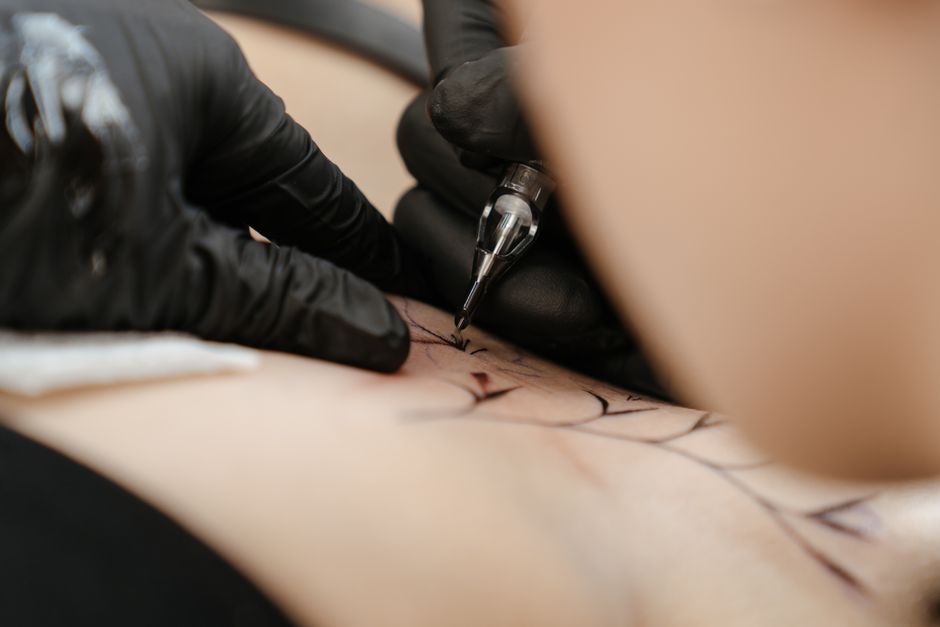
Set up your station, apply a stencil, practice lines, build shading and review your results.
- Set up your station. Lay out barriers, gloves and supplies as you would for a real client.
- Apply a stencil. Transfer a clean design so you’re practicing execution. Learning to use tattoo transfer paper properly is part of the skill.
- Pull your lines. Focus on steady speed, consistent depth and smooth curves. Repeat simple shapes until they’re clean.
- Build your shading. Practice smooth gradients and solid fills, and watch how hand speed affects saturation.
- Review and repeat. Compare the result to your stencil. Note what wobbled or blew out, then try again.
Repetition is where the progress happens. Each session teaches your hand something new.
What mistakes should you avoid when practicing on fake skin?
The biggest mistakes are practicing without structure, working too deep, skipping hygiene habits and assuming fake skin behaves exactly like real skin.
Fake skin is a tool, not a full substitute. Real skin stretches, moves, bleeds and swells, and fake skin doesn’t. It’s great for drilling fundamentals, but it can give you false confidence if it’s the only surface you ever work on.
Practicing without feedback is another trap. Repeating a mistake just makes it a habit. Ink Different Master Mentor BillyJack Gunter runs Thursday night critiques to give Tattoo Artists regular, honest feedback on their work. Skipping that kind of feedback is one of the most common apprentice mistakes.
Warning: Fake skin won’t always tell you when you’ve gone too deep. A trained eye watching your technique helps you avoid habits that lead to needle cross-lines and blowouts on real skin.
When do you move beyond fake skin?
Once your lines, shading and machine control are consistent, and only with proper training and supervision that meets your state’s rules.
Fake skin builds the foundation, but becoming a professional takes real feedback, supervised client work and licensing. Requirements vary from state to state, as this state-by-state tattoo licensing map shows.
The transition goes best with structured support. Ink Different apprentice Ashley Breaux moved from art school and the military into her tattoo apprenticeship, where in-person mentorship helped turn practice into professional skill.
Get Serious About Your Craft With Ink Different
Ink Different’s Traditional Tattoo Apprenticeship takes you from practice drills to supervised work on real skin, with licensing support along the way.
What You Can Expect From Our Traditional Tattoo Apprenticeship
The Traditional Tattoo Apprenticeship runs 18 to 24 months across four phases, with in-person training at one of 60+ tattoo studios nationwide. No prior art experience is required.
- Phase 1, Art and Design Principles: Drawing, shading, digital design and building a portfolio.
- Phase 2, Machine Mastery and Practice Tattooing: Hand-control exercises, machine operation, lining, shading and color packing on practice surfaces like fake skin.
- Phase 3, Supervised Tattoos: Tattooing real skin under a Mentor’s direct supervision.
- Phase 4, Junior Artist Externship: Building client relationships and refining your skills while you start earning.
A Career That Comes With Confidence
For 15 years, Ink Different has trained aspiring Tattoo Artists as a college alternative. You’ll finish with job-ready skills, licensing support and a guaranteed job offer at one of Ink Different’s own tattoo studios. Interest-free payment plans help make training more accessible.
Mentorship that pushes your brand and skills further
The one-year, in-person Master Mentorship lets you train with celebrity and award-winning Master Mentors like BillyJack Gunter, with a focus on mastering a specific style, growing your career and learning the business of running a tattoo studio.
Making tattoo training accessible for everyone
We offer Spanish-speaking locations in Denver, Orange County, NYC, Miami, San Antonio and San Diego. Our “Good Humans” culture means you join a supportive, family-like community.
Ready to become a Tattoo Artist?
Fake skin is a smart place to start. The next step is structured training, where a Mentor helps you turn practice into professional skill. Each Mentor takes just two tattoo apprentices per tattoo studio, so seats fill up quickly.
Ready to become a Tattoo Artist? Apply now to Ink Different’s Traditional Tattoo Apprenticeship and start building a career with licensing support along the way.
Frequently Asked Questions
What is the best fake skin for tattooing beginners?
Flat silicone practice sheets. They’re affordable and good for linework and shading drills before you move to 3D shapes or thicker skins.
Is fake skin the same as real skin?
No. It mimics the texture and resistance of skin, but it doesn’t stretch, bleed or swell like real skin, so it’s best for building fundamentals.
How long should I practice on fake skin?
There’s no fixed timeline. Focus on consistent lines, smooth shading and steady machine control, then move on through structured, supervised training.
Can I practice on real people at home?
No. Tattooing real people without proper training risks infection and scarring, and most states regulate who can tattoo.
Can fake skin replace a tattoo apprenticeship?
No. Fake skin builds fundamentals, but it can’t provide in-person feedback, supervised client work or licensing support.
Do I need art experience to start practicing on fake skin?
No. Ink Different’s Traditional Tattoo Apprenticeship starts with art and design principles, so beginners are welcome.
Sources (all checked November 23, 2026)