Midlife Career Change: How to Retrain Without Starting From Zero
November 26, 2026
In This Article
- Key Takeaways
- Is Cosmetology a Trade School Path?
- What Counts as Trade School, Anyway?
- What Beauty and Body Art Careers Can You Pursue?
- How Does Cosmetology Compare to Tattooing?
- How Do You Choose the Right Path for You?
- How Does Tattoo Artist Training Actually Work?
- What Does Ink Different’s Apprenticeship Offer?
- Ready to Take the First Step?
- FAQ
Yes, cosmetology is a trade school path. Cosmetology programs train you for a specific licensed career through hands-on practice and classroom study. They lead to a certificate and a state licensing exam, not a four-year degree. Tattooing is a related hands-on career, but it’s usually learned differently, through a tattoo apprenticeship with an experienced Tattoo Artist in a working tattoo studio.
The federal government classifies cosmetology as trade-style training. The U.S. Bureau of Labor Statistics lists a “postsecondary nondegree award” as the typical entry-level education for barbers, hairstylists and cosmetologists, and notes that all states require them to be licensed. Below, we compare cosmetology and tattooing, look at other beauty and body art careers and explain how to choose.
Key Takeaways
- Cosmetology is a trade: It typically requires a postsecondary nondegree award and a state license, according to the BLS.
- Steady demand: The BLS projects 7% job growth for barbers, hairstylists and cosmetologists from 2025 to 2035, much faster than average.
- Tattooing is learned differently: Most Tattoo Artists train through a hands-on tattoo apprenticeship rather than a cosmetology program.
- Licensing varies: Both fields are regulated by state, with different requirements.
- No experience needed: Ink Different’s Traditional Tattoo Apprenticeship starts with art and design fundamentals.
Is Cosmetology a Trade School Path?
Yes. Cosmetology prepares you for a specific licensed career through practical training rather than a general academic degree.
Cosmetology programs typically mix classroom study with hands-on training and lead to a certificate or other nondegree award, according to the BLS. Graduates then take a state exam for licensure. Like other trades, the value comes from what you can do with your hands, the client trust you build and the results in your portfolio.
It’s also a field with lots of openings. The BLS projects about 75,800 openings each year for hairdressers, hairstylists and cosmetologists from 2024 to 2034, one of the highest totals among jobs that need some postsecondary training but not a bachelor’s degree, according to The Economics Daily. Cosmetology sits on a long list of trade school careers that pay at different levels.
What Counts as Trade School, Anyway?
Trade school is training for a specific skilled job, usually in two years or less, that leads to a certificate, a license or both.
Instead of general education courses, you focus on the work itself, whether that’s hair, skin, nails, electrical work, welding or HVAC. If you’re new to the idea, this plain-English look at trade school covers the basics.
Some hands-on careers, including tattooing, are learned mainly through apprenticeships rather than schools. That’s still trade-style training, just in a different format.
Pro Tip: Before choosing any training, check whether it includes licensing support and real, supervised client work. Those two things separate serious training from an expensive hobby.
What Beauty and Body Art Careers Can You Pursue?
Beauty and body art careers include cosmetology, esthetics, nail technology, barbering, permanent makeup and tattooing. Most require hands-on training and a state license.
- Cosmetology and barbering: Haircutting, coloring and styling. Barbers, hairstylists and cosmetologists earned a median of $35,880 in May 2025, according to the BLS.
- Esthetics (skincare): Facials and skin treatments. Skincare specialists earned a median of $41,560 in May 2024, with 7% projected growth from 2024 to 2034, according to the BLS.
- Nail technology: Manicures, pedicures and nail art. Manicurists and pedicurists earned a median of $34,660 in 2024, according to the BLS.
- Permanent makeup: Cosmetic tattooing like brows and lips, which often draws on both tattoo and beauty training.
- Tattooing: Permanent body art created with a tattoo machine under strict safety standards, usually learned through a tattoo apprenticeship.
Tattooing stands apart because it’s permanent, which raises the stakes for precision, hygiene and skill. Some Tattoo Artists even specialize in medical work. Ink Different Master Mentor Kara Gutierrez, for example, built a career restoring areolas for breast cancer survivors.

How Does Cosmetology Compare to Tattooing?
Cosmetology is usually learned in a state-approved school with required hours before a licensing exam, while tattooing is usually learned through a hands-on tattoo apprenticeship in a working tattoo studio.
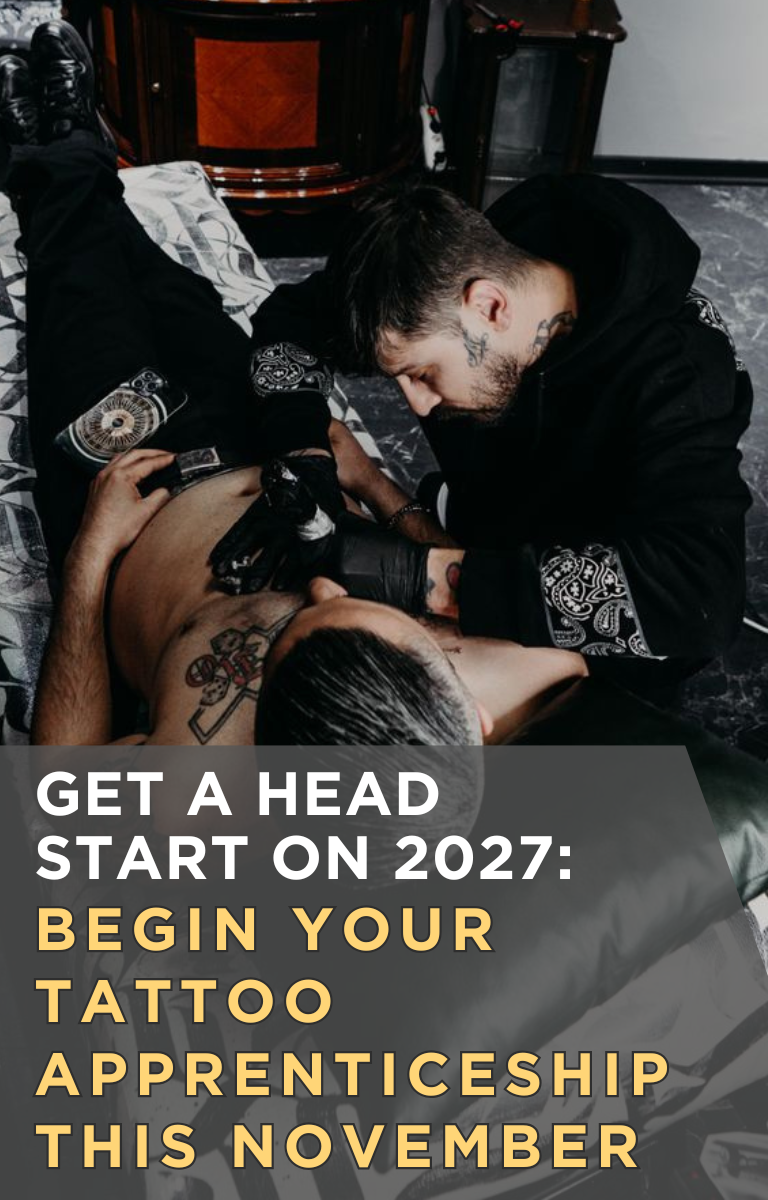
In a tattoo apprenticeship, you learn drawing, machine handling, sterilization and skin work directly beside an experienced Tattoo Artist. That mentorship passes on technique and professional judgment that’s hard to learn from a textbook.
Many people move between the two worlds. Ink Different apprentice Rina spent 15 years as a hairdresser before starting her tattoo apprenticeship, and Destiny came to tattooing from permanent makeup.
Both fields are regulated by state, and tattoo rules vary widely, as this state-by-state tattoo licensing map shows. Safety is essential in tattooing, starting with the OSHA Bloodborne Pathogens Standard.
Pay can differ too. Cosmetology has a BLS median of $35,880, while ZipRecruiter puts the average Tattoo Artist salary at $106,858 a year, though tattoo income varies widely with skill, location and client base.
How Do You Choose the Right Path for You?
Match your interests and learning style to the career that excites you, then check your state’s licensing requirements.
Step 1: Name your medium
Do you light up imagining hair transformations, skincare or permanent artwork on skin? Follow that pull.
Step 2: Consider how you learn
Do you prefer a structured classroom schedule, or hands-on mentorship in a working tattoo studio?
Step 3: Research licensing
Check your state’s rules. If you might move, some states are easier for relocating Tattoo Artists than others.
Step 4: Visit and ask questions
Talk to working professionals and look closely at the quality of their work.
Step 5: Commit
Once you’ve decided, take the first step toward training.
Choosing training without checking it carefully is one of the most common apprentice mistakes, and one of the easiest to avoid.

How Does Tattoo Artist Training Actually Work?
Tattoo training usually follows a structured tattoo apprenticeship, building from drawing to machine control to supervised work on real skin.
You start with drawing and design fundamentals, then learn machine handling and sterilization, then tattoo real skin under supervision. Each stage prepares you for the next, and the mentorship model means you learn directly from someone with years of experience.
Because it’s so hands-on, many people see a tattoo apprenticeship as a practical alternative to college.
What Does Ink Different’s Traditional Tattoo Apprenticeship Offer?
Ink Different’s Traditional Tattoo Apprenticeship runs 18 to 24 months across four phases, with in-person training at one of 60+ tattoo studios nationwide. It’s built for complete beginners.
- Phase 1, Art and Design Principles: Drawing, shading, digital design and building a portfolio.
- Phase 2, Machine Mastery and Practice Tattooing: Hand-control exercises, machine operation, lining, shading and color packing.
- Phase 3, Supervised Tattoos: Tattooing real skin under a Mentor’s direct supervision.
- Phase 4, Junior Artist Externship: Building client relationships and refining your skills while you start earning.
- Interest-free payment plans: Flexible payments make training more accessible.
You’ll finish with job-ready skills, licensing support and a guaranteed job offer at one of Ink Different’s own tattoo studios.
Want to go further? The one-year, in-person Master Mentorship lets you train with celebrity and award-winning Master Mentors like Kara Gutierrez, with a focus on mastering a specialty and learning to run your own tattoo studio.
We also offer Spanish-speaking locations in Denver, Orange County, NYC, Miami, San Antonio and San Diego. Our “Good Humans” culture means you join a supportive, family-like community.
Remember: Each Mentor takes just two tattoo apprentices per tattoo studio, so seats fill up quickly.

Ready to Take the First Step?
Cosmetology is a trade school path, and tattooing is another hands-on, licensed career, usually learned through a tattoo apprenticeship. If permanent artwork is what draws you, the right training and Mentor can get you there.
Ready to become a Tattoo Artist? Apply now to Ink Different’s Traditional Tattoo Apprenticeship and start building a creative career with licensing support along the way.
Frequently Asked Questions
Is cosmetology considered a trade school?
Yes. Cosmetology programs typically lead to a certificate and a state license, and the BLS lists a postsecondary nondegree award as the typical entry-level education.
Do you need a license to be a cosmetologist?
Yes. According to the BLS, all states require barbers, hairstylists and cosmetologists to be licensed.
Is tattooing taught in cosmetology school?
Usually not. Most Tattoo Artists learn through a hands-on tattoo apprenticeship in a working tattoo studio.
Can a cosmetologist become a Tattoo Artist?
Yes. Client care, hygiene habits and steady hands transfer well, though you’ll still need tattoo training and must meet your state’s licensing rules.
How long does a tattoo apprenticeship take?
Most take one to three years. Ink Different’s Traditional Tattoo Apprenticeship takes 18 to 24 months across four phases.
Do I need art experience to start tattoo training?
No. The Traditional Tattoo Apprenticeship is built for beginners and starts with art and design principles.
Sources (all checked November 23, 2026)