Women-Owned Tattoo Studios Are Changing the Business of Ink
October 8, 2026
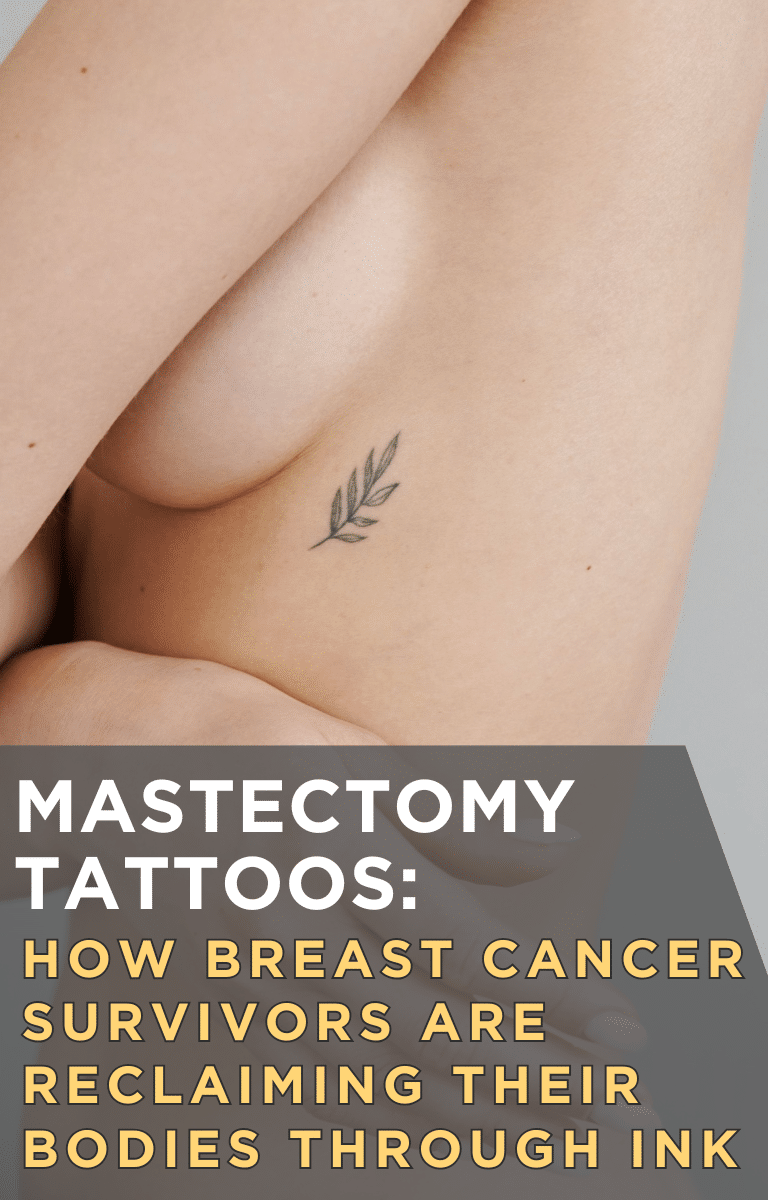
Mastectomy Tattoos: How Breast Cancer Survivors Are Reclaiming Their Bodies Through Ink
October 8, 2026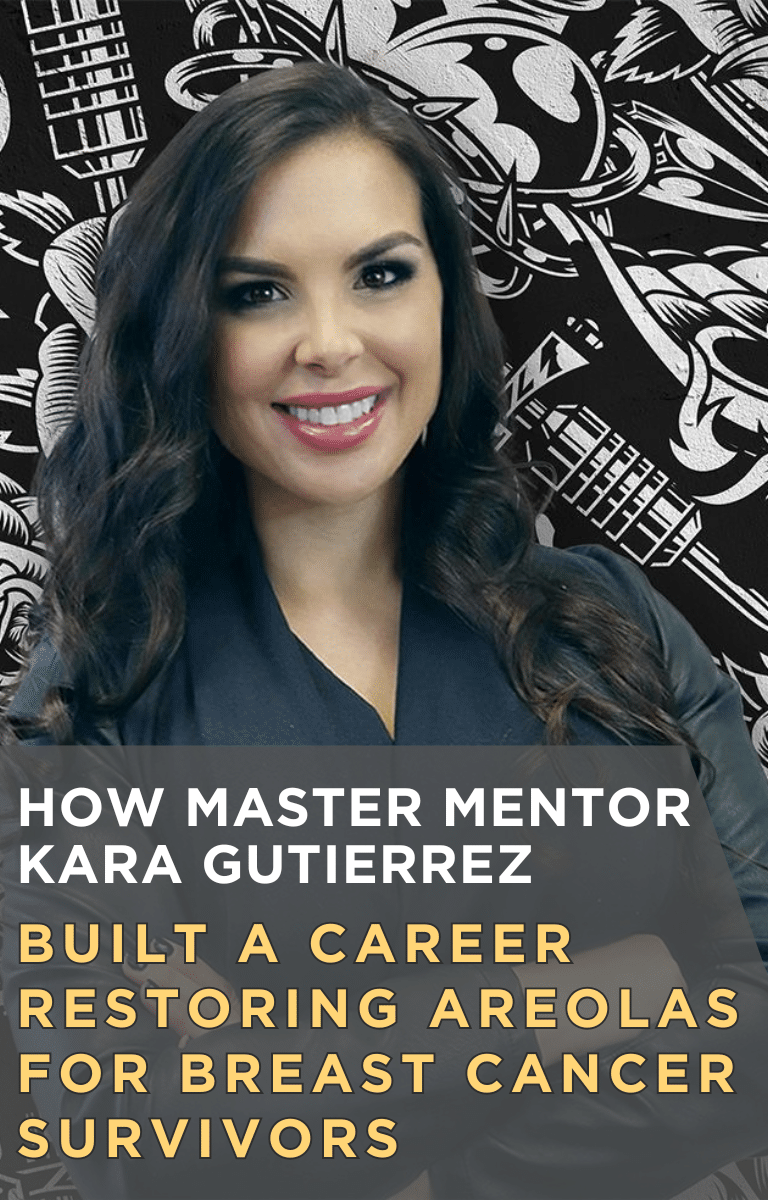
In This Article
- Key Takeaways
- What is paramedical tattooing and areola restoration?
- Who is Master Mentor Kara Gutierrez?
- Why does areola restoration matter to breast cancer survivors?
- How did Kara build a career in this specialized craft?
- What skills does areola restoration require?
- How can you start a career in paramedical tattooing?
- What you can expect from our Traditional Tattoo Apprenticeship
- Mentorship that pushes your brand and skills further
- Making tattoo training accessible for everyone
- Ready to become a Tattoo Artist?
- FAQ
Earlier this year, Paul Anthony watched Master Mentor Kara Gutierrez work with a client in Kansas City. By the end, everyone in the room was crying, including the camera crew. Kara restores areolas for breast cancer survivors and others with chest scars, and she’s been in the industry for nearly 15 years.
In a September 2026 webinar with Ink Different, she shared how she found this work, what it demands, and who she’s looking to train next. Paramedical tattooing uses tattoo techniques to restore natural-looking features after surgery or injury. For Kara, it’s the most advanced tattooing there is.
Key Takeaways
- The craft: Areola restoration uses realism tattooing to recreate natural-looking nipples and areolas on scarred skin after surgery.
- The Mentor: Kara Gutierrez started with a traditional tattoo apprenticeship and now tattoos one to four areolas a day.
- The mindset: In her words, scar tissue demands more humility than confidence, and healed results matter more than fresh photos.
- The path: Kara only trains Tattoo Artists who already know their machine, needles, and realism. Beginners need a tattoo apprenticeship first.
- The opportunity: She’s taking just one or two Tattoo Artists to train this year.
What is paramedical tattooing and areola restoration?
Paramedical tattooing uses tattoo techniques to restore natural-looking features after surgery or injury. Areola restoration recreates the look of a nipple and areola on the chest.
Many of Kara’s clients are breast cancer survivors who’ve had mastectomies and reconstruction. She also works with burn survivors, people who’ve had gender-affirming surgery, and clients with scarring from other surgeries or complications.
Kara calls her approach scar-aware tattooing. Every scar behaves differently, so she studies what each client’s skin has been through before she picks up a machine.
When a chest is too altered to recreate an areola, she may suggest decorative tattooing instead. The goal is to beautify the area, not force a recreation the skin can’t support.

Who is Master Mentor Kara Gutierrez?
Kara Gutierrez is an Ink Different Master Mentor based in Kansas City who specializes in areola restoration and scar-aware tattooing.
She tattoos one to four areolas a day. For about six or seven years, she’s also taught monthly at St. Luke’s Hospital, a teaching hospital in Kansas City.
She’s known for sharing what she knows without gatekeeping. She even teaches saline removal of radiation marking tattoos for free, so survivors who want those marks gone can have them removed.
Kara also works closely with her husband, a double board-certified physician. Together, they created AMIT, short for Application of Medicine and Tattooing, a course covering the medical knowledge Tattoo Artists in this field need.
Remember: You do not need to know your specialty on day one. You need to build real skills first, then let purpose guide where you point them.
Why does areola restoration matter to breast cancer survivors?
Areola restoration matters because it helps survivors reclaim a part of their body that surgery took from them.
Breast cancer is one of the most common cancers among women in the United States, according to the Centers for Disease Control and Prevention. Kara explained that many survivors go through at least two surgeries, and some go through as many as 10.
By the time they reach her chair, many feel like they’ve lost control of their own bodies. Kara sees her role as the final chapter, where clients are respected, supported, and heard.
She often tells clients she’s giving them their private parts back. Sometimes she invites a partner over to see the healed result. As Paul shared, he’s watched couples reconnect in that moment.
As Kara put it, you can’t put a price on the feeling of putting someone back together.
How did Kara build a career in this specialized craft?
Kara built her career on a traditional tattoo apprenticeship, years of permanent makeup experience, and one client who changed everything.
She learned the hard way first. Her best friend, Tim, brought her into tattooing through an old-school traditional tattoo apprenticeship. That foundation taught her to tattoo every part of the body and every skin tone.
She spoke up in permanent makeup. Kara also worked in permanent makeup. As the industry grew online, she saw a lot of misinformation and called it out. That built relationships with respected names in the field.
One client sparked the work. A woman in her late fifties came in to have her brows done. Kara asked about her other tattoos and learned her areolas had been poorly tattooed after a double mastectomy. Kara told her she could fix them.
Then the work found her. Word spread among clients, and hospitals started reaching out. Kara is clear that nobody should get into this work for the money. People come to it because it has touched their lives in some way.
What skills does areola restoration require?
Areola restoration requires strong tattooing fundamentals, realism skills, deep knowledge of scar tissue, and the judgment to know when not to tattoo.
Here are the core skills Kara emphasized:
- Reading the scar: Hypertrophic scars, radiated skin, grafted skin, thin skin after a flat closure, and stretched scars all behave differently. You need to recognize each one on sight and by touch.
- Knowing when skin is ready: A scar can look healed on the surface while it’s still changing underneath. Kara calls this the iceberg effect.
- Machine control: Kara breaks control down into depth, speed, stretch, angle, pressure, and patience. Scar thickness can change within a few millimeters, so constant adjustment matters.
- Realism and color: Kara describes areola realism as an illusion built on placement, value, undertone, edge, texture, and highlight. Colors are chosen for how they’ll heal, not how they look fresh.
- Restraint: If the skin isn’t taking more pigment, forcing it won’t help. Kara schedules at least two sessions and sometimes three, so the skin can heal between them.
- Consultations: Kara believes the consultation is part of the procedure. She learns each client’s history, goals, and limits, then explains what can and can’t be promised.
She also uses a simple traffic light check. Green means the skin is stable and the work is within your skill. Yellow means pause. Red means stop and refer the client out.

How can you start a career in paramedical tattooing?
You start by becoming a skilled Tattoo Artist first. Areola restoration is not an entry point.
Kara was direct about this. She’s looking for Tattoo Artists who already know their machine inside and out, understand needles, and can tattoo realism. With that foundation, she believes she can get someone ready in about 12 months.
If you’re new to tattooing, your first step is a tattoo apprenticeship. Kara also recommends practicing decorative tattoos over scars, since body art is more forgiving than areola work. Skipping the foundation is one of the biggest mistakes aspiring tattoo apprentices should avoid.
The good news is you don’t need prior art experience to begin. You need commitment, a strong work ethic, and the right Mentor. That’s why more people are choosing a tattoo apprenticeship as a college alternative.
Good to know: Seats in live, in-person mentorships are limited by nature, so the aspiring artists who move with intention are the ones who find a seat.
What you can expect from our Traditional Tattoo Apprenticeship?
Ink Different’s Traditional Tattoo Apprenticeship is a four-phase tattoo apprenticeship that takes complete beginners to job-ready Tattoo Artists with licensing support.
It’s the same kind of foundation Kara started with. Here’s what you can expect:
- Hands-on training: You learn in person from experienced Mentors, not from a video playlist.
- Beginner-friendly: No prior experience required. You’ll learn drawing, line work, and safety.
- Licensing support: Your Mentor helps you meet your state’s requirements. See how to get your tattoo license in Texas or how long a tattoo license takes in Colorado.
- A guaranteed job offer: You’ll receive a guaranteed job offer at one of Ink Different’s tattoo studios.
This is a career that comes with confidence. You’ll finish with real skills, licensing support, and a guaranteed job offer at one of Ink Different’s 60+ tattoo studios nationwide. Seats are limited, with only two apprentices per tattoo studio per Mentor.
What advanced mentorship offers to build your brand and skills
Advanced mentorship lets experienced Tattoo Artists train directly with Ink Different’s Master Mentors to sharpen a specialty.
Ink Different’s Master Mentors include Kara Gutierrez, Al Fliction, Liz Cook, Kyle Dunbar, Boneface, and Jordi Pla. Kara credits Liz Cook, her best friend, for her deep knowledge of color theory.
Kara’s own mentorship is selective. She’s taking only one or two Tattoo Artists this year. Trainees get case studies, consultation training, and the chance to observe her work at St. Luke’s Hospital.
She wants Tattoo Artists who know what it means to be an apprentice and arrive ready to work. She’s also open to learning from them. Being based in Kansas City makes training easier for Tattoo Artists in or near Missouri.
Making tattoo training accessible for everyone
Ink Different offers Spanish-speaking locations so language is never a barrier to your tattoo career.
You’ll find Spanish-speaking locations in Denver, Orange County, NYC, Miami, San Antonio, and San Diego. With 60+ locations nationwide, there’s likely one near you.
Ink Different’s “Good Humans” culture means you join a supportive community that wants you to succeed. Kara reflects that culture, too. She believes there should be no gatekeeping in this work.
Ready to become a Tattoo Artist?
Kara Gutierrez built a career that gives survivors a piece of themselves back. It started with a traditional tattoo apprenticeship and a strong foundation.
If this work calls to you, the first step is learning to tattoo. Every specialty, including areola restoration, builds on that.
Ready to become a Tattoo Artist? Apply now to Ink Different’s Traditional Tattoo Apprenticeship and start building an AI-proof career, with licensing support along the way. Prefer to explore first? Fill out our quick questionnaire to see if the Traditional Tattoo Apprenticeship is right for you.
Already an experienced Tattoo Artist? To be considered for training with Kara, email info@inkdifferenttattoos.com with eight to 10 images of your recent work. Tell us why this work matters to you and what you want to achieve.
Frequently Asked Questions
What is areola restoration tattooing?
Areola restoration uses realism tattooing to recreate the look of a natural nipple and areola on the chest after surgery.
Do I need art experience to start a tattoo apprenticeship?
No. Ink Different’s Traditional Tattoo Apprenticeship welcomes beginners and teaches drawing, line work, and safety.
How long does it take to learn areola restoration with Kara?
For Tattoo Artists with a strong foundation, Kara aims to get them ready in about 12 months.
Can I specialize in paramedical or areola restoration work?
Yes. You build strong foundations first, then specialize through advanced mentorship. Our Master Mentorship connects you with award-winning Mentors to refine restorative and specialty techniques.
What makes Ink Different different from a tattoo school?
Ink Different offers in-person mentorship, access to Master Mentors, licensing support, a guaranteed job offer, and a “Good Humans” community.
Is restorative tattooing a stable career choice?
Yes. It depends on human skill, trust, and judgment that technology can’t replicate.