
Tattoo Printers: Why Artists Still Hand-Place Stencils
November 20, 2026
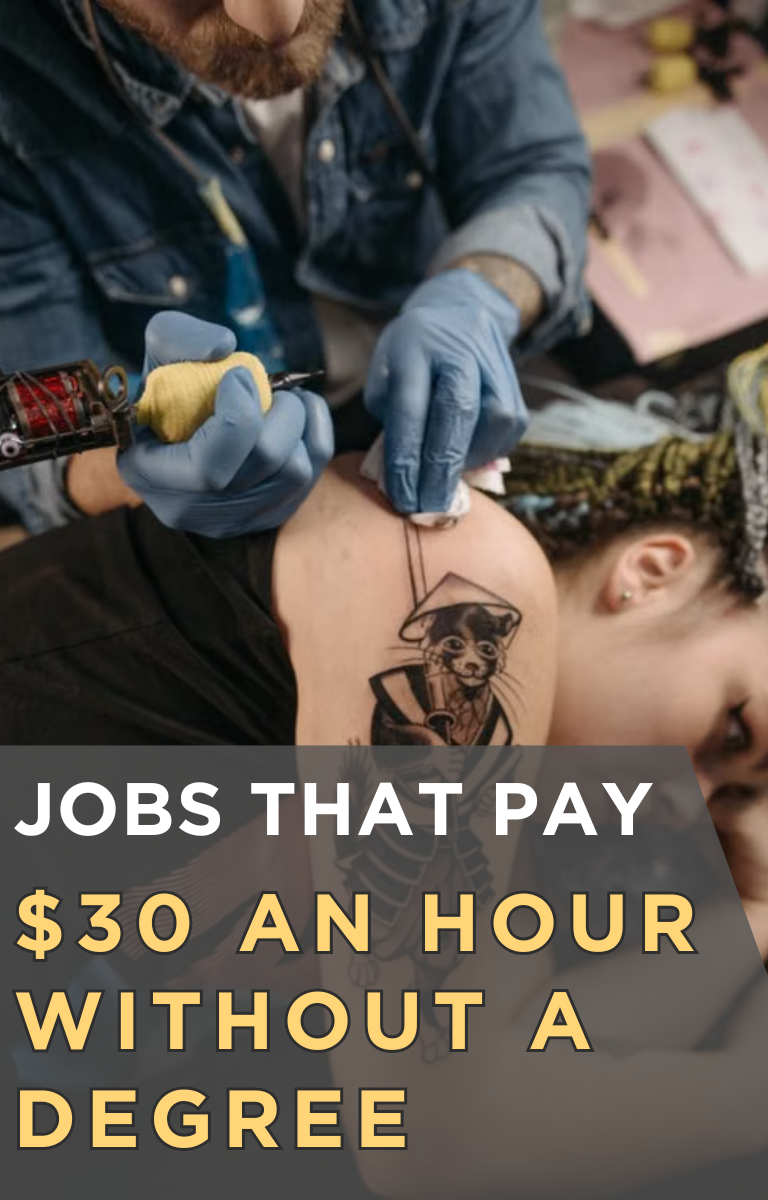
Jobs That Pay $30 an Hour Without a Degree
November 20, 2026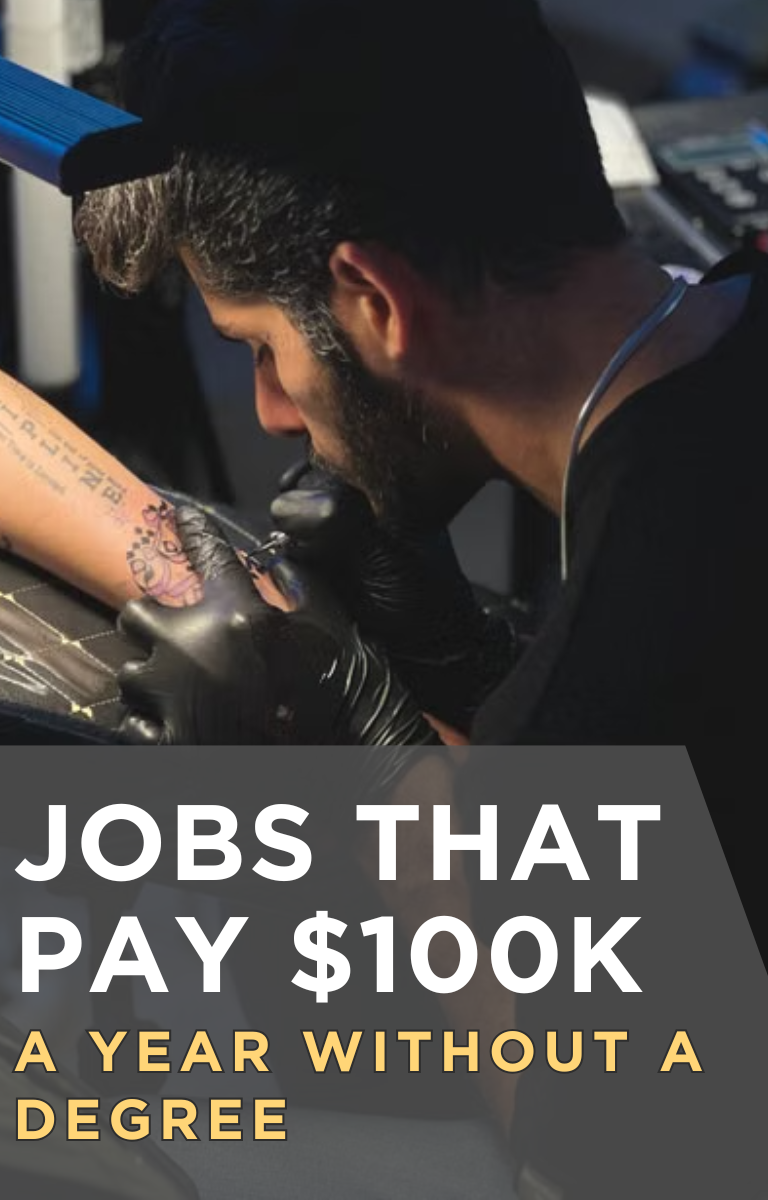
In This Article
- Key Takeaways
- What are high-paying jobs that pay $100K without a degree?
- Why do these jobs not require a four-year degree?
- Which jobs can actually pay $100K a year without a degree?
- Why does tattooing stand out among no-degree careers?
- How do you start a six-figure path without a degree?
- What does the Ink Different Traditional Tattoo Apprenticeship offer?
- How can Master Mentorship accelerate your income?
- Ready to build an AI-proof, six-figure career?
- FAQ
Jobs that can pay $100K a year without a four-year degree include elevator installers, experienced power-line workers and electricians, and successful Tattoo Artists who’ve built a strong client base. Only a few no-degree jobs have a median pay above $100K. In most fields, six figures comes with experience, specialization, overtime or building your own business.
For context, the U.S. Bureau of Labor Statistics reports a median wage of $49,500 for all U.S. occupations in May 2024, so $100K is roughly double the typical worker’s pay. Below, we look at which paths can realistically get you there, what it takes and why tattooing stands out.
Key Takeaways
- It’s possible: Some skilled careers reach $100K without a four-year degree, though usually not right away.
- Top median earner: Elevator installers earned a median of $106,580 in May 2024, according to the BLS.
- Experience matters: In most trades and creative careers, six figures comes with skill, specialization and reputation.
- Tattooing: ZipRecruiter reports an average Tattoo Artist salary of $106,858, with a wide range depending on skill and client base.
- Training path: Ink Different’s Traditional Tattoo Apprenticeship runs 18 to 24 months, with licensing support.
What are high-paying jobs that pay $100K without a degree?
They’re skilled careers where your pay depends on what you can do, not your diploma. Most are learned through apprenticeships, certificates or hands-on training.
Many of these jobs reward people who master a craft, earn a license and build a reputation. In some, like the skilled trades, pay rises with experience and specialization. In others, like tattooing, it grows with your client base and personal brand.
Why do these jobs not require a four-year degree?
These careers measure skill by results, so hands-on training and apprenticeships matter more than a transcript.
An electrician proves their skill by wiring a building correctly. A Tattoo Artist proves theirs with clean work and clients who come back and refer friends. That’s why many of these careers are learned on the job.
Paid training is common too. According to Apprenticeship.gov, 93% of apprentices keep their jobs after completing an apprenticeship, with an average starting salary of $86,000. That kind of hands-on path is also why more people see tattoo apprenticeships as a real alternative to college.

Which jobs can actually pay $100K a year without a degree?
A few careers reach $100K at the median, while others can get there with experience, overtime or building a business. Here’s how several compare, using BLS median pay for May 2024.
- Elevator and escalator installers: A median of $106,580, according to the BLS. Most learn through an apprenticeship.
- Electrical power-line installers: A median of $92,560, according to the BLS. Experience and overtime can push pay higher.
- Plumbers and electricians: Medians of $62,970 and $62,350, according to the BLS. Licensed master tradespeople and business owners can earn much more.
- Commission-based sales: Fields like real estate and sales can pay six figures for top performers, though income varies widely.
- Tattoo Artists: An average of $106,858 a year, according to ZipRecruiter, as of November 2026. Most salaries fall between $43,500 and $80,000, while top earners at the 90th percentile make about $340,000.
Some careers close to this list, like radiation therapists ($101,990 median) and dental hygienists ($94,260), pay well but typically require at least an associate degree, according to the BLS.
The pattern is the same across all of these: skill, licensing and reputation push pay higher over time.
Why does tattooing stand out among no-degree careers?
Tattooing combines creative freedom, repeat clients and a hands-on skill that’s hard to automate, and top Tattoo Artists can earn well above six figures.
Software can generate an image, but it can’t read a client’s story, fit a stencil to the curve of a shoulder or hold a steady hand through a long session. That human element is part of why Tattoo Artists stay essential.
Tattooing also lets you build something of your own: your brand, your client list and your schedule. That’s where the biggest earning potential lives. ZipRecruiter’s wide salary range shows how much skill, reputation and business sense can affect income. Demand is strong too. According to Pew Research Center, 32% of Americans have a tattoo, and 22% have more than one.
Pro Tip: Six-figure tattoo income rarely comes from technique alone. It usually comes from strong skills, a recognizable style and a business mindset, including how you market your work.
How do you start a six-figure path without a degree?
Choose a skill in demand, get structured hands-on training, earn any required license and build a reputation over time.
If tattooing is your path:
- Commit to the decision. Make a realistic plan for your time and finances during training.
- Learn the fundamentals. Practice drawing, linework and design every day.
- Know your equipment. Getting familiar with beginner tattoo tools early makes training easier.
- Train under a Mentor. A structured tattoo apprenticeship gives you real-time feedback from a working professional.
- Get licensed. Complete bloodborne pathogens training, guided by the OSHA Bloodborne Pathogens Standard, and meet your state’s requirements.
- Build your brand and client base. Grow your portfolio, market your work and let referrals build over time.
Rushing your training or skipping fundamentals are among the biggest mistakes beginners make, and both slow down your earning potential.

What does the Ink Different Traditional Tattoo Apprenticeship offer?
Ink Different’s Traditional Tattoo Apprenticeship runs 18 to 24 months across four phases. It takes beginners from their first lines to job-ready, with licensing support.
For 15 years, Ink Different has trained aspiring Tattoo Artists as a college alternative. You train in person with a Mentor at one of 60+ tattoo studios nationwide, and no prior art experience is required.
- Phase 1, Art and Design Principles: Drawing, shading, digital design and building a portfolio.
- Phase 2, Machine Mastery and Practice Tattooing: Hand-control exercises, machine operation, lining, shading and color packing.
- Phase 3, Supervised Tattoos: Tattooing real skin under a Mentor’s direct supervision.
- Phase 4, Junior Artist Externship: Building client relationships and refining your skills while you start earning.
- Interest-free payment plans: Flexible payments make training more accessible.
You’ll finish with job-ready skills, licensing support and a guaranteed job offer at one of Ink Different’s own tattoo studios. Each Mentor takes just two tattoo apprentices per tattoo studio, so seats fill up quickly.
How can Master Mentorship accelerate your income?
Ink Different’s one-year, in-person Master Mentorship lets you train directly with celebrity and award-winning Master Mentors to master a style, grow your career and learn the business side of tattooing.
It’s for beginners who want an intensive path and experienced Tattoo Artists ready to level up. You’ll train with Master Mentors including Al Fliction, Liz Cook, Kyle Dunbar, Boneface, Jordi Pla and Marcel Oliveira.
Our “Good Humans” culture means you join a supportive, family-like community. We also offer Spanish-speaking locations in Denver, Orange County, NYC, Miami, San Antonio and San Diego.

Ready to build an AI-proof, six-figure career?
You don’t need a four-year degree to build a strong income. You need a skill people pay for, solid training and the patience to grow your reputation. For creative, people-focused work, tattooing offers one of the clearest paths.
Ready to become a Tattoo Artist? Apply now to Ink Different’s Traditional Tattoo Apprenticeship and start building an AI-proof career with licensing support along the way.
Frequently Asked Questions
Can you really make $100K a year without a degree?
Yes, but usually not right away. Elevator installers earn a median of $106,580, and experienced tradespeople, top salespeople and successful Tattoo Artists can reach six figures with skill and experience.
What is the highest-paying job without a degree?
Among careers with BLS data, elevator and escalator installers stand out, with a median of $106,580 in May 2024. Tattoo Artists average $106,858, according to ZipRecruiter.
How much do Tattoo Artists make?
ZipRecruiter reports an average of $106,858 a year, with most salaries between $43,500 and $80,000 and top earners making about $340,000. Income depends on skill, location and client base.
How long does it take to become a Tattoo Artist?
Most tattoo apprenticeships take one to three years. Ink Different’s Traditional Tattoo Apprenticeship takes 18 to 24 months across four phases.
Do I need prior art experience to start?
No. The Traditional Tattoo Apprenticeship is built for beginners and starts with art and design principles.
Is tattooing a stable career with AI growing?
Tattooing relies on human judgment, steady hands and personal connection with clients, which makes it hard to automate.