
Apprentice Spotlight: Why Nick Constantini Stopped Waiting on a Shop and Applied to Ink Different
November 25, 2026
In This Article
- Key Takeaways
- What is tattoo shading?
- Why does shading make or break a tattoo?
- What tools do you need to shade a tattoo?
- What are the main tattoo shading techniques for beginners?
- How do you shade a tattoo step by step?
- What shading mistakes do beginners make most?
- How do you practice shading before touching skin?
- Get Serious About Shading With Become A Tattoo Artist
- Frequently Asked Questions
To shade a tattoo, you build tone gradually with light, overlapping passes. Plan where the darkest and lightest areas go, mix a few gray wash dilutions, stretch the skin, use a magnum needle at a low angle and work from dark to light. Finish by blending the transitions with soft, flicking motions. The four core techniques beginners learn are whip shading, pendulum shading, packing and gray wash gradients.
Safety is part of shading too. Gray wash means diluting ink, and the CDC has linked tattoo infections to ink diluted with nonsterile water. Below, we break down the tools, techniques, step-by-step process and common mistakes, plus how to practice before you ever tattoo skin.
Key Takeaways
- What it is: Shading layers ink at different densities to create depth, gradients and dimension.
- Core techniques: Whip shading, pendulum shading, packing and gray wash gradients.
- Main tool: Magnum needles spread ink across a wider area for smooth tones.
- Dilute safely: Use sterile diluent for gray wash, since nonsterile water has been linked to infections.
- Practice first: Build control on practice skin and sheets before tattooing a client.
What is tattoo shading?
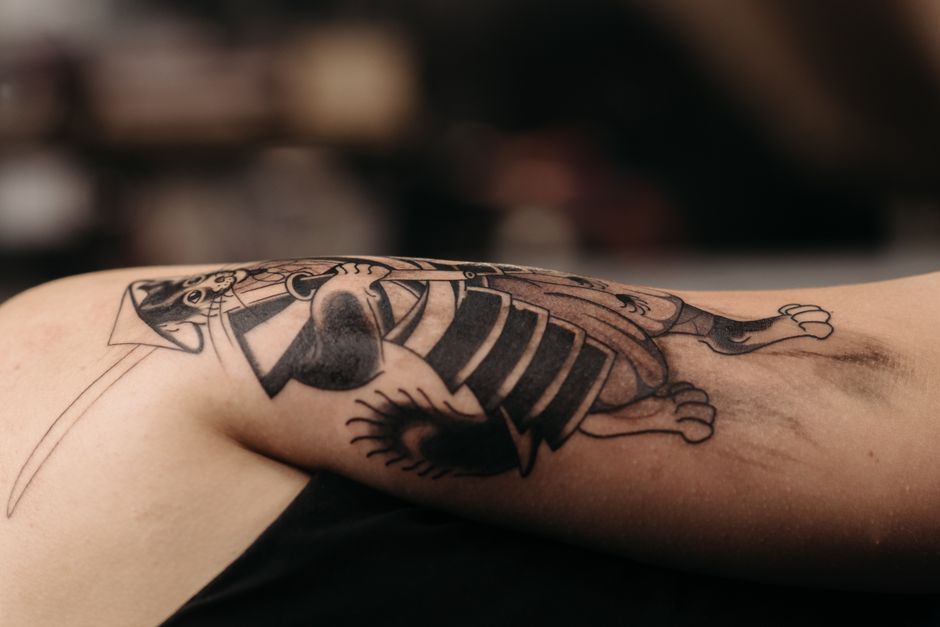
Tattoo shading means applying ink at different concentrations to create smooth transitions from light to dark. It gives a design depth, texture and realism.
It works like shadow and light in a pencil drawing. The outline gives you the shape, and the shading shows where the light hits and how the object sits in space. A shaded apple looks round and solid. An outlined one looks flat.
Shading feels intimidating at first because it takes control you haven’t built yet. That control comes with practice and feedback.
Why does shading make or break a tattoo?
Shading decides whether a tattoo looks dimensional or flat, and it’s often how clients judge a Tattoo Artist’s skill.
Patchy or overworked shading can heal unevenly and look blotchy. Well-built shading holds its depth for years. Healing affects the final result too, which is why Tattoo Artists teach clients aftercare based on guidance like the American Academy of Dermatology’s tips for caring for tattooed skin. The AAD also notes that UV light can fade some tattoo inks, which affects how gradients hold up.
Smooth shading is a big part of styles like black and gray realism. Ink Different Master Mentor Boneface is best known for his black and gray realism, where rich shading, high contrast and dark-to-light transitions carry the whole design.
What tools do you need to shade a tattoo?
You need a tattoo machine that runs shading needles smoothly, magnum needle groupings, quality ink, a steady power supply and proper hygiene supplies.
- Magnum needles: Your main shading tool. Their flat, wide grouping spreads ink across a larger area for soft, blended tones.
- Round shaders: Useful for small fills and tight areas.
- Tattoo machine: A rotary or coil machine with a smooth, consistent stroke.
- Gray wash dilutions: Pre-mixed or custom dilutions for building tone step by step. The FDA has issued alerts about contaminated tattoo inks, so buy from reputable suppliers.
- Hygiene supplies: Gloves, barrier film and a sterile setup that follows the OSHA Bloodborne Pathogens Standard.
The rest of your setup counts too, from power supplies to grips, and knowing the tools beginners rely on helps you avoid spending on gear you don’t need.
What are the main tattoo shading techniques for beginners?
Beginners usually learn four core techniques: whip shading, pendulum shading, packing and gray wash gradients.
What is whip shading?
Whip shading uses a quick flicking motion, lifting the needle as you move. It creates a soft, fading edge that’s ideal for feathered shadows and gentle transitions.
What is pendulum shading?
Pendulum shading swings the machine back and forth in overlapping arcs. It produces even tone and works well for filling larger areas smoothly.
What is packing in tattoo shading?
Packing means fully saturating an area with solid black or color. It’s essential for bold fills, and it’s a defining feature of punchy, saturated new school tattoos.
What are gray wash gradients?
Gray wash layers diluted ink from light to dark to build seamless gradients. It’s the backbone of black and gray realism and one of the most requested looks today.
How do you shade a tattoo step by step?
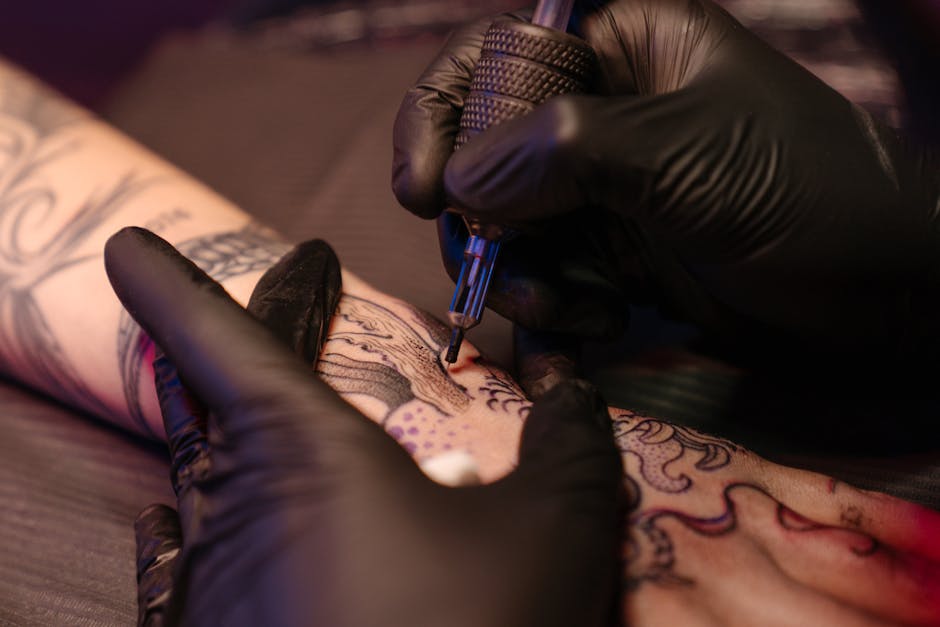
Plan your values, prepare your dilutions, stretch the skin, enter at a low angle and build tone in light passes from dark to light.
- Plan your values. Decide where the darkest shadows and brightest highlights go before you start.
- Prepare your gray wash. Set up two or three dilutions, from dark to light, using sterile diluent.
- Stretch the skin. Taut skin takes ink more evenly than loose skin.
- Enter at a low angle. With magnums, angle the needle so the grouping glides across the skin.
- Start with the darkest areas. Lay down the deepest shadows first, then move toward the lighter areas with lighter dilutions.
- Build in light, overlapping passes. Smooth shading comes from several soft layers, not one heavy pass.
- Blend the transitions. Use whip motions to feather the edges between tones.
- Wipe, check and adjust. Clean the area, step back and add depth where it’s needed.
Pro Tip: Keep a light hand and a loose grip, and move slowly and steadily. Most beginner shading problems come from pressing too hard and moving too fast.
What shading mistakes do beginners make most?
The most common mistakes are overworking the skin, pressing too hard, moving too fast, skipping a value plan and not stretching the skin.
- Overworking: Passing over the same spot too many times can damage the skin and cause patchy healing.
- Too much pressure: Pushing too hard can drive ink too deep and blur the shading.
- Moving too fast: Rushing leaves gaps and uneven tone.
- No value plan: Without one, shading turns muddy and flat.
- Loose skin: Without a good stretch, ink goes in unevenly.
Depth problems are especially common, and learning how to avoid needle cross-lines and blowouts helps you keep shading clean. Rushing ahead before your fundamentals are solid is also one of the most common apprentice mistakes.
How do you practice shading before touching skin?
Practice on synthetic skin, pig skin and practice sheets to build hand control and consistent gradients before working on a client.
Start by filling practice sheets with gradients that move from solid black to bare skin tone. Repeat them until the transitions look smooth. Then move to synthetic skin to feel how pressure, angle and speed change the result. There’s a lot you can do to practice tattooing before a tattoo apprenticeship, and shading drills are some of the most useful.
Repetition is what builds consistency. Ink Different apprentice Daniel Mercedes talks about repetition in Phase 2 of his training and what it taught him.
Practice skin only takes you so far, though. A Mentor watching your angle, hand speed and number of passes in real time is what turns practice into professional shading.
Get Serious About Shading With Ink Different
Ink Different’s Traditional Tattoo Apprenticeship teaches shading and every other core skill through in-person mentorship. For 15 years, Ink Different has trained aspiring Tattoo Artists as a college alternative.
What You Can Expect from Our Traditional Tattoo Apprenticeship
The Traditional Tattoo Apprenticeship runs 18 to 24 months across four phases, with in-person training at one of 60+ tattoo studios nationwide. No prior art experience is required.
- Phase 1, Art and Design Principles: Drawing, shading, digital design and building a portfolio, including shading on paper.
- Phase 2, Machine Mastery and Practice Tattooing: Hand-control exercises, machine operation, lining, shading and gradients, and color packing on practice surfaces.
- Phase 3, Supervised Tattoos: Tattooing real skin under a Mentor’s direct supervision.
- Phase 4, Junior Artist Externship: Building client relationships and refining your skills while you start earning.
A Career That Comes With Confidence
You’ll finish with job-ready skills, licensing support and a guaranteed job offer at one of Ink Different’s own tattoo studios. Interest-free payment plans help make training more accessible. Licensing rules vary by state, as this state-by-state tattoo licensing map shows.
Mentorship That Pushes Your Brand and Skills Further
The one-year, in-person Master Mentorship lets you train with celebrity and award-winning Master Mentors like Boneface, with a focus on mastering a specific style, growing your career and owning your own business.
Making Tattoo Training Accessible for Everyone
We offer Spanish-speaking locations in Denver, Orange County, NYC, Miami, San Antonio and San Diego. Our “Good Humans” culture means you join a supportive, family-like community.

Ready to become a Tattoo Artist?
Shading is what turns a flat outline into an image with depth, and it’s a skill you can learn with practice and good guidance. Each Mentor takes just two tattoo apprentices per tattoo studio, so seats fill up quickly.
Ready to become a Tattoo Artist? Apply now to Ink Different’s Traditional Tattoo Apprenticeship.
Frequently Asked Questions
How long does it take to learn tattoo shading?
Basic control can come within months of regular practice, but smooth, professional gradients take longer and develop fastest with a Mentor’s feedback.
What needles are best for tattoo shading?
Magnum needles are the standard for most shading, because their flat, wide grouping creates smooth gradients. Round shaders work well for small areas.
What is gray wash in tattooing?
Gray wash is diluted black ink in several strengths, layered from light to dark to build smooth gradients. Dilutions should be made with sterile diluent.
Why does my shading look patchy?
Patchy shading usually comes from pressing too hard, overworking the skin, inconsistent hand speed or skipping a value plan. Light, overlapping passes help.
Can I practice shading at home?
Yes, on practice sheets and synthetic skin. Never practice on real skin without proper training and supervision.
Do I need art experience to learn tattoo shading?
No. The Traditional Tattoo Apprenticeship is built for beginners and covers shading from Phase 1.