How to Shade a Tattoo: Techniques for Beginners
November 25, 2026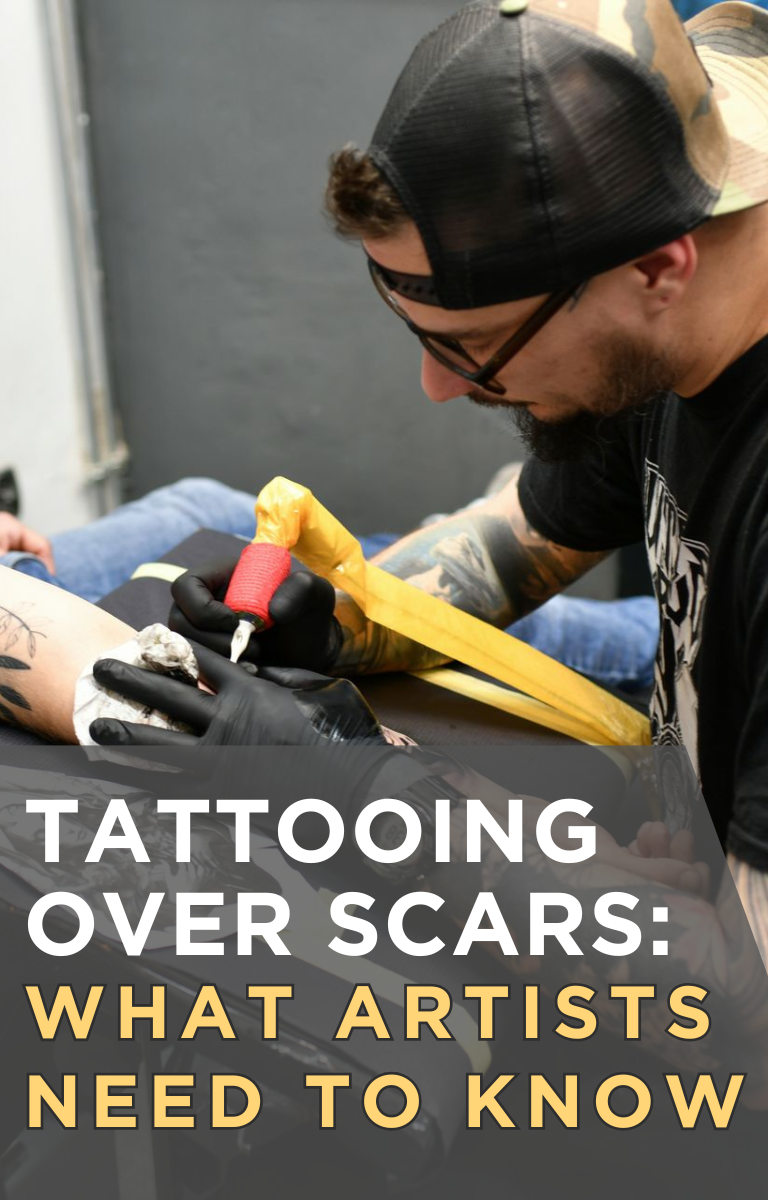
In This Article
- Key Takeaways
- What Is Tattooing Over Scars?
- Can You Tattoo Over Any Scar?
- When Is a Scar Ready to Be Tattooed?
- How Does Scarred Skin Behave Differently?
- How Do You Tattoo Over a Scar Step by Step?
- What Safety Rules Matter Most?
- Where Do You Learn These Skills Properly?
- Get Serious About Scar Work With Ink Different
- FAQ
Tattooing over scars is possible for many fully healed, flat scars, but not every scar is a good candidate. Scar tissue takes ink less predictably than healthy skin, so Tattoo Artists adjust their pressure and pacing and often plan for more than one session. Keloid-prone skin carries real risk, because a tattoo can trigger new keloid growth. When in doubt, a client should check with a dermatologist first.
Timing matters too. Wound healing includes a maturation, or remodeling, phase that can last from two weeks to years, according to the American Academy of Family Physicians. Below, we cover which scars can be tattooed, when a scar is ready, how scar tissue behaves and the safety rules that apply.
Key Takeaways
- Wait for maturity: Scars keep remodeling for months to years, so many Tattoo Artists wait at least a year and look for a soft, pale, stable scar.
- Keloids are high-risk: The American Academy of Dermatology notes that tattoos can cause keloids in people prone to them.
- Scar tissue takes ink unevenly: Expect patchy areas, slower healing and possible touch-ups.
- Test first: A small test area shows how the tissue responds before a full piece.
- Advanced work: Scar coverage builds on solid fundamentals and hands-on mentorship.
What Is Tattooing Over Scars?
Tattooing over scars means tattooing healed scar tissue to camouflage, decorate or reclaim skin marked by surgery, injury, burns or self-harm.
It can be some of the most meaningful work a Tattoo Artist does. For many clients, covering a scar is about feeling at home in their own skin again.
It’s also more complex than tattooing healthy skin. Raised ridges, discoloration and tissue that behaves differently all affect the outcome, so scar work sits in the advanced category of the craft.
Some of this work overlaps with medical tattooing. Ink Different Master Mentor Kara Gutierrez built a career restoring areolas for breast cancer survivors, and many survivors also choose decorative mastectomy tattoos over their scars.

Can You Tattoo Over Any Scar?
No. Whether a scar can be tattooed depends on its type, age and texture, and knowing when to decline is a core professional skill.
- Flat, pale scars: Usually the best candidates once fully healed.
- Raised (hypertrophic) scars: Sometimes possible with careful technique and realistic expectations. These scars stay within the original wound and can flatten over time.
- Keloid scars: High-risk. Keloids grow beyond the original wound, and StatPearls on the NIH bookshelf advises people prone to keloids to avoid elective procedures like tattooing when possible.
- Burn scars: Vary widely. Thin or fragile areas need extra caution.
Some people are more likely to form keloids. The AAFP notes that people with darker skin have a 15- to 20-fold higher risk, and that the sternum, shoulders, upper arms, earlobes and cheeks are the most susceptible areas. A personal or family history of keloids is an important question to ask in any consultation.
When Is a Scar Ready to Be Tattooed?
A scar is generally ready when it’s fully mature: soft, flat or nearly flat, pale and no longer changing. For many scars, that takes at least a year, and sometimes longer.
During remodeling, collagen keeps reorganizing, and the scar may still be red, tight or sensitive. Tattooing too early can lead to uneven results and irritation. If a client isn’t sure their scar is ready, a dermatologist can help them decide.
Pro Tip: If a scar still feels tight, itchy or raised, or is still changing color, wait.
The American Academy of Dermatology suggests that people with keloid-prone skin who still want a tattoo start with a small test tattoo first.
How Does Scarred Skin Behave Differently?
Scar tissue holds ink less predictably and can be more fragile than healthy skin, so line work, pressure and pacing all need to change.
- Ink retention: Some areas take ink well, while others hold it poorly, which can look patchy.
- Texture: Raised or uneven surfaces make consistent lines harder.
- Sensation: Nerve changes can leave areas numb or extra sensitive.
- Healing: Scar tissue may heal more slowly, and touch-ups are common.
These variables are why scar work is easiest to learn with a Mentor who has done it, rather than through trial and error on clients.
How Do You Tattoo Over a Scar Step by Step?
Consult carefully, design around the scar, test the skin, work gently and build color in layers.
- Consult thoroughly. Ask about the scar’s age, cause and any history of keloids, and set honest expectations.
- Design with the scar. Choose imagery and placement that work with the texture, like organic shapes, florals or shading.
- Test a small area. See how the tissue takes ink before committing to the full piece.
- Work slowly and gently. Use lighter pressure and avoid overworking the area.
- Build in layers. Plan multiple sessions spaced weeks apart if needed.
- Plan for touch-ups. Let clients know follow-up work is common.
Some clients want to cover scars from self-harm. Approach that conversation with care and without judgment, and let the client share only what they’re comfortable sharing. If someone seems to be in crisis, they can call or text the 988 Suicide & Crisis Lifeline.

What Safety Rules Matter Most When Tattooing Over Scars?
Strict sterilization, bloodborne pathogens protocols and single-use equipment are essential, and so is knowing when to refer a client to a doctor.
Follow the OSHA Bloodborne Pathogens Standard for needles, cross-contamination and station setup, as in every professional tattoo studio. Clients should also know the signs of infection after any tattoo. Mayo Clinic notes that skin infections and other complications are possible.
Safety also means knowing your limits. If a scar looks like an active keloid or shows signs of a condition you’re not trained to assess, referring the client to a dermatologist is the responsible move. Licensing rules also vary by state, as this state-by-state tattoo licensing map shows.
Where Do You Learn These Skills Properly?
Scar coverage is learned through hands-on mentorship under experienced Tattoo Artists, after you’ve built solid fundamentals.
Clean linework, smooth shading, machine control and reading skin all come first. Scar work builds on those skills. Ink Different apprentice Megan shares how she went from tattooing friends at home to real training, and why structured mentorship made the difference.
For many people, a structured tattoo apprenticeship is also a practical alternative to college, with a Mentor correcting technique in real time.
Get Serious About Scar Work With Ink Different
Ink Different’s Traditional Tattoo Apprenticeship takes beginners to job-ready, building the fundamentals that advanced work like scar coverage depends on.
What You Can Expect from Our Traditional Tattoo Apprenticeship
The Traditional Tattoo Apprenticeship runs 18 to 24 months across four phases, with in-person training at one of 60+ tattoo studios nationwide.
- No experience needed: It’s built for beginners, starting with art and design principles.
- A clear path: Machine mastery and practice tattooing, then supervised tattoos on real skin, then a Junior Artist Externship where you start earning.
- Licensing support: Help meeting your state’s requirements.
- In-person mentorship: Guidance from experienced Tattoo Artists.
- “Good Humans” culture: A supportive, family-like community.
A Career With Room to Specialize
You’ll finish with job-ready skills, licensing support and a guaranteed job offer at one of Ink Different’s own tattoo studios. Interest-free payment plans help make training more accessible. From there, many Tattoo Artists go on to specialize in areas like cover-ups and scar work.
Mentorship That Pushes Your Brand and Skills Further
The one-year, in-person Master Mentorship offers training with celebrity and award-winning Master Mentors like Kara Gutierrez, whose specialty work helps clients after surgery.
Making Tattoo Training Accessible for Everyone
We offer Spanish-speaking locations in Denver, Orange County, NYC, Miami, San Antonio and San Diego.
Ready to Become a Tattoo Artist?
Helping someone feel comfortable in their skin again is some of the most rewarding work in tattooing, and it takes real training to do it safely. Each Mentor takes just two tattoo apprentices per tattoo studio, so seats fill up quickly.
Ready to become a Tattoo Artist? Apply now to Ink Different’s Traditional Tattoo Apprenticeship and start building a hands-on career with licensing support along the way.
Frequently Asked Questions
How long should a scar heal before tattooing over it?
Until it’s fully mature: soft, pale and no longer changing. Scar remodeling can take months to years, so many Tattoo Artists wait at least a year. A dermatologist can help confirm readiness.
Can you tattoo over keloid scars?
It’s risky. Tattoos can trigger keloids in people prone to them, and medical sources advise keloid-prone people to avoid elective procedures like tattooing when possible.
Who is more likely to get keloids?
People with a personal or family history of keloids, people with darker skin and people under 30 are at higher risk, according to the AAFP.
Does tattooing over scars hurt more?
It can. Scar tissue may be numb in some spots and extra sensitive in others.
Will one session cover a scar?
Often not. Scar tissue takes ink unevenly, so multiple sessions and touch-ups are common.
Do I need special training to tattoo over scars?
Yes. Scar coverage is advanced work that builds on strong fundamentals and hands-on mentorship.