Unique Jobs That Pay Well Without a Degree
November 27, 2026
Tattoo Shop Software: Booking, Deposits and Client Records
November 27, 2026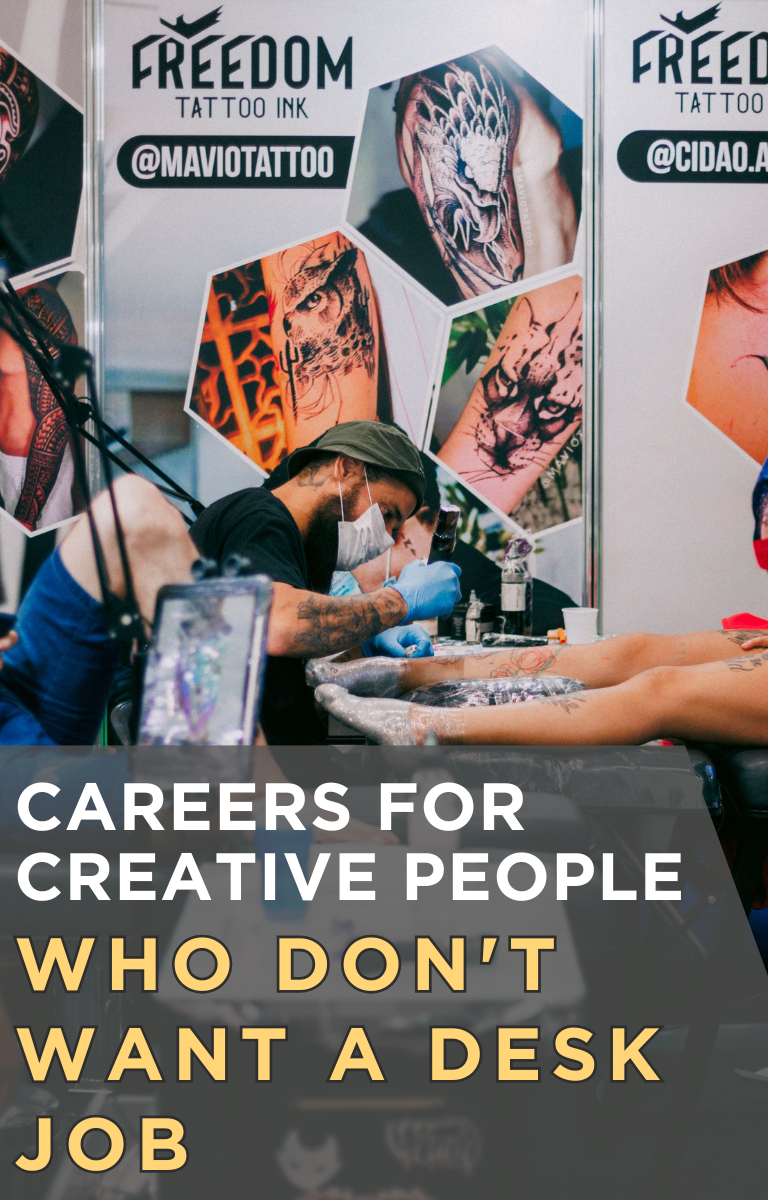
In This Article
- Key Takeaways
- What Counts as a Creative Career Without a Desk?
- Why Do Creative People Hate Desk Jobs So Much?
- What Are the Best Careers for Creative People Who Don’t Want a Desk Job?
- Why Is Tattooing One of the Best Creative Careers?
- How Do You Start a Hands-On Creative Career?
- What Does Ink Different’s Traditional Tattoo Apprenticeship Offer?
- How Does the Master Mentorship Take You Further?
- Ready to Trade Your Desk for a Tattoo Machine?
- FAQ
Careers for creative people who don’t want a desk job include tattooing, culinary arts, photography, hairstyling and skilled trades like carpentry and custom fabrication. Each lets you make something original with your hands, work with people and see real results at the end of the day. Many are learned through apprenticeships, certificates or on-the-job training rather than a four-year degree.
Creative work spans many fields. The U.S. Bureau of Labor Statistics reports that craft and fine artists earned a median of $56,260 in May 2024, and pay in hands-on creative careers varies widely by field and experience. Below, we compare strong options and explain why tattooing stands out.
Key Takeaways
- The common thread: Hands-on creative careers reward originality, movement and visible results.
- Strong options: Tattooing, culinary arts, photography, hairstyling and skilled trades.
- Pay varies: Craft and fine artists earned a median of $56,260 in May 2024, per the BLS.
- Tattooing stands out: It combines art, human connection and income that grows with skill.
- No art degree needed: Ink Different’s Traditional Tattoo Apprenticeship starts with art and design fundamentals.
What Counts as a Creative Career Without a Desk?
It’s any career where you earn a living by making something original with your hands, rather than sitting at a workstation all day.
These careers usually share three things: they reward originality, they keep you moving and they produce something you can point to at the end of the day. For many creative people, that’s what’s missing from office work.
Why Do Creative People Hate Desk Jobs So Much?
Routine desk work often leaves little room for the independence, physical activity and visible results creative people want.
That doesn’t make anyone lazy or ungrateful. Some people simply do their best work with their hands. Long stretches of sitting take a toll too. The CDC recommends that adults move more and sit less throughout the day.
Many people who leave desk jobs describe the change as a big shift for their wellbeing. This story about leaving a desk job for tattooing shows how one Tattoo Artist’s mental health changed after making the switch.

What Are the Best Careers for Creative People Who Don’t Want a Desk Job?
Strong options include tattooing, culinary arts, photography, hairstyling and skilled trades.
- Tattoo Artist: Combines art, human connection and a loyal client base in a working tattoo studio.
- Chef or culinary artist: Create something new every day in a fast-paced, hands-on kitchen.
- Photographer: Tell stories through images while staying mobile and independent.
- Hairstylist or barber: Transform people’s looks with your hands. Barbers, hairstylists and cosmetologists earned a median of $35,880 in May 2025, according to the BLS.
- Skilled tradesperson: Carpentry, welding and custom fabrication blend creativity with physical craft, and there are plenty of creative trades worth training for.
Some creative careers are mostly screen-based. Graphic designers, for example, earned a median of $61,300 in May 2024, per the BLS, but much of that work happens at a computer.
For a wider look, this list of creative careers beyond graphic design covers more options, and this breakdown of creative careers that pay well compares earnings.
Why Is Tattooing One of the Best Creative Careers?
Tattooing combines art, close human connection and earning potential that grows with your skill and reputation.
Every tattoo is a one-of-a-kind collaboration with someone who trusts you to mark their body for life. That trust and hands-on skill are a big part of why Tattoo Artists stay essential.
Tattooing also gives you visible, lasting results. Your work walks out the door with every client. And the income potential can be strong: ZipRecruiter puts the average Tattoo Artist salary at $106,858 a year, though pay varies widely.
Sometimes the career finds you. Ink Different Master Mentor Liz Cook has talked on Tattoo Shop Tango about how she built a tattoo career she never planned.
Real Talk: Tattooing isn’t a shortcut. It’s a craft built on skill, patience and mentorship, which is exactly why it lasts.
How Do You Start a Hands-On Creative Career?
Choose a craft, find structured training with experienced professionals, build a portfolio and earn any required license.
For tattooing, here’s the path:
- Commit to the decision. Make a plan for your time and finances during training.
- Build your foundation. Practice drawing and linework. No art degree is required.
- Find real mentorship. Train with experienced Tattoo Artists in a working tattoo studio.
- Learn safety first. Study the OSHA Bloodborne Pathogens Standard before working on anyone.
- Get licensed. Requirements vary by state, as this state-by-state tattoo licensing map shows.
It helps to know the tools beginners rely on and the most common apprentice mistakes before you start.

What Does Ink Different’s Traditional Tattoo Apprenticeship Offer?
Ink Different’s Traditional Tattoo Apprenticeship runs 18 to 24 months across four phases, with in-person mentorship and licensing support.
For 15 years, Ink Different has trained aspiring Tattoo Artists, and no prior experience is needed. For many people, it’s a practical alternative to college without years of student debt.
In the Traditional Tattoo Apprenticeship, you train with a Mentor at one of 60+ tattoo studios nationwide.
- Phase 1, Art and Design Principles: Drawing, shading, digital design and building a portfolio.
- Phase 2, Machine Mastery and Practice Tattooing: Hand-control exercises, machine operation, lining, shading and color packing.
- Phase 3, Supervised Tattoos: Tattooing real skin under a Mentor’s direct supervision.
- Phase 4, Junior Artist Externship: Building client relationships and refining your skills while you start earning.
- Interest-free payment plans: Flexible payments make training more accessible.
- “Good Humans” culture: A supportive, family-like community.
You’ll finish with job-ready skills, licensing support and a guaranteed job offer at one of Ink Different’s own tattoo studios. Many apprentices come from other careers. Job coach Emma Huff-Hoffman, for example, decided it was time to become a Tattoo Artist. Each Mentor takes just two tattoo apprentices per tattoo studio, so seats fill up quickly.
How Does the Master Mentorship Take You Further?
The one-year, in-person Master Mentorship is for beginners and experienced Tattoo Artists who want to master a specific style, grow their career or build their own business.
You’ll train with celebrity and award-winning Master Mentors like Liz Cook, with intensive work on both your craft and your brand. Once you’re working, the right platforms for building your brand help clients find you.
Ready to Trade Your Desk for a Tattoo Machine?
If you’re a creative person who dreads the desk, a tattoo apprenticeship offers a hands-on path to a career built on skill, independence and human connection.
We offer Spanish-speaking locations in Denver, Orange County, NYC, Miami, San Antonio and San Diego.
Ready to become a Tattoo Artist? Apply now to Ink Different’s Traditional Tattoo Apprenticeship and start building a creative career with licensing support along the way.

Frequently Asked Questions
What are good careers for creative people who don’t want a desk job?
Tattooing, culinary arts, photography, hairstyling and skilled trades like carpentry and custom fabrication are all strong options.
What creative careers pay well?
Pay varies widely. ZipRecruiter reports an average of $106,858 for Tattoo Artists, while the BLS reports medians of $61,300 for graphic designers and $56,260 for craft and fine artists.
Do I need an art degree to become a Tattoo Artist?
No. The Traditional Tattoo Apprenticeship is built for beginners and starts with art and design principles.
How long does it take to start a tattoo career?
Most tattoo apprenticeships take one to three years. Ink Different’s Traditional Tattoo Apprenticeship takes 18 to 24 months across four phases.
Can I switch to tattooing later in life?
Yes. People move into tattooing from many careers and at many ages.
Is tattooing financially stable?
It can be once you’re trained, licensed and building a client base, though income varies with skill, location and demand.