Why Tattoo Artists Will Outlast Every Robot in the House
September 28, 2026
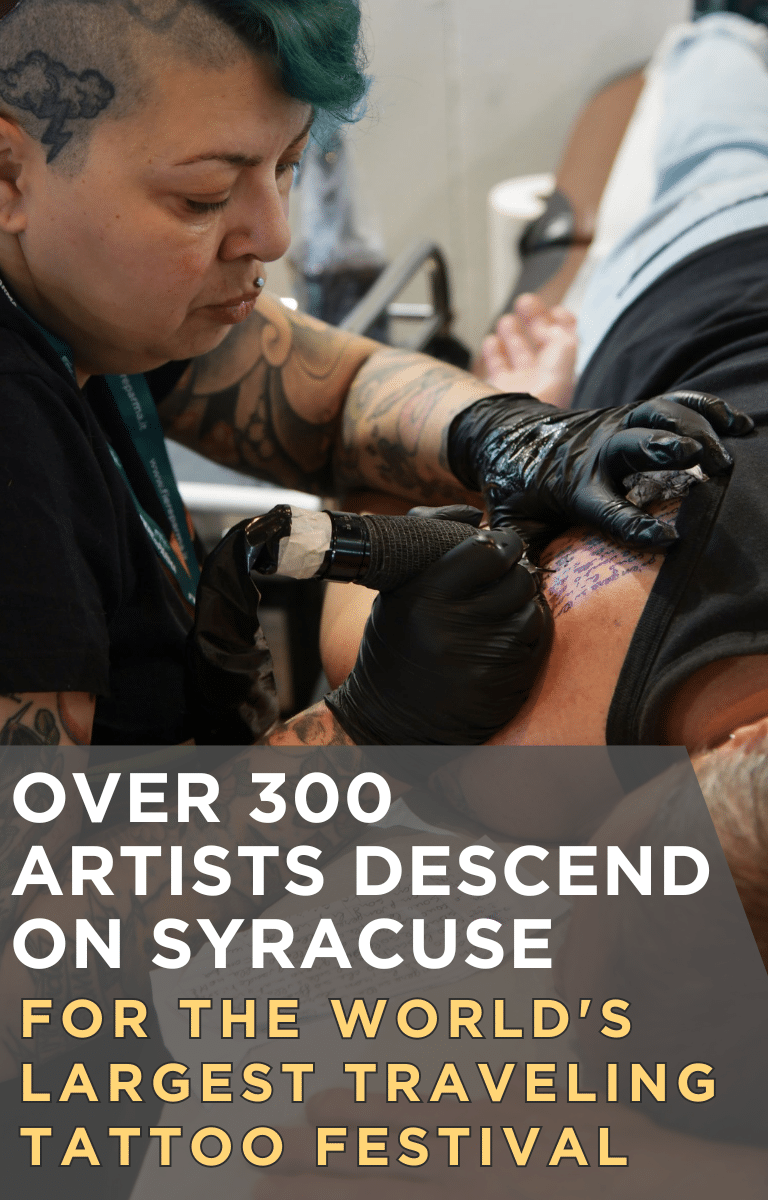
Over 300 Artists Descend on Syracuse for the World’s Largest Traveling Tattoo Festival
September 29, 2026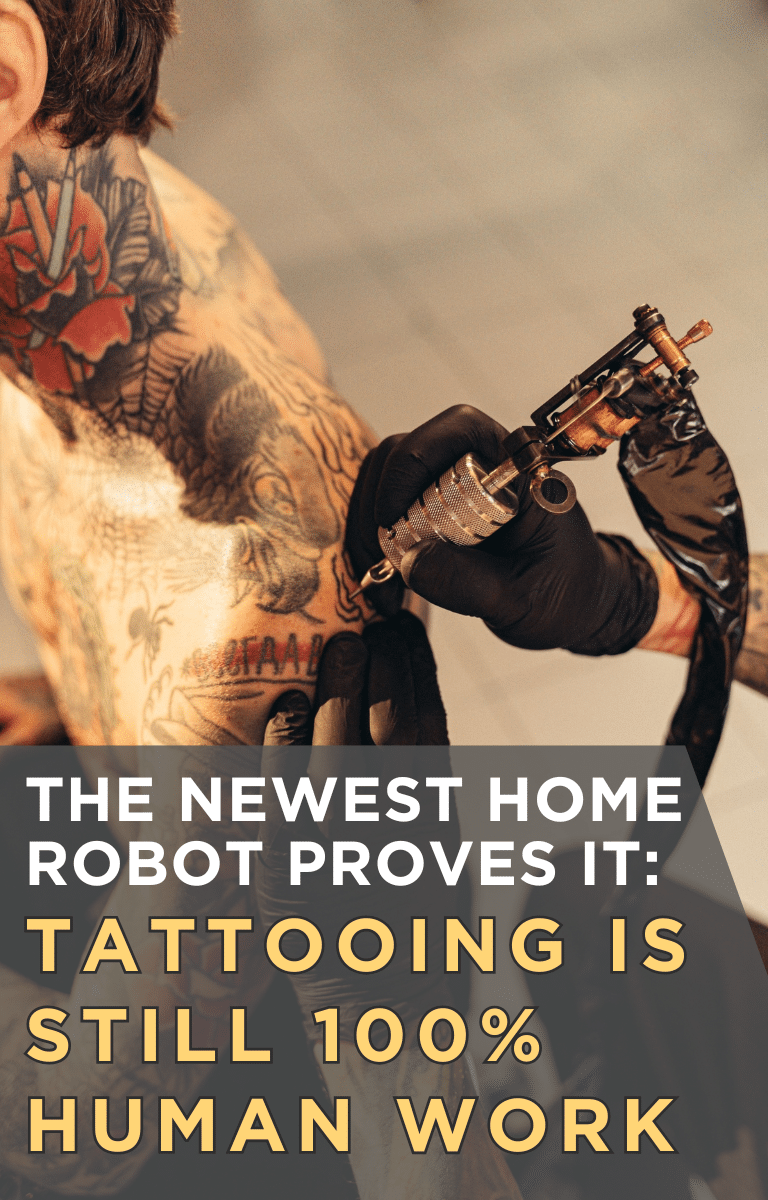
In This Article
- Key Takeaways
- What did the newest home robot actually prove?
- Why is tattooing still 100% human work?
- What can a robot never replicate in a tattoo?
- Why is a tattoo career AI-proof?
- How do you start a tattoo career that machines can’t touch?
- What does the Ink Different Traditional Tattoo Apprenticeship include?
- What is the Master Mentorship program?
- How does Ink Different make training accessible?
- Ready to build a human-proof career?
- FAQ
Human-proof work is any career built on skills a machine cannot fake: trust, touch, taste, and the human relationship behind the craft. Tattooing sits at the very top of that list because it requires real-time judgment, emotional intelligence, and irreplaceable hand skill that automation cannot replicate.
On September 17, 2026, Figure gave that idea a real test. Its Helix 2.5 humanoid rolled out with slick demos: folding towels, making beds, tidying living rooms, all inside 30 real Bay Area homes it had never operated in before. And somewhere in that hype, the actual numbers landed: 237 successes out of 420 trials, a 56% completion rate, with zero partial credit for a job half-finished. Could a robot that still fails 44% of the time folding a towel ever tattoo you?
The answer is a resounding no, and that answer is a gift to anyone stuck in a job that drains them. Your creative potential is not going to waste in a world of automation. It is more valuable than ever. Here at Ink Different Tattoos, we have spent 15 years proving that the future belongs to real Tattoo Artists, not robots.
Key Takeaways
- The proof: Figure’s newest home robot, Helix 2.5, can fold towels and make beds at a 56% success rate, but no robot can safely tattoo living human skin.
- Why it matters: Tattooing requires trust, real-time judgment, and human touch that automation cannot replicate, even with $3.5 billion in training compute behind it.
- The opportunity: A tattoo career is AI-proof and automation-resistant, making it one of the safest creative paths.
- The path: Ink Different’s Traditional Tattoo Apprenticeship runs 18 to 24 months with licensing support and job-ready skills.
- Who it’s for: Beginners with no formal art experience can start online and finish training in real tattoo studios.
What did the newest home robot actually prove?
Figure’s Helix 2.5 proved that automation excels at repetitive, predictable tasks but fails at high-trust, high-touch human work like tattooing. Tested zero-shot across 30 homes it had never seen, the robot folded towels, made beds, and tidied living rooms, succeeding 56% of the time. Impressive, sure. But tattooing is not a party trick, and a coin-flip success rate isn’t a demo you’d want anywhere near a needle.
When a robot folds a towel, it works on a soft but forgiving object graded on corner alignment within an inch. Human skin is none of those things. It stretches, breathes, flinches, and heals differently on every person. The same robot that needed half its predecessor’s training data just to match its performance on a towel would have produced a scarred, uneven mess on living skin, if it could even be trusted to try.
That gap between “can fold a towel 56% of the time” and “can permanently mark a human being” is exactly where your future career lives. The irreplaceable value of a real Tattoo Artist grows stronger every time a machine attempts to replace human creativity and comes up short.
For a deeper look at this, read our breakdown of why tattoo artists are still essential.
Why is tattooing still 100% human work?
Tattooing is 100% human work because it depends on trust, real-time adaptation, and physical intuition that no algorithm, not even one trained on Figure’s 16-million-video Index dataset, can generate. A tattoo is not just an image. It is a relationship, a decision, and a moment of vulnerability between two people.
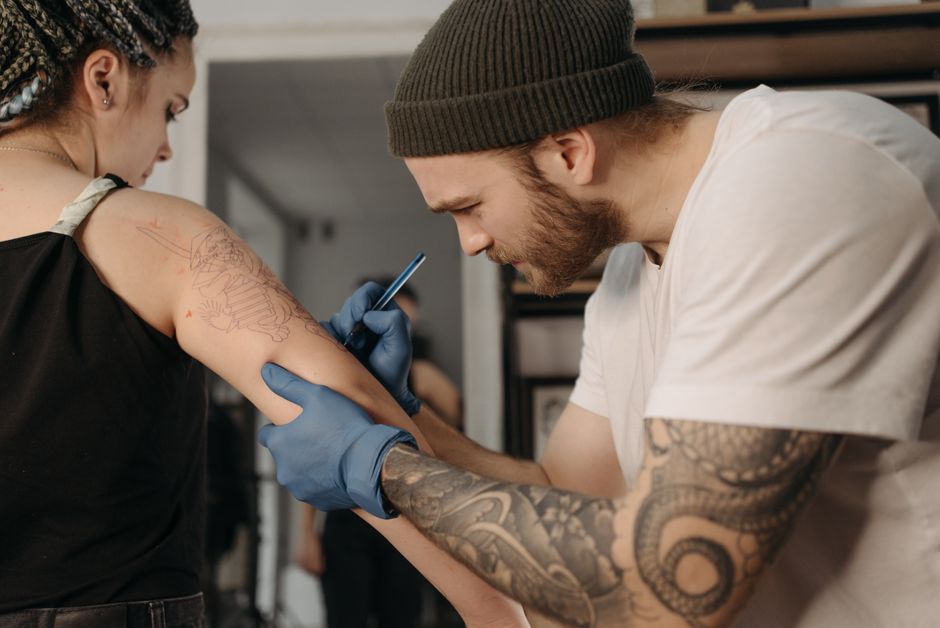
Think about what actually happens in a tattoo studio. A client tells you a story about their late father. You translate that into a design. You calm their nerves. You adjust your pressure when their skin gets tender. You read the flicker in their eyes and slow down. That is a hundred human judgments per minute. Compare that to Helix 2.5’s most advanced “adaptation,” according to Figure itself: stepping back to reposition a comforter or walking around a bed to fix a fold. A robot has no story to share back, no reassuring presence, no gut feeling that says “ease up here.”
According to the U.S. Bureau of Labor Statistics on craft and fine artists, success in this field depends on originality and hand skill, precisely the traits automation struggles to copy. Figure’s own data backs this up: a version of Helix 2.5 trained without its Index pretraining succeeded on only 9% of trials. Even with the boost, the model still fails nearly half the time on tasks far simpler than reading a client’s body language.
What can a robot never replicate in a tattoo?
A robot can never replicate the safety judgment, artistic collaboration, and human trust that define a professional tattoo. These are not luxuries in tattooing. They are the entire job, and none of them appear anywhere in Figure’s 420-trial dataset.
Here is what stays firmly in human hands:
- Safety and hygiene: Following OSHA bloodborne pathogen standards requires constant human awareness and real-time decision-making in a living, changing environment.
- Skin reading: Every person’s skin takes ink differently based on age, location, skin tension, and individual healing patterns, unlike a couch or bed frame that stays the same shape every time.
- Live collaboration: Clients change their minds mid-session, and a great Tattoo Artist adapts design and execution on the fly, something a fixed checkpoint applied identically across 30 homes was never built to do.
- Emotional trust: People want a human they can look in the eye before marking their body forever.
- Aftercare guidance: Following American Academy of Dermatology care guidelines means coaching a real person through healing with personalized advice.
Strip those away, and you do not have tattooing. You have a printer, and one that would likely perform worse than 56% given what’s actually at stake. Nobody drives across town, saves up money, and sits through hours of discomfort to be marked by a machine.
Why is a tattoo career AI-proof?
A tattoo career is AI-proof because it combines irreplaceable hand skill with human-to-human trust, the two things automation cannot mass-produce, even with $3.5 billion in compute behind the effort. While software eats spreadsheets and scripts, and now inches toward folding your laundry, the tattoo chair stays warm with a living artist in it.
Let that sink in if you are sitting in a job you already suspect a machine could do. That anxiety is real, and it is valid. Figure itself says it’s hiring to push “general physical intelligence” further into daily life. But it is also a signal. It is telling you to plant your energy somewhere that grows instead of somewhere that shrinks.
Choosing a human-proof craft is not just smart; it is empowering. You stop competing with software and start building something a machine can never take from you: a reputation, a client base, and a name.
If you have been weighing a change, our guide on the career change tattoo apprenticeship path will feel like a green light.
Pro Tip: The safest careers in an automated world are the ones that require a human body in the room, one that can’t be swapped for a fixed checkpoint. Tattooing is one of the few that always will be.
How do you start a tattoo career that machines can’t touch?
You start a machine-proof tattoo career by getting real, in-person mentorship, mastering fundamentals, and earning your license through a structured tattoo apprenticeship. There are no shortcuts, and honestly, that is the point. The barrier that keeps robots out is the same barrier that protects your value.
Here is a simple, honest roadmap:
- Step 1: Commit to the decision. Stop treating your creative potential as a hobby. Decide that this is the moment you stop waiting.
- Step 2: Build your foundations. Learn drawing, line work, and machine handling. No prior experience is required to begin.
- Step 3: Find a real Mentor. Live, in-person guidance from working professionals is the difference between guessing and knowing.
- Step 4: Practice under supervision. Move from fake skin to supervised live work as your skills sharpen.
- Step 5: Get licensed and go pro. Complete your training with licensing support and job-ready skills.
Before you begin, learn from those who went first. Our list of mistakes aspiring tattoo apprentices should avoid can save you months of frustration, and our roundup of tools every beginner tattoo artist should know will get you oriented fast.
What does the Ink Different Traditional Tattoo Apprenticeship include?
The Ink Different Traditional Tattoo Apprenticeship is an 18- to 24-month, four-phase Tattoo Artist Training program with personalized hands-on mentorship, licensing support, and job-ready skills. It is built as a real college alternative for people who want to work, not just study.
Here is what you can expect:
- Four-phase structure: Progressive Tattoo Artist Training that takes you from fundamentals to confident live work.
- Start remote, finish in studios: Begin building your foundation from anywhere, then complete your training in real Tattoo Shops.
- Beginner-friendly: No prior art experience needed. We teach you from the ground up.
- Licensing support: We guide you through the requirements so you finish ready to work professionally.
- Live mentorship: In-person guidance from experienced Tattoo Artists, not a video course you binge alone.
This is the “Good Humans” culture we are known for: a supportive, family-like community where you are never left to figure it out solo. Because let’s be honest, a career this human deserves a human community behind it, not a fixed model applied the same way to every person who walks in.
What is the Master Mentorship program?
The Master Mentorship is a one-year, in-person program where you train intensively with award-winning Mentors to master a style, explode your career, or launch your own business. It works for both beginners and experienced artists ready to level up.
You would learn directly from names the industry knows: Al Fliction, Liz Cook, Kyle Dunbar, Boneface, and Jordi Pla. That is access most artists spend a decade chasing. These mentors bring real-world expertise and established reputations that cannot be replicated by any algorithm or video tutorial, no matter how many hours of footage it’s trained on.
If your goal is to specialize, build a brand, and own your future, this is the accelerator.
How does Ink Different make training accessible?
Ink Different makes Tattoo Artist Training accessible with Spanish-speaking locations in Denver, Orange County, New York City, Miami, San Antonio, and San Diego. Your language should never be the wall between you and a human-proof career.
Whether you are searching for a tattoo apprenticeship near Miami or near San Antonio, we meet you where you are. Seats are limited by the very nature of hands-on, in-person training, so the sooner you decide, the sooner you plant that seed.
Ready to build a human-proof career?
The newest home robot did you a favor. It drew a hard line at exactly 56% between the jobs machines will absorb and the jobs that will always need a human hand, a steady heart, and real trust. Tattooing lives on the safe side of that line, and so can you.
Ready to become a Tattoo Artist? Apply now to Ink Different’s Traditional Tattoo Apprenticeship and start building an AI-proof career with licensing support along the way. Not sure yet? Fill out our quick questionnaire and get personalized guidance on whether our Traditional Tattoo Apprenticeship is right for you.
Frequently Asked Questions
Can a robot actually tattoo a person?
No. Skin stretches, flinches, and heals unpredictably, requiring real-time judgment, safety awareness, and human trust only a Tattoo Artist provides.
Is becoming a Tattoo Artist a good career in an age of automation?
Yes. Tattooing is AI-proof because it relies on human touch, artistic collaboration, and personal trust that machines cannot replicate.
Do I need art experience to start a tattoo apprenticeship?
No. Ink Different’s Traditional Tattoo Apprenticeship teaches drawing, line work, and machine handling from the ground up for beginners.
How long does the Traditional Tattoo Apprenticeship take?
The apprenticeship runs 18 to 24 months across four phases, starting remote for fundamentals, then finishing hands-on in real Tattoo Studios.
What makes Ink Different different from other tattoo training programs?
Ink Different offers live in-person mentorship, a “Good Humans” community, and 15 years of proven training since 2011, not a solo video course.
Are Spanish-speaking tattoo apprenticeships available?
Yes. Ink Different offers Spanish-language training in Denver, Orange County, New York City, Miami, San Antonio, and San Diego.