
Unlucky for Some, Big Business for Tattoo Artists: Inside Friday the 13th
November 13, 2026
In This Article
- Key Takeaways
- What Does It Take to Be a Tattoo Artist?
- What Skills Does a Tattoo Artist Need?
- What Personality Traits Make a Great Tattoo Artist?
- How Do You Get Trained to Become a Tattoo Artist?
- What Are the Steps to Become a Tattoo Artist?
- How Long Does It Take to Become a Tattoo Artist?
- Why Train With Ink Different Tattoos?
- What Programs Does Ink Different Offer?
- Ready to Take the First Step?
- FAQ
Being a Tattoo Artist takes four things working together: art skills, hygiene discipline, patience and people skills. You need to draw well enough to design clean, readable tattoos and follow strict safety practices every time. You also need the patience to sit through long, detailed work and the people skills to make clients feel comfortable trusting you with something permanent.
The good news is that all of it can be learned. This guide breaks down the skills, traits and training it takes to become a professional Tattoo Artist.
Key Takeaways
- Art skills: Drawing, linework, shading, composition and an eye for how designs fit the body.
- Hygiene discipline: Following the OSHA Bloodborne Pathogens Standard and sterilization practices every single time.
- Patience: Long sessions, detailed work and years of practice to master the craft.
- People skills: Listening, calming nervous clients and building trust.
- Training: Most Tattoo Artists learn through a structured tattoo apprenticeship that takes one to three years.
What Does It Take to Be a Tattoo Artist?
It takes a mix of artistic skill, technical precision, personal discipline and real mentorship. It’s one part craft, one part grit and one part human connection.
Many people assume natural talent is the whole story. It isn’t. Some of the most successful Tattoo Artists started as average drawers who were willing to show up, take correction and practice the fundamentals until the machine felt natural in their hand.
The demand is there for people who put in the work. According to Pew Research Center, 32% of Americans have a tattoo, and 22% have more than one.
What Skills Does a Tattoo Artist Need?
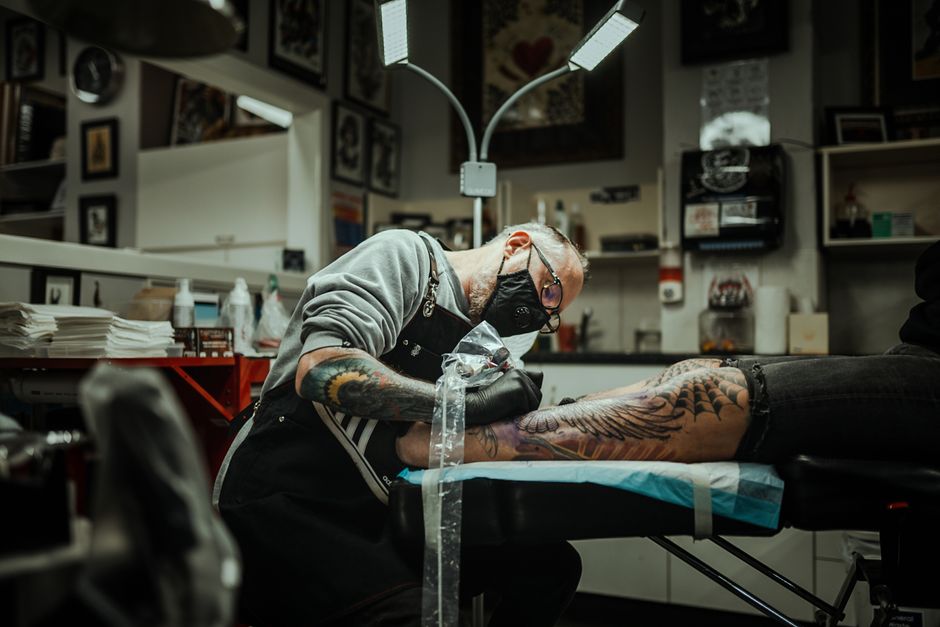
A Tattoo Artist needs strong drawing ability, consistent linework, machine control, color and shading skills, composition and strict hygiene knowledge. All of these can be learned.
Art skills
- Drawing fundamentals: Turning an idea into clean, balanced art before it touches skin.
- Linework: Smooth, confident, consistent lines are the backbone of most tattoo styles.
- Color and shading: Understanding how ink looks and heals in different skin tones.
- Composition and placement: Designing tattoos that flow with the body.
Technical skills
- Machine control: Handling your tattoo machine, adjusting depth and reading the skin. This takes supervised practice.
- Stencil work: Transferring designs accurately so they sit straight and balanced.
Hygiene discipline
Safety isn’t a step you can skip on a busy day. Professional Tattoo Artists follow the OSHA Bloodborne Pathogens Standard, which protects workers from diseases spread through blood. That means proper glove use, sterilization, sharps disposal and preventing cross-contamination every time.
It also includes aftercare. Guiding clients through healing with trusted resources like the American Academy of Dermatology’s tips for caring for tattooed skin protects both your client and your reputation.
What Personality Traits Make a Great Tattoo Artist?
Patience, people skills, humility, resilience and discipline. The craft demands both precision and trust.
Patience
Tattooing rewards slow, careful work. You may spend hours on one piece, and years building your skills. Rushing leads to mistakes you can’t erase.
People skills
You’re often marking a meaningful moment for someone: a memorial, a milestone or a fresh start. Good Tattoo Artists listen closely, explain clearly and help nervous first-timers feel at ease. Clear communication also helps you turn a client’s idea into a design they’ll love.
Humility
The Tattoo Artists who grow fastest stay coachable. When a Mentor says “do it again,” they don’t get defensive. They get better.
Resilience
You’ll make mistakes while learning, and building a client base takes time. Staying steady through setbacks matters.
Discipline
Consistent practice is what builds skill. Research on expertise supports this. A 2019 review in Royal Society Open Science notes that Ericsson and colleagues defined deliberate practice as a very specific activity designed for an individual by a skilled teacher explicitly to improve performance. That’s essentially what a good tattoo apprenticeship provides. nih
Pro Tip: Clients rarely remember how fast a tattoo took. They remember how you made them feel and how clean the healed result looks months later.
How Do You Get Trained to Become a Tattoo Artist?
Most Tattoo Artists train through a structured tattoo apprenticeship with in-person mentorship, not online tutorials alone.
Videos can teach vocabulary. They can’t correct your hand angle in real time or catch a hygiene mistake before it becomes a problem. A Mentor who has done the work can shorten your learning curve dramatically.
That’s part of why tattoo apprenticeships are gaining ground as a solid alternative to college. You build a hands-on skill without years of general coursework.
It’s also a career that’s hard to automate. Software can’t earn a client’s trust, read their body language or hand-tattoo a custom design on living skin. We explain why in why Tattoo Artists are still essential.
What Are the Steps to Become a Tattoo Artist?
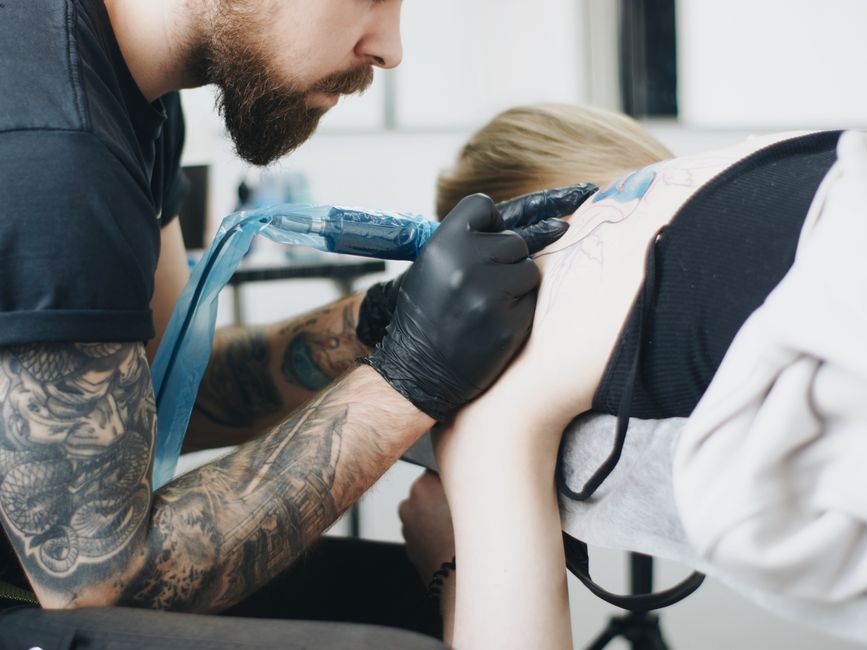
Build your drawing foundation, join a structured tattoo apprenticeship, master safety, practice under supervision, build your portfolio and get licensed.
- Step 1: Build your drawing foundation. Draw every day. Train your eye for line, proportion and composition.
- Step 2: Commit to the path. Set a realistic plan for your time and finances.
- Step 3: Join a structured tattoo apprenticeship. Look for experienced Mentors, a clear plan and in-person tattoo studio time.
- Step 4: Master hygiene and safety. Learn bloodborne pathogens protocols and sterilization until they’re second nature.
- Step 5: Practice under supervision. Move from synthetic skin to supervised client work as your Mentor approves your progress.
- Step 6: Build your brand and portfolio. Document your work early with these platforms to help new and aspiring Tattoo Artists build their brand.
- Step 7: Get licensed. Meet your state’s requirements. See how to get your tattoo license in Texas, tattoo license requirements in California and how long it takes to get a tattoo license in Colorado.
How Long Does It Take to Become a Tattoo Artist?
Most tattoo apprenticeships take one to three years. Ink Different’s Traditional Tattoo Apprenticeship takes 18 to 24 months, depending on your effort and how quickly you master each phase.
Shortcuts in this craft often create bad habits that take longer to unlearn than to learn correctly in the first place.
State rules can affect your timeline too. Oklahoma, for example, requires 1,500 apprenticeship hours, completed in no less than one year and no more than two years, according to the Oklahoma State Department of Health.
Why Train With Ink Different Tattoos?
For 15 years, Ink Different Tattoos has trained professional Tattoo Artists through in-person mentorship as a college alternative.
Our approach is built on one belief: excellence can be trained. You don’t need to be born with it. You need structure, practice and the right people beside you.
Our “Good Humans” culture is central to everything. You join a supportive, family-like community of tattoo apprentices and Mentors who want you to succeed.
Remember: Each Mentor takes just two tattoo apprentices per tattoo studio, because real mentorship can’t be mass-produced. Seats fill up quickly.
What Training Does Ink Different Offer?
Ink Different offers the Traditional Tattoo Apprenticeship for beginners and the Master Mentorship for Tattoo Artists ready to level up. Both are built on in-person training.
The Traditional Tattoo Apprenticeship
The Traditional Tattoo Apprenticeship takes 18 to 24 months across four phases. It’s designed for people with no prior experience.
- Phase 1, Art and Design Principles: Drawing, shading, digital design and building a portfolio.
- Phase 2, Machine Mastery and Practice Tattooing: Hand-control exercises, machine operation, lining, shading and color packing.
- Phase 3, Supervised Tattoos: Tattooing real skin under a Mentor’s direct supervision.
- Phase 4, Junior Artist Externship: Building client relationships and refining your skills while you start earning.
You train in person with a Mentor at one of 60+ tattoo studios nationwide. You’ll finish with job-ready skills, licensing support and a guaranteed job offer at one of Ink Different’s own tattoo studios. Interest-free payment plans help make training more accessible. According to ZipRecruiter, the average Tattoo Artist in the United States earns $106,858 a year as of November 2026.
The Master Mentorship
If you already draw or tattoo and want to level up, the one-year, in-person Master Mentorship lets you train directly with celebrity and award-winning Master Mentors. They include Al Fliction, Liz Cook, Kyle Dunbar, Boneface, Jordi Pla and Marcel Oliveira. It’s built for mastering a specific style, growing your brand and working toward owning a tattoo studio.
Making Tattoo Training Accessible for Everyone
We offer Spanish-speaking locations in Denver, Orange County, NYC, Miami, San Antonio and San Diego.

Ready to Take the First Step?
So, what does it take to be a Tattoo Artist? Art skills you can learn, hygiene habits you can build, and patience and people skills you can strengthen with practice. The right training brings it all together.
Ready to become a Tattoo Artist? Apply now to Ink Different’s Traditional Tattoo Apprenticeship and start building an AI-proof career with licensing support along the way.
Frequently Asked Questions
What does it take to be a Tattoo Artist?
Strong art skills, strict hygiene discipline, patience and people skills, plus structured training under an experienced Mentor.
Do I need art experience to become a Tattoo Artist?
No. Ink Different’s Traditional Tattoo Apprenticeship is built for beginners. Phase 1 starts with art and design principles.
What skills do you need to be a Tattoo Artist?
Drawing, consistent linework, machine control, color and shading, composition and hygiene practices that follow OSHA standards. All are learnable.
Why do people skills matter for Tattoo Artists?
Clients trust you with something permanent and often personal. Listening well, explaining clearly and keeping clients calm builds trust and repeat business.
How long does it take to become a Tattoo Artist?
Most tattoo apprenticeships take one to three years. Ink Different’s takes 18 to 24 months across four phases.
Is becoming a Tattoo Artist a good career?
It’s a hands-on, human-driven craft that’s hard to automate. ZipRecruiter reports an average Tattoo Artist salary of $106,858 a year, though pay varies with skill and location.