
How to Become a Tattoo Artist in Illinois
July 29, 2026
How to Become a Tattoo Artist in Florida
July 30, 2026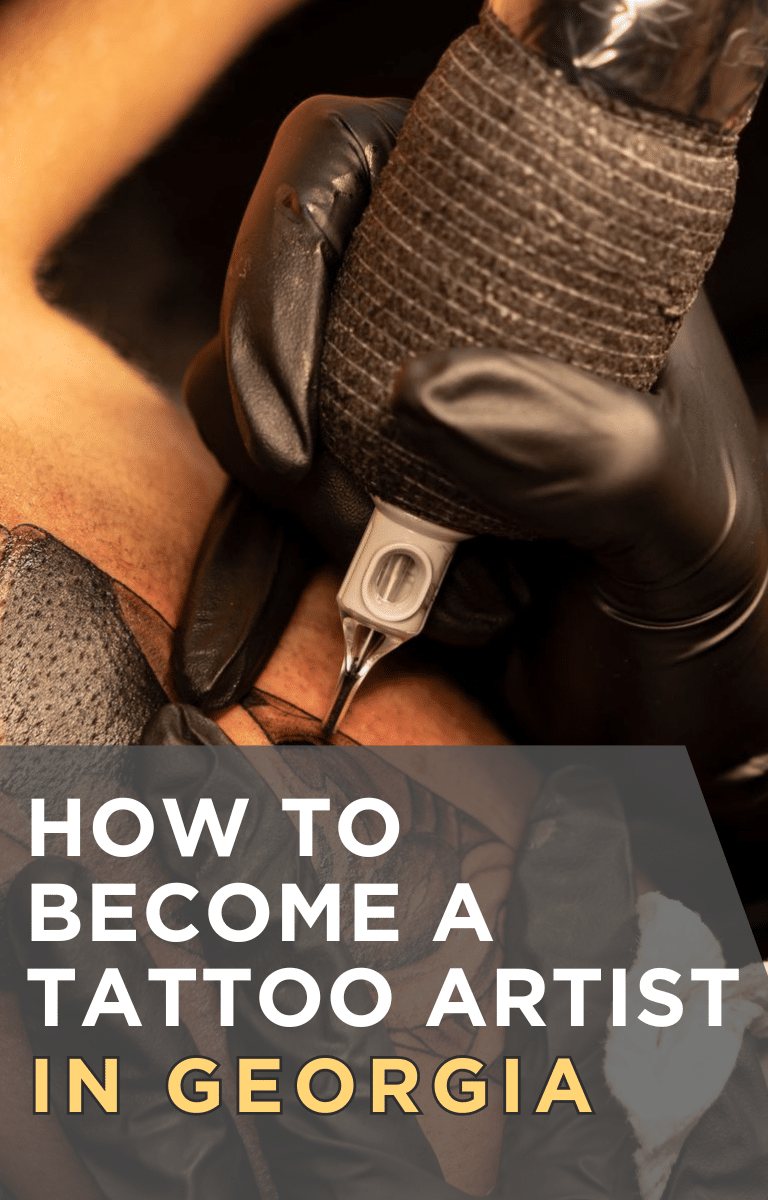
A Georgia tattoo license is the state credential you need to legally tattoo clients in a licensed tattoo studio. The Georgia Department of Public Health now oversees this credential statewide, replacing a patchwork of local rules with one unified standard. This guide walks you through how to become a Tattoo Artist in Georgia and what the state requires. It also covers how to build the real-world skill that separates working professionals from beginners.
Tattooing is one of the most AI-proof careers left. A machine cannot hold a client’s trust, read living skin, or hand-render a design in real time. That is why serious Tattoo Artists treat their training like a craft worth mastering. A Tattoo Artist can earn over $106,000 a year, according to ZipRecruiter.
Key Takeaways
- Regulator: The Georgia Department of Public Health (DPH) oversees body art licensing statewide.
- Governing law: Senate Bill 214 and Chapter 511-3-8 set the current rules, effective October 2023 with full compliance in October 2024.
- Exam: Georgia requires a State Body Art Exam scheduled through your local County Environmental Health Office.
- Health requirements: BBP, First Aid, and CPR certifications plus Hepatitis B vaccination or a signed declination.
- Model: Georgia uses a state-license model, so newer requirements apply to all existing Tattoo Artists.
How does Georgia regulate tattooing?
Georgia regulates tattooing through the Department of Public Health under Senate Bill 214 and Chapter 511-3-8, which created a single statewide standard for body art. Before this change, tattoo rules in Georgia were handled locally, which meant expectations could vary from county to county.
The new framework took effect in October 2023, with full compliance required by October 2024. Because Georgia recently shifted from local-only oversight to unified state regulation, the newer requirements apply to all existing Tattoo Artists, not just new ones entering the field.
The practical hub for Tattoo Artists is the DPH Body Art homepage, and the detailed legal language lives in the Rules and Regulations under Chapter 511-3-8. Always treat those two sources as your final word on any requirement.
Tip: Because Georgia’s system is newly unified, bookmark the DPH Body Art pages and check them before you make any decisions. Rules that changed recently are the ones most likely to trip up people relying on old advice.
Georgia tattoo licensing at a glance
Georgia uses a state-license model administered by the Department of Public Health, with a required State Body Art Exam and health and safety certifications. Here is the quick reference, drawn only from verified state facts.
- Regulator: Department of Public Health (DPH)
- Governing law: Senate Bill 214; Chapter 511-3-8
- Licensing model: State license
- Exam: State Body Art Exam, scheduled with your local County Environmental Health Office
- Health requirements: BBP, First Aid, and CPR (none expiring within 6 months of certification renewal), plus Hepatitis B vaccination or signed declination
- Fees: Not specified in the state facts available here. Confirm current fees directly with DPH and your County Environmental Health Office.
What does state regulation mean for you?
State regulation means your path to a tattoo license in Georgia is consistent statewide, so the same core requirements follow you regardless of which county you work in. That consistency is good news for a serious learner.
Under the old local model, a Tattoo Artist might satisfy one county’s expectations only to discover a neighboring county wanted something different. With a unified state standard, you can build toward one clear set of requirements: the State Body Art Exam and the required health certifications.
It also means the state expects a baseline of safety knowledge from everyone. Bloodborne pathogens training, First Aid, CPR, and a Hepatitis B decision are not optional extras. They are part of what it takes to work legally and responsibly on other people’s skin.
How do you get a tattoo license in Georgia step by step?
To get a tattoo license in Georgia, you complete the required health certifications, pass the State Body Art Exam through your County Environmental Health Office, and follow the DPH rules under Chapter 511-3-8. Here is the practical sequence.
Step 1: Learn to tattoo through a real tattoo apprenticeship
Before licensing, you need actual skill. Georgia’s requirements are about health and safety, but they do not teach you to tattoo. That craft comes from a structured Tattoo Apprenticeship Program under an experienced Mentor who can watch your hands and correct you in real time.
Step 2: Complete BBP, First Aid, and CPR certifications
Georgia requires Bloodborne Pathogens (BBP), First Aid, and CPR certifications. A key detail is timing: none of these can be set to expire within 6 months of your certification renewal, so plan your training so your credentials stay comfortably current.
Step 3: Handle your Hepatitis B decision
The state requires either a Hepatitis B vaccination or a signed declination. Both are valid ways to satisfy this requirement, so decide with a medical provider and keep the documentation.
Step 4: Schedule and pass the State Body Art Exam
Georgia’s exam is the State Body Art Exam, and you schedule it with your local County Environmental Health Office rather than a central state testing center. Contact your county office early to understand how they handle scheduling.
Step 5: Confirm every detail with the official sources
Because Georgia’s system is newly unified, verify the current process on the DPH Body Art homepage and in the Chapter 511-3-8 rules. When something in a forum or old post contradicts the official pages, trust the official pages.
Warning: Do not assume the exam or certification steps are identical to a neighboring state. Georgia’s rules are specific, recently updated, and enforced at the county level for scheduling.
What does a Georgia tattoo license cost?
The specific dollar amounts for a Georgia tattoo license are not part of the verified facts here, so you should confirm current fees directly with the Department of Public Health and your County Environmental Health Office. Never rely on a guessed figure when money and legality are involved.
That said, you can plan for several real cost categories even without exact numbers:
- Certifications: BBP, First Aid, and CPR courses typically carry their own separate fees from training providers.
- Hepatitis B: Vaccination may involve medical costs, while a signed declination generally does not.
- Exam and licensing: The State Body Art Exam and licensing may have fees set through the state and your county office.
- Training: Your most important investment is learning the craft itself through a serious Tattoo Apprenticeship Program.
Think of licensing costs as the smaller line item. The larger question is whether you actually learn to tattoo at a professional level, because that is what determines your earning power over a career.
What if you are moving to Georgia from another state?
Georgia’s license transfer status is unclassified, which means you should not assume an out-of-state credential carries over and should confirm your standing directly with the Department of Public Health.
Because Georgia only recently unified its rules under a state model, reciprocity or transfer expectations are not clearly defined in the verified facts here. If you are relocating, contact DPH and your County Environmental Health Office before you plan on tattooing.
Be ready to satisfy Georgia’s own requirements regardless of what another state accepted: the State Body Art Exam, current BBP, First Aid, and CPR certifications, and your Hepatitis B documentation. Treat a move as a fresh confirmation of compliance rather than an automatic handoff.
What mistakes should you avoid?
The most common mistakes are relying on outdated local rules, letting certifications lapse, and treating licensing as a substitute for real tattoo training. Avoiding these keeps your path clean.
- Trusting old county-only advice: Georgia moved to a unified state standard, so pre-change guidance may be wrong.
- Ignoring the 6-month rule: Your BBP, First Aid, and CPR cannot be set to expire within 6 months of certification renewal, so watch the dates.
- Skipping the county step: The State Body Art Exam is scheduled through your local County Environmental Health Office, not a single statewide portal.
- Guessing at fees: Confirm every cost with official sources rather than secondhand numbers.
- Choosing shortcuts over craft: A license lets you work legally, but skill built through a Tattoo Apprenticeship Program is what earns clients and income.
Remember: A tattoo license georgia proves you meet health and safety standards. It does not prove you can tattoo well. Those are two different achievements, and clients pay for the second one.
How do you learn to tattoo with Ink Different?
You learn to tattoo with Ink Different Tattoos through a mentored Traditional Tattoo Apprenticeship that treats the craft as a serious profession, not a hobby. We position ourselves as the Juilliard of tattoo training and a genuine college alternative.
Instead of a lecture hall, you train the way tattooing has always been passed down: under a working Mentor, with feedback on your actual hands and technique. This is how you build the kind of skill that supports a long, AI-proof career.
We also help you understand Georgia’s licensing landscape as you go. Georgia’s rules run through the Department of Public Health. Your Traditional Tattoo Apprenticeship keeps your focus on the craft and the compliance steps you’ll need, including the State Body Art Exam and health certifications.
For the official Georgia details, use these authoritative resources:
Ready to become a Tattoo Artist? Apply now to Ink Different’s Traditional Tattoo Apprenticeship and start building an AI-proof career, with licensing support along the way.
Frequently Asked Questions
Who regulates tattooing in Georgia?
The Georgia Department of Public Health (DPH) regulates tattooing statewide under Senate Bill 214 and Chapter 511-3-8, which replaced the older local-only approach with one unified standard.
What exam do I need for a tattoo license in Georgia?
Georgia requires the State Body Art Exam. You schedule it through your local County Environmental Health Office rather than a single central testing site.
What health certifications does Georgia require?
Georgia requires Bloodborne Pathogens, First Aid, and CPR certifications, none expiring within 6 months of certification renewal, plus a Hepatitis B vaccination or a signed declination.
Does Georgia accept a tattoo license from another state?
Georgia’s transfer status is unclassified, so you should not assume reciprocity. Confirm your standing directly with the Department of Public Health and your County Environmental Health Office before tattooing.
How much does a Georgia tattoo license cost?
Specific fees are not confirmed in the facts available here. Verify current costs directly with the Department of Public Health and your County Environmental Health Office before you plan your budget.
Do I need an apprenticeship to become a Tattoo Artist in Georgia?
Licensing covers health and safety, but it does not teach the craft. A structured Tattoo Apprenticeship Program under a Mentor is how you build the real skill clients pay for.