
How to Become a Tattoo Artist in Georgia
July 30, 2026
How to Become a Tattoo Artist in North Carolina
July 30, 2026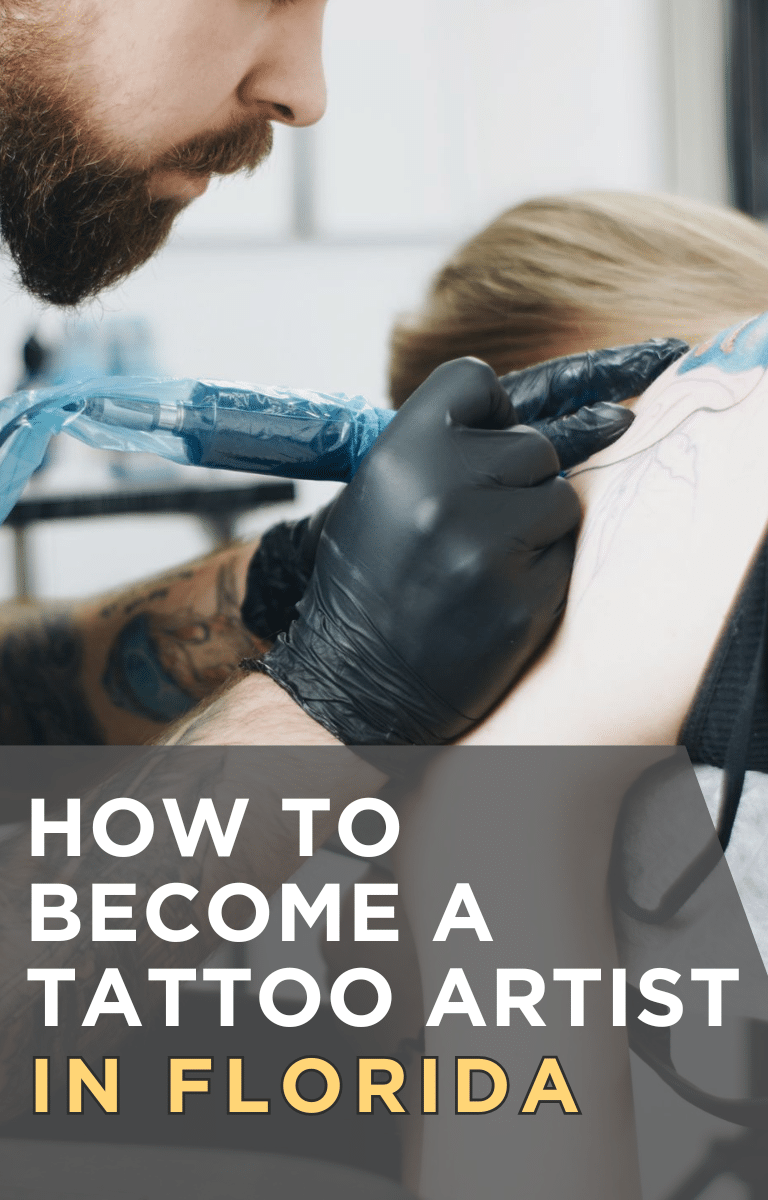
Becoming a Tattoo Artist in Florida means learning a hands-on craft, mastering safety standards, and earning the credential the state requires before you can legally ink clients. A Florida tattoo license is the state-issued permit that authorizes you to practice tattooing, permanent makeup, and microblading at an inspected facility. The Florida Department of Health administers it at the county level.
This guide walks you through how to earn that license, what it costs, and what to watch for along the way. It also covers how a Traditional Tattoo Apprenticeship builds the real, AI-proof career behind the credential.
Key Takeaways
- Regulator: The Florida Department of Health oversees tattoo licensing, administered county by county under Fla. Stat. § 381.0775 et seq.
- Core requirement: You must complete a DOH-approved bloodborne pathogens and communicable diseases course and score at least 70 percent.
- Fee: Florida charges a $60 application fee for a Tattoo Artist license.
- Facility tie: Your establishment’s name appears on the license, so you must work from an inspected tattoo studio.
- Scope: The license covers tattooing, permanent makeup, and microblading.
Florida tattoo licensing at a glance
Florida uses a state-license model. The Department of Health administers it locally, requiring a bloodborne pathogens course, a $60 application fee, and a tie to an inspected facility.
- Regulator: Department of Health (DOH), county-administered
- Governing law: Fla. Stat. § 381.0775 et seq.
- Licensing model: State license
- Application fee: $60
- Required course: DOH-approved bloodborne pathogens (BBP) and communicable diseases course, 70 percent or higher score
- Identification: Government-issued photo ID
- Scope covered: Tattooing, permanent makeup, and microblading
How does Florida regulate tattooing?
Florida regulates tattooing through the Department of Health under Fla. Stat. § 381.0775 et seq., with counties handling the licensing and inspection process locally.
The state sets the rules, but your county health office is where the paperwork, inspections, and approvals actually happen. This structure keeps standards consistent statewide while giving local officials the authority to inspect tattoo studios in their area.
Florida’s framework covers more than traditional tattooing. The same licensing pathway applies to permanent makeup and microblading, so the credential you earn is broad enough to support several service offerings. Florida also publishes the most detailed reciprocity matrix in the country, which matters if you plan to visit or relocate.
What does the state license model mean for you?
Under Florida’s model, your license is tied to a specific inspected establishment. You cannot legally tattoo without working from a facility whose name appears on your license.
This is one of the most important details to understand early. In Florida, the establishment name must appear on your license, so practitioners are attached to an inspected facility rather than being fully independent. If you change tattoo studios, your license information needs to reflect that.
For a new Tattoo Artist, this is actually helpful. It pushes you to build relationships with reputable, inspected tattoo studios from day one, which is exactly where you want to be learning and working. It also protects clients by ensuring every tattoo happens in a space that meets health standards.
Tip: Before you apply, confirm which inspected establishment will host you. Since the facility name goes on your license, having that arrangement settled makes the application smoother.
How do you get a tattoo license in Florida step by step?
To earn a Florida tattoo license, complete a DOH-approved bloodborne pathogens course and gather your photo ID. Then secure an inspected facility and submit your application with the $60 fee.
- Learn the craft first. A license proves you understand safety, but it does not teach you to tattoo. Train through a Traditional Tattoo Apprenticeship so your skill matches your credential.
- Complete the required course. Take a DOH-approved bloodborne pathogens and communicable diseases course and score at least 70 percent. This is a core requirement, not optional.
- Gather your identification. Have a government-issued photo ID ready to submit with your application.
- Secure your inspected facility. Because the establishment name must appear on your license, line up the tattoo studio where you will practice.
- Submit your application and fee. File the Tattoo Artist License Application with the $60 application fee through your county Department of Health office.
Always confirm the exact filing steps and any county-specific details on the official Florida Health tattooing page before you submit. If a requirement is not listed in the verified facts here, check the official source rather than assume.
What does a Florida tattoo license cost?
The Florida Tattoo Artist license carries a $60 application fee, plus the separate cost of the required DOH-approved bloodborne pathogens course.
The $60 application fee is the figure Florida publishes for the license itself. The bloodborne pathogens and communicable diseases course is a separate expense, and its price depends on the approved provider you choose. Course pricing is not part of the state fee, so confirm it directly with the provider.
Compared to the cost of a four-year college degree, the licensing side of becoming a Tattoo Artist is remarkably affordable. Your real investment is in your training and skill development, which is where a strong tattoo apprenticeship pays off. A Professional Tattoo Artist can earn over $106,000 a year, according to ZipRecruiter. That makes the licensing cost a small entry point into a high-earning, hands-on career that AI cannot replace.
What if you are moving to Florida from another state?
Florida publishes the most detailed reciprocity matrix in the country. It treats transfer status as predetermined, so out-of-state Tattoo Artists should review that matrix before applying.
If you already hold credentials elsewhere, Florida’s reciprocity documentation is the best place to understand how your situation is handled. The transfer status is predetermined, meaning the state has published guidance on how out-of-state licensure is treated rather than deciding case by case.
Florida also provides a Guest Tattoo Guide for Tattoo Artists who want to work temporarily in the state, such as at conventions or guest spots. Review that guide and the official licensure overview to confirm what applies to you. When in doubt, contact your county Department of Health office directly rather than guessing at the rules.
What mistakes should you avoid?
The most common mistakes are skipping the bloodborne pathogens course, tattooing outside an inspected facility, and treating the license as a substitute for proper training.
- Ignoring the BBP requirement. The DOH-approved course with a 70 percent minimum score is mandatory. Do not schedule client work before it is complete.
- Working outside an inspected establishment. Your license is tied to a facility whose name appears on it. Tattooing elsewhere puts your credential at risk.
- Confusing a license with skill. A Florida tattoo license shows you understand safety. It does not prove you can produce quality tattoos. That comes from mentorship and practice.
- Guessing on county rules. Because Florida is county-administered, always verify local steps on the official Florida Health pages.
- Skipping the reciprocity matrix. Out-of-state Tattoo Artists who assume their credentials transfer automatically can waste time. Read the published guidance first.
How do you learn to tattoo with Ink Different?
Ink Different is a college alternative that trains you through a Traditional Tattoo Apprenticeship built around personalized Mentor relationships and licensing support.
Florida can tell you how to earn a license. It does not teach you the technique, craft, or business sense that separates a hobbyist from a Professional Tattoo Artist. That is our entire focus. Instead of sitting in a lecture hall, you learn hands-on, working closely with an experienced Mentor who guides your progress.
Our Traditional Tattoo Apprenticeship is designed to build genuine skill on professional equipment, using proper tattoo machine technique, sanitation habits, and client care. We also help you understand the licensing steps along the way, so the credential and the craft come together. This is a career path that rewards human creativity and connection, which is exactly why it is AI-proof.
Ready to become a Tattoo Artist? Apply now to Ink Different’s Traditional Tattoo Apprenticeship and start building an AI-proof career, with licensing support along the way.
Frequently Asked Questions
Who issues a tattoo license in Florida?
The Florida Department of Health issues tattoo licenses, administered at the county level under Fla. Stat. § 381.0775 et seq. Your local county health office handles the application and inspections.
How much does a Florida tattoo license cost?
Florida charges a $60 application fee for a Tattoo Artist license. The required bloodborne pathogens course is a separate cost that depends on your approved provider.
What training is required to get a tattoo license in Florida?
You must complete a DOH-approved bloodborne pathogens and communicable diseases course and score at least 70 percent. You also need a government-issued photo ID to apply.
Does a Florida tattoo license cover permanent makeup and microblading?
Yes. Florida’s tattoo licensing framework covers tattooing, permanent makeup, and microblading, so the credential supports several related services.
Do I need to work at a specific studio to hold a license?
Yes. In Florida, the establishment name must appear on your license, so practitioners are tied to an inspected facility and cannot legally tattoo outside it.
Can I transfer an out-of-state tattoo license to Florida?
Florida treats transfer status as predetermined and publishes a detailed reciprocity matrix. Review that matrix and the official licensure overview before applying to confirm how your credentials are handled.


