How to Become a Tattoo Artist in Florida
July 30, 2026
How to Become a Tattoo Artist in New Jersey
July 31, 2026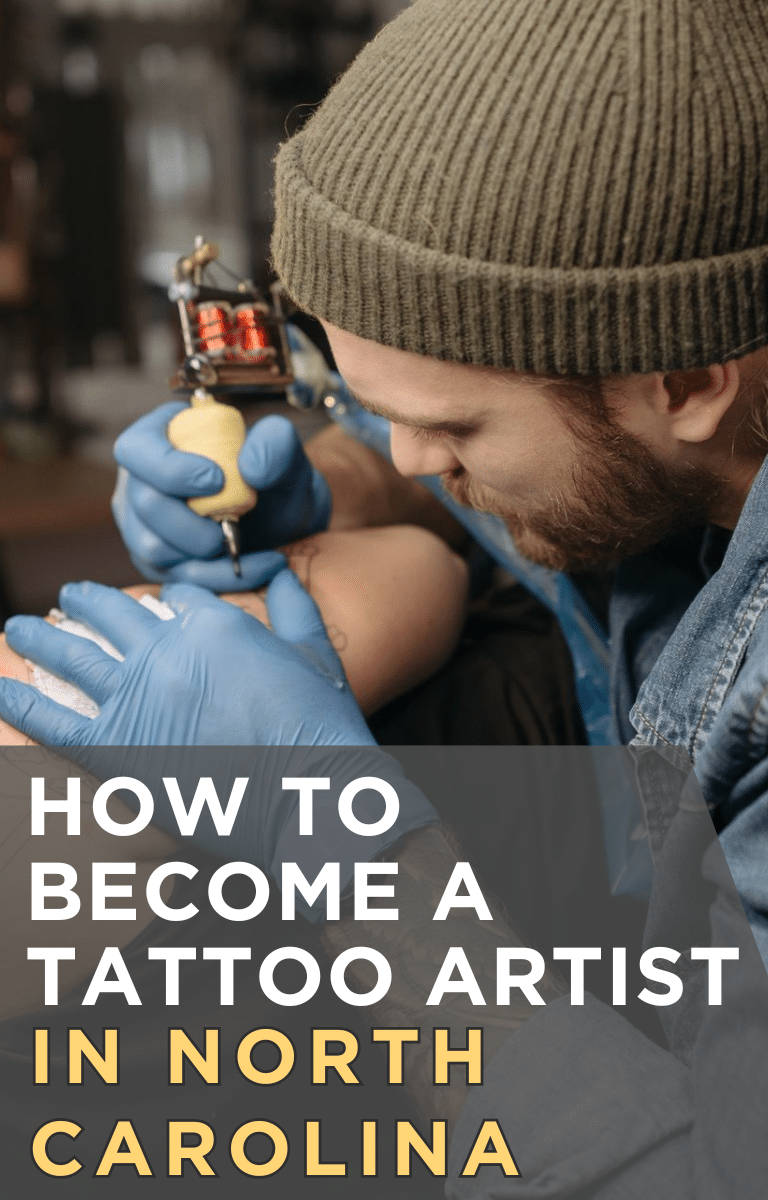
Becoming a Tattoo Artist in North Carolina takes two things: expert skill and a legal permit. The state does not hand out one blanket license. Instead, your county health department issues a Tattoo Permit once you meet its requirements.
This guide breaks down how North Carolina regulates tattooing, what the permit covers, and the exact steps to get one. It also covers what a serious tattoo apprenticeship gives you that a permit alone cannot: the skill to actually do the job well.
Let’s start with how the state’s licensing system works, then walk through each step you need to take.
Key Takeaways
- Who regulates it: The North Carolina Department of Health and Human Services sets rules, and county health departments issue the permits.
- What you need: A county Tattoo Permit, bloodborne pathogens training, and proof of age.
- Governing law: Tattooing in North Carolina is governed by N.C. Gen. Stat. § 130A-283.
- Not portable: Your permit is tied to one artist and one shop, so moving shops or counties requires a fresh permit.
- Career upside: A Professional Tattoo Artist can earn over $106,000 a year, per ZipRecruiter, in an AI-proof craft.
North Carolina Tattoo Licensing at a Glance
North Carolina uses a county-local licensing model where each county health department issues a Tattoo Permit tied to a specific artist and a specific shop. Here are the core facts drawn from official sources.
- Regulator: Department of Health and Human Services (NCDHHS), with local permits issued by county health departments.
- Governing law: N.C. Gen. Stat. § 130A-283.
- Licensing model: County-local.
- Core requirements: Tattoo Permit from the county health department, bloodborne pathogens (BBP) training, and proof of age.
- Transfer status: Guest, and the permit is non-portable.
- Fees: Set locally, so confirm the current amount with your county health department.
Because fees and specific procedures are handled at the county level, always verify the current numbers and paperwork directly with your county health department before you apply.
How Does North Carolina Regulate Tattooing?
North Carolina regulates tattooing through the Department of Health and Human Services under N.C. Gen. Stat. § 130A-283, with the actual permits issued by county health departments. This is a county-local model, so the state sets the framework, and your county carries it out.
That structure means the person you deal with day to day is typically your county health department, not a single statewide licensing board. NCDHHS publishes guidance, and the county reviews your paperwork, inspects the studio, and grants the Tattoo Permit.
The permit itself is tied to a specific artist working at a specific shop. In other words, it is not a general credential you carry around the state. It authorizes you, personally, to tattoo at that one location.step-by-step
What Does the Permit System Mean for You?
The permit system means your legal right to tattoo in North Carolina is location-specific, so your career planning has to account for where you work, not just whether you are qualified.
Because the Tattoo Permit is tied to a specific artist and a specific shop, you cannot simply pick up and move without paperwork. If you change Tattoo Studios or move to a different county, the state treats that as a situation requiring a fresh permit rather than a quick transfer.
This has a few practical effects. First, choose your studio carefully, because your permit and your workplace are linked. Second, build strong relationships with the county health department where you plan to work. Third, keep your bloodborne pathogens training and proof of age documentation organized so you can re-apply smoothly if your circumstances change.
Tip: Treat the county health department as a partner in your career. Clear, complete paperwork and a clean, compliant studio make the permit process far smoother.
How Do You Get a Tattoo License in North Carolina Step by Step?
You get a tattoo license in North Carolina by learning the craft through a tattoo apprenticeship, completing bloodborne pathogens training, proving your age, and applying for a county Tattoo Permit at a specific studio.
- Learn the craft properly. Before any permit conversation matters, you need expert skill. A structured Tattoo Apprenticeship Program under an experienced Mentor is the proven route to competence, safety, and a portfolio that studios respect.
- Complete bloodborne pathogens (BBP) training. North Carolina requires BBP training. This covers safe handling, cross-contamination prevention, and the kind of infection-control knowledge that protects your clients and your career.
- Gather proof of age. Keep valid identification ready, since proof of age is one of the stated requirements.
- Secure a spot at a specific studio. Because the permit is tied to a specific artist and a specific shop, you apply in connection with the Tattoo Studio where you will actually work.
- Apply for the Tattoo Permit at your county health department. Submit your application, documentation, and any county-required materials to the county health department that covers your studio.
- Pass any required inspection and keep your permit current. Counties typically confirm the studio meets health standards. Follow their guidance and renew as instructed.
For the authoritative starting point, use the official NCDHHS tattooing page and then contact your county health department for local specifics: NCDHHS Tattooing Page.
What Does a Tattoo License in North Carolina Cost?
Tattoo Permit fees in North Carolina are set at the county level, so the exact cost depends on the county health department that issues your permit.
Because this is a county-local model, there is no single statewide fee to quote. The honest, accurate answer is to check the current fee directly with the county health department where your studio is located, and to confirm it again with the official NCDHHS resource if anything is unclear.
When you budget, plan for more than just the permit. Consider the cost of bloodborne pathogens training and the investment in learning the craft to a professional standard. The training and skill-building are what actually make the permit worth having.
Warning: Do not rely on secondhand fee figures from forums or old posts. County fees and procedures can differ, so verify with the official source before you apply.
Moving to North Carolina From Another State
North Carolina treats out-of-state credentials as guest status, and its permit is non-portable, so relocating almost always means securing a fresh county Tattoo Permit at your new studio.
If you are an experienced Tattoo Artist moving to North Carolina, do not assume your home-state paperwork automatically carries over. Plan to complete the state’s stated requirements, which include a county Tattoo Permit, bloodborne pathogens training, and proof of age.
The same non-portable rule applies even within North Carolina. Moving shops or counties requires a fresh permit, so factor that into any plan to relocate your career inside the state. Contact the receiving county health department early so you understand exactly what they expect.
What Mistakes Should You Avoid?
The most common mistakes are treating the permit as portable, skipping serious training, and guessing at local rules instead of confirming them with the county health department.
- Assuming the permit follows you. It does not. The permit is tied to a specific artist and a specific shop, and moving requires a fresh permit.
- Chasing a permit before building skill. A permit does not make you a Tattoo Artist. Mastery of the craft, safety, and a strong portfolio come first.
- Skipping bloodborne pathogens training. BBP training is a stated requirement and a genuine safety foundation, not a formality.
- Relying on outdated online fee figures. Confirm current fees and procedures with your county health department and the official NCDHHS page.
- Choosing a studio without checking compliance. Since your permit is linked to the shop, the studio’s standing matters to you directly.
Learning to Tattoo With Ink Different
Ink Different Tattoos is the college alternative for serious Tattoo Artists. Our Traditional Tattoo Apprenticeship is built to make you employable and skilled, not just certified. We call it the Juilliard of tattoo training: genuine mentorship, fundamentals, and a portfolio tattoo studios take seriously.
Tattooing is an AI-proof career. A machine cannot hand-tattoo a client, read skin, or build the trust a great Tattoo Artist earns. Building genuine craft under a Mentor is one of the smartest investments in your career. A professional Tattoo Artist can earn over $106,000 a year, according to ZipRecruiter, and that ceiling rewards skill and reputation.
Our Traditional Tattoo Apprenticeship focuses on technique, safety, and professionalism. We also support you as you navigate the North Carolina permit process with your county health department. We do not offer a shortcut; we build Tattoo Artists.
Ready to become a Tattoo Artist? Apply now to Ink Different’s Traditional Tattoo Apprenticeship and start building an AI-proof career, with licensing support along the way.
Frequently Asked Questions
Do I need a state tattoo license in North Carolina?
North Carolina uses a county-local model. You need a Tattoo Permit from your county health department, issued under N.C. Gen. Stat. § 130A-283, rather than a single statewide license.
Is a North Carolina Tattoo Permit transferable between studios?
No. The permit is tied to a specific artist and a specific shop and is non-portable. Moving shops or counties requires a fresh permit from the relevant county health department.
What are the core requirements to tattoo in North Carolina?
You need a Tattoo Permit from your county health department, bloodborne pathogens training, and proof of age. Confirm any additional local requirements with your county.
How much does a Tattoo Permit cost in North Carolina?
Fees are set at the county level, so there is no single statewide figure. Check the current cost directly with your county health department before applying.
Can I transfer my out-of-state credentials to North Carolina?
North Carolina treats out-of-state artists under guest status, and its permit is non-portable. Plan to obtain a fresh county Tattoo Permit and meet the state’s stated requirements.
Where can I find the official North Carolina tattoo rules?
Start with the NCDHHS Tattooing Page at ehs.dph.ncdhhs.gov, then contact the county health department covering your studio for local procedures and fees.


