
How to Become a Tattoo Artist in North Dakota
August 19, 2026
How to Become a Tattoo Artist in Vermont
August 20, 2026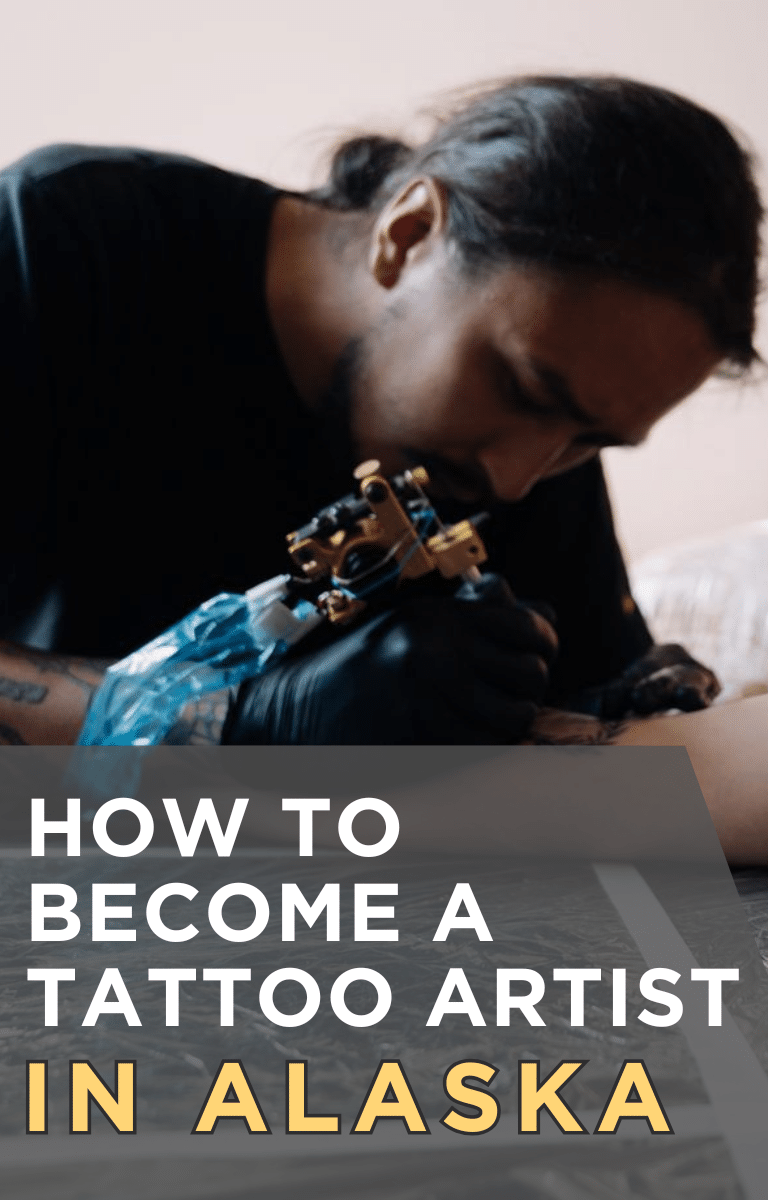
Becoming a Tattoo Artist in Alaska starts with understanding one thing clearly: the state regulates body art through a formal licensing board, and meeting its requirements is your gateway to a real, hands-on, AI-proof career. A tattoo license in Alaska is the state credential, issued through the Alaska Board of Barbers and Hairdressers, that legally permits you to tattoo clients within Alaska. This guide walks you through exactly how to earn that credential, what it involves, and how to build the skills that make a license worth having.
Tattooing is a craft that cannot be automated away. While software replaces desk jobs, a skilled Tattoo Artist trades directly in human trust, skill, and permanence. That is why the path is worth taking seriously.
Key Takeaways
- Regulator: The Alaska Board of Barbers and Hairdressers oversees tattoo licensing under Alaska Stat. § 08.13.217.
- Training: You need 1,650 hours of school OR 2,000 hours of a tattoo apprenticeship.
- Safety cards: A current CPR card and a current bloodborne pathogens card are required.
- Minors: A parent or guardian must be present with written consent for any procedure on a minor.
- Out of state: Alaska offers guest transfer status for licensed Artists from other states.
Table of Contents
- How does Alaska regulate tattooing?
- What does that mean for you as an aspiring Artist?
- What are the requirements for a tattoo license in Alaska?
- How do you get licensed step by step?
- What does it cost to get licensed?
- What if you are moving to Alaska from another state?
- What mistakes should you avoid?
- How do you learn to tattoo with Ink Different?
- Frequently Asked Questions
How does Alaska regulate tattooing?
Alaska regulates tattooing through the Alaska Board of Barbers and Hairdressers under Alaska Stat. § 08.13.217, using a formal state-license model. This is the same board-based approach common to beauty and trade industries, which means the state applies a structured, documentation-heavy process to body art licensing.
The board sets the standards for training hours, safety certifications, and documentation. It is strict about protecting minors and about the paperwork you submit, so accuracy and completeness matter throughout your application.
Tip: Because tattooing falls under a barbers and hairdressers board, always confirm current forms and instructions directly with the board before you apply.
You can review the governing body directly through the Board of Barbers and Hairdressers page.
What does that mean for you as an aspiring Artist?
It means your path to tattooing in Alaska is defined by verifiable training hours, current safety credentials, and clean documentation rather than guesswork. The state-license model gives you a clear target: complete your hours, hold your safety cards, and submit an accurate application.
For someone building a career, this structure is an advantage. It rewards people who train seriously and keep good records, and it filters out those who cut corners. That protects clients and it protects your reputation as a professional.
A licensed Tattoo Artist can earn a strong living. According to ZipRecruiter, a Professional Tattoo Artist can earn over $106,000 a year. That is the kind of income potential that makes the effort of licensing well worth it.
What are the requirements for a tattoo license in Alaska?
To qualify for a tattoo license in Alaska you must complete the required training hours, hold current CPR and bloodborne pathogens cards, and follow strict rules for procedures on minors. Each requirement below comes directly from the Alaska Board of Barbers and Hairdressers.
Training hours
You need 1,650 hours of school OR 2,000 hours of a tattoo apprenticeship. Both routes are recognized, so you can choose the path that fits your learning style and your access to a qualified Mentor.
CPR certification
You must hold a current CPR card, and the board expects a certified true copy as part of your documentation. Keep this credential up to date, since an expired card can stall your application.
Bloodborne pathogens
A current bloodborne pathogens card is required. This training covers safe handling of equipment and the prevention of cross-contamination, which is central to responsible tattooing.
Rules for minors
For any procedure on a minor, a parent or guardian must be present and provide written consent. Alaska treats minor protections seriously, so never assume verbal permission is enough.
Warning: Do not guess about fees, exam details, or supervised-hours specifics beyond what is stated here. Confirm every detail on the official Body Art License Application.
How do you get licensed step by step?
The path to a tattoo license in Alaska follows a clear sequence: choose your training route, complete your hours, earn your safety cards, then submit your application to the board. Taking these steps in order keeps your paperwork clean and your timeline predictable.
- Choose your route. Decide between 1,650 hours of school or 2,000 hours of a tattoo apprenticeship. An apprenticeship under a skilled Mentor gives you real studio experience alongside your hours.
- Complete your training hours. Log and document your hours carefully. Accurate records make the application process smoother.
- Earn your CPR card. Complete a recognized CPR course and keep a certified true copy of the card.
- Earn your bloodborne pathogens card. Complete an approved bloodborne pathogens course and retain proof.
- Prepare your documentation. Gather your training records, safety cards, and any identification the board requires.
- Submit the Body Art License Application. File the application with the Alaska Board of Barbers and Hairdressers and follow their instructions exactly.
Confirm the current version of the Body Art License Application before you file, since forms are updated periodically.
What does it cost to get licensed?
Alaska’s specific licensing fees are set by the Board of Barbers and Hairdressers, so you should confirm the current amounts directly on the official application rather than relying on an estimate. We will not guess at fee figures here, because outdated numbers can mislead you.
Your real costs fall into a few predictable categories: your training route, your CPR and bloodborne pathogens courses, and the state application fees. The training route is usually the largest investment, and it is also where the value lives, because that is where you actually learn to tattoo.
Think of it as an investment in an AI-proof career rather than an expense. Compared to the cost of a traditional college degree, a tattoo apprenticeship path can lead to a skilled trade with strong earning potential and no automation risk.
Tip: Budget for renewing your CPR and bloodborne pathogens cards over time, since these must stay current.
What if you are moving to Alaska from another state?
Alaska recognizes guest transfer status, which means a Tattoo Artist licensed in another state can work in Alaska under that guest arrangement subject to the board’s rules. This makes Alaska accessible to traveling and relocating Artists.
If you are already licensed elsewhere, contact the Alaska Board of Barbers and Hairdressers to confirm exactly how guest status applies to your situation and what documentation you need to bring. Because the board is strict on paperwork, arrive with your current safety cards and proof of your existing license.
Even with guest status, you must still follow Alaska’s rules, including the requirement that a parent or guardian be present with written consent for any procedure on a minor.
What mistakes should you avoid?
The most common mistakes are letting safety cards expire, submitting incomplete documentation, and assuming rules for minors are flexible. Each of these can delay or derail your licensing.
- Expired safety cards. Keep both your CPR and bloodborne pathogens certifications current at all times.
- Sloppy hour records. Whether you choose school hours or a tattoo apprenticeship, document everything clearly.
- Guessing about requirements. Do not rely on rumor or outdated forums. Confirm details with the board.
- Ignoring minor protections. Never tattoo a minor without a parent or guardian present and written consent.
- Learning without a Mentor. Self-teaching leaves gaps in technique and safety. A structured Tattoo Apprenticeship builds real skill.
Warning: A license proves you met the minimum standards. It does not by itself make you a great Artist. The quality of your training determines your career.
How do you learn to tattoo with Ink Different?
Ink Different is a college alternative that trains you through a Traditional Tattoo Apprenticeship built around real mentorship and professional standards. It is designed for people who want to do this seriously.
Rather than treating training as a box to check, Ink Different focuses on the craft that no algorithm can replicate: line work, shading, composition, client care, and studio professionalism. The Traditional Tattoo Apprenticeship runs 18 to 24 months across four phases, starts remote, and welcomes beginners. You learn under an experienced Mentor, working toward the hours and skills that support licensing in your state.
This is the path for people who want a real, AI-proof career instead of a fragile desk job. A Professional Tattoo Artist can earn over $106,000 a year according to ZipRecruiter, and the skills you build are yours for life.
Ready to become a Tattoo Artist? Apply now to Ink Different’s Traditional Tattoo Apprenticeship and start building an AI-proof career, with licensing support and job-ready skills along the way.
Frequently Asked Questions
How many hours do you need for a tattoo license in Alaska?
You need 1,650 hours of school or 2,000 hours of a tattoo apprenticeship to qualify for a tattoo license in Alaska, per the Board of Barbers and Hairdressers.
Who issues tattoo licenses in Alaska?
The Alaska Board of Barbers and Hairdressers issues tattoo licenses under Alaska Stat. § 08.13.217, using a formal state-license model common to trade industries.
Do you need CPR and bloodborne pathogens certification?
Yes. Alaska requires a current CPR card, submitted as a certified true copy, and a current bloodborne pathogens card as part of your licensing documentation.
Can you tattoo a minor in Alaska?
Only when a parent or guardian is present and provides written consent. Alaska is strict about minor protections, so verbal permission is never enough.
Can I transfer my out of state tattoo license to Alaska?
Alaska recognizes guest transfer status for licensed Artists from other states. Contact the Board of Barbers and Hairdressers to confirm how it applies to you.
How much does an Alaska tattoo license cost?
Fees are set by the Alaska Board of Barbers and Hairdressers. Confirm current amounts on the official Body Art License Application rather than relying on estimates.