
How to Become a Tattoo Artist in Alaska
August 20, 2026
How to Become a Tattoo Artist in Wyoming
August 20, 2026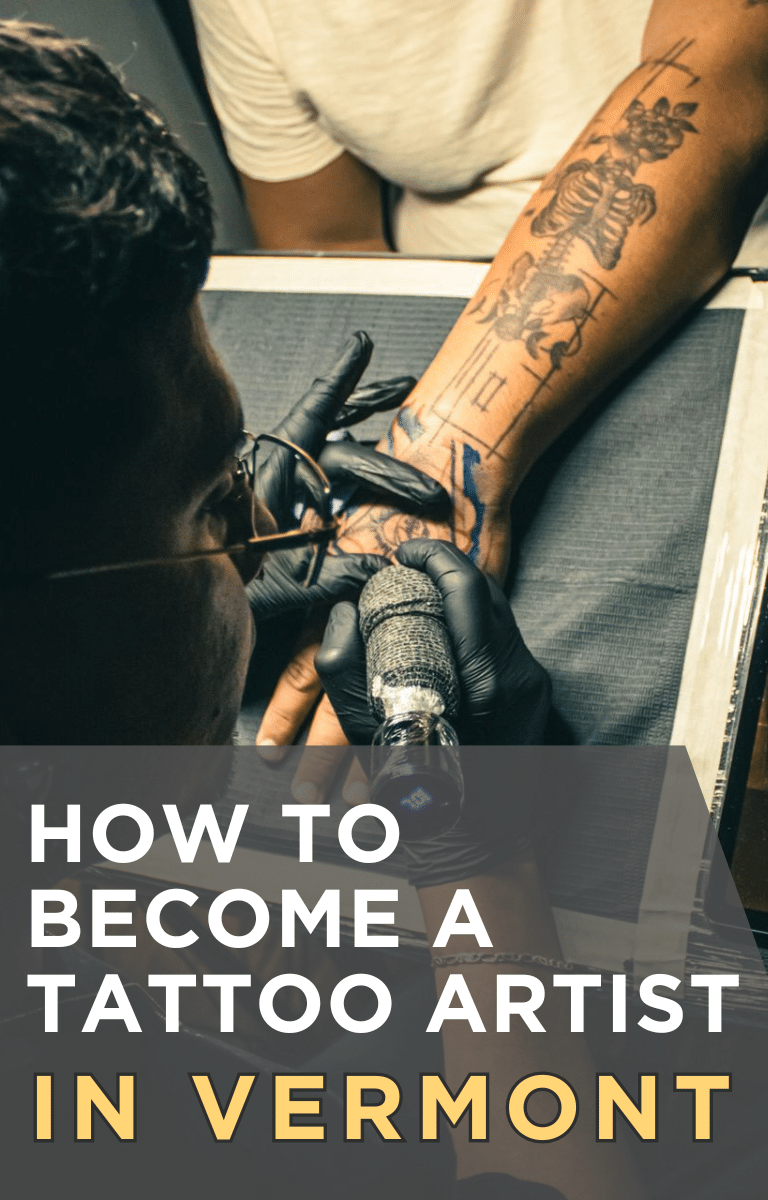
Table of Contents
- How does Vermont regulate tattooing?
- What does state licensing mean for you?
- How do you become a Tattoo Artist in Vermont step by step?
- What does a tattoo license in Vermont cost?
- How do you transfer a license or move to Vermont?
- What mistakes should you avoid?
- How do you learn to tattoo with Ink Different?
- Frequently Asked Questions
A tattoo license in Vermont is the state-issued credential from the Office of Professional Regulation that legally allows you to tattoo clients for pay in Vermont. If you want a hands-on, creative, and genuinely AI-proof career, tattooing is one of the few paths where human skill still commands real money. A Professional Tattoo Artist can earn over $106,000 a year according to ZipRecruiter, and no algorithm can replicate the trust and craft of a great artist working skin.
This guide walks you through exactly how to earn your credential and start building that career in the Green Mountain State.
Key Takeaways
- Regulator: The Vermont Office of Professional Regulation (OPR) oversees tattooing under Vt. Stat. Ann. Title 26 section 4101.
- Model: Vermont uses a state-license model, so you apply directly to the OPR to work legally.
- Training: A documented tattoo apprenticeship plus a supervising statement is the core requirement.
- Transfers: Vermont offers a Fast Track Endorsement for artists already licensed in equivalent states.
- Career: Tattooing is an AI-proof craft where skilled artists can earn over $106,000 a year per ZipRecruiter.
Vermont Tattoo Licensing at a Glance
- Regulator: Office of Professional Regulation (OPR)
- Governing law: Vt. Stat. Ann. Title 26 section 4101
- Licensing model: State license
- Transfer status: Guest status and Fast Track Endorsement available
- Fees: Confirm current fees on the official OPR page (see resources below)
How does Vermont regulate tattooing?
Vermont regulates tattooing at the state level through the Office of Professional Regulation, which issues tattoo licenses under Vt. Stat. Ann. Title 26 section 4101.
This is a centralized, state-license model. Rather than getting approval from a county health department or a patchwork of local offices, you apply to one statewide body, the OPR. That keeps the process clear and consistent no matter which corner of Vermont you plan to work in.
The OPR sets the standards for who may legally tattoo, what documentation you must submit, and how licensed artists coming from other states can join the Vermont workforce. Because the rules live in one place, your homework is simple: read the official OPR guidance and follow it carefully.
Always verify the specific forms, fees, and current requirements directly with the Vermont OPR before you apply. This guide points you in the right direction, but the OPR is the final authority.
What does state licensing mean for you?
A state-license model means you earn one credential from the Vermont OPR and can then work legally anywhere in the state without chasing separate local permits.
For an aspiring Tattoo Artist, this is good news. You are not navigating a maze of city ordinances. You focus your energy on the two things that actually matter: becoming genuinely skilled through a proper tattoo apprenticeship, and completing the OPR paperwork correctly.
It also means the OPR takes documentation seriously. Vermont wants proof that you trained under a qualified Mentor and that a supervising artist can vouch for your readiness. This protects clients and protects the reputation of the craft, which raises the value of your license once you hold it.
In practice, your license is your professional identity. It is the difference between tattooing legally in a reputable Tattoo Studio and working in the shadows, which is a fast way to end your career before it starts.
How do you become a Tattoo Artist in Vermont step by step?
To become a Tattoo Artist in Vermont, complete a documented tattoo apprenticeship, gather your supervising statement, and submit your application to the Office of Professional Regulation.
Here is the practical path from beginner to licensed professional.
- Build a strong art foundation. Before you ever touch a Tattoo Machine, sharpen your drawing, composition, and design skills. Everything you tattoo starts as art.
- Find a qualified Mentor and enroll in a Tattoo Apprenticeship. Vermont requires documented tattoo apprenticeship experience, so you need real training under an experienced artist, not self-teaching.
- Document your training carefully. Keep records of your hours, your work, and your progress. The OPR expects evidence of legitimate apprenticeship experience.
- Secure your supervising statement. Your Mentor or supervising artist provides a statement confirming your training and readiness to practice.
- Complete the OPR application. Download the current forms from the Vermont OPR site, follow the instructions exactly, and submit everything the state requires.
- Start working professionally. Once licensed, you can build a client base, refine your specialty, and grow toward that six-figure earning potential.
The apprenticeship stage is where careers are made. A weak or informal training path produces weak artists who struggle to get hired. A serious Tattoo Apprenticeship builds the technical skill, safety discipline, and portfolio that let you thrive.
What does a tattoo license in Vermont cost?
Vermont’s specific tattoo license fees are set by the Office of Professional Regulation, so you must confirm current amounts directly on the official OPR page.
We will not guess at a number here, because fees change and the OPR is the only reliable source. When you review the official forms and instructions, look for the application fee, any endorsement fee, and renewal costs so you can budget accurately.
Beyond the state fee, plan for the real investment in your career: quality training. Your tattoo apprenticeship, supplies, and portfolio development are where your money creates lasting value. Think of licensing fees as a small line item compared to the skill that actually earns you a living.
Tip: Save the official OPR fee schedule and application checklist in one folder before you begin. It removes surprises and keeps your application moving.
How do you transfer a license or move to Vermont?
Vermont offers a Fast Track Endorsement that lets Tattoo Artists already licensed in equivalent states get licensed quickly, making it one of the friendliest states for incoming professionals.
If you already hold a license in another state, this is a major advantage. Instead of repeating an entire tattoo apprenticeship, you may qualify for endorsement based on your existing credential. Vermont also recognizes a guest transfer status, which supports artists working across state lines within the rules.
To use the Fast Track Endorsement, confirm that your current state qualifies as equivalent and gather proof of your existing license and experience. The OPR forms and instructions spell out exactly what to submit, so read them closely before applying.
This welcoming approach is one reason Vermont is attractive for both new and established artists. The state wants skilled, licensed professionals working in its studios.
What mistakes should you avoid?
The biggest mistakes are skipping a documented tattoo apprenticeship, submitting incomplete OPR paperwork, and trying to work before your Vermont license is issued.
Avoid these common traps as you build your career.
- Tattooing without a license. Working before the OPR issues your credential puts your entire career at risk. Get licensed first.
- Poor documentation. Vermont wants a documented tattoo apprenticeship and a supervising statement. Keep clean, thorough records from day one.
- Choosing the wrong Mentor. A rushed or careless teacher produces gaps you will spend years fixing. Train with someone who takes the craft seriously.
- Relying on rumor instead of the OPR. Fees and forms come from the official source, not forums. Verify everything with the Office of Professional Regulation.
- Underinvesting in skill. The license is the door. Your craft is what fills your chair and grows your income.
How do you learn to tattoo with Ink Different?
Ink Different is a serious college alternative that trains you through a Traditional Tattoo Apprenticeship and supports you through licensing.
We are not a shortcut. We build Tattoo Artists the right way, pairing you with an experienced Mentor and teaching the technical, artistic, and safety fundamentals that Vermont’s documentation requirements are designed to protect.
Our Traditional Tattoo Apprenticeship focuses on real skill on real skin, the kind that AI cannot touch and clients will always pay for. Instead of taking on college debt for a degree with uncertain returns, you learn a durable craft with genuine six-figure potential, over $106,000 a year for Professional Tattoo Artists according to ZipRecruiter. The Traditional Tattoo Apprenticeship runs 18 to 24 months across four phases, starts remote, and welcomes beginners.
We also help you understand the licensing path, so your documented tattoo apprenticeship and supervising statement line up with what the Vermont OPR expects.
Ready to become a Tattoo Artist? Apply to Ink Different’s Traditional Tattoo Apprenticeship and start building an AI-proof career, with licensing support along the way.
Official Vermont Resource
Frequently Asked Questions
Do I need a license to tattoo in Vermont?
Yes. Vermont uses a state-license model, and you must be licensed by the Office of Professional Regulation under Vt. Stat. Ann. Title 26 section 4101 before tattooing clients.
What are the main requirements for a tattoo license Vermont?
The core requirements are documented tattoo apprenticeship experience and a supervising statement submitted to the OPR. Always confirm the full checklist on the official OPR page.
Can I transfer my out-of-state tattoo license to Vermont?
Often yes. Vermont offers a Fast Track Endorsement for artists licensed in equivalent states, making it one of the friendliest states for incoming Tattoo Artists.
How much does a Vermont tattoo license cost?
Fees are set by the Office of Professional Regulation. Check the current amounts on the official OPR forms and instructions page rather than relying on estimates.
How long does it take to become a Tattoo Artist in Vermont?
It depends on how quickly you complete a quality tattoo apprenticeship and gather your documentation. Focus on genuine skill, since strong training shortens your path to steady work.
Is tattooing a stable career?
Yes. Tattooing is a hands-on, AI-proof craft, and Professional Tattoo Artists can earn over $106,000 a year according to ZipRecruiter, making it a strong college alternative.