
Tattoo Design Software for Artists Who Hate Digital Drawing
October 6, 2026
Best Tattoo Styles to Avoid Until You Have More Experience
October 6, 2026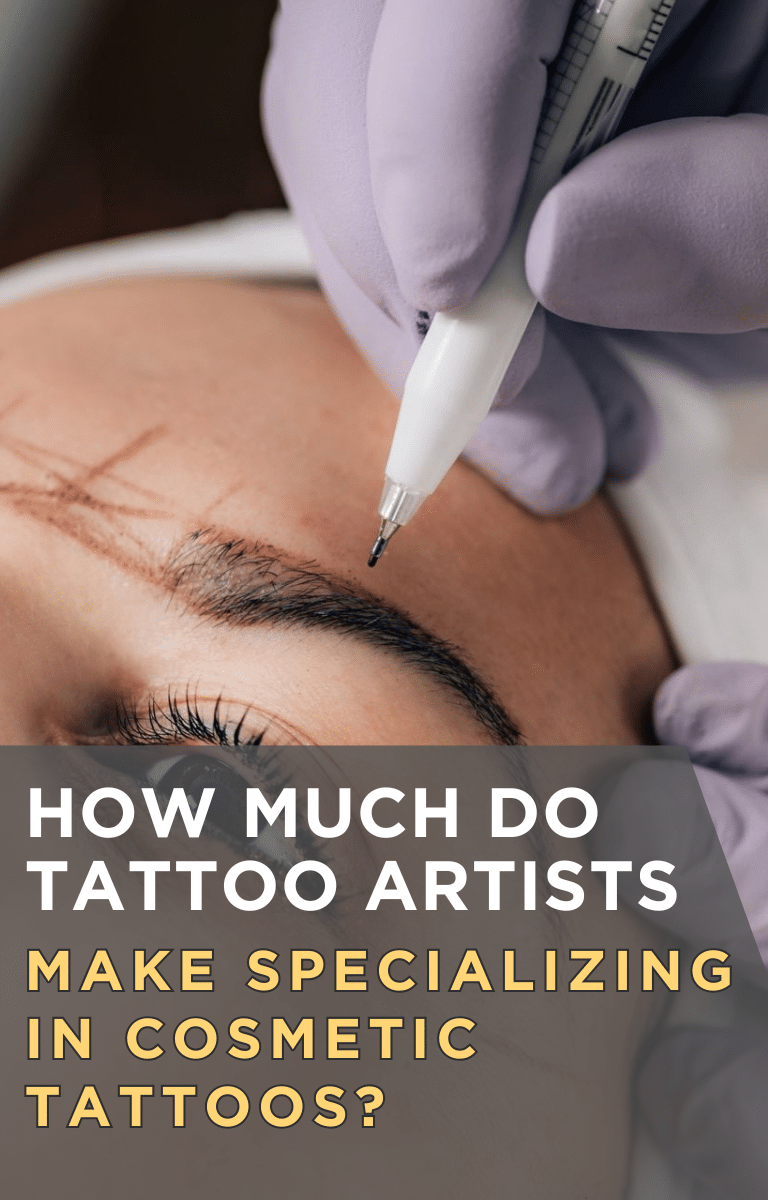
In This Article
- Key Takeaways
- What is cosmetic tattooing?
- How much do Tattoo Artists make specializing in cosmetic tattoos?
- Why does a cosmetic specialty pay more?
- What services do cosmetic Tattoo Artists offer?
- How do you start a career in cosmetic tattooing?
- What skills do you need to earn more?
- How Ink Different helps you build this career
- Ready to start?
- FAQ
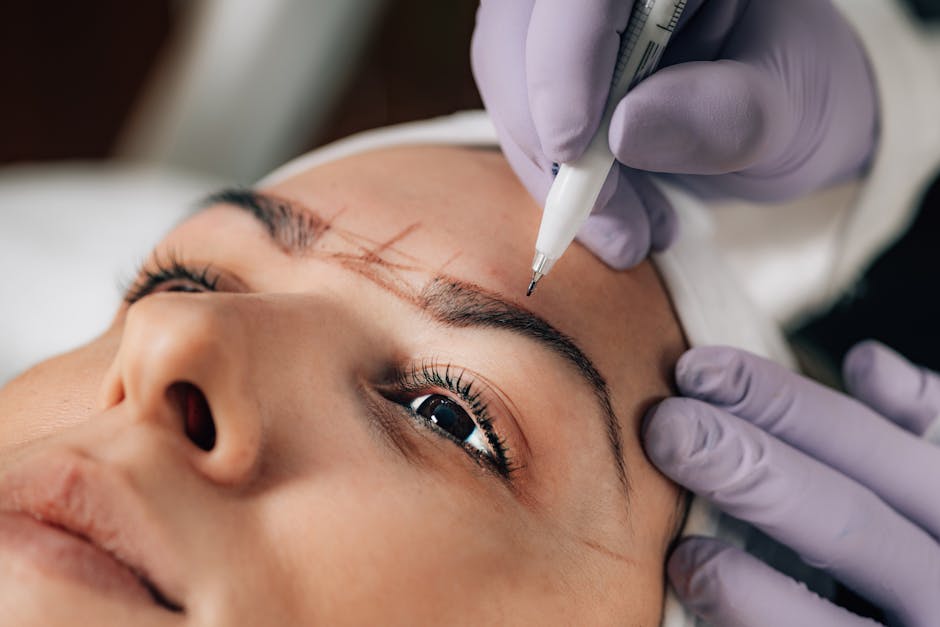
Across town, a cosmetic Tattoo Artist is charging hundreds of dollars for a single session, booked out for weeks, doing work that genuinely changes how people feel about themselves. Cosmetic tattooing is a specialized branch of tattooing that uses pigment to enhance or recreate facial features, including microbladed eyebrows, permanent eyeliner, lip blush, and scar camouflage, often called permanent makeup or micropigmentation.
At Ink Different Tattoos, we have spent 15 years helping aspiring artists build a real, income-generating craft around work like this.
Key Takeaways
- Income potential: Cosmetic specialists earn higher per-session rates than traditional tattoo artists through premium pricing and recurring touch-up appointments.
- Why specialization pays: Repeat clients, scheduled maintenance, referrals, and the technical precision required create steady, higher income streams.
- Foundation first: Strong foundational tattoo skills from a structured apprenticeship are essential before specializing in cosmetic techniques.
- No shortcuts: Cosmetic tattooing requires real mentorship and hands-on training, not weekend certificates, to build lasting client trust and income.
- AI-proof career: Human judgment, facial anatomy reading, and real-time skin adaptation make cosmetic tattooing machine-resistant and future-proof.
What is cosmetic tattooing?
Cosmetic tattooing is the practice of implanting pigment into the skin to enhance or recreate facial features, including microbladed eyebrows, permanent eyeliner, lip blush, and scar camouflage.
You might also hear it called permanent makeup, micropigmentation, or PMU. Unlike traditional body tattooing, cosmetic work is precise, small-scale, and deeply personal. Clients are trusting you with their face, which raises both the stakes and the value of your skill.
Because this work directly affects how someone sees themselves in the mirror every day, clients are often willing to invest significantly.
How much do Tattoo Artists make specializing in cosmetic tattoos?
Cosmetic Tattoo Artists typically earn higher income per session than general Tattoo Artists, with specialists in busy markets commanding premium pricing for procedures like microblading and lip blush.
Income varies based on your location, your reputation, your technique, and how many clients you can serve. According to the Bureau of Labor Statistics on craft and fine artists, the income range for skilled professionals varies based on specialization and self-employment, and cosmetic tattooing sits at the higher-skill, higher-value end of that spectrum.
Here is what shapes your earning power as a cosmetic specialist:
- Procedure pricing: Microblading, lip blush, and permanent eyeliner each command premium per-session rates.
- Touch-up revenue: Cosmetic work fades and requires scheduled touch-ups, creating recurring income streams.
- Client loyalty: Satisfied clients return and refer, building a reliable book of business.
- Market location: Urban and affluent markets support higher pricing and year-round demand.
Reality check: No one can promise you an exact number. Your income reflects your skill, your hustle, and the foundation you build.
Why does a cosmetic specialty pay more?
A cosmetic tattoo specialty pays more because it combines technical precision, high client trust, recurring touch-up appointments, and an AI-proof skill that machines cannot replicate.
A general skill feeds you once. A specialty keeps producing year after year because clients come back for maintenance and refer their friends.
Cosmetic tattooing is also deeply human. A robot cannot read a client’s bone structure, match their natural coloring, or adjust in real time to how their skin takes pigment. That irreplaceable human touch is exactly why this career stays valuable, a theme we explore in our post on why Tattoo Artists are still essential.
What services do cosmetic Tattoo Artists offer?
Cosmetic Tattoo Artists offer eyebrow microblading, permanent eyeliner, lip blush, scalp micropigmentation, and medical tattooing such as scar camouflage and areola restoration.
Each service opens a different income stream and serves a different kind of client. The more techniques you master, the more valuable you become. Here are the most in-demand services:
- Microblading and powder brows: The most requested cosmetic service worldwide, with high repeat client rates.
- Permanent eyeliner and lash enhancement: Precision work with high repeat demand and premium pricing.
- Lip blush: Soft color enhancement that brings out natural lip tone and creates lasting results.
- Scalp micropigmentation: Creates the appearance of fuller hair and addresses hair loss concerns.
- Medical and restorative tattooing: Scar camouflage and areola reconstruction after surgery or injury.
Because cosmetic work involves penetrating the skin, you must follow strict safety protocols. The OSHA bloodborne pathogen standards are non-negotiable, and proper aftercare guidance as outlined by the American Academy of Dermatology tattoo care guidelines protects your clients and your reputation.
How do you start a career in cosmetic tattooing?
You start a cosmetic tattooing career by building strong foundational tattoo skills, completing a structured tattoo apprenticeship, earning your license, and then specializing in cosmetic techniques under a Mentor.
Many people try to shortcut this with a weekend microblading certificate. That road often ends in frustrated clients and damaged confidence. The artists who build lasting, higher-income careers do it on a real foundation. Here is the step-by-step path:
- Step 1: Build your fundamentals. Learn drawing, color theory, line control, and machine handling before touching skin.
- Step 2: Complete a Tattoo Apprenticeship. Train hands-on under experienced Mentors who correct your technique in real time and guide your development.
- Step 3: Learn bloodborne pathogen safety. Pass required safety and sanitation training to protect clients and comply with regulations.
- Step 4: Get licensed. Meet your state’s tattoo licensing requirements with support from your program and mentors.
- Step 5: Specialize in cosmetic work. Pursue advanced mentorship in microblading, lip blush, and permanent makeup techniques.
- Step 6: Build your brand. Market your portfolio across platforms and attract repeat clients through referrals and online presence.
If you are new to all of this, read our guide on mistakes aspiring Tattoo Apprentices should avoid so you can skip the costly detours.

What skills do you need to earn more as a cosmetic Tattoo Artist?
To earn more as a cosmetic Tattoo Artist, you need precision technique, color theory, facial anatomy knowledge, client communication, sanitation discipline, and business and branding skills.
The technical side gets you in the door. The business side builds your income. Even a brilliant microblading artist stays broke if no one can find them. That is why your brand matters as much as your needle control.
Learning to showcase your work online is part of the modern craft. Our breakdown of platforms to help Tattoo Artists build their brand will help you attract the clients who pay premium rates.
And before you invest in equipment, make sure you know the basics covered in our list of tools every beginner Tattoo Artist should know.
How Ink Different helps you build a cosmetic tattooing career
Ink Different Tattoos offers a college alternative that trains aspiring Tattoo Artists through live, in-person mentorship, providing the foundation needed before specializing in high-value cosmetic work.
We have spent 15 years proving that you do not need a four-year degree and a mountain of debt to build a real creative income. You need the right Mentor, real reps, and a community that treats you like family.
What You Can Expect from our Traditional Tattoo Apprenticeship
Our Traditional Tattoo Apprenticeship runs 18 to 24 months through a structured four-phase process. You get personalized, hands-on training in working tattoo studios. No prior experience is required, because we teach you from the ground up, whether you have never drawn before or already have a sketchbook full of ideas.
A Career That Comes With Confidence
You graduate with job-ready skills, licensing support, and a guaranteed job offer at one of our tattoo studios, ready to build an AI-proof career that machines cannot copy. We hand you real skills and a real path to working professionally, with the foundation needed to eventually specialize in cosmetic work.
Mentorship That Pushes Your Brand and Skills Further
Ready to grow your career or master a specialty? Our one-year, in-person Master Mentorship puts you alongside celebrity and award-winning Mentors like Al Fliction, Liz Cook, Kyle Dunbar, Boneface, and Jordi Pla. It is built for beginners and experienced artists who want intensive skill development and business ownership, including advanced cosmetic specialization if that is your path.
Making Tattoo Training Accessible for Everyone
We offer Spanish-speaking locations in Denver, Orange County, NYC, Miami, San Antonio, and San Diego, so language never stands between you and your craft. Wherever you are, there is likely a path near you to start this journey.
Ink Different also operates nationwide, with the Traditional Tattoo Apprenticeship available in 60+ locations, so language and distance are never barriers to your craft.
Ready to Become a Tattoo Artist and Specialize in Cosmetic Work?
Seats in our tattoo apprenticeship are limited because real, hands-on mentorship cannot be mass-produced.
Ready to become a Tattoo Artist? Apply now to Ink Different’s Traditional Tattoo Apprenticeship and start building an AI-proof career, with licensing support along the way. Prefer to explore first? Fill out our quick questionnaire to get personalized support and find out if our Traditional Tattoo Apprenticeship is right for you.
Frequently Asked Questions
How much do cosmetic Tattoo Artists actually earn?
Cosmetic specialists typically earn higher per-session rates than traditional tattoo artists. Income depends on skill, location, client base, and recurring touch-up appointments. Urban markets support premium pricing.
Do I need prior tattoo experience to start cosmetic tattooing?
No. Ink Different’s Traditional Tattoo Apprenticeship is built for complete beginners and teaches foundational skills from day one. You build core techniques first, then specialize in cosmetic work under mentorship.
How long does it take to become a cosmetic Tattoo Artist?
Ink Different’s Traditional Apprenticeship takes 18 to 24 months. You then pursue advanced cosmetic specialization, which takes additional focused mentorship depending on your goals and pace.
Why is cosmetic tattooing a more profitable specialty?
Cosmetic work commands premium rates due to technical precision, high client trust, recurring touch-up appointments, and strong referral networks. Repeat clients create steady, higher income streams year-round.
Is cosmetic tattooing truly AI-proof?
Yes. Cosmetic tattooing requires human judgment, facial anatomy reading, real-time skin assessment, and emotional intelligence, skills machines cannot replicate, making it a resilient, future-proof creative career.
Where can Spanish speakers train at Ink Different?
Ink Different offers Spanish-speaking locations in Denver, Orange County, NYC, Miami, San Antonio, and San Diego, making professional tattoo training accessible regardless of primary language.