
How Much Do Tattoo Artists Make Specializing in Cosmetic Tattoos?
October 6, 2026
In This Article
- Key Takeaways
- What tattoo styles should beginners avoid?
- Why should you wait before attempting advanced styles?
- Why is realism too advanced for beginners?
- Why is fine line work harder than it looks?
- What makes color realism and portraits so risky?
- Why does Japanese and blackwork require patience?
- How do you build the foundation to earn these styles?
- How does Ink Different help you get there?
- Frequently Asked Questions
You picked up a tattoo machine, felt the buzz in your hand, and something clicked. You want to tattoo the jaw-dropping stuff: photorealistic portraits, delicate single-needle script, sprawling Japanese sleeves. We get it. That fire is exactly what makes a great Tattoo Artist. But rushing into the hardest styles before your foundation is set is how promising talent stalls out and how clients end up with regret they wear forever.
Tattoo styles to avoid as a beginner are the advanced techniques, realism, fine line, color portraits, large-scale Japanese, and intricate blackwork, that demand years of skill most aspiring artists haven’t built yet. Ink Different Tattoos has spent 15 years teaching aspiring artists which battles to fight now and which to save for later.
Key Takeaways
- Avoid early: Realism, fine line, color portraits, large Japanese pieces, and dense blackwork punish small mistakes before you’re ready.
- Why it matters: Complex styles amplify beginner errors, damaging skin and your reputation permanently before you build credibility.
- Start with: Bold lines, simple blackwork, small flash, and traditional American designs build unshakable fundamentals every style needs.
- The path: A structured tattoo apprenticeship teaches skills in the right order under live mentorship in working studios.
- Timeline: Ink Different’s Traditional Tattoo Apprenticeship spans 18–24 months with licensing support and career-ready skills after.
What tattoo styles should beginners avoid?
Beginners should avoid photorealism, fine line and single-needle work, color portraits, large-scale Japanese, and dense blackwork until they have mastered line work, shading, and skin behavior. These styles punish inexperience harder than any other.
Think of it like learning to drive. You do not start on a race track in the rain. You start in an empty parking lot, learning how the wheel responds. The same logic applies to your needle. Certain styles leave zero room for error, and a beginner simply hasn’t earned that margin yet.
The styles that trip up new artists most often include:
- Photorealism: Every gradient must be perfect or the illusion collapses.
- Fine line and single-needle: One wobble is permanently visible.
- Color portraits: Color theory plus anatomy plus healing behavior all at once.
- Large Japanese (Irezumi): Composition and flow across the whole body.
- Intricate blackwork and ornamental: Dense saturation that shows every misstep.
Why should you wait before attempting advanced styles?
You should wait because advanced tattoo styles multiply the consequences of small mistakes, and skin is an unforgiving canvas that cannot be undone with an eraser. Skipping fundamentals sets you up to fail publicly.
Every tattoo you do lives on a human being for decades. When you attempt a style beyond your skill level, you are not just risking a bad grade. You are risking someone’s confidence, their body, and your name. Word travels fast in this industry, and your early work is your resume.
There is also a health dimension. Advanced pieces mean longer sessions, more trauma to the skin, and higher stakes for hygiene and depth control. Understanding safety standards like the OSHA bloodborne pathogen standards is non-negotiable, and proper healing matters just as much, which is why the American Academy of Dermatology tattoo care guidelines are worth knowing cold before you attempt anything complex.
Pro Tip: If you cannot execute a clean, consistent line every single time, you are not ready for any style that hides its structure behind detail.
Why is realism too advanced for beginners?
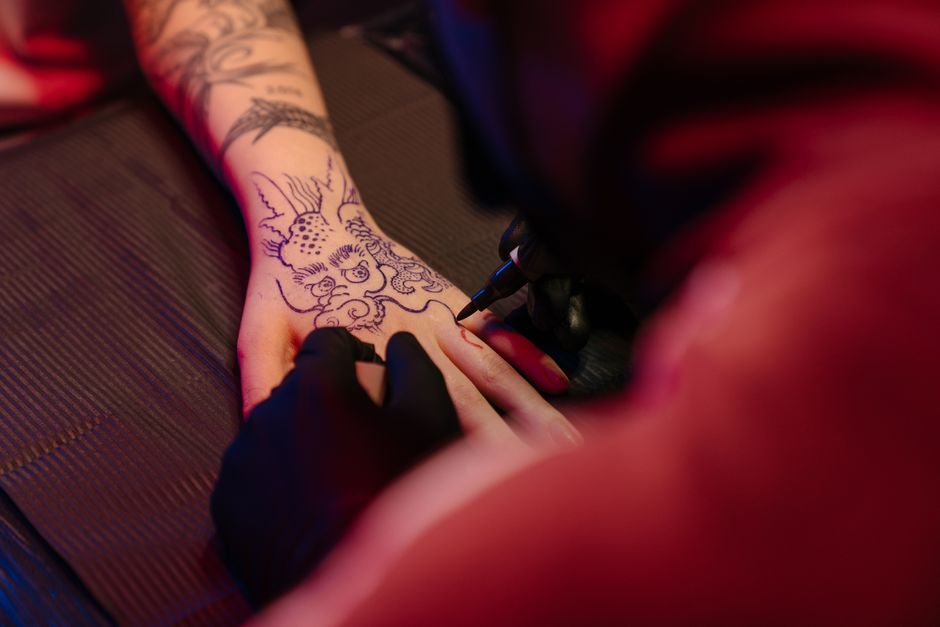
Realism is too advanced for beginners because it requires flawless value control, smooth gradients, and an understanding of how ink settles and fades over years, skills that only develop after thousands of hours.
Realism has no lines to hide behind. A traditional tattoo forgives a slightly shaky outline because the bold black carries the design. Realism has no such safety net. Every smudge of shading, every blown-out area, every uneven transition stands out to the viewer.
Worse, realism ages harshly when done poorly. What looks passable fresh can turn into a muddy gray blob in five years if the artist did not understand saturation and depth. That is a lesson you learn through mentorship and repetition, not through your first month with a machine.
Why is fine line work harder than it looks?
Fine line work is harder than it looks because a single needle leaves no margin for correction, demanding perfect hand stability, consistent depth, and an understanding of how thin lines spread and heal over time.
Fine line and single-needle tattoos have exploded in popularity, which fools beginners into thinking they are simple. They are the opposite. That minimalist script or delicate floral requires a rock-steady hand and precise depth control that most new artists have not developed.
Push too deep and the line blows out into a fuzzy blur within months. Go too shallow and it fades to nothing. There is no forgiving black mass to cover a mistake. This is a style you grow into, not one you start with.
What makes color realism and portraits so risky?
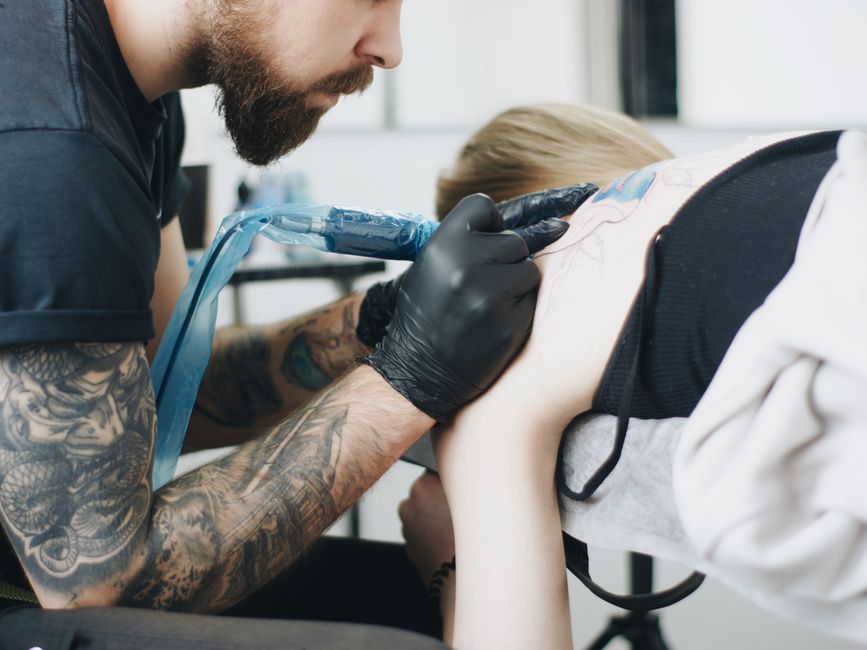
Color realism and portraits are risky because they combine color theory, human anatomy, and healing prediction all at once, meaning one weak skill anywhere causes the whole piece to fail.
A portrait that is off by a few millimeters no longer looks like the person. Add color and you now juggle how pigments layer, blend, and shift as they heal. This is arguably the most technically demanding combination in the entire craft.
Clients also carry deep emotional weight into portraits, often memorializing a loved one. Getting it wrong is not just a technical failure; it is a personal one for the client. That is a burden no beginner should shoulder. Master these only after your fundamentals are automatic, and your mentor tells you that you are ready.
Why does Japanese and blackwork require patience?
Japanese Irezumi and large-scale blackwork require patience because they demand mastery of composition, body flow, and consistent saturation across huge areas; skills that take years to develop under expert guidance.
Traditional Japanese tattooing is a centuries-old discipline with rules about placement, background, and movement that most Western beginners have never studied. A dragon that flows beautifully on a full back panel is the product of deep knowledge, not raw talent alone.
Dense blackwork looks bold and simple, but achieving smooth, even black saturation without patchiness or scarring is brutally difficult. Beginners often leave “holidays” (missed spots) or overwork the skin. These are styles you earn the right to attempt after your foundation is solid.
How do you build the foundation to earn these styles?
You build the foundation by mastering skills in the correct order: drawing, then line work, then shading, then simple color, then style specialization, ideally under live Mentors in a working tattoo studio.
The good news is that this path is learnable by anyone with the drive, even if you have never held a pencil professionally. Here is the progression that turns raw ambition into real skill:
- Step 1: Master drawing fundamentals. Line confidence, proportion, and value on paper before skin.
- Step 2: Learn safety and setup. Sterilization, station setup, and bloodborne pathogen standards.
- Step 3: Drill clean line work. Practice on synthetic skin until your lines are consistent and confident.
- Step 4: Build shading and blackwork. Smooth, even saturation without overworking skin.
- Step 5: Take on simple flash and traditional designs. Bold, forgiving pieces on real clients under supervision.
- Step 6: Specialize. Once your foundation is unshakable, grow into realism, fine line, or Japanese with a mentor’s guidance.
This is the same philosophy behind treating a tattoo apprenticeship as a serious college alternative.
How does Ink Different help you get there?
Ink Different Tattoos helps you get there through our Traditional Tattoo Apprenticeship, an 18 to 24 month, four-phase program that teaches skills in the right order with live, in-person mentorship and licensing support.
We started in 2011 with one belief: aspiring artists deserve a real path, not guesswork from online videos. For 15 years we have trained professional Tattoo Artists the right way, building foundations strong enough to eventually carry any style you want to master.
What you can expect from our Traditional Tattoo Apprenticeship
Our four-phase apprenticeship is built for beginners with no prior experience. You train hands-on in real tattoo studios, working with clients under expert eyes. You get personalized, hands-on Tattoo Artist training that respects the correct progression: fundamentals first, advanced styles when you have earned them.
A career that comes with confidence
By the end, you graduate with job-ready skills, licensing support, and a guaranteed job offer at one of our tattoo studios, ready to build an AI-proof career doing work that a machine will never replace. Tattooing is human trust made permanent, and that is exactly why Tattoo Artists are still essential.
Mentorship that pushes your brand and skills further
Ready to specialize once your foundation is set? Our one-year in-person Master Mentorship pairs you with celebrity and award-winning Mentors like Al Fliction, Liz Cook, Kyle Dunbar, Boneface, and Jordi Pla. It is the fast lane to mastering a specific style, growing your career, and even owning your own studio.
Making tattoo training accessible for everyone
We offer Spanish-speaking locations in Denver, Orange County, NYC, Miami, San Antonio, and San Diego, so language never blocks your path. This is a family, our “Good Humans” culture, and you never walk this journey alone.
Remember: Seats in a live, mentor-led tattoo apprenticeship are limited by nature.
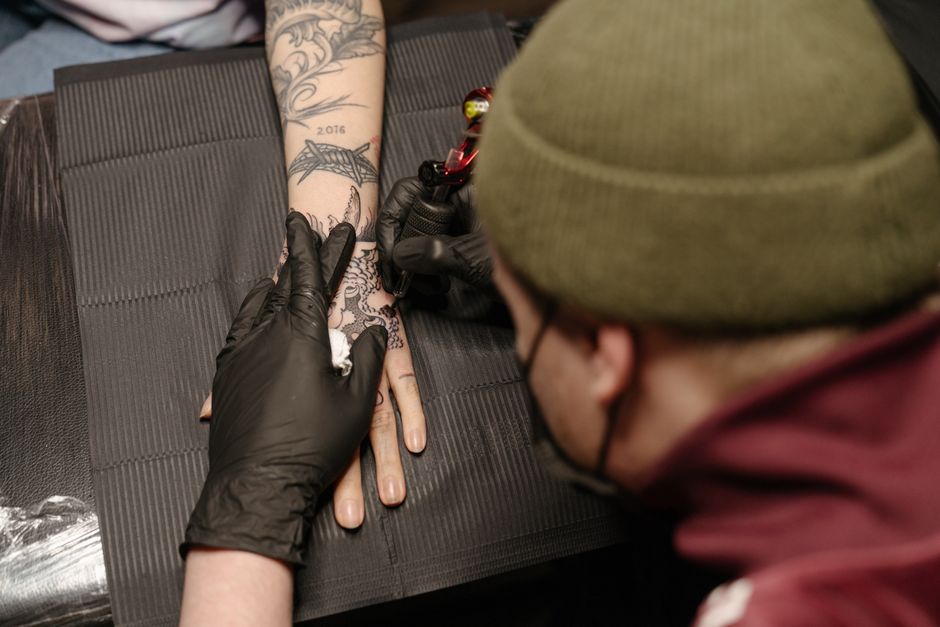
Ready to build the right foundation?
The styles you dream of tattooing are absolutely within reach, but only if you build the fundamentals first. Skipping them to chase realism or fine line today is how you stall out tomorrow. Master the order, honor the craft, and the advanced work becomes yours to own.
If you are stuck in a job that ignores your creative fire, this is your sign to stop waiting. Ready to become a tattoo artist? Apply now to Ink Different’s Traditional Tattoo Apprenticeship and start building an AI-proof career with licensing support along the way. Not sure yet? Fill out our quick questionnaire and get personalized guidance on whether the tattoo apprenticeship is right for you.
Frequently Asked Questions
What tattoo style should a complete beginner start with?
Beginners should start with bold traditional American designs and simple blackwork, which build the line confidence and fundamentals every advanced style depends on.
When can I start doing realism tattoos?
You can attempt realism only after mastering clean line work, smooth shading, and ink healing behavior—usually after significant supervised practice. Your mentor confirms readiness.
How long does a tattoo apprenticeship take at Ink Different?
Ink Different’s Traditional Tattoo Apprenticeship takes 18 to 24 months across four phases, starting remote and finishing in working studios with real clients.
Do I need art experience to join a tattoo apprenticeship?
No. Ink Different’s program is built for beginners with no prior experience and teaches drawing and design fundamentals from day one.
What makes Ink Different different from other programs?
Ink Different offers 15 years of experience, live in-person mentorship in studios, licensing support, award-winning mentors, and a supportive “Good Humans” culture.
Is fine line tattooing really that hard for beginners?
Yes. Fine line work uses a single needle with no room for error, requiring advanced hand stability and depth control that beginners haven’t yet developed.
Related reading: Tools every beginner tattoo artist should know, ready for a career change? Try a tattoo apprenticeship, and why now is the best time to become a tattoo artist.