
6 Tattoo Health Facts That May Surprise You
October 5, 2026
How Much Do Tattoo Artists Make Specializing in Cosmetic Tattoos?
October 6, 2026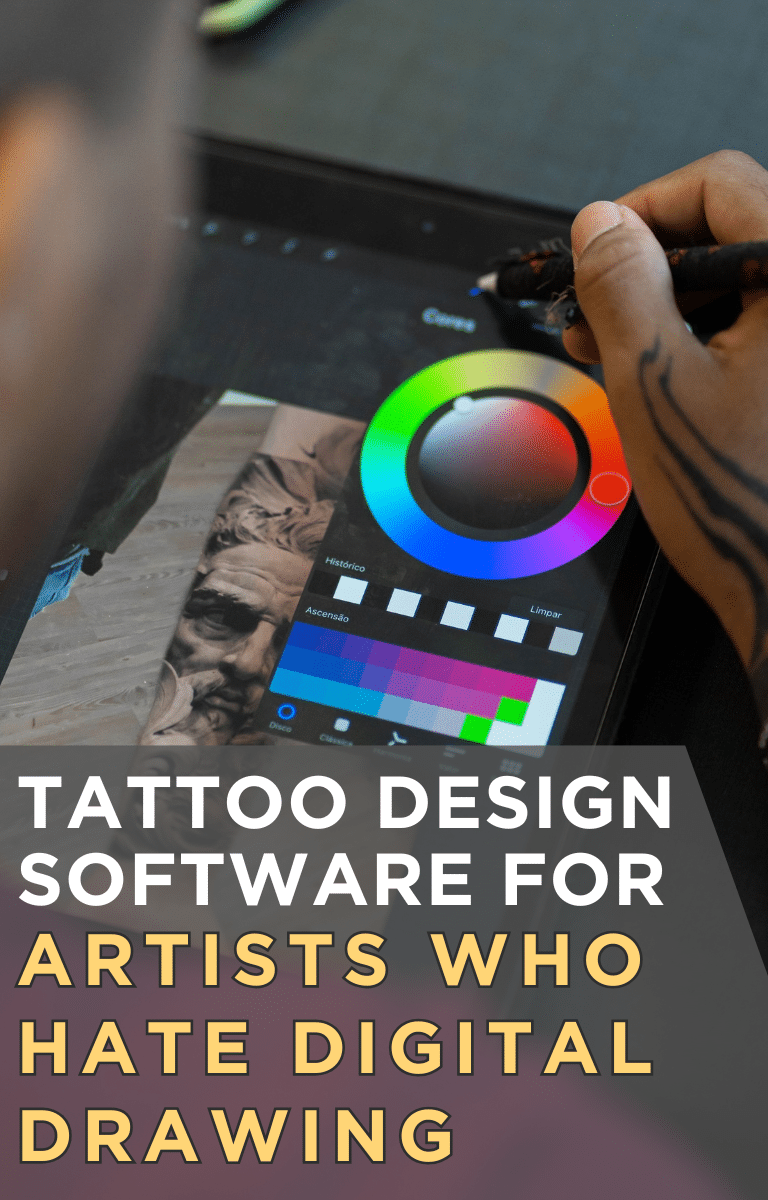
In This Article
- Key Takeaways
- What Is Tattoo Design Software for Artists Who Hate Digital Drawing?
- Why Do So Many Artists Hate Digital Drawing?
- Do You Really Need Software to Become a Tattoo Artist?
- What Are the Best Low-Friction Tattoo Design Tools?
- How Do You Start Designing Without Hating the Screen?
- How Does Pencil-and-Paper Skill Translate to Tattooing?
- Why Does Mentorship Beat Any App?
- What You Can Expect From Our Traditional Tattoo Apprenticeship?
- Ready to Become a Tattoo Artist?
- Frequently Asked Questions
You love to draw. Then someone tells you that to become a professional Tattoo Artist, you have to go digital, and suddenly the thing you love feels like homework. Tattoo design software for artists who hate digital drawing is any tool, app, or low-friction workflow that lets you plan, scale, and transfer designs without abandoning your natural, hands-on drawing style.
At Ink Different Tattoos, we’ve spent over 15 years training people exactly like you, and your discomfort with screens will not hold you back.
Key Takeaways
- You don’t have to go fully digital: Paper-first artists can tattoo professionally using simple scanning and stencil workflows.
- Software is a tool, not a talent: Design apps assist with sizing and layout, but hand skills carry the craft.
- Hybrid workflows win: Draw on paper, then digitize only for scaling, placement, and client previews.
- Mentorship beats tutorials: Live, in-person guidance teaches what no app can, like reading skin and handling a Tattoo Machine.
- It’s an AI-proof career: Human-made tattoos are a craft no robot can replicate, and demand stays steady.
What Is Tattoo Design Software for Artists Who Hate Digital Drawing?
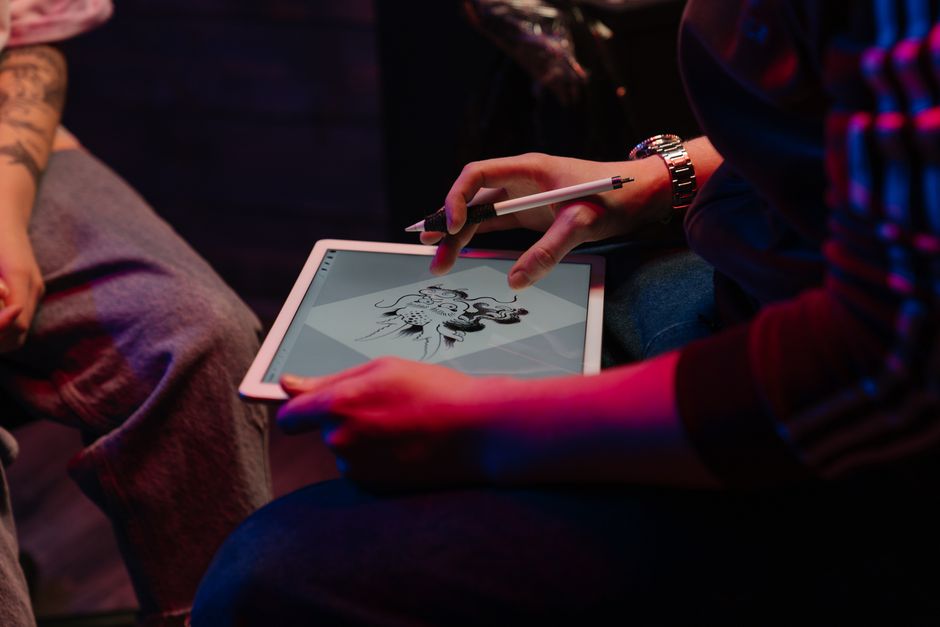
Tattoo design software for reluctant digital artists is any app or workflow that handles technical tasks like sizing, mirroring, and stenciling while letting you keep drawing by hand. You still create on paper, the way you always have. The software simply steps in for tasks that are genuinely painful to do by hand, like resizing a design to fit a forearm or flipping a composition to check symmetry.
The idea that real Tattoo Artists do everything on an iPad is a myth. Plenty of working professionals still sketch in notebooks, then photograph or scan those drawings. The screen becomes a bridge, not a cage.

Why Do So Many Artists Hate Digital Drawing?
Most artists dislike digital drawing because they miss the tactile feedback of paper, feel disconnected from the stroke on glass, and get overwhelmed by cluttered software menus. On paper, your hand gets resistance and texture. Glass gives you nothing back.
Then there’s the overwhelm. Open most design programs and you’re hit with hundreds of brushes, layers, and settings you never asked for. If you came to tattooing to make art, that wall of menus can kill your momentum fast.
Here’s the truth we tell every nervous beginner: your discomfort with screens is not a weakness. It signals a tactile, instinct-driven creator, and that instinct is exactly what great tattooing is built on.
Do You Really Need Software to Become a Tattoo Artist?
No, you don’t need digital drawing software to become a Tattoo Artist, but you do need a reliable way to size, mirror, and transfer your hand-drawn designs onto skin. Tattooing is one of the last great hands-on trades. According to the Bureau of Labor Statistics on craft and fine artists, the craft is defined by the human hand, not the device. Your value as an artist lives in your eye, your line work, and your ability to read a client, none of which a program can replace.
That said, a few technical tasks are far easier with tools:
- Scale designs to fit a specific body placement.
- Create stencils that transfer cleanly to skin.
- Show clients mockups so they can approve before you tattoo.
You can do all of this with a photo of your sketch and one or two beginner-friendly apps. If you’re just getting started, avoid the classic pitfalls by reading our guide on mistakes aspiring tattoo apprentices should avoid.
What Are the Best Low-Friction Tattoo Design Tools?
The best tools for paper-first Tattoo Artists are simple scanning apps, basic image editors with easy resize and mirror functions, and stencil-making software that keeps the workflow fast and intuitive. You don’t need the most expensive, feature-packed program on the market. You need one that gets out of your way.
How do you digitize pencil sketches for tattoo designs?
A good scanner app turns your paper drawing into a clean digital file in seconds. Many Tattoo Artists simply photograph a sketch in good light, then clean it up. Your art stays yours; the phone just captures it.
What tools help you resize and mirror tattoo designs?
Simple editors let you scale a design to exact dimensions, flip it to check balance, and drop it onto a photo of the client’s skin. This is where software genuinely saves you from frustrating hand measurements.
How do you create stencils from hand-drawn tattoo designs?
Stencil tools convert your line drawing into a transfer-ready image. Combined with a thermal printer, this is often faster and cleaner than hand-tracing.
Pro Tip: Pick one tool for scanning and one for sizing, then master both before adding anything else.
How Do You Start Designing Without Hating the Screen?
Start by keeping every creative decision on paper, then use software only at final technical stages: digitizing, resizing, and stenciling your finished hand-drawn design. Follow these steps and the tablet stops feeling like an enemy.
- Sketch on paper. Build your design the way you always have, with full freedom and zero menus.
- Refine your line work by hand. Finalize the drawing until you’re happy with it on paper.
- Digitize with a scan or photo. Capture the drawing in bright, even light to get clean contrast.
- Resize and mirror on-screen. Scale the design to the exact placement and flip it to check symmetry.
- Create your stencil. Convert the cleaned image into a transfer, then print it for application.
- Preview on the client. Overlay the design on a photo of the body area so your client can approve the fit.
Notice that five of six creative steps happen with your hands. The screen only enters at the end, to handle the math.
How Does Pencil-and-Paper Skill Translate to Tattooing?
Strong hand-drawing skills transfer directly to tattooing because a tattoo machine rewards the same muscle memory, line confidence, and pressure control you build with a pencil. A tattoo machine lives in your hand with weight, vibration, and resistance. It feels far more like a pen than a stylus ever will.
Your paper practice builds everything that matters: steady lines, smooth shading, and an eye for composition. When you move to skin, you’re transferring skills you already own.
The one thing no app and no sketchbook can teach you alone is how skin behaves. Skin stretches, heals, and reacts, and understanding safety matters just as much as technique. Reputable training covers OSHA bloodborne pathogen standards and healing science from sources like the American Academy of Dermatology tattoo care guidelines. That knowledge comes from guidance, not guesswork.
Why Does Mentorship Beat Any App?
Live, in-person mentorship beats any software because a Mentor can correct your hand in real time, read the skin with you, and teach instincts that tutorials and apps simply cannot. You can download every tool on earth and still not know why your lines blow out or your shading heals patchy. An app cannot stand beside you and adjust your angle. A Mentor can.
This is the difference between information and transformation. Tutorials give you information. A seasoned Tattoo Artist standing over your shoulder gives you the kind of growth that turns a hobbyist into a professional.
What You Can Expect From Our Traditional Tattoo Apprenticeship?
Ink Different’s Traditional Tattoo Apprenticeship is an 18 to 24 month, four-phase tattoo apprenticeship that trains you hands-on in professional tattoo studios, with licensing support and job-ready skills. We built this as a serious college alternative for people who want to turn real passion into a real career. You don’t need any prior art experience or any love of screens. You need the drive to pursue excellence, and we handle the rest, step by step.
- Phase-based structure: You progress through four phases, building from fundamentals to supervised client work.
- Hands-on training: Live, in-person mentorship so your hand gets corrected in real time.
- Licensing support: We guide you toward credentials you need to work professionally, including state requirements like getting your tattoo license in Texas.
This is a craft no algorithm can replace. As robots and AI reshape other fields, human tattooing stays essential, which is why we call it an AI-proof career. Learn more about why tattoo artists are still essential in our detailed exploration.
How do you build career confidence as a Tattoo Artist?
By the end of the tattoo apprenticeship, you’ll have job-ready skills, licensing guidance, and a guaranteed job offer at one of our tattoo studios. You stop guessing and start working, backed by a family-like community living our “Good Humans” culture.
What advanced mentorship options are available after the Apprenticeship?
Our one-year, in-person Master Mentorship trains you alongside award-winning Mentors like Al Fliction, Liz Cook, Kyle Dunbar, Boneface, and Jordi Pla. It’s built for beginners and experienced artists alike who want to master a specific style, grow their career, or own a business.
How does Ink Different make tattoo training accessible?
We offer Spanish-speaking locations near Denver, Orange County, NYC, Miami, San Antonio, and San Diego, so language is never the barrier between you and the career you want. Ink Different operates nationwide, with the Traditional Tattoo Apprenticeship available in 60+ locations across the country. Seats are limited because real mentorship cannot be mass-produced.
Ready to Become a Tattoo Artist?
You don’t have to love screens to love this craft. You just have to stop waiting.
Ready to become a Tattoo Artist? Apply now to Ink Different’s Traditional Tattoo Apprenticeship and start building an AI-proof career with licensing support along the way. Prefer to test the water first? Fill out our quick questionnaire to get personalized support and find out if our Traditional Tattoo Apprenticeship is right for you.
Frequently Asked Questions
Do I need digital drawing skills to become a tattoo artist?
No. You can become a professional Tattoo Artist using paper-first workflows. Software only handles sizing, mirroring, and stenciling; your creative drawing happens by hand.
What tattoo design software is best for artists who hate screens?
Keep it simple: a scanning app to digitize sketches, a basic editor to resize and mirror, and one stencil tool. Master one or two instead of overwhelming yourself.
How long does the Traditional Tattoo Apprenticeship take?
Ink Different’s program runs 18 to 24 months across four phases. You start with remote foundation learning, then finish with hands-on training inside professional Tattoo Studios.
Do I need prior art experience to apply?
No prior experience required. Our Tattoo Apprenticeship Program is built for beginners and teaches fundamentals from the ground up with live, in-person mentorship.
What makes Ink Different different from learning online?
Ink Different offers live mentorship, a 15-year track record since 2011, supportive “Good Humans” culture, licensing guidance, and access to award-winning Mentors no app can replicate.
Is tattooing really an AI-proof career?
Yes. Tattooing is a hands-on human craft requiring skin reading, client connection, and real-time judgment. Automation cannot replicate it, keeping skilled artists in steady demand.