Mastectomy Tattoos: How Breast Cancer Survivors Are Reclaiming Their Bodies Through Ink
October 8, 2026
Leaving a Desk Job for Tattooing: How a Creative Career Changed a Tattoo Artist’s Mental Health
October 9, 2026
In This Article
- Key Takeaways
- Who were the first women in tattooing?
- Why do these women still matter today?
- Who are the female pioneers who changed tattooing?
- Which modern women are leading the industry now?
- What barriers did women in tattooing have to break?
- How can you follow in their footsteps?
- How does Ink Different help you build your legacy?
- Ready to make your mark?
- FAQ
Female Tattoo Artists are professionals who helped turn tattooing from a male-dominated trade into a respected creative career. Their history is worth knowing if you are thinking about this path yourself. At Ink Different Tattoos, we’ve spent 15 years helping aspiring Tattoo Artists build lasting careers, and the women in this article helped make that possible.
Key Takeaways
- Pioneers: Maud Wagner, Jessie Knight, and Vyvyn Lazonga opened doors for women long before acceptance was widespread.
- Impact: Women helped transform tattooing from a male-only trade into a diverse, respected creative profession.
- Modern leaders: Award-winning Mentors like Liz Cook train the next generation through hands-on, personalized mentorship.
- Your path: A structured tattoo apprenticeship builds real skills, safety knowledge, and licensing readiness, with no prior experience required.
- AI-proof career: Hand-crafted tattooing remains a human skill machines cannot replicate, making it future-proof work.
Who were the first women in tattooing?
The first known professional female tattoo artist in America was Maud Wagner, who began tattooing in the early 1900s after learning the craft from Gus Wagner, the tattoo artist she later married. She traded a date for tattoo lessons, and it launched her career.
Maud worked as an aerialist and contortionist in traveling circuses before she met Gus at the 1904 St. Louis World’s Fair. She learned the hand-poke method, and the Wagners were among the last tattoo artists to work without a machine. They traveled the country working county fairs, vaudeville houses, and amusement arcades, and they are credited with bringing tattooing inland, away from the coastal port cities.
Britain had its own pioneer in Jessie Knight, born in 1904. A one-time circus performer, she was the country’s first known female tattoo artist and advertised herself as an expert freehand lady tattoo artist.
These early women did not have a roadmap. They made their own. If you’re considering a tattoo apprenticeship, you are walking a path they helped open.

Why do these women still matter today?
These women matter because they proved that talent and persistence, not gender, define a great Tattoo Artist. Their work shaped the welcoming, diverse tattoo studios where you can train today.
Every time a woman books a client, mentors an apprentice, or opens her own tattoo studio, she builds on a foundation these pioneers laid. Women are also a large part of the tattooed public. According to Pew Research Center, 38% of U.S. women have at least one tattoo, compared with 27% of men.
Women now work across the industry as studio owners, Mentors, and award winners. The barriers these pioneers broke mean fewer obstacles stand between you and a creative career.
Who are the female pioneers who changed tattooing?
Key female pioneers include Maud Wagner (America’s first known female tattoo artist), Jessie Knight (Britain’s first), Vyvyn Lazonga (Seattle’s First Lady of Tattoo), and Kate Hellenbrand, each expanding what women could achieve in the craft.
Here are a few of the artists who moved the needle, literally and figuratively:
- Maud Wagner: America’s first recorded female professional tattoo artist, active from around 1904 through the 1950s. She established that women could master the technical and artistic demands of the trade.
- Jessie Knight: Widely recognized as Britain’s first female tattoo artist, working from the 1920s and winning tattoo competitions in a male-dominated field. She proved that European women could claim space in the industry.
- Vyvyn Lazonga: A Seattle pioneer often called the “first lady of tattoo,” who helped elevate custom fine-line and feminine designs in the 1970s and built a lasting portfolio of innovative work.
- Kate Hellenbrand: A respected artist and historian who worked alongside legendary figures and helped preserve tattoo history through documentation and mentorship.
Each of these women faced doors slammed shut and opened them anyway. They didn’t ask whether the industry was ready for them. They decided they were ready for the industry. That same decisive energy is what we cultivate in every apprentice who walks through our doors at Ink Different.
Which modern women are leading the industry now?
Today, women lead the tattoo industry as award-winning artists, studio owners, and celebrated Mentors, including Liz Cook and Kara Gutierrez, who train Tattoo Artists through hands-on mentorship in real tattoo studios.
The modern era is full of talented women pushing styles forward: fine-line botanicals, bold neo-traditional, hyper-realistic portraits, and watercolor-inspired work. Social media has given them platforms the pioneers could only imagine. If you want to build your own presence and reach clients online, our guide on platforms to help Tattoo Artists build their brand covers the tools modern artists use to grow.
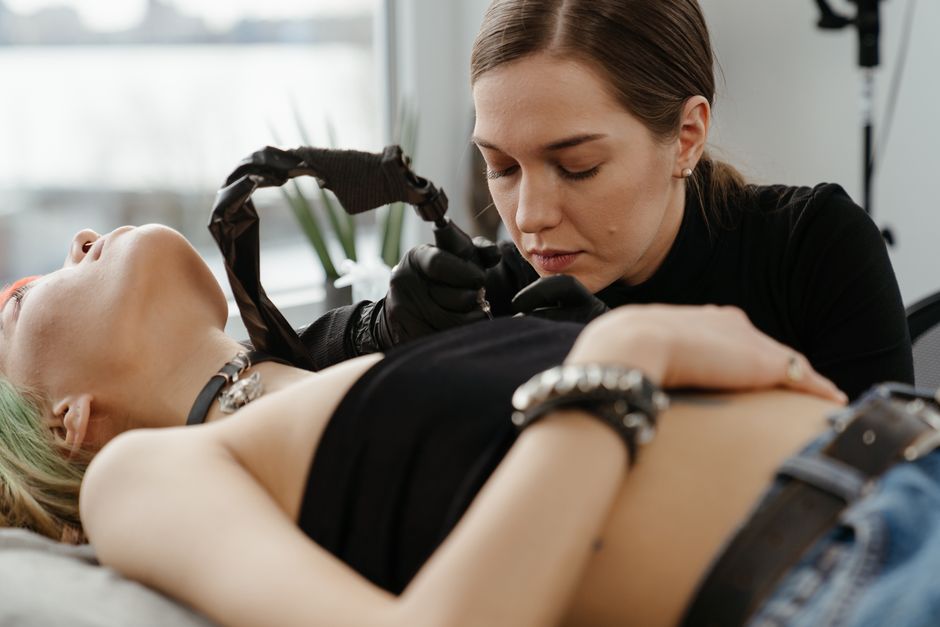
Kara Gutierrez, an Ink Different Master Mentor, has spent nearly 15 years in tattooing. She started with a traditional tattoo apprenticeship and now focuses on areola restoration for breast cancer survivors and others with chest scars. Like Vyvyn Lazonga, she works with survivors, and she calls her approach scar-aware tattooing. In her words, scar tissue calls for more humility than confidence.
Kara is also clear that this work is not for beginners. She trains only one or two experienced Tattoo Artists a year, which is why a strong tattooing foundation comes first.
At Ink Different, Liz Cook is one of the celebrated Mentors in our Master Mentorship, training alongside award-winning names like Al Fliction, Kyle Dunbar, Boneface, and Jordi Pla. The women changing tattooing now are not distant legends. Some of them mentor at Ink Different.
What barriers did women in tattooing have to break?
Women in tattooing had to break barriers of exclusion from tattoo studios, skepticism about their technical skill, and a persistent culture that treated the craft as men-only territory.
For decades, many tattoo studios refused to hire or even train women. Pioneers were often dismissed as curiosities or novelties rather than serious artists deserving equal respect. They had to prove their skill again and again to earn the same credit as their male peers.
What changed it was relentless skill, community support, and refusing to quit despite the rejection. Those same traits are what we look for in the apprentices we train today.
Remember: Every barrier these women broke means one fewer obstacle standing between you and the career you want. Your job is to walk through the door they opened.
How can you follow in their footsteps?
You can follow in their footsteps by learning the craft properly through a structured tattoo apprenticeship that builds real skills, safety knowledge, client management, and licensing readiness under experienced Mentors.
A legacy is earned through training, deliberate practice, and mentorship from people who have already walked the path. Here is a simple, actionable route:
- Step One: Commit to the decision. If you are in a job that leaves your creative potential unused, choose the path, even if it feels risky.
- Step Two: Learn your tools. Understand the equipment, including tattoo machines, needles, power supplies, and inks, before you ever touch skin. Our guide to tools every beginner Tattoo Artist should know is a smart first read.
- Step Three: Master safety and hygiene. Study the OSHA bloodborne pathogen standards and client aftercare from the American Academy of Dermatology tattoo care guidelines. Every professional relies on this foundation.
- Step Four: Find real mentorship. Train under licensed, experienced Tattoo Artists who correct your mistakes in real time, push your skill higher, and model professional ethics.
- Step Five: Earn your license. Complete your apprenticeship training and pursue state licensing requirements to work legally and professionally in your area.
This is the same ladder the pioneers climbed, with a clearer path, better resources, and a community of Mentors and peers to support you. You are not starting from zero. You are starting from what they built.
How does Ink Different help you build your legacy?
Ink Different Tattoos helps you build your legacy through a personalized, 18 to 24 month Traditional Tattoo Apprenticeship that takes you from complete beginner to job-ready professional, with licensing support and direct mentorship.
We are a college alternative for aspiring professional Tattoo Artists who are serious about excellence and sustainable careers. For 15 years, we’ve trained beginners with zero prior experience into confident, working Tattoo Artists. You don’t need an art degree. You need the willingness to show up, learn from mistakes, and keep improving.
What you can expect from our Traditional Tattoo Apprenticeship
Our four-phase Traditional Tattoo Apprenticeship is built around hands-on learning in real tattoo studios. You build design fundamentals and safety knowledge, then work toward live client readiness under close Mentor supervision. It is designed for beginners, so you can start exactly where you are. No portfolio is required.
A career that comes with confidence
By the end, you’ll have job-ready technical skills, licensing support to work professionally in your state, and a guaranteed job offer at one of our tattoo studios. Tattooing is an AI-proof career. A machine cannot replicate the human connection, trust, and hand-crafted skill a great Tattoo Artist brings to every session.
Mentorship that pushes your brand and skills further
Our Master Mentorship is a one-year, in-person training track with celebrity and award-winning Mentors, including Liz Cook, Kara Gutierrez, Al Fliction, Kyle Dunbar, Boneface, and Jordi Pla. It is built for artists who want to master a signature style, accelerate their career, and build toward owning their own business.
Making tattoo training accessible for everyone
Ink Different operates nationwide, with the Traditional Tattoo Apprenticeship available in 60+ locations, including Spanish-speaking locations in Denver, Orange County, NYC, Miami, San Antonio, and San Diego, so language is never the barrier between you and your future. Our “Good Humans” culture means you join a supportive, family-like community from day one, not a cutthroat competitive environment.
Ready to make your mark?
The women in this article started with a decision to learn the craft and do the work. You can start the same way.
Seats in our hands-on tattoo apprenticeship are limited, because real mentorship cannot be mass-produced. If you want to explore a career change, read about career change tattoo apprenticeship opportunities.
Ready to become a tattoo artist? Apply now to Ink Different’s Traditional Tattoo Apprenticeship and start building an AI-proof career with licensing support along the way. Prefer to explore first? Fill out our quick questionnaire for personalized guidance and to find out if our Traditional Tattoo Apprenticeship is the right fit for your goals.
Related reading: career change tattoo apprenticeship, start your tattoo apprenticeship this spring, and why spring is the best time to become a tattoo artist.
Frequently Asked Questions
Who was the first female tattoo artist?
Maud Wagner is widely recognized as America’s first known professional female tattoo artist. She began her career in the early 1900s after learning the craft from Gus Wagner, whom she later married.
Do I need prior art experience to become a tattoo artist?
No. Ink Different’s Traditional Tattoo Apprenticeship is built for complete beginners and teaches fundamentals from day one through personalized, hands-on training with experienced Mentors.
How long does a tattoo apprenticeship take?
Ink Different’s Traditional Tattoo Apprenticeship takes 18 to 24 months across four phases of hands-on training in real tattoo studios.
Is tattooing a good career for women today?
Yes. Women work across the tattoo industry as award-winning artists, studio owners, and celebrated Mentors. It is an AI-proof, creative career built on skill and artistry.
What makes Ink Different different from other tattoo schools?
Ink Different offers live, in-person mentorship from award-winning professionals, 15 years of proven results since our founding, and a supportive “Good Humans” culture that feels like family.
Are there Spanish-speaking apprenticeship locations?
Yes. Ink Different operates nationwide, with the Traditional Tattoo Apprenticeship available in 60+ locations, including Spanish-speaking locations in Denver, Orange County, NYC, Miami, San Antonio, and San Diego.