
As Robots Learn to Make Beds, Tattoo Artists Remain the One Job No Machine Can Learn
September 29, 2026
In This Article
- Key Takeaways
- What are 1950s tattoo styles?
- Why are 1950s tattoo styles making a comeback?
- What defines classic American Traditional tattooing?
- Who pioneered the tattoo styles of the 1950s?
- Why do clients want vintage-inspired tattoos today?
- How can you learn to tattoo these timeless styles?
- What does Ink Different’s Traditional Tattoo Apprenticeship offer?
- How does Master Mentorship push you further?
- Ready to become a Tattoo Artist?
- FAQ
You have probably scrolled past a sailor’s swallow, a bold red rose, or a classic pin-up and felt something stir. That pull toward the old-school is not nostalgia for nostalgia’s sake. It is a signal. If you are stuck in a job that drains you while your creative potential goes unused, the resurgence of mid-century ink is more than a trend. It is an invitation to build a real career.
1950s tattoo styles are the bold, high-contrast, black-outlined designs rooted in American Traditional (also called old-school) tattooing that emphasize durability, simple color palettes, and iconic imagery that endure for decades on living skin. At Ink Different Tattoos, we have spent 15 years helping people just like you turn that pull into a profession.
Key Takeaways
- What’s back: American Traditional 1950s tattoo styles are surging because of their bold lines and long-lasting readability.
- Why it matters: Clients crave timeless, hand-crafted ink that machines and AI cannot replicate.
- Who started it: Legends like Sailor Jerry Collins shaped the visual language artists still use today.
- How to learn: A structured tattoo apprenticeship teaches these fundamentals from scratch, no prior experience needed.
- Where to start: Ink Different’s Traditional Tattoo Apprenticeship offers hands-on mentorship and licensing support.
What are 1950s tattoo styles?
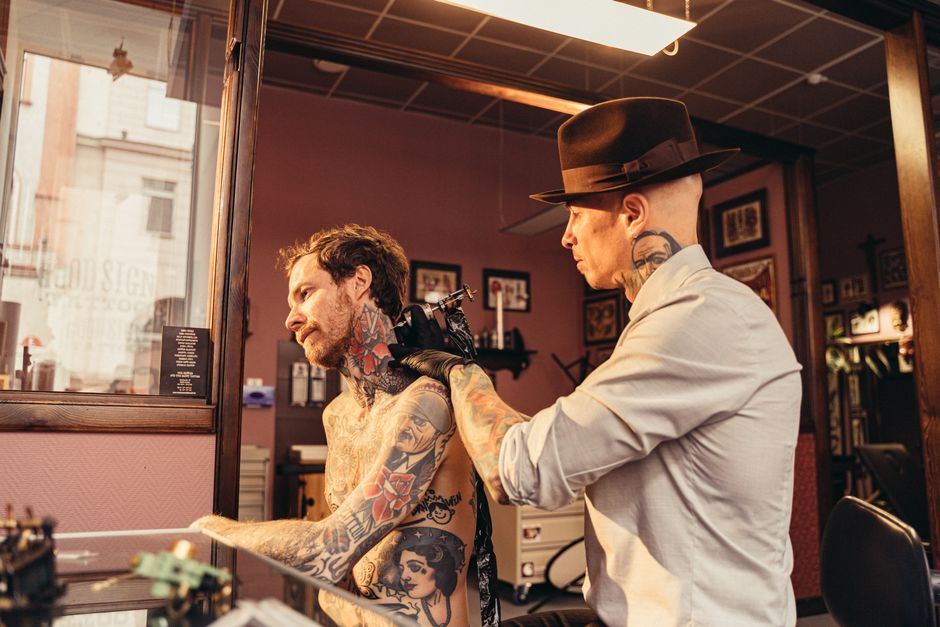
1950s tattoo styles are bold American Traditional designs defined by thick black outlines, a limited color palette, and iconic imagery like anchors, roses, swallows, and pin-ups that were built to last on skin for decades. They were born from maritime and military culture, where sailors and servicemen wore ink as badges of honor.
The designs were simple by necessity, but that simplicity is exactly why they endure. A tattoo from this tradition still reads clearly after 40 years of sun and life. Think of these designs as the foundation of a house. Everything modern tattooing builds on was poured in these decades, and learning them gives you a rock-solid base for any style you pursue later.
Why are 1950s tattoo styles making a comeback?
1950s tattoo styles are making a comeback because their bold, timeless simplicity stands out in a saturated digital world, and clients increasingly value ink that ages beautifully over fleeting micro-trends. We live in an age of endless options and fast content. That overload is pushing people back toward things that feel authentic and permanent.
There is also a practical reason. According to the American Academy of Dermatology tattoo care guidelines, tattoos with bold lines and high contrast tend to hold their shape as skin ages. Clients are catching on, and they are asking for work that will still look sharp in decades. If you want to ride this wave, learning about why now is a great time to become a tattoo artist is a smart first move.
What defines classic American Traditional tattooing?
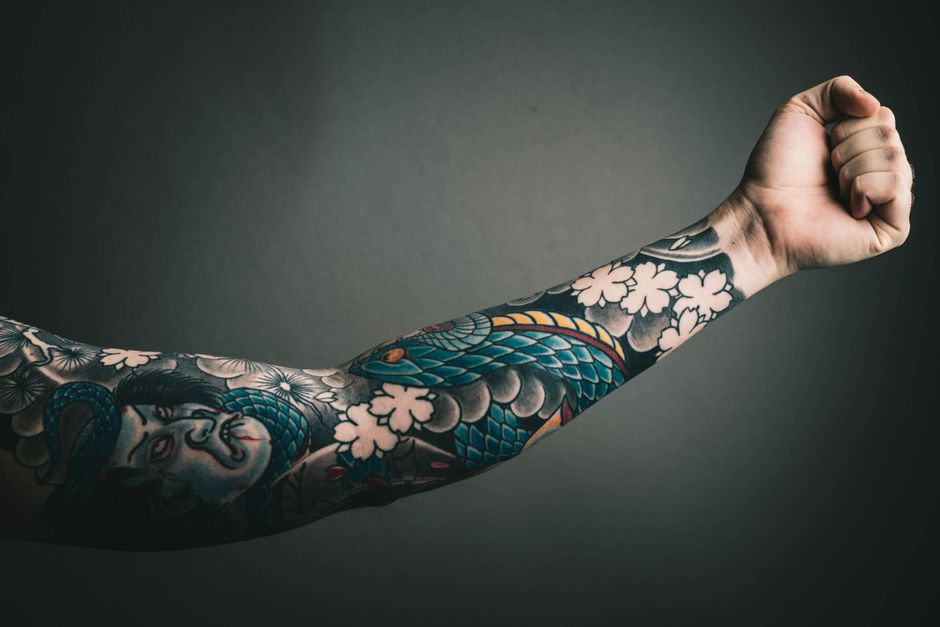
Classic American Traditional tattooing is defined by clean, bold outlines, a small palette of solid colors (red, green, yellow, black), heavy black shading, and time-tested iconic subjects engineered for longevity and clarity. These rules were not arbitrary. They were created by working Tattoo Artists who understood how ink behaves in living skin over a lifetime.
Here are the core elements that define the style:
- Bold outlines: Thick, confident linework that frames the entire design.
- Limited palette: A handful of solid, saturated colors instead of complex gradients.
- Iconic imagery: Anchors, eagles, roses, daggers, hearts, and pin-ups.
- Heavy black: Strong shadows that give the design depth and contrast.
Mastering these fundamentals is where great Tattoo Artists are made. Skip them and you will spend years playing catch-up, which is one of the mistakes aspiring tattoo apprentices should avoid.
Who pioneered the tattoo styles of the 1950s?
Norman “Sailor Jerry” Collins is the artist most credited with shaping 1950s tattoo styles, blending American Traditional imagery with Japanese technique and setting standards for hygiene and design that still guide the industry. Working out of Honolulu, Sailor Jerry tattooed sailors passing through Pearl Harbor and elevated the craft from back-alley work to a respected discipline.
His flash sheets are still studied and copied by Tattoo Artists worldwide. His influence rippled forward through artists like Ed Hardy and Lyle Tuttle, who carried the torch into later decades. When you learn old-school ink, you are joining a lineage that stretches back generations, a family tree of craftsmen who took pride in doing the work right.
Pro Tip: Study original flash sheets before you ever pick up a Tattoo Machine. Understanding why a design was built a certain way makes you a far stronger artist than simply copying it.
Why do clients want vintage-inspired tattoos today?
Clients want vintage-inspired tattoos today because they crave designs with genuine history, proven longevity, and a hand-crafted human quality that mass-produced or AI-generated art cannot deliver. A tattoo is one of the few things a person keeps for life. In an era where so much feels disposable, that permanence is precisely the appeal.
This is also why the tattoo profession is one of the most future-proof creative careers out there. A machine can suggest a design, but it cannot read a client’s story, adapt to living skin, or build the trust it takes to mark someone permanently. If you want proof, read why tattoo artists are still essential in an AI-driven world. The Bureau of Labor Statistics on craft and fine artists also tracks skilled, hands-on professionals like Tattoo Artists as resilient career paths that resist automation.
How can you learn to tattoo these timeless styles?
You can learn to tattoo 1950s tattoo styles by completing a structured tattoo apprenticeship that teaches drawing fundamentals, machine handling, and safe technique under a live, experienced Mentor. There are no real shortcuts here, and that is a good thing. The barrier to entry is exactly what protects your future income.
Follow these steps to build your foundation the right way:
- Step 1: Master the fundamentals of drawing. Learn line quality, composition, and the iconic subjects that define old-school flash. You do not need prior art training to start.
- Step 2: Learn your tools. Understand your Tattoo Machine, needles, inks, and stations. Get familiar with the tools every beginner tattoo artist should know.
- Step 3: Study safety and hygiene. Follow OSHA bloodborne pathogen standards so you protect every client and yourself.
- Step 4: Practice on synthetic skin. Build muscle memory for those confident bold lines before you ever touch a client.
- Step 5: Tattoo live clients under supervision. Apply everything under the watchful eye of a Mentor who has walked the path before you.
- Step 6: Prepare for licensing. Get job-ready and pursue your state license with proper support.
This is the path a real tattoo apprenticeship walks you through. It is also why so many people are choosing tattoo apprenticeships as a college alternative that leads to a hands-on, creative income.
What does Ink Different’s Traditional Tattoo Apprenticeship offer?
Ink Different’s Traditional Tattoo Apprenticeship is an 18 to 24 month, four-phase Tattoo Artist training program that takes you from complete beginner to job-ready professional with live, in-person mentorship in real studios. You train hands-on in real tattoo studios where the craft actually happens. There is no prior experience required, so if you have been sitting in an unfulfilling job wondering if it is too late, it is not.
Here is what you can expect:
- Personalized hands-on training: Real guidance, not a video library you watch alone.
- Start remote, finish in studios: Learn the theory, then apply it where it counts.
- Beginner-friendly: We teach the fundamentals, including the 1950s tattoo styles clients keep requesting.
- Licensing support and job-ready skills: A real path to working professionally in an AI-proof career.
Our “Good Humans” culture means you are never grinding alone. You join a family-like community of Tattoo Apprentices and award-winning Mentors who genuinely want you to win. Seats are limited by design, because real mentorship cannot be mass-produced.
How does Master Mentorship push you further?
Ink Different’s Master Mentorship is a one-year, in-person program that pairs you with celebrity and award-winning Mentors like Al Fliction, Liz Cook, Kyle Dunbar, Boneface, and Jordi Pla to master a specific style and build toward studio ownership. If you are already an artist, or you finish your apprenticeship hungry for more, this is your accelerator.
You train alongside names who have shaped modern tattooing, learning the intensive skill development that separates good Tattoo Artists from sought-after ones. Whether you want to specialize in old-school flash or build a personal brand from the ground up, this program is designed to grow your career.
Making Tattoo Training accessible for everyone
We offer Spanish-speaking locations so more aspiring artists can pursue this path. You can train near you in Denver, Orange County, New York City, Miami, San Antonio, and San Diego. Wherever you are, the door is open.
Ready to become a Tattoo Artist?
The comeback of 1950s tattoo styles is proof that timeless, human-made craft will always have a place. The only question is whether you will be the one holding the machine.
Ready to become a Tattoo Artist? Apply now to Ink Different’s Traditional Tattoo Apprenticeship and start building an AI-proof career with licensing support along the way. Not sure yet? Fill out our quick questionnaire to get personalized support and find out if our Traditional Tattoo Apprenticeship is right for you.

Frequently Asked Questions
Why are 1950s tattoo styles popular again?
1950s tattoo styles are popular again because their bold outlines and simple color palettes age beautifully and feel authentic in a digital, trend-saturated world. Clients want ink with history and staying power.
Do I need art experience to learn old-school tattooing?
No. Ink Different’s Traditional Tattoo Apprenticeship is built for beginners and teaches drawing fundamentals, machine handling, and old-school design from day one with no prior experience required.
How long does a tattoo apprenticeship take?
Most tattoo apprenticeships take 18 to 24 months. Ink Different’s four-phase Traditional Tattoo Apprenticeship follows this timeline, moving you from remote foundations to hands-on studio training.
What makes Ink Different’s Tattoo Artist Training unique?
Ink Different offers live, in-person mentorship, 15 years of experience, award-winning Mentors, and a supportive “Good Humans” community, a serious college alternative for aspiring Tattoo Artists.
Is tattooing a future-proof career?
Yes. Tattooing is an AI-proof, hands-on craft. A machine cannot read a client’s story, adapt to living skin, or build the trust required to mark someone permanently.
Where can I do a tattoo apprenticeship near me?
Ink Different operates studios nationwide, including Spanish-speaking locations near Denver, Orange County, New York City, Miami, San Antonio, and San Diego.