
Become a Tattoo Artist in Santa Clarita, California
November 4, 2026
Apprentice Spotlight: How Ana Cabrera Balanced a Court Job While Training to Become a Tattoo Artist
November 5, 2026
In This Article
- Key Takeaways
- What does it mean for a tattoo studio to go digital?
- Why are tattoo studios going digital?
- What costs hold tattoo studios back from going digital?
- Why does privacy worry tattoo studios going digital?
- How can you balance digital tools with the human craft?
- How do you prepare for a digital-ready tattoo career?
- How does Ink Different prepare you for a digital future?
- Ready to take the first step?
- FAQ
More tattoo studios are moving their bookings, payments, and client records online. A new market report from HTF Market Intelligence looks at this shift and forecasts growth for tattoo studio management software through 2032. The report also points out what’s slowing some tattoo studios down: subscription costs, data privacy, and software that wasn’t built with tattooing in mind.
The report comes from a research firm selling its full study, so its outlook is a projection, not hard data. Still, the trend is worth understanding if you’re thinking about a tattoo career. At Ink Different Tattoos, we’ve been training professional Tattoo Artists for 15 years. Here’s what the shift means for you.
Key Takeaways
- The trend: Tattoo studios and independent Tattoo Artists are adopting software for booking, payments, client records, and marketing.
- The cost barrier: The report lists high subscription costs as a challenge for smaller tattoo studios and independent Tattoo Artists.
- The privacy concern: Keeping sensitive client information secure is another major challenge.
- The gap: General salon software often lacks features tattoo studios need, creating demand for tattoo-specific tools.
- The real skill: Software supports a tattoo business, but the craft is still built by hand through live mentorship.
What does it mean for a tattoo studio to go digital?
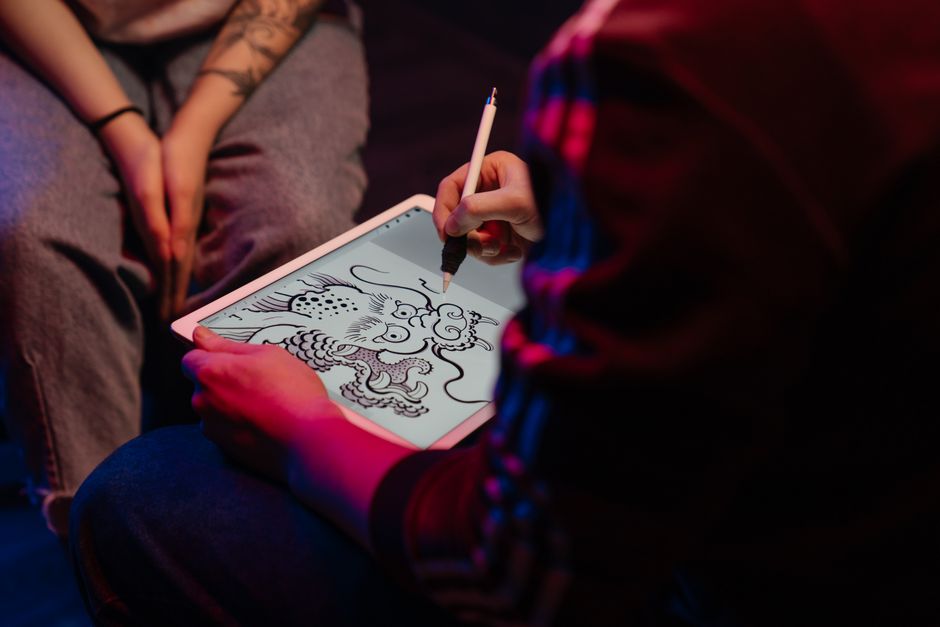
Going digital means running the business side of a tattoo studio through software instead of paper, phone calls, and spreadsheets.
According to the report, these tools can cover a lot of ground:
- Booking: Online scheduling, automated confirmations and reminders, deposits, and cancellation policies.
- Client records: Digital consent forms and client history kept in one place.
- Payments: Integrated payment processing and billing.
- Operations: Tattoo Artist calendars, supply inventory tracking, and business analytics.
- Marketing: Digital portfolios, follow-up campaigns, and loyalty efforts.
The report names a mix of general booking and salon platforms, like Square, Mindbody, and Acuity Scheduling, alongside tattoo-focused options like TattooPro.
What doesn’t change is the tattoo itself. Software handles everything around the session. The design, the needlework, and the client connection stay human.
Why are tattoo studios going digital?
Tattoo studios are going digital to save time, keep clients coming back, and manage their business more smoothly.
The report highlights a few main drivers:
- Automated scheduling: More demand for online booking and appointment reminders.
- Cloud-based tools: More tattoo studios using business software they can access anywhere.
- Client retention: A growing need for loyalty efforts and personalized marketing.
- Business growth: More independent Tattoo Artists and multi-artist tattoo studios that need organized systems.
- Easier payments: Demand for built-in payment processing, deposits, and billing.
The report also points to newer trends, including AI-powered booking recommendations, mobile-friendly apps, and all-in-one platforms. These combine scheduling, payments, marketing, and analytics.
It ranks North America as the leading region for this software and Asia-Pacific as the fastest-growing. The release itself notes that these regional rankings still need to be verified against the full report.
Your online presence matters too. Clients often find Tattoo Artists through portfolios and social media before they ever book. Our guide to platforms to help Tattoo Artists build their brand is a great place to start.
Pro Tip: Start building your portfolio and social presence while you train. It gives future clients a way to find you.
What costs hold tattoo studios back from going digital?
The report names high subscription costs as a key challenge, especially for smaller tattoo studios and independent Tattoo Artists.
Most business software runs on monthly subscriptions. For a tattoo studio with just one or two Tattoo Artists, those fees can add up fast. The report also mentions some resistance to digital tools among traditionally run tattoo studios that have always done things by hand.
Two other challenges add to the cost:
- Integration problems: New software doesn’t always work smoothly with existing payment systems or business apps.
- Missing tattoo features: General salon software often lacks tools tattoo studios need, so some tattoo studios pay for features that don’t quite fit.
That gap is also an opportunity. The report expects growth in tattoo-specific software built for independent Tattoo Artists and tattoo studio owners.
Why does privacy worry tattoo studios going digital?
Moving client records online means a tattoo studio is responsible for keeping sensitive information safe. The report lists data privacy and secure storage as a major challenge.
Tattoo studios collect personal details through consent forms, client history, and payment information. When those records move online, keeping them secure becomes part of running the business. Losing that data can damage the trust clients place in you.
The report sees this as a growth area too. It expects more platforms that combine digital consent forms, client records, secure data management, and aftercare communication.
Clear communication with clients has always mattered. Good aftercare guidance, like the information shared by the American Academy of Dermatology, is part of earning that trust.
The lesson for you: protecting client trust is as important as clean line work.
How can you balance digital tools with the human craft?
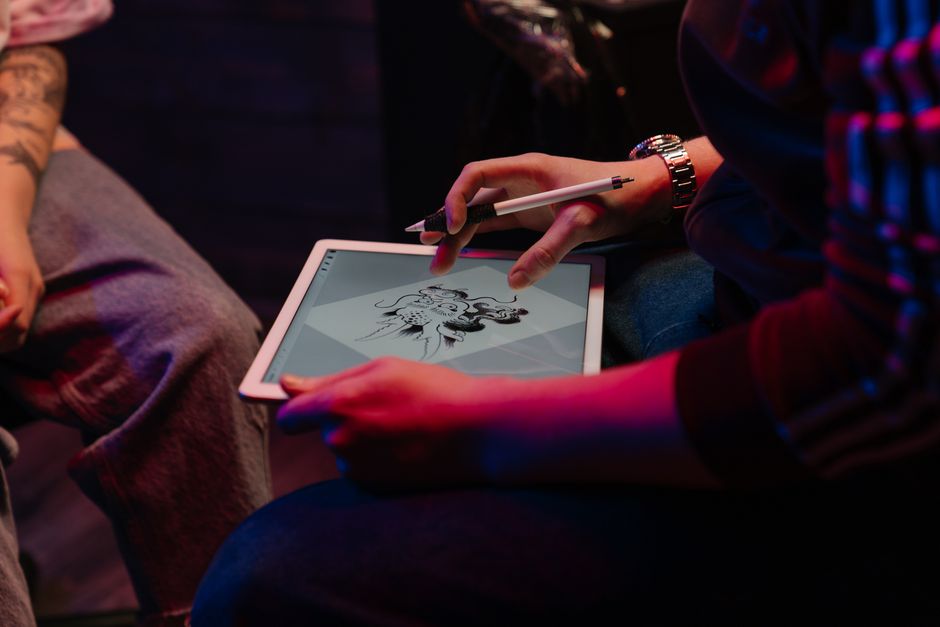
Treat software as support, not a substitute. Master your hand skills first, then let technology handle the paperwork.
No app can hold a tattoo machine steady or read a nervous client’s energy. Drawing, shading, machine control, and clean technique are built by hand under a Mentor’s guidance. Software only carries that talent further.
If you’ve wondered whether technology could replace Tattoo Artists, read why Tattoo Artists are still essential. The human touch is what makes this an AI-proof career.
How do you prepare for a digital-ready tattoo career?
Start with the fundamentals, then add business and digital skills step by step.
- Step One: Build your foundation. Learn drawing, line work, shading, and clean technique through live mentorship, including the OSHA bloodborne pathogens standard.
- Step Two: Learn the business basics. Understand booking, deposits, and cancellation policies, since these keep a tattoo studio running.
- Step Three: Handle client records responsibly. Learn how consent forms and client information should be stored and protected.
- Step Four: Grow your brand. Build a portfolio and social presence so clients can find you.
- Step Five: Get licensed. Complete your training and meet your state’s requirements to work professionally.
New to all of this? Read about the mistakes aspiring tattoo apprentices should avoid before you start.
How does Ink Different prepare you for a digital future?
Ink Different prepares you by pairing live, in-person mentorship in the craft with the business and branding skills modern tattoo studios need.
We’ve been training professional Tattoo Artists for 15 years, since 2011. Ink Different’s Traditional Tattoo Apprenticeship is a serious college alternative for people ready to build an AI-proof career.
Get Serious About Your Future With Ink Different Tattoos
The digital shift in tattooing isn’t something to fear. Tattoo Artists who learn the craft and understand the business side will be ready to lead tomorrow’s tattoo studios.
What You Can Expect from Our Traditional Tattoo Apprenticeship
Our Traditional Tattoo Apprenticeship takes 18 to 24 months across four phases. You train hands-on at one of 60+ tattoo studios nationwide, with personalized guidance from professional Tattoo Artists. It’s built for beginners, so no prior art experience is required. Interest-free payment plans help make it more affordable.
Each Mentor takes on only two tattoo apprentices per tattoo studio, so you get real one-on-one attention.
A Career That Comes With Confidence
You finish with job-ready skills, licensing support, and a guaranteed job offer at one of Ink Different’s own tattoo studios. Learn more about why tattoo apprenticeships are gaining ground as a college alternative.
Mentorship That Pushes Your Brand and Skills Further
Ready to go deeper? Master Mentorship is a one-year, in-person experience for beginners and experienced Tattoo Artists. You train with award-winning Master Mentors Al Fliction, Liz Cook, Kyle Dunbar, Boneface, Jordi Pla, and Marcel Oliveira. It’s built for mastering a style, growing your career, and preparing to run a tattoo studio of your own.
Already running a tattoo studio? Check out our shop owner training. If you’d like to train the next generation, you can also become a Mentor for the Traditional Tattoo Apprenticeship.
Making Tattoo Training Accessible for Everyone
We offer Spanish-speaking locations in Denver, Orange County, NYC, Miami, San Antonio, and San Diego. Wherever you train, our “Good Humans” culture means you’re never doing this alone.

Ready to take the first step?
Tattoo studios are going digital, but the cost and privacy challenges show that software alone doesn’t run a great tattoo studio. Skilled, well-trained Tattoo Artists do. Seats are limited, because real mentorship can’t be mass-produced.
Ready to become a Tattoo Artist? Apply now to Ink Different’s Traditional Tattoo Apprenticeship. You’ll get hands-on training at one of 60+ tattoo studios nationwide, licensing support, and a guaranteed job offer at one of Ink Different’s own tattoo studios. Not sure yet? Fill out our quick questionnaire, and we’ll help you figure out if it’s the right fit.
Frequently Asked Questions
Will digital tools replace Tattoo Artists?
No. Software can handle booking, payments, and client records, but it can’t replace the hand skills, safety technique, and human connection tattooing requires.
Do I need digital skills to start a tattoo apprenticeship?
No. Ink Different’s Traditional Tattoo Apprenticeship is built for beginners. You learn the fundamentals first and build business skills along the way.
How long does the Traditional Tattoo Apprenticeship take?
It takes 18 to 24 months across four phases, with hands-on training in working tattoo studios.
What holds tattoo studios back from going digital?
A recent market report points to high subscription costs, data privacy concerns, integration problems, and general salon software that lacks tattoo-specific features.
What makes Ink Different different from a tattoo school?
You get live, in-person mentorship at 60+ tattoo studios nationwide, licensing support, and interest-free payment plans. You also finish with a guaranteed job offer at one of Ink Different’s own tattoo studios.
Is tattooing a good career change from an unfulfilling job?
Yes. Tattooing is a creative, AI-proof career. A structured tattoo apprenticeship gives you job-ready skills, licensing support, and a clear path forward.