
Tattoo Studios Are Going Digital, but Costs and Privacy Hold Some Back
November 5, 2026
Apprentice Spotlight: From Tattooing Friends at Home to Real Training, Why Megan Hostetler Started Over
November 5, 2026
In This Article
- Key Takeaways
- Who is Ana Cabrera and why does her story matter?
- Why would someone leave a stable court job to chase ink?
- How did Ana balance a full-time job with tattoo training?
- What steps can you take to start training while still working?
- What does it mean to start remote and finish in a studio?
- Why is tattooing an AI-proof career worth the leap?
- What does Ink Different’s Traditional Tattoo Apprenticeship offer?
- What if you want to push even further?
- Ready to take the first step?
- Frequently Asked Questions
As a kid, Ana Cabrera saw people covered in tattoos as walking coloring books. She’d wonder where the art came from and how they got it. Years later, after getting tattooed herself many times, people kept telling her the same thing: your artwork is so cool, you should be tattooing. She sat on the idea for a couple of years. Then she saw an Ink Different ad and thought, “You know what? I think now’s the time.”
Today, Ana works at one of her city’s courts by day. She’s also finishing Phase Three of Ink Different’s Traditional Tattoo Apprenticeship in New Haven, Connecticut, with supervised tattoos on real clients.
Key Takeaways
- The nudge: After years of people praising her art, an Ink Different ad finally got Ana to apply.
- Her day job: She records proceedings and types transcripts at a court, a quiet role that leaves her energy for art.
- Her schedule: Practicing after work became a calming way to wind down, not a burden.
- Her mindset: Remember you’re human, ask questions, and take it one step at a time.
- What’s next: She’s moving into Phase Four, where apprentices begin charging for their work.
Who is Ana Cabrera and why does her story matter?
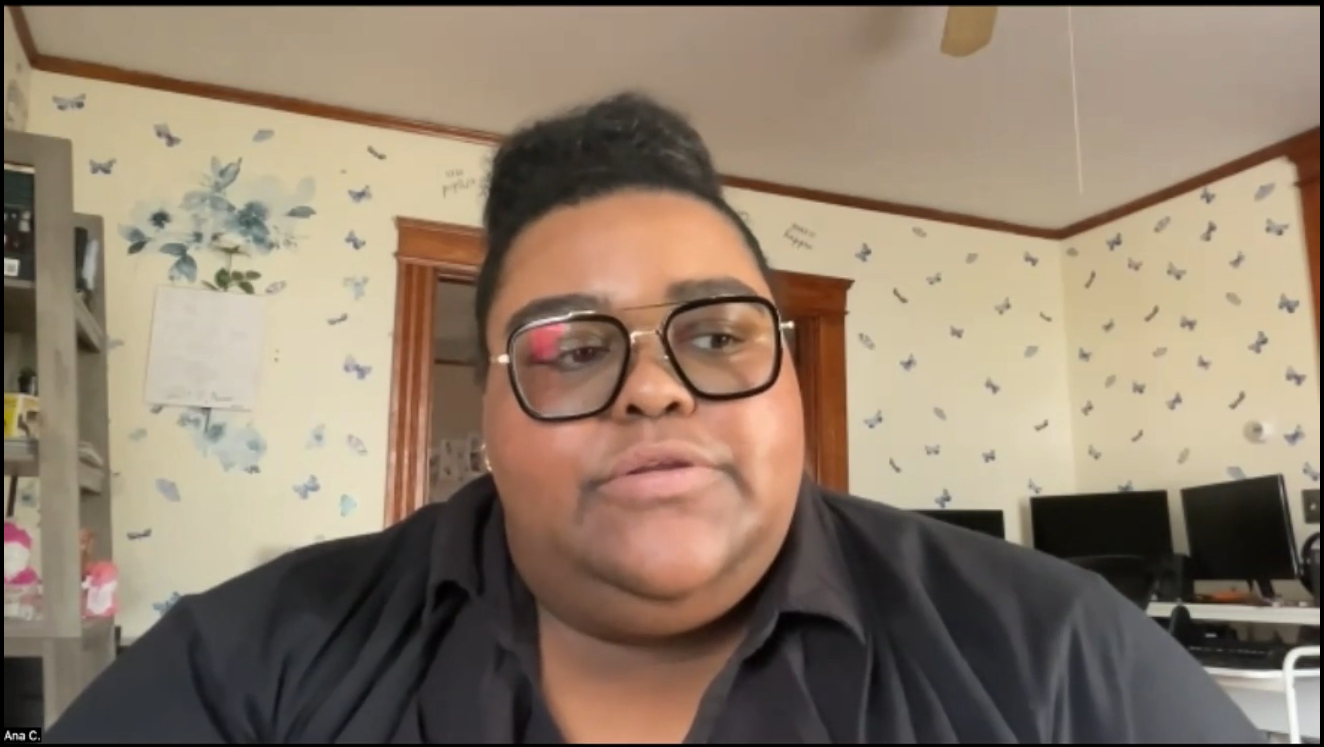
Ana Cabrera is an Ink Different apprentice in New Haven who’s training to become a Tattoo Artist while working full-time.
She’s mostly self-taught as an artist. Her spark came from an elementary school teacher who was a big art buff. That teacher explained how artwork comes together and the emotion behind it. Ana decided to try it and never stopped.
Her interest in tattoos grew the same way. As a kid, she noticed tattoos everywhere. As she got older, she started learning what went into them, from the quality of the tattoo to the quality of the Tattoo Artist. She got tattooed herself and eventually thought, “I think I want to join this group of people.”
Her story matters because she didn’t upend her life to start. She found a path that fit around the job she already had.
Why would someone leave a stable court job to chase ink?
Ana hasn’t left her court job. Instead, she’s using it to support her training.
Before the court, she worked as a case manager. Now she’s the quiet person in the room who records everything and types transcripts. She says it isn’t mindless work, but it’s calm enough that she has room for her art to grow.
That matters when you’re learning a demanding craft. She isn’t coming home too burned out to pick up a pencil. On days when she had submissions due, sitting down to practice after work became a peaceful way to ease out of the day.
Truth: You don’t always have to quit your job to change your career. Sometimes the right job gives you room to build the next one.
How did Ana balance a full-time job with tattoo training?
Ana balanced work and training by being realistic, patient, and willing to ask for help.
She started with the right expectations
Phase One started with what Ana calls “bare bones” designs. Many apprentices come in already skilled, so learning to simplify was a challenge. Once she started using a tattoo machine in Phase Two, it clicked. The designs were kept simple so they’d translate well onto skin.
She stopped forcing progress
Her biggest early challenge was trying to rush. She’d get ahead of herself instead of letting progress happen. She also learned not to compare herself to classmates who were further along.
She leaned on her Mentors
In Phase Three, Ana leans heavily on her Mentor, Charmaine. She laughs that she’s bothered her constantly with questions. Talking through each tattoo helps her plan, so she isn’t stressed when the appointment comes.
She reminded herself she’s human
Ana says it helps to accept that mistakes will happen. The goal is to do better, not to be perfect. She admits there were times she felt frustrated and antsy, even like quitting. Her Mentors’ advice to take it one step at a time and breathe kept her going.
Before you start, read about the mistakes aspiring tattoo apprentices should avoid.
What steps can you take to start training while still working?
Ana’s path offers a simple roadmap.
Step 1: Stop sitting on it. Ana waited a couple of years. If people keep telling you to try tattooing, take it seriously.
Step 2: Look at your schedule honestly. Ana’s quieter court job gave her the mental space to practice after work.
Step 3: Choose a path that fits your life. Phases One and Two of the Traditional Tattoo Apprenticeship happen online, so you can train around your job.
Step 4: Ask questions early. Ana says your first idea might not be the most effective one. Ask how others would approach it.
Step 5: Accept the redos. In Phase Two, Ana learned that redoing assignments is part of learning to pull a clean line with the right depth.
Step 6: Learn safety. Every Tattoo Artist must follow the OSHA bloodborne pathogens standard.
For supplies, see the tools every beginner Tattoo Artist should know.
What does it mean to start remote and finish in a studio?
It means you build your foundation online first, then move into a working tattoo studio for supervised client work.
For Ana, the online phases meant she could keep her job while learning. Her classes were small. She says that compared to college lecture halls with hundreds of students, instructors could be far more attentive, and the group felt like a real community.
Ana also liked learning from several instructors. She explains it this way: one person might describe a dog as a fluffy animal with four legs, while another calls it a strong animal with four legs. Both are right, and hearing different explanations helped her understand.
Then came Phase Three in the tattoo studio. Real skin, she says, has very different dips and contours, and depth works differently. Halfway through Phase Three, she realized she could apply what she’d learned to real skin and succeed. That feeling is what she chases with every tattoo now.
Why is tattooing an AI-proof career worth the leap?
Tattooing depends on human hands, judgment, and trust, which is why Tattoo Artists remain in demand.
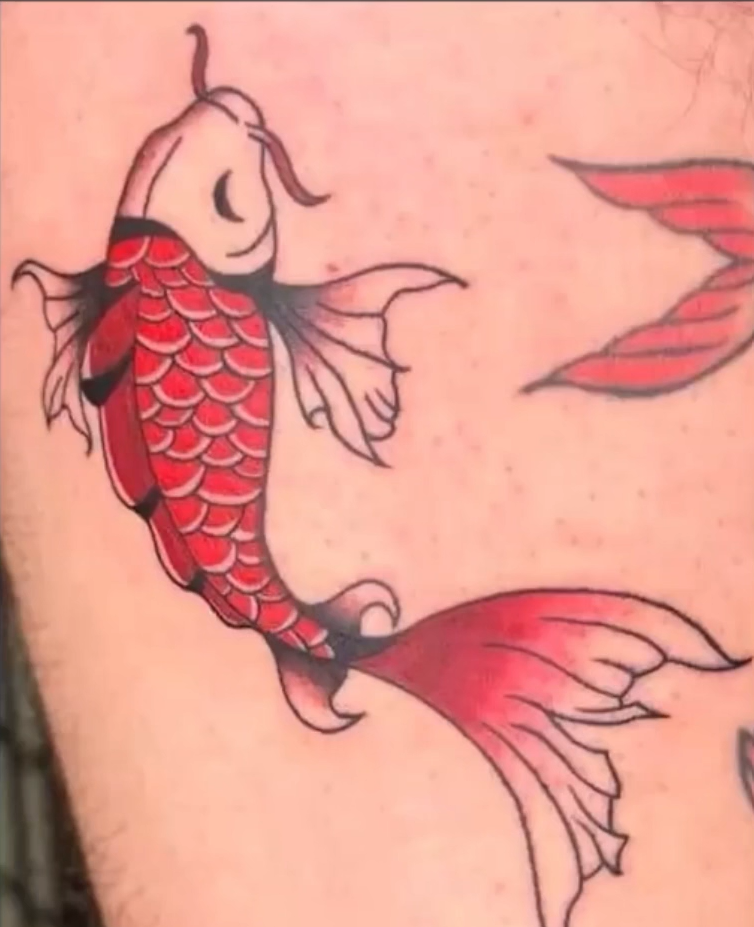
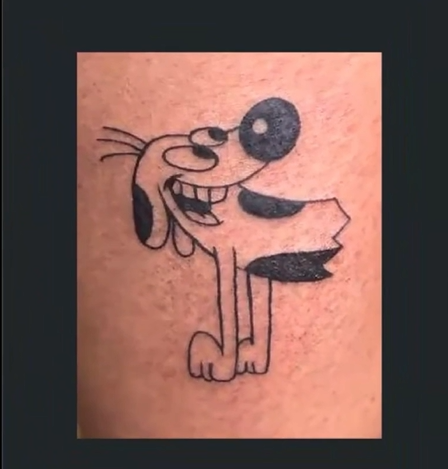
Ana’s supervised tattoos show that personal side. She designed a koi for Brandon, one of her tattoo shop’s permanent Tattoo Artists, matching the red and black already on his leg. She also tattooed a CatDog pair for a coworker and her friend, inspired by a show Ana loved growing up.
Each piece involved conversations, planning, and care that no machine can replicate. Read more on why Tattoo Artists are still essential.
What does Ink Different’s Traditional Tattoo Apprenticeship offer?
Ink Different’s Traditional Tattoo Apprenticeship is an 18 to 24 month, four-phase tattoo apprenticeship built for beginners. Ink Different has trained Tattoo Artists for 15 years.
- Online foundations: Phases One and Two happen online, so you can keep working.
- In-studio training: Phases Three and Four take place in a tattoo studio under a Mentor’s supervision.
- Beginner-friendly: No prior art experience required.
- Licensing support: Guidance through your state’s requirements, like how to get your tattoo license in Texas.
- A guaranteed job offer: You’ll receive a guaranteed job offer at one of Ink Different’s own tattoo studios.
- “Good Humans” culture: Ana says the support from instructors and fellow apprentices kept her going.
Seats are limited, with only two apprentices per tattoo studio per Mentor. If you’re comparing options, see why tattoo apprenticeships are gaining ground as a solid alternative to college. Ana, who earned a master’s degree, says her skills paid off much faster here.
A career that comes with confidence
This is a career that comes with confidence. You’ll finish with job-ready skills, licensing support, and a guaranteed job offer at one of Ink Different’s own tattoo studios. The Traditional Tattoo Apprenticeship is available at 60+ tattoo studios nationwide.
What if you want to push even further?
Once you’ve built your foundation, Ink Different’s Master Mentorship connects you with Master Mentors, including Al Fliction, Liz Cook, Kyle Dunbar, Boneface, Jordi Pla, Marcel Oliveira, and Kara Gutierrez.
Ana already has a style she wants to grow. Japanese traditional surprised her in Phase One, and its use of color still inspires her today. Master Mentorship is one way Tattoo Artists keep developing a style they love.
Ready to take the first step?
Ana Cabrera spent years hearing that she should tattoo before she finally said yes. Now she’s tattooing real clients and about to start charging for her work, all without giving up the job that supports her.
Her advice for anyone on the fence: take it one step at a time, and breathe.
Ready to become a Tattoo Artist? Apply now to Ink Different’s Traditional Tattoo Apprenticeship and start building an AI-proof career with licensing support and a guaranteed job offer at one of Ink Different’s own tattoo studios.
Frequently Asked Questions
Can I train to become a Tattoo Artist while keeping my job?
Yes. Ana Cabrera works at her city’s court while training. Phases One and Two happen online.
What made Ana decide to start?
People had told her for years that she should tattoo. After sitting on the idea, she saw an Ink Different ad and decided it was time.
Do I need art experience to start?
No. Ana is mostly self-taught, and the Traditional Tattoo Apprenticeship is built for beginners.
How long does the Traditional Tattoo Apprenticeship take?
Ink Different’s Traditional Tattoo Apprenticeship takes 18 to 24 months across four phases, with licensing support and a guaranteed job offer at one of Ink Different’s own tattoo studios.
What’s the hardest part of starting?
For Ana, it was trying to force progress and comparing herself to others. She learned to let progress happen.
Where can I find a tattoo apprenticeship near me?
Ink Different’s Traditional Tattoo Apprenticeship is available at 60+ tattoo studios nationwide, including Spanish-speaking locations in Denver, Orange County, NYC, Miami, San Antonio, and San Diego.