
How to Get a Tattoo License When You Move Mid Apprenticeship
October 5, 2026
How Long Does It Take to Get Your First Paying Tattoo Client?
October 5, 2026
In This Article
- Key Takeaways
- What is tattoo design software and how does it help pricing?
- Why do so many new artists price custom work wrong?
- What features should tattoo design software have for pricing?
- Which tools help you price custom tattoos accurately?
- How do you price a custom tattoo step by step?
- Why does skill matter more than software?
- How does Ink Different train you to price like a pro?
- Ready to build your pricing confidence?
- FAQ
You spend hours designing a custom piece, pour your heart into every line, then quote a number that either scares the client away or leaves you working for pennies. That gut-punch feeling of guessing your worth is exactly what the right tools were built to fix.
Tattoo design software is a digital platform that helps artists create, revise, and organize custom tattoo designs while calculating fair, consistent prices based on time, size, detail, and studio costs. At Ink Different Tattoos, we see this pricing struggle trip up talented beginners every single day, and we want you to walk into your first client conversation with numbers you can defend.
Pricing custom work is not a gift you are born with. It is a learnable system.
Key Takeaways
- Purpose: Tattoo design software helps you draft designs and calculate consistent, fair prices based on time and detail.
- Popular tools: Procreate, Adobe Fresco, and studio management apps support accurate quoting and time tracking.
- Pricing basics: Custom work is usually priced by hourly rate or by piece, factoring size, placement, and detail.
- Skill first: Software speeds the process, but real mentorship teaches you what your time is actually worth.
- Training: Ink Different’s Traditional Tattoo Apprenticeship builds pricing, design, and business skills for a real career.
What is tattoo design software and how does it help pricing?
Tattoo design software is a digital tool that lets artists sketch, refine, and store custom designs while tracking the time, size, and complexity that drive an accurate price.
Think of it as your workshop and your calculator rolled into one. On the creative side, you sketch, layer, and revise without wasting stencil paper. On the business side, many platforms log how long a piece takes and help you translate that effort into a number.
The best programs connect the dots between your artistry and your income. When you can see exactly how much time a portrait sleeve demands versus a small script piece, you stop guessing and start quoting with confidence.

Why do so many new artists price custom work wrong?
New artists price custom work wrong because they guess emotionally instead of calculating from time, cost, and skill, leaving them underpaid and burned out.
When you are stuck in a dead-end job dreaming of a creative career, it is easy to think any income beats no income. So beginners undercharge to win clients, then realize they are working long hours for less than minimum wage.
The opposite mistake stings too. Quote too high without a clear breakdown and the client walks, taking your confidence with them. Pricing without a system is like tattooing without a stencil: you are improvising something that should be planned.
If you want to sidestep these traps, read our guide on mistakes aspiring tattoo apprentices should avoid. Pricing confusion is one of the most common ones.
What features should tattoo design software have for pricing?
Good tattoo design software for pricing includes time tracking, design layering, client galleries, deposit collection, and a way to convert size and detail into a consistent quote.
Not every app is built for the business side, so look for tools that support both the art and the money. Here is what actually moves the needle when you are quoting custom work:
- Time tracking: Logs how long designs and sessions take so your hourly rate reflects reality.
- Design mockups: Layered sketching lets you show clients a clear vision before they commit.
- Client galleries and consultations: Keep reference photos, revisions, and notes organized in one place.
- Deposit and payment tools: Protect your time with upfront deposits and clear invoicing.
- Consistent quote logic: Standardize how size, placement, and detail affect your final number.
Pro Tip: Software that saves your quotes builds a personal database. After 50 pieces, you will spot patterns that make future pricing almost automatic.
Which tools help you price custom tattoos accurately?
The most useful tools for pricing custom tattoos combine design apps like Procreate and Adobe Fresco with studio management platforms that handle booking, deposits, and time tracking.
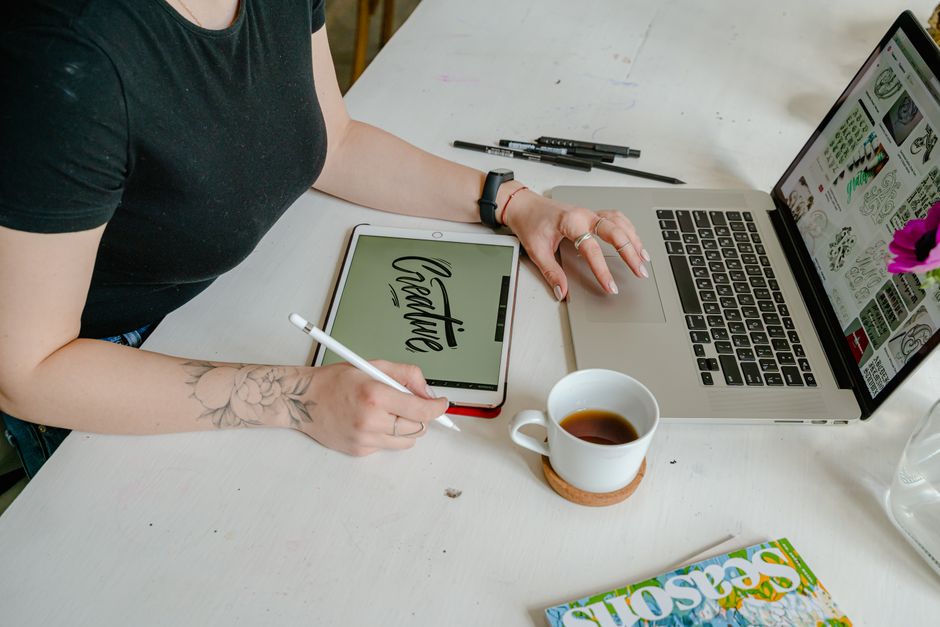
No single app does everything, so most working artists stack a couple of tools together. On the design side, Procreate on the iPad remains the industry favorite for drafting and mockups, while Adobe Fresco offers strong vector and raster blending.
For the business layer, studio management and booking platforms handle client intake, deposits, and scheduling. Many let you attach a price estimate to each appointment, which trains you to think about time and money together from the first message.
Once you have a portfolio worth showing, pair these tools with strong marketing. Our list of platforms to help tattoo artists build their brand pairs nicely with your design workflow. And if you are still gathering your kit, check our rundown of tools every beginner tattoo artist should know.
How do you price a custom tattoo step by step?
To price a custom tattoo accurately, calculate your hourly rate, estimate design and session time, factor in size and detail, add studio costs, then present a clear quote.
Software makes this faster, but the logic is what you must own. Here is a simple, repeatable system you can start using on your very next design.
- Set your base hourly rate. Factor your skill level, local market, and studio overhead. This is your foundation.
- Estimate design time. Use your software’s time tracker to log how long the drawing and revisions take.
- Estimate session time. Break the tattoo into hours based on size, placement, and detail density.
- Add material and studio costs. Ink, needles, aftercare, and station fees all belong in the number.
- Apply complexity adjustments. Fine detail, color packing, and difficult placements take longer, so charge accordingly.
- Present a transparent quote. Show the client a range and require a deposit to lock the appointment.
The U.S. Bureau of Labor Statistics tracks income data for craft and fine artists, which is a helpful reality check when you set your rate against your market. And remember, your pricing also protects your safety standards. Following OSHA bloodborne pathogen standards means single-use supplies and proper setup, which are real costs your price must cover.
Why does skill matter more than software?
Skill matters more than software because pricing accurately depends on knowing how long a piece truly takes, which only comes from real hands-on experience under a mentor.
An app can hold your quotes, but it cannot tell you that a client’s chest piece will fight you for three extra hours because of the skin and placement. That judgment is earned at the machine, not downloaded.
This is the painful truth behind the shortcut trap. Countless online guides promise instant pricing formulas, but they cannot teach you the feel of a session or the confidence to hold your number when a client pushes back. That confidence grows from live, in-person practice.
As artificial intelligence reshapes so many jobs, hand-tattooing remains a deeply human craft. We break down why in our post on why tattoo artists are still essential. Software helps, but your trained hands and your judgment are the parts no machine can replace.
How does Ink Different train you to price like a pro?
Ink Different Tattoos trains you to price like a pro through hands-on mentorship that teaches design, session timing, business fundamentals, and licensing support inside real tattoo studios.
For 15 years since 2011, we have built our nationwide tattoo apprenticeship as a college alternative for people who are done wasting their creative potential in jobs that drain them.
What you can expect from our Traditional Tattoo Apprenticeship
Our Traditional Tattoo Apprenticeship runs 18 to 24 months across a four-phase structure. You train hands-on in real tattoo studios working alongside experienced Tattoo Artists. No prior art experience is required. We teach you from the ground up, including the design and pricing skills covered in this post.
A career that comes with confidence
You graduate with job-ready skills, licensing support, and a guaranteed job offer at one of our tattoo studios, prepared to step into an AI-proof career built on human craftsmanship. We build real ability, so you walk into pricing conversations knowing your work is worth every dollar.
Mentorship that pushes your brand and skills further
If you want to accelerate, our Master Mentorship is a one-year, in-person track working directly with award-winning Mentors including Al Fliction, Liz Cook, Kyle Dunbar, Boneface, and Jordi Pla. It is ideal for mastering a specific style, growing your career, and learning studio ownership, including how to price at a premium.
Making tattoo training accessible for everyone
We offer Spanish-speaking locations in Denver, Orange County, NYC, Miami, San Antonio, and San Diego, so language never blocks your path. Our “Good Humans” culture means you join a supportive, family-like community, not a competition.
Ready to build your pricing confidence?
Software can organize your quotes, but only real training turns you into an artist who prices with authority and never works for pennies again. Seats in our apprenticeship are limited.
Ready to become a tattoo artist? Apply now to Ink Different’s Traditional Tattoo Apprenticeship and start building an AI-proof career with licensing support along the way. Prefer to test the waters first? Fill out our quick questionnaire to get personalized support and find out if our Traditional Tattoo Apprenticeship is right for you.
Frequently Asked Questions
What tattoo design software do professional artists use?
Most professional tattoo artists use Procreate on iPad for drafting, paired with Adobe Fresco and a studio management platform for booking, deposits, and pricing.
Can software price a custom tattoo automatically?
No. Software tracks time and stores quotes, but accurate custom pricing relies on your trained judgment about session length, detail, and placement from hands-on experience.
Do I need art experience to learn tattoo pricing and design?
No. Ink Different’s Traditional Tattoo Apprenticeship is built for beginners with no prior art background and teaches design, machine work, and pricing fundamentals from day one.
How long does the Traditional Tattoo Apprenticeship take?
The Traditional Tattoo Apprenticeship takes 18 to 24 months across four phases: remote foundations, then finishing in real tattoo studios with experienced mentors.
What makes Ink Different different from other training?
Ink Different offers live, in-person mentorship with award-winning tattoo artists, a supportive culture, and 15 years of experience training professionals since 2011.
Does Ink Different offer training in Spanish?
Yes. Ink Different offers Spanish-speaking locations in Denver, Orange County, NYC, Miami, San Antonio, and San Diego, so language never blocks your path.