
Career Change Quiz: Are You Ready to Leave Your Job?
November 26, 2026
How to Open a Tattoo Shop: Licenses, Costs and the Path From Apprentice to Owner
November 27, 2026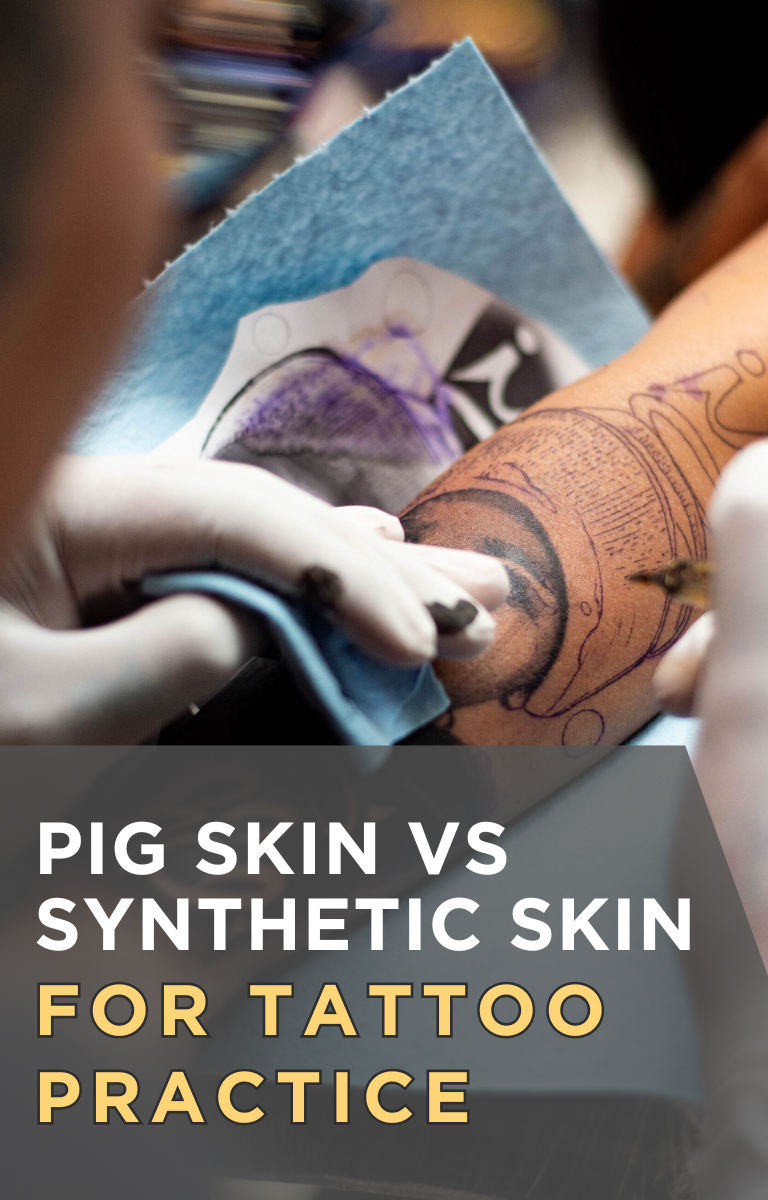
In This Article
- Key Takeaways
- What Is Tattoo Practice Skin?
- What Is Pig Skin for Tattoo Practice?
- What Is Synthetic Skin for Tattoo Practice?
- Which One Feels More Like Real Human Skin?
- What Are the Pros and Cons of Each?
- How Do You Practice on Each One?
- Which Should You Choose as a Beginner?
- How Ink Different Trains You Beyond the Practice Mat
- Ready to Become a Tattoo Artist?
- Frequently Asked Questions
Pig skin feels more like real human skin than most synthetic practice skins, so it gives you a better sense of depth, stretch and how ink settles. Synthetic skin is cleaner, easier to store and more consistent, which makes it the easier place to start. Many beginners build basic control on synthetic skin first, then use pig skin for more realistic practice. Neither one replaces supervised training on real clients.
There’s a scientific reason pig skin is popular. Researchers often use pig skin as a model for human skin. A study published in Burns, available through the NIH, notes that pig epidermis measures about 30 to 140 micrometers thick, compared with 50 to 120 micrometers in humans, and that both have similar collagen and elastic fiber content. Below, we compare the two surfaces and explain how to practice on each.
Key Takeaways
- Realism: Pig skin is structurally similar to human skin, so it gives more realistic feedback.
- Convenience: Synthetic skin is shelf-stable, odorless and easy to practice on at home.
- Food safety: Raw pig skin is raw meat. Keep it refrigerated and handle it like you would raw pork.
- Best for beginners: Start on synthetic skin, then add pig skin once your lines are steady.
- Next step: Practice skin builds fundamentals, but mentorship builds professional skill.
What Is Tattoo Practice Skin?
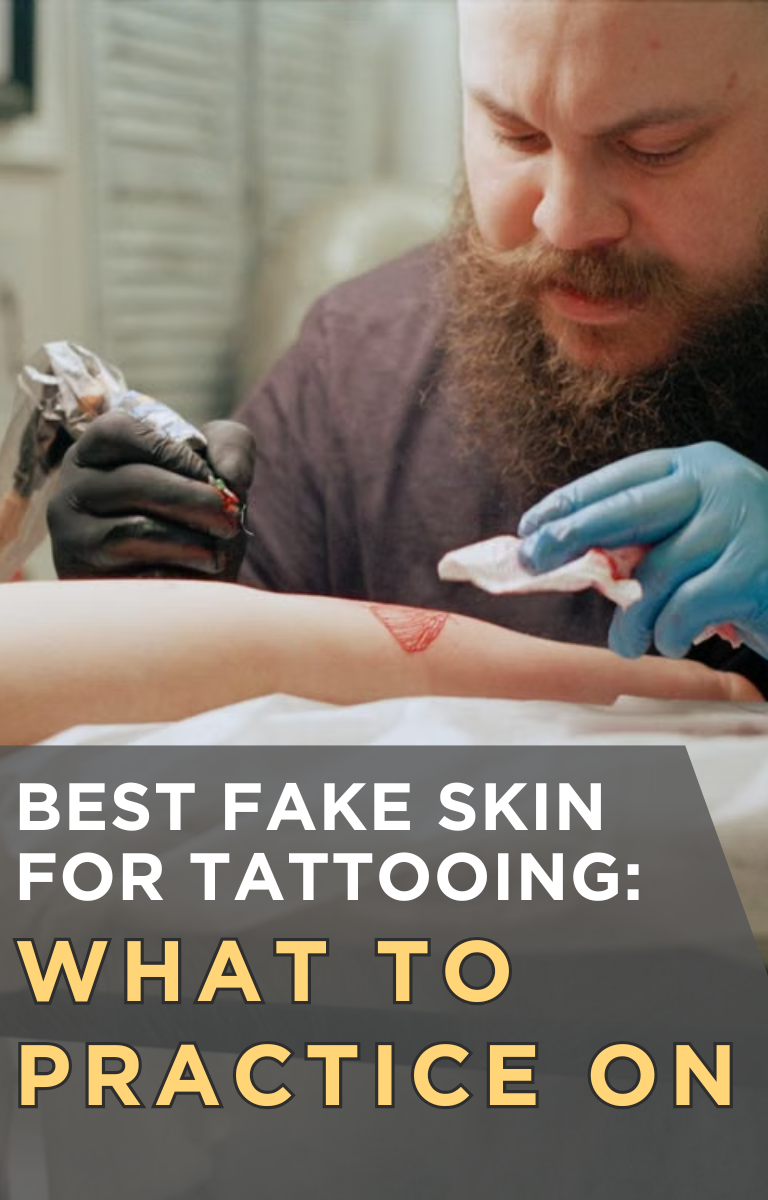
Tattoo practice skin is any surface, natural or synthetic, that lets you rehearse machine control, linework and shading before working on a real person.
It’s a lot like a musician practicing scales. Repeating the fundamentals on a practice surface builds the control you’ll need later on real skin.
You have two main options: pig skin, which is real animal skin from the butcher or grocery store, and synthetic skin, which is a silicone or rubber sheet designed to feel like skin.

What Is Pig Skin for Tattoo Practice?
Pig skin is real porcine skin, often pork belly, that many new Tattoo Artists use because its structure and feel are close to human skin.
You can often find it at a butcher shop or grocery store. When you tattoo it, you feel resistance and give that most synthetic sheets don’t fully copy, which helps you practice depth control.
The trade-off is handling. Pig skin is raw meat, so it spoils and can carry bacteria. Keep it refrigerated at 40°F or below. FoodSafety.gov recommends using fresh raw pork within three to five days. Wear gloves, clean your work surface afterward and dispose of it promptly.
What Is Synthetic Skin for Tattoo Practice?
Synthetic skin is a silicone or rubber practice sheet designed to mimic the feel of skin, without the smell, mess or spoilage of real tissue.
It comes as flat sheets, sheets with printed outlines and molded shapes like arms and hands. It’s shelf-stable, so you can practice anytime, and it’s easy to set up at a kitchen table.
Products vary a lot. Some feel firmer or softer than real skin, and ink can sit differently on the surface. Try a few types to see which feels most realistic. Drawing and stencil work come first, though, and there’s a lot you can do to practice tattooing before a tattoo apprenticeship on paper.
Which One Feels More Like Real Human Skin?
Pig skin generally feels closer to human skin, thanks to its similar structure, stretch and resistance.
Real skin stretches, moves, bleeds and takes ink differently depending on where it is on the body. Pig skin recreates more of that variation, which helps you prepare for real clients.
Synthetic skin is consistent and forgiving. That’s helpful early on, but it can give you false confidence. Many beginners feel steady on synthetic sheets, then find real skin much harder to control.
Pro Tip: Build muscle memory on synthetic skin, then test that control on pig skin to see where your technique needs work.
What Are the Pros and Cons of Each?
Pig skin offers more realism but less convenience. Synthetic skin is clean and consistent but less realistic.
Pig Skin Pros and Cons
- Pro: Realistic stretch, resistance and ink absorption.
- Pro: Often inexpensive at a butcher or grocery store.
- Con: Spoils quickly and needs refrigeration.
- Con: It’s raw meat, so it requires careful handling and cleanup.
Synthetic Skin Pros and Cons
- Pro: Clean, odorless and shelf-stable.
- Pro: Available as flat sheets or molded shapes.
- Con: Feel varies by product and may not match real skin.
- Con: Can create false confidence if it’s all you practice on.
How Do You Practice on Each One?
Start simple on synthetic skin, then move to pig skin for more realistic feedback.
- Set up your station. Use gloves, sterile needles and barrier film, and secure your practice surface so it doesn’t slide.
- Warm up on synthetic skin. Practice straight lines, curves and simple shapes to find your machine speed and hand angle.
- Practice shading. Work on smooth gradients and consistent depth.
- Move to pig skin. Once your lines and shading feel controlled, try the same exercises on pig skin.
- Repeat your designs. Tattoo the same designs on both surfaces and compare where your technique slips.
- Clean up properly. Dispose of used needles in a sharps container, and handle pig skin like raw meat.
Professional tattoo studios follow the OSHA Bloodborne Pathogens Standard for human blood and needles. Practicing a similar setup and cleanup routine now builds good habits.
Rushing this progression is one of the most common apprentice mistakes. Feeling confident on synthetic skin before you’ve tested yourself on more realistic surfaces can set you back later.
Which Should You Choose as a Beginner?
Start on synthetic skin to build confidence cleanly and cheaply, then add pig skin for more realistic practice. Using both gives you the best of each.
If you only have an hour at night to practice, synthetic skin removes most of the hassle. There’s no shopping trip, refrigeration or cleanup, which makes it easier to practice consistently.
Practice skin only takes you so far, though. The biggest progress comes when an experienced Mentor watches your hand and corrects your angle and depth in real time.
How Ink Different Trains You Beyond the Practice Mat
Ink Different’s Traditional Tattoo Apprenticeship takes you from practice surfaces to supervised work on real skin through in-person mentorship over 18 to 24 months.
For 15 years, Ink Different has trained aspiring Tattoo Artists as a college alternative. The Traditional Tattoo Apprenticeship runs across four phases, with in-person training at one of 60+ tattoo studios nationwide. No prior art experience is required.
- Phase 1, Art and Design Principles: Drawing, shading, digital design and building a portfolio.
- Phase 2, Machine Mastery and Practice Tattooing: Hand-control exercises, machine operation, lining, shading and color packing on practice surfaces.
- Phase 3, Supervised Tattoos: Tattooing real skin under a Mentor’s direct supervision.
- Phase 4, Junior Artist Externship: Building client relationships and refining your skills while you start earning.
You’ll finish with job-ready skills, licensing support and a guaranteed job offer at one of Ink Different’s own tattoo studios. Interest-free payment plans help make training more accessible. Licensing rules vary by state, as this state-by-state tattoo licensing map shows.
Our “Good Humans” culture means you learn in a supportive, family-like community. Ink Different apprentice Ashley Breaux, for example, moved from art school and the military into her tattoo apprenticeship.
Ready to Push Even Further?
The one-year, in-person Master Mentorship lets you train with celebrity and award-winning Master Mentors like Jordi Pla, who trains apprentices at his tattoo studio, Black Flamingo. It’s built for mastering a specific style, growing your career and learning the business side of tattooing.
Making Tattoo Training Accessible for Everyone
We offer Spanish-speaking locations in Denver, Orange County, NYC, Miami, San Antonio and San Diego.

Ready to Become a Tattoo Artist?
Pig skin and synthetic skin are both great starting points. Turning practice into a career takes structured training with a Mentor beside you. Each Mentor takes just two tattoo apprentices per tattoo studio, so seats fill up quickly.
Ready to become a Tattoo Artist? Apply now to Ink Different’s Traditional Tattoo Apprenticeship and start building a career with licensing support along the way.
Frequently Asked Questions
Is pig skin or synthetic skin better for tattoo practice?
Pig skin is more realistic, while synthetic skin is cleaner and more convenient. Many beginners start with synthetic skin, then add pig skin.
Why is pig skin used for tattoo practice?
Pig skin is structurally similar to human skin, with comparable epidermal thickness and collagen content, which is why researchers often use it as a model for human skin.
How do I store pig skin for practice?
Keep it refrigerated at 40°F or below and use it within a few days. FoodSafety.gov recommends using fresh raw pork within three to five days.
Is pig skin safe to practice on at home?
It’s raw meat, so treat it that way: wear gloves, keep it refrigerated, clean your surfaces afterward and dispose of it promptly.
Can practice skin replace a tattoo apprenticeship?
No. Practice skin builds fundamentals, but it can’t provide supervised work on real skin, in-person feedback or licensing support.
Do I need art experience to start a tattoo apprenticeship?
No. The Traditional Tattoo Apprenticeship is built for beginners and starts with art and design principles.
Sources (all checked November 25, 2026)