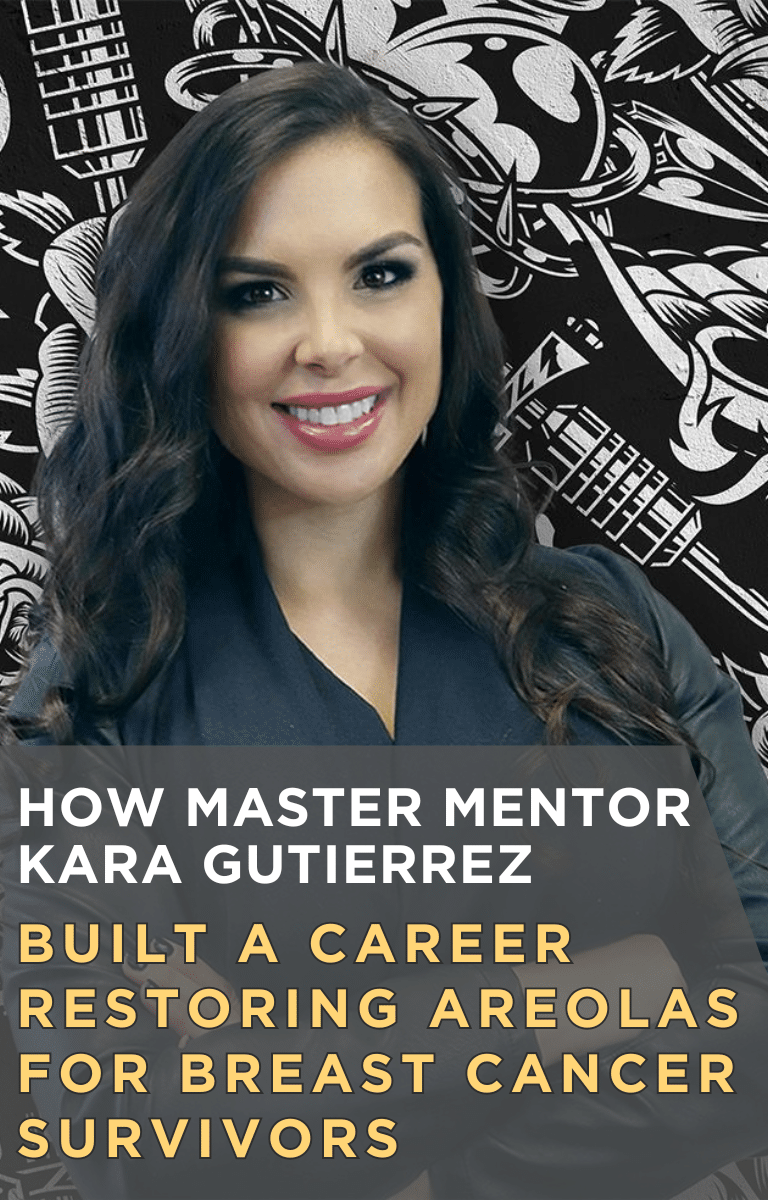
How Master Mentor Kara Gutierrez Built a Career Restoring Areolas for Breast Cancer Survivors
October 8, 2026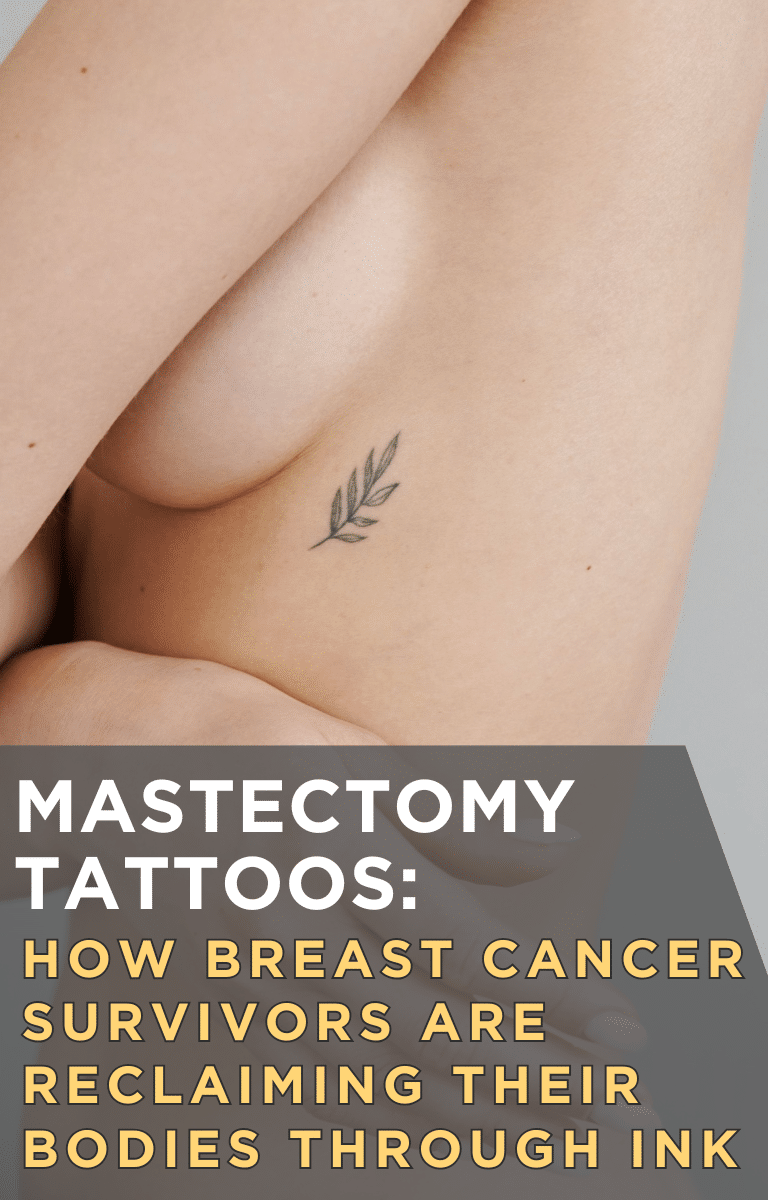
In This Article
- Key Takeaways
- What are mastectomy tattoos?
- Why do mastectomy tattoos matter so much to survivors?
- What types of mastectomy tattoos are there?
- How does the mastectomy tattoo process work?
- What skills does a Tattoo Artist need for this work?
- How do you learn to create meaningful tattoos like these?
- What can you expect from our Traditional Tattoo Apprenticeship?
- How can Master Mentorship push your craft further?
- Ready to become a Tattoo Artist?
- Frequently Asked Questions
For many breast cancer survivors, the scars left by surgery are a daily reminder of what they endured. A mastectomy tattoo can change that. A mastectomy tattoo is a specialized decorative or restorative tattoo applied over mastectomy scars. It recreates the appearance of a nipple or covers scar tissue with meaningful art, helping survivors reclaim their bodies after breast cancer surgery.
At Ink Different Tattoos, we have spent over 15 years training professional Tattoo Artists who understand that this work is about far more than cool designs.
Key Takeaways
- Definition: Mastectomy tattoos restore nipple appearance or cover scars with art after breast cancer surgery.
- Emotional impact: Many survivors report feeling reclaimed, confident, and healed after the process.
- Skill required: This work demands advanced shading, color theory, and deep empathy from a trained Tattoo Artist.
- Training path: A structured tattoo apprenticeship teaches the technical and human skills behind restorative tattooing.
- Career outlook: Tattooing is an AI-proof craft rooted in human connection and hands-on mastery.
What are mastectomy tattoos?
Mastectomy tattoos are specialized tattoos applied after breast cancer surgery, designed either to realistically recreate a nipple and areola or to transform scar tissue into decorative art the survivor chooses.
There are two broad approaches. The first is 3D nipple-areola restoration, where a Tattoo Artist uses shading and color theory to create the illusion of a natural nipple on a flat, reconstructed breast. The second is decorative coverage, where survivors choose florals, geometric work, or symbolic imagery to reclaim the space on their own terms.
According to the National Breast Cancer Foundation (https://www.nationalbreastcancer.org/breast-cancer-facts/), one in eight women in the United States will be diagnosed with breast cancer in her lifetime, and more than 4 million breast cancer survivors are living in the country today. That is a large community of survivors, and some of them seek out restorative tattoo work.

Why do mastectomy tattoos matter so much to survivors?
Mastectomy tattoos matter because they give survivors back a sense of control, identity, and confidence after an experience that can leave them feeling their body was taken from them.
Surgery saved their life, but it also left visible marks of the fight. For many, looking in the mirror becomes a source of grief rather than pride. A thoughtfully placed tattoo can change that.
Reconstruction is also not the path every survivor takes. A peer-reviewed paper (https://onlinelibrary.wiley.com/doi/full/10.1111/nuf.12486) on mastectomy tattoos, which draws on Canadian figures, reports that fewer than one in five women pursue breast reconstruction after a mastectomy. For some women, a tattoo over the mastectomy site is a chosen alternative. Research is still limited, but the same paper describes tattoos as a way some women reclaim their bodies after breast cancer.
When you help someone turn a scar into a flower, or recreate what surgery changed, you are doing more than applying ink. No screen, app, or machine can replicate that.
Remember: You hold the tattoo machine, but the survivor in your chair sets the direction. Your job is to listen, steady your hand, and honor their choices.
What types of mastectomy tattoos are there?
The two main types of mastectomy tattoos are realistic 3D nipple-areola restoration and decorative scar coverage, with many survivors blending both into a single custom piece.
Each type asks something different from the Tattoo Artist. Here is how they break down:
- 3D nipple-areola tattoos: Hyper-realistic shading that mimics depth, light, and natural skin tone.
- Decorative florals: Roses, lotuses, and vines that flow across and soften scar lines.
- Symbolic imagery: Phoenixes, ribbons, birds, and personal symbols of survival.
- Geometric and mandala work: Balanced patterns that frame the chest and draw the eye.
No two pieces are ever the same, because no two survivors carry the same story. That is exactly why this work can never be automated, a reality we explore in our post on why tattoo artists are still essential.
How does the mastectomy tattoo process work?
The mastectomy tattoo process typically begins once scar tissue has fully healed, then moves through consultation, design, and careful application over one or more sessions with a trained Tattoo Artist.
Here is a simplified look at how a professional approaches this work, step by step:
- Step 1: Confirm healing. Work only begins after a medical clearance, often around a year post-surgery, when scar tissue has settled.
- Step 2: Consult with compassion. You listen first. Understand their story, their goals, and what will make them feel whole.
- Step 3: Design the piece. Whether it is realistic restoration or custom art, the design is built around their body and their choice.
- Step 4: Prep the workspace. Strict hygiene following OSHA bloodborne pathogen standards is non-negotiable, especially on sensitive post-surgical skin.
- Step 5: Tattoo with patience. Scar tissue behaves differently than normal skin, so steady technique and adjustments matter.
- Step 6: Guide aftercare. You walk them through healing so the result stays beautiful for years.
Because scar tissue is delicate, aftercare guidance should always align with trusted resources like the American Academy of Dermatology tattoo care guidelines.

What skills does a Tattoo Artist need for this work?
Creating mastectomy tattoos requires advanced shading, precise color theory, strong consultation skills, and the emotional intelligence to hold space for someone during a vulnerable, life-changing moment.
The technical bar is high. Realistic nipple restoration demands a deep understanding of how light, shadow, and skin tone interact. Decorative work requires strong composition so the art flows with the body rather than fighting against scar lines.
The human skills matter just as much. You need to communicate clearly, build trust fast, and stay calm and warm throughout. These are not skills you pick up from online videos. They develop through live, in-person mentorship, which is where the difference between a hobbyist and a professional becomes obvious.
How do you learn to create meaningful tattoos like these?
You learn restorative and meaningful tattooing through a structured tattoo apprenticeship, where you train under experienced Mentors who guide you from fundamentals all the way to advanced client work.
If you are in a job that leaves your creative side unused, this is a career worth considering. The world needs skilled, compassionate Tattoo Artists who can do work that genuinely changes lives.
A tattoo apprenticeship is increasingly recognized as a smart college alternative for people who want hands-on skills and a real career without a four-year degree. You do not need a degree. You need the right Mentor, a plan, and the decision to begin.
What can you expect from our Traditional Tattoo Apprenticeship?
Ink Different’s Traditional Tattoo Apprenticeship is an 18 to 24 month, four-phase tattoo apprenticeship where you train hands-on in professional tattoo studios, with personalized instruction and licensing support.
We built this for real people with real lives, including complete beginners with no prior art experience. You will not be thrown into the deep end. You are guided through fundamentals, machine handling, skin work, and live client experience in a structured, supportive order.
Here is what sets our Tattoo Artist training apart:
- Hands-on studio training: Learn in working tattoo studios under live Mentor guidance.
- Great for beginners: No formal art background required, just drive and a willingness to grow.
- Licensing support: We help you get job-ready and navigate requirements, like learning how to get your tattoo license in Texas.
- An AI-proof career: Human-centered craft that technology cannot replace.
A career that comes with confidence
By the time you finish all four phases, you have job-ready skills, licensing support, and a guaranteed job offer at one of our tattoo studios. You walk into your career with a portfolio and the confidence to work professionally. The Bureau of Labor Statistics tracks craft and fine artists as a field built on skilled, hands-on work, exactly the kind of career that rewards mastery over shortcuts.
How can Master Mentorship push your craft further?
Ink Different’s Master Mentorship is a one-year, in-person program that lets you train directly with celebrity and award-winning Mentors to master a specific style, grow your brand, and build your career.
If you want to specialize in work like realistic restoration or fine-line florals, this is where you level up. You will learn alongside Mentors like Al Fliction, Liz Cook, Kyle Dunbar, Boneface, and Jordi Pla, who have shaped the industry.
The Master Mentorship is built for both beginners and experienced artists who want intensive skill development and business ownership.
Making tattoo training accessible for everyone
Ink Different operates nationwide, with the Traditional Tattoo Apprenticeship available in 60+ locations, including Spanish-speaking locations in Denver, Orange County, NYC, Miami, San Antonio, and San Diego, so language is never the barrier between you and a career you love.
Ready to become a Tattoo Artist?
If reading about mastectomy tattoos made you want to do this work, the first step is applying. Seats in our tattoo apprenticeship are limited, because real, live mentorship cannot be mass-produced.
Our “Good Humans” culture means you never walk this path alone. You join a family-like community that supports you through every phase.
Ready to become a Tattoo Artist? Apply now to Ink Different’s Traditional Tattoo Apprenticeship and start building an AI-proof career with licensing support along the way. Not sure yet? Fill out our quick questionnaire to get personalized support and find out if our Traditional Tattoo Apprenticeship is right for you.
Frequently Asked Questions
Do I need prior art experience to create tattoos like mastectomy work?
No. Ink Different’s Traditional Tattoo Apprenticeship is built for beginners and teaches drawing, shading, and technique from the ground up. Advanced restorative work comes later.
How long does it take to become a professional Tattoo Artist?
Our Traditional Tattoo Apprenticeship takes 18 to 24 months across four phases. You start remote, then finish in professional studios with hands-on training.
When can a survivor get a mastectomy tattoo?
Mastectomy tattoos are typically done after scar tissue heals, often around one year post-surgery, only with medical clearance. Timing varies by individual and doctor guidance.
What makes Ink Different different from other tattoo training?
Ink Different offers live mentorship, 15+ years of experience since 2011, award-winning Mentors, and a supportive “Good Humans” culture. It is a genuine college alternative.
Is tattooing an AI-proof career?
Yes. Tattooing relies on human connection, trust, and hands-on craft that technology cannot replicate, especially for emotional, personal work like restorative tattoos.
Where can I find a tattoo apprenticeship near me?
Ink Different operates nationwide, including Spanish-speaking locations near Denver, Orange County, NYC, Miami, San Antonio, and San Diego. Start remote, finish in-studio.