
American Traditional Flash: The Rules Behind the Style
November 11, 2026
How Much Does Trade School Cost?
November 11, 2026
In This Article
- Key Takeaways
- What is a career change, really?
- Why do so many people feel stuck in the wrong career?
- When is the right time to make a career change?
- How do you make a career change step by step?
- Why is tattooing a smart career change today?
- How does Ink Different’s Traditional Tattoo Apprenticeship work?
- What is the Master Mentorship program?
- How does Ink Different make training accessible?
- Ready to take the first step?
- FAQ
A career change is the deliberate decision to leave one line of work and build a new one that fits your skills, values and goals. With a clear plan, it’s far less risky than it feels.
Career changes are more common than most people think. According to the U.S. Bureau of Labor Statistics, people born from 1957 to 1964 held an average of 12.7 jobs from ages 18 to 56. And many people don’t just switch jobs. They switch fields entirely.
Below is a step-by-step plan for making a career change, backed by research on why people switch and what happens after they do. At Ink Different Tattoos, we’ve spent 15 years helping career changers start over as professional Tattoo Artists.
Key Takeaways
- Career changes are common: In a Pew Research Center survey, 53% of employed adults who quit a job in 2021 had changed their field or occupation in the past year.
- Top reasons people leave: Low pay, no room for advancement and feeling disrespected lead the list.
- Most see improvements: Many people who switch report better pay, more opportunities and better work-life balance.
- The plan: Clarify your why, research the field, build a financial runway, get real training, then transition.
- A hands-on option: Ink Different’s Traditional Tattoo Apprenticeship runs 18 to 24 months, with licensing support and no experience required.
What is a career change, really?
A career change is a full shift from one occupation to another. It usually means new skills, new training and a new professional identity, not just a new employer.
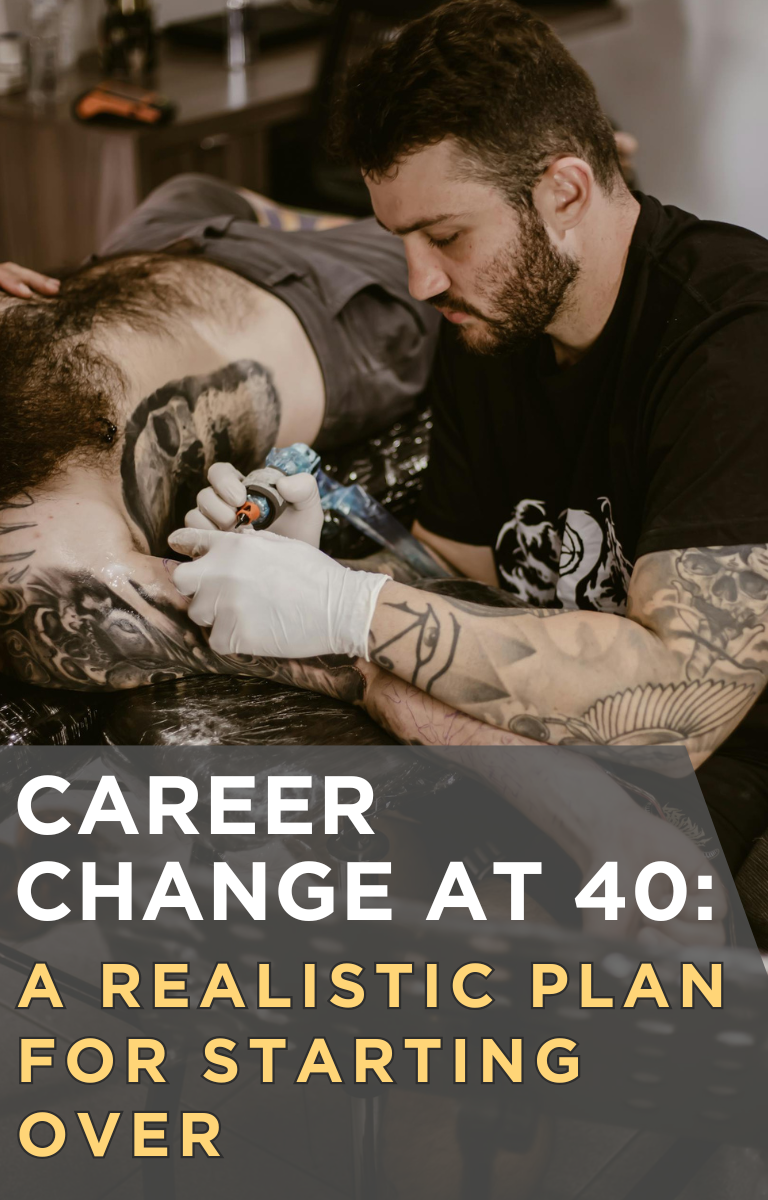
Switching desks at the same company is a job change. Leaving accounting to become a working Tattoo Artist is a career change. The difference matters because a real career change asks more of you up front and gives you more in return.
Why do so many people feel stuck in the wrong career?
Many people feel stuck because they chose a career out of pressure, convenience or fear, not because the work truly fit their talents and values.
Maybe you picked a “safe” major. Maybe you took the first job that paid the bills. Years later, that temporary choice has become your whole identity.
Research backs up what many people feel. In a Pew Research Center survey, majorities of workers who quit a job in 2021 said low pay (63%), no opportunities for advancement (63%), and feeling disrespected at work (57%) were reasons why they quit. Similar shares pointed to a lack of flexibility in when they work (45%) or not having good benefits such as health insurance and paid time off (43%).
Recognizing that feeling isn’t weakness. It’s an honest signal that it may be time to move.

When is the right time to make a career change?
The right time is when staying put becomes more painful than starting over, not when every condition is perfect.
If you wait for zero risk and total certainty, you’ll wait forever. What you can do is prepare while you work, so the leap is calculated instead of reckless.
The upside is real for many people. Pew found that at least half of workers who quit and found new jobs say they’re now earning more money (56%), have more opportunities for advancement (53%) and have an easier time balancing work and family responsibilities (53%). pewresearch
Mentor Tip: Don’t quit on Monday and panic by Friday. Build your runway first, then transition with confidence.
How do you make a career change step by step?
Clarify your motivation, research your target field, build a financial runway, train under an expert Mentor, then transition fully into the new work.
Here’s the practical plan:
- Step 1: Name your “why.” Write down exactly why you want out and the life you want instead. A clear why survives the hard days.
- Step 2: Research the real field. Learn what the work, income and lifestyle actually look like. The BLS Occupational Outlook Handbook is a solid starting point for pay, training and outlook across hundreds of careers.
- Step 3: Build a runway. Save a cushion, cut nonessential spending and keep your current income while you prepare. A runway turns a scary leap into a steady walk.
- Step 4: Get real training. Online videos won’t make you job-ready. Train under a working professional who can correct your technique in real time.
- Step 5: Build your brand early. Share your progress online so clients know you before day one. Explore these platforms to help new and aspiring Tattoo Artists build their brand.
- Step 6: Transition fully. Once you’re licensed and competent, step into the new career and let the old one go.
Steps 1 through 3 can happen while you’re still employed. That’s how you change careers without free-falling. For career changers considering tattooing, read why a tattoo apprenticeship is perfect for career changers starting over.
Why is tattooing a smart career change today?
Tattooing is a hands-on, human craft that’s hard to automate. It offers creative freedom and rewards skill with income that grows as you do.
A tattoo depends on trust between two people and the steadiness of a working hand. No software can hold a conversation, understand a client’s story and turn it into permanent art. We explore this in our article on why Tattoo Artists are still essential.
The income potential is real. According to ZipRecruiter, the average Tattoo Artist in the United States earns $106,858 a year as of November 2026. Pay varies widely with skill, reputation and location.
Tattooing is also a strong college alternative. Instead of years of tuition, you learn a hands-on craft directly from professionals. See why tattoo apprenticeships are gaining ground as a solid alternative to college.
How does Ink Different’s Traditional Tattoo Apprenticeship work?
Ink Different’s Traditional Tattoo Apprenticeship runs 18 to 24 months across four phases. You train in person with a Mentor at one of 60+ tattoo studios nationwide, with no prior experience required.
This is where your plan becomes real. We built the Traditional Tattoo Apprenticeship for beginners and career changers who are serious about doing the work. You get personalized, hands-on training from working professionals who correct your technique as you learn. Interest-free payment plans also help you manage costs during your transition.
What does the four-phase structure include?
The four phases take you from fundamentals to job-ready skills. You get licensing support along the way and a guaranteed job offer at one of Ink Different’s own tattoo studios.
Licensing varies by state, so we guide you through it. See our guides on how to get your tattoo license in Texas, tattoo license requirements in California and how long it takes to get a tattoo license in Colorado.
Safety and hygiene are non-negotiable, so your training includes practices aligned with the OSHA Bloodborne Pathogens Standard. That’s the difference between someone who owns a tattoo machine and a professional clients trust with their skin.
What is the Master Mentorship?
Master Mentorship is Ink Different’s one-year, in-person training path, where you train directly with award-winning Master Mentors. It helps you master a style, accelerate your career and build toward owning a tattoo studio.
Whether you already have some experience or want an intensive leap forward, this is your track. You’ll learn alongside celebrated Master Mentors like Al Fliction, Liz Cook, Kyle Dunbar, Boneface, Jordi Pla and Marcel Oliveira.
Both share the same foundation: our “Good Humans” culture, a supportive, family-like community. You never figure this out alone.
How does Ink Different make training accessible?
Ink Different offers the Traditional Tattoo Apprenticeship at 60+ tattoo studios nationwide, along with Spanish-speaking locations, so language or location is never what stalls your career change.
Spanish-speaking locations include Denver, Orange County, New York City, Miami, San Antonio and San Diego.

Ready to take the first step?
You’ve read the plan, and you’ve seen the research. Many people who change careers end up with better pay, more opportunities and a better balance. The difference between the job you tolerate and the career you want is a clear plan and one decisive move.
Each Mentor takes just two tattoo apprentices per tattoo studio, so seats fill up quickly.
Ready to become a Tattoo Artist? Apply now to Ink Different’s Traditional Tattoo Apprenticeship and start building an AI-proof career with licensing support along the way.
Frequently Asked Questions
How common is changing careers?
Very common. Pew found that 53% of employed adults who quit a job in 2021 had changed their field or occupation in the past year. BLS data shows people often hold many jobs over their working lives.
What are the most common reasons people change careers?
In Pew’s survey of people who quit a job in 2021, the top reasons were low pay (63%), no opportunities for advancement (63%) and feeling disrespected at work (57%).
Am I too old to make a career change into tattooing?
No. People change careers into tattooing in their 20s, 30s, 40s and beyond. Commitment and willingness to train matter more than age or past job history.
Do I need art experience to start a tattoo apprenticeship?
No. Ink Different’s Traditional Tattoo Apprenticeship teaches fundamentals from day one, so beginners learn the craft properly.
How long does the Traditional Tattoo Apprenticeship take?
It takes 18 to 24 months across four phases, with in-person training at a working tattoo studio.
What makes Ink Different different from other tattoo apprenticeship options?
Ink Different offers in-person mentorship from award-winning Master Mentors, 15 years of experience, licensing support, interest-free payment plans and a guaranteed job offer at one of its own tattoo studios.