
How Much Does Trade School Cost?
November 11, 2026
Career Change at 40: A Realistic Plan for Starting Over
November 11, 2026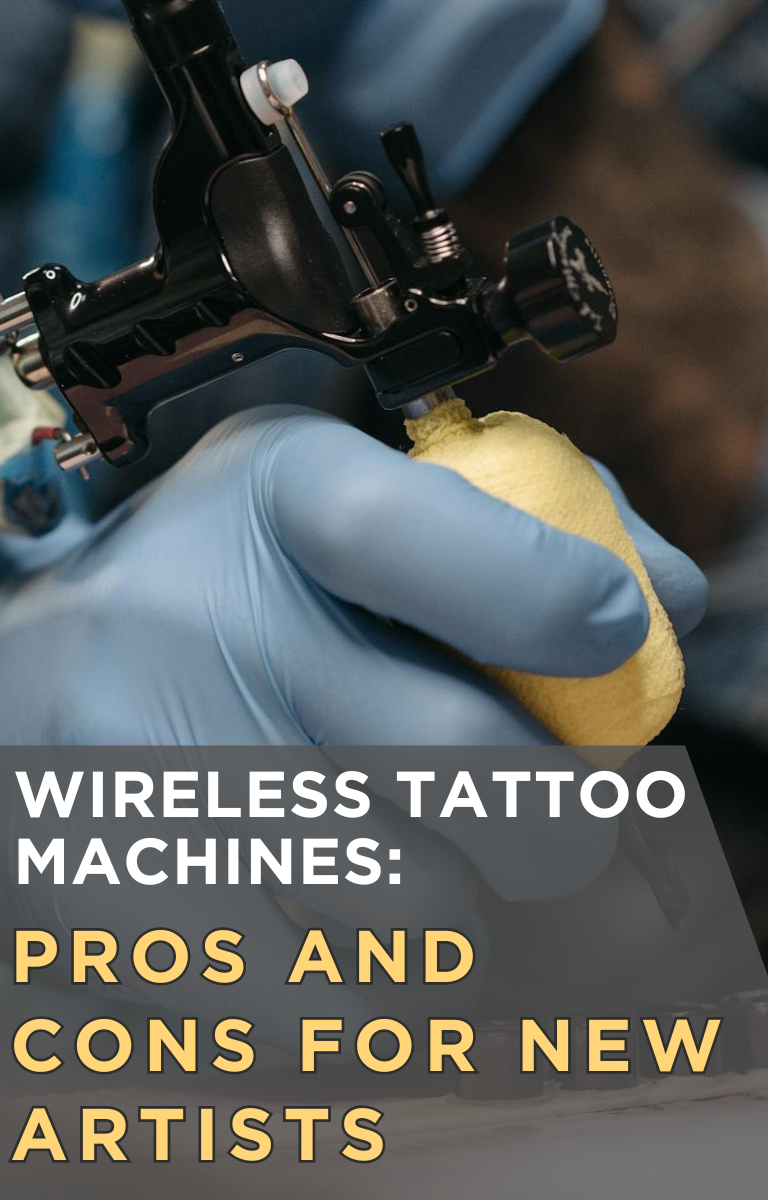
In This Article
- Key Takeaways
- What is a wireless tattoo machine?
- How do wireless tattoo machines work?
- What are the pros of wireless tattoo machines for new artists?
- What are the cons of wireless tattoo machines for beginners?
- How do you choose your first tattoo machine?
- What safety practices matter most with any tattoo machine?
- Why mentorship matters more than your machine
- Get Serious About Your Craft With Become A Tattoo Artist
- Ready to Become a Tattoo Artist?
- Frequently Asked Questions
A wireless tattoo machine is a cordless, battery-powered rotary pen. The battery attaches directly to the machine, so you don’t need a clip cord, a separate power supply or a foot pedal. Wireless pens have become a common sight in tattoo studios, and many new Tattoo Artists wonder whether they should start on one.
The short answer: wireless machines offer real advantages, but they come with trade-offs in cost, weight and battery management. This guide breaks down how they work, the pros and cons for beginners and how to choose your first machine. At Ink Different Tattoos, we’ve spent 15 years training new Tattoo Artists, and we’ve seen how much more technique matters than gear.
Key Takeaways
- Definition: Wireless tattoo machines are cordless rotary pens with a built-in or attachable battery, with no clip cord or foot pedal.
- Main pros: Freedom of movement, a cleaner station, faster setup and fewer surfaces to barrier-wrap.
- Main cons: Higher cost, battery management and the risk that smooth performance hides weak fundamentals.
- Real-world specs: A popular model like the FK Irons Spektra Flux weighs about 6.3 ounces and is rated for up to 10 hours per charge, depending on settings.
- For beginners: Fundamentals and in-person mentorship matter more than which machine you buy.
What is a wireless tattoo machine?
A wireless tattoo machine is a cordless rotary pen powered by a rechargeable battery, so you can tattoo without a clip cord, external power supply or foot pedal.
Instead of being tethered to your workstation, you attach a battery pack and press a button to start. The whole setup fits in your hand like a thick marker. FK Irons, for example, released the Spektra Flux as its first wireless tattoo pen, the successor to the popular Spektra Xion. imaxshop
Wireless pens are a newer chapter in a long history. Samuel O’Reilly, a New York Tattoo Artist, patented the first electric tattoo machine on December 8, 1891, according to the profile of O’Reilly. His machine was based on the rotary technology of Thomas Edison’s autographic printing pen. Today’s wireless rotaries build on that same basic rotary idea, with modern motors and batteries.

How do wireless tattoo machines work?
Wireless tattoo machines use a rotary motor powered by a rechargeable lithium battery that mounts onto the machine. The motor converts rotation into the needle’s up-and-down motion, and you adjust voltage with buttons or a display on the battery.
Coil machines work differently. They use electromagnets to drive the needle and traditionally run through a power supply and foot pedal. Rotary pens tend to run quieter and smoother, while coils are known for their distinct feel and buzz.
Here’s what one popular wireless pen offers, as an example of current specs:
- Weight: About 6.3 ounces (178 grams), per Painful Pleasures’ FK Irons Spektra Flux listing.
- Battery life: Around 10 hours, with roughly a 1.5-hour charge time, according to Tatsoul.
- What affects run time: Battery life depends on needle resistance, machine speed and stroke.
- Adjustments: Voltage adjusts in 0.5-volt increments, with an LED display for voltage and battery life.
Understanding how each machine type behaves is part of learning your tools. For a broader rundown, see these tools every beginner Tattoo Artist should know.
What are the pros of wireless tattoo machines for new artists?
The biggest pros are freedom of movement, a cleaner station, faster setup and fewer cords and surfaces to barrier-wrap.
When you’re learning, anything that reduces friction in your workflow helps you focus on the tattoo itself:
- No cords to fight: You can move around a client freely, without a clip cord tugging at your hand or limiting your angles.
- Simpler setup and breakdown: Fewer parts to wrap, connect and clean between clients helps you turn over your station faster.
- Consistent power: Rotary motors deliver steady, predictable needle movement, which can feel forgiving while you learn pressure control.
- Quieter operation: Many new Tattoo Artists find the softer hum less intimidating than a loud coil buzz.
- Easier cross-contamination control: Fewer cords means fewer surfaces to cover with barrier film, which supports hygiene practices under the OSHA Bloodborne Pathogens Standard.
- Portability: Some models charge by USB-C. The Spektra Flux, for example, can be charged in your car, on a laptop or from a battery pack.
What are the cons of wireless tattoo machines for beginners?
The main cons are higher upfront cost, battery management, the weight of the battery on the back of the pen and the risk that smooth power hides weak technique.
Consider these before you buy:
- Higher cost: Premium wireless pens are expensive. The FK Irons Spektra Flux lists at $899.99, or $1,099.99 with an additional battery.
- Battery management: Run time varies with your settings, so long sessions may require a spare battery or a charging rotation.
- Weight and balance: The battery sits on the back of the pen, which changes how the machine balances in your hand. That can be tiring until your grip and forearm strength develop.
- Tech upkeep: Some wireless pens need firmware updates. The Spektra Flux, for example, connects to an app by Bluetooth for firmware updates.
- False confidence: A smooth machine can mask inconsistent pressure, poor hand speed or weak line control. That’s why hands-on correction from a Mentor matters.
Pro Tip: Never let your gear become a crutch. The smoothest wireless pen won’t fix a line you never learned to pull correctly. Fundamentals come first.
How do you choose your first tattoo machine?
Prioritize comfort in your hand, reliability and your Mentor’s recommendation over brand hype. The right fit depends on your grip, your intended style and guidance from a working professional.
- Step 1: Talk to a working Tattoo Artist. Ask what your future Mentor uses and recommends for beginners. Real-world advice beats a sponsored review.
- Step 2: Hold it before you buy. Weight, balance and grip size matter. A pen that looks great in a video may feel wrong after a few hours.
- Step 3: Match the machine to your work. Stroke length affects how a machine handles lining, shading and color packing. Learn what each setting does first.
- Step 4: Budget for the full kit. Factor in batteries, cartridges, grip covers and barrier supplies, not just the pen itself.
- Step 5: Keep a backup. Whether wireless or corded, never rely on a single machine or battery for client work.
Many aspiring Tattoo Artists overspend on trendy gear before they can pull a clean line. Avoid that trap with our guide to the mistakes aspiring tattoo apprentices should avoid.
What safety practices matter most with any tattoo machine?
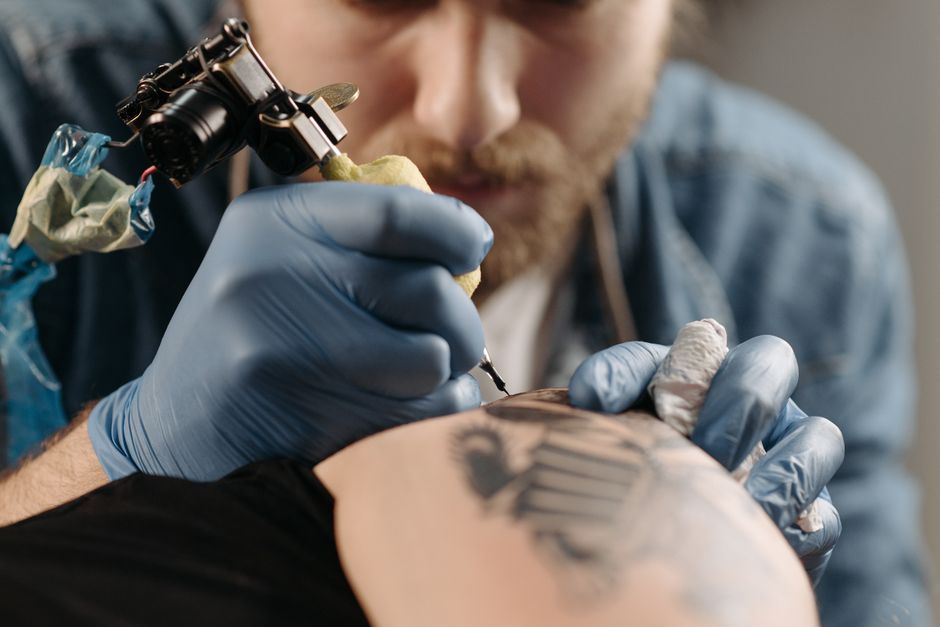
For any tattoo machine, the essentials are barrier film, single-use sterile needles and cartridges, cross-contamination control, bloodborne pathogens training and clear aftercare guidance for clients.
Wireless or corded, the rules don’t change. You barrier-wrap your machine, use a fresh cartridge for every client and dispose of sharps in approved containers. For client aftercare, the American Academy of Dermatology’s tips for caring for tattooed skin are a trusted reference.
Many states and localities require bloodborne pathogens training to tattoo legally. Requirements vary, so check your state. See how to get your tattoo license in Texas, tattoo license requirements in California or how long it takes to get a tattoo license in Colorado.
Why mentorship matters more than your machine
An in-person Mentor can correct your hand speed, needle depth, line weight and technique in real time. No wireless pen, video or online course can do that.
Tattooing has always been passed from one Tattoo Artist to the next, at the station, with someone watching your hands. That feedback is what turns a beginner into a professional clients trust and refer.
It’s also why tattooing is so hard to automate. Machines can’t replace human judgment, a steady hand built over thousands of hours or the trust between a Tattoo Artist and a client. Read more about why Tattoo Artists are still essential.
Get Serious About Your Craft With Ink Different
Ink Different’s Traditional Tattoo Apprenticeship teaches beginners everything from machine handling to bloodborne pathogens safety and licensing. It’s a hands-on college alternative for aspiring professional Tattoo Artists.
For 15 years, we’ve trained people with no prior art experience to become working Tattoo Artists. Tattoo apprenticeships are gaining ground as a solid alternative to college, and the career can pay off. According to ZipRecruiter, the average Tattoo Artist in the United States earns $106,858 a year.
What You Can Expect from Our Traditional Tattoo Apprenticeship
The Traditional Tattoo Apprenticeship runs 18 to 24 months across four phases, built for beginners with zero experience:
- Fundamentals: Drawing, machine handling, bloodborne pathogens safety and sanitation.
- Hands-on practice: Supervised work on synthetic skin to build muscle memory, line confidence and speed control.
- Live client work: Real client sessions under direct Mentor supervision.
- Licensing prep: Portfolio development and support with your state’s requirements.
You train in person with a Mentor at one of 60+ tattoo studios nationwide, supported by our “Good Humans” culture, a family-like community that has your back. Interest-free payment plans help make training more accessible.
A Career That Comes With Confidence
You’ll finish with job-ready skills, licensing support and a guaranteed job offer at one of Ink Different’s own tattoo studios.
Mentorship That Pushes Your Brand and Skills Further
Want to go further? Our one-year, in-person Master Mentorship lets you train alongside celebrity and award-winning Master Mentors, including Al Fliction, Liz Cook, Kyle Dunbar, Boneface, Jordi Pla and Marcel Oliveira. It’s built for mastering a specific style, growing your career and learning to run your own business.
Making Tattoo Training Accessible for Everyone
We offer Spanish-speaking locations in Denver, Orange County, NYC, Miami, San Antonio and San Diego, so language is never a barrier.

Ready to Become a Tattoo Artist?
Wireless or corded, the best machine is the one you’ve learned to use well. Skill comes from structured training, steady practice and a Mentor who corrects your hands as you learn. Each Mentor takes just two tattoo apprentices per tattoo studio, so seats fill up quickly.
Ready to become a Tattoo Artist? Apply now to Ink Different’s Traditional Tattoo Apprenticeship and start building an AI-proof career, with licensing support along the way.
Frequently Asked Questions
Are wireless tattoo machines good for beginners?
They can be. Wireless pens offer steady power and simple setup, but they cost more and require battery management. In-person mentorship matters more than the machine type.
How long does a wireless tattoo machine battery last?
It depends on the model and your settings. The FK Irons Spektra Flux is rated for up to about 10 hours per charge, but needle resistance, speed and stroke all affect real run time.
How much does a wireless tattoo machine cost?
Premium wireless pens can cost several hundred to over a thousand dollars. The FK Irons Spektra Flux, for example, lists at $899.99 with one battery.
Is wireless better than a coil tattoo machine?
Neither is universally better. Wireless rotaries offer freedom and cleaner stations, while coil machines have a distinct feel many Tattoo Artists prefer. Your Mentor can help match a machine to your style.
Do I need prior art experience to start a tattoo apprenticeship?
No. Ink Different’s Traditional Tattoo Apprenticeship is built for beginners and teaches drawing fundamentals, machine handling, bloodborne pathogens safety and sanitation.
What makes Ink Different different from a tattoo school?
Ink Different offers in-person mentorship at 60+ tattoo studios nationwide, award-winning Master Mentors, licensing support, interest-free payment plans and a guaranteed job offer at one of its own tattoo studios.