American Traditional Tattoos: Why the Style Refuses to Go Out of Fashion
September 17, 2026
How Long It Actually Takes to Feel Confident With a Tattoo Machine
September 17, 2026
In This Article
- Key Takeaways
- What Is Chicano Tattooing?
- Where Did Chicano Tattooing Come From?
- Who Shaped the Chicano Tattoo Style?
- What Makes Chicano Tattooing So Recognizable?
- Why Does Chicano Tattooing Still Matter Today?
- How Can You Learn to Tattoo in the Chicano Style?
- Get Serious About Chicano Tattooing With Become A Tattoo Artist
- Frequently Asked Questions
Maybe you have felt it every time you scroll past a black-and-grey portrait so real it seems to breathe, or a script so clean it looks carved into skin. Chicano tattooing is a black-and-grey fine-line tattoo tradition rooted in Mexican-American culture, born from prison and barrio life, known for religious imagery, script lettering, portraits, and lowrider symbolism.
At Ink Different Tattoos, we believe understanding where this craft came from is the first step toward carrying it forward, and building an income doing what you love.
Key Takeaways
- Origin: Chicano tattooing emerged from Mexican-American communities and prison culture in the American Southwest during the mid-20th century.
- Style characteristics: Fine black-and-grey shading, ornate script lettering, religious imagery, and photorealistic portraits define the tradition.
- Cultural significance: It preserves identity, honors personal stories, and represents handmade craft that AI cannot replicate.
- Learning path: A structured tattoo apprenticeship with live mentorship teaches drawing, machine control, safety, and single-needle technique from the ground up.
- Career stability: Tattooing is an AI-proof profession offering creative fulfillment, autonomy, and sustainable income for skilled artists.
What Is Chicano Tattooing?
Chicano tattooing is a black-and-grey tattoo style that grew out of Mexican-American culture, distinguished by fine-line detail, religious symbolism, elegant script, and realistic portraiture. It is less about color and more about depth, contrast, and story.
Every piece carries meaning: faith, family, loss, loyalty, and pride. Where some styles chase flash, Chicano work leans into restraint and craftsmanship.
This is a tradition where technique and emotion live side by side. Learning it means learning to say something, not just decorate.
Where Did Chicano Tattooing Come From?
Chicano tattooing came from Mexican-American communities in the American Southwest and Los Angeles, taking shape in the 1940s through the prison systems and barrios of California.
In an era with limited access to professional equipment, incarcerated artists built single-needle tools from whatever they had. That scarcity is exactly what created the style’s defining feature: delicate, fine-line black-and-grey work made with a single needle.
The imagery drew from Catholic faith, the Pachuco culture of the 1940s, and the lowrider movement that followed. Over decades, this underground craft moved from cell blocks and neighborhoods into legitimate tattoo studios, earning worldwide respect.
Remember: Great styles are rarely born in comfort. Chicano tattooing was forged from limitation, and that same resourcefulness still defines the best Tattoo Artists today.
Who Shaped the Chicano Tattoo Style?
Chicano tattooing was shaped by pioneering artists like Freddy Negrete, Jack Rudy, and Charlie Cartwright, who brought single-needle black-and-grey work from prisons into professional tattoo shops in the 1970s.
Freddy Negrete learned the craft while incarcerated, then helped bring it into legitimate studios in East Los Angeles. Jack Rudy and Charlie Cartwright refined the technique and helped invent the single-needle machine setup that made fine-line work possible on a professional scale.
These names matter because they remind you that every Tattoo Artist stands on the shoulders of someone who came before. The craft is passed hand to hand, Mentor to apprentice.
What Makes Chicano Tattooing So Recognizable?
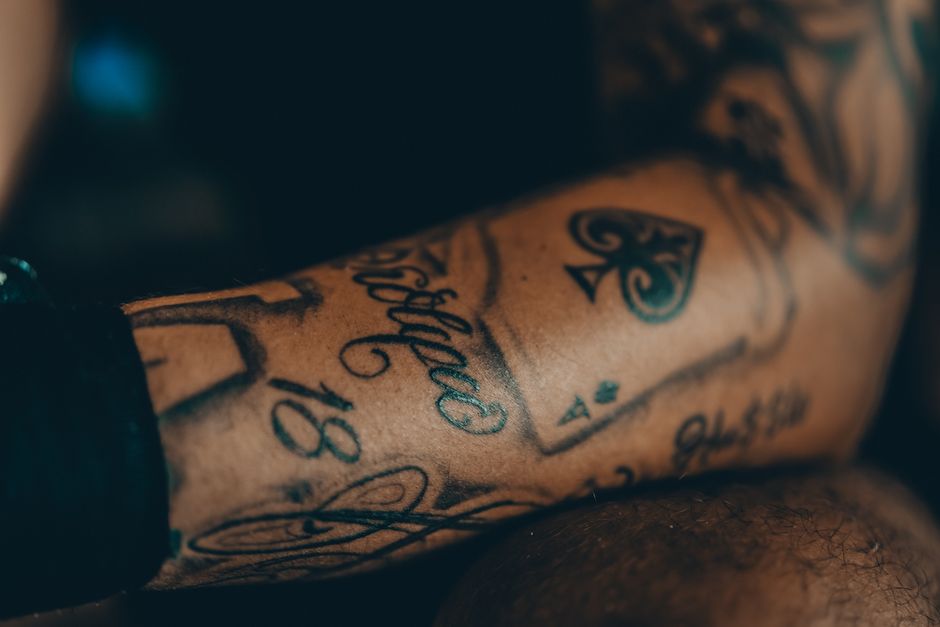
Chicano tattooing is instantly recognizable for its smooth black-and-grey gradients, ornate script lettering, religious icons, lowrider imagery, and lifelike portraits rendered with fine-line precision.
- Script lettering: Flowing, calligraphy-style words and names that require a steady hand and years of practice.
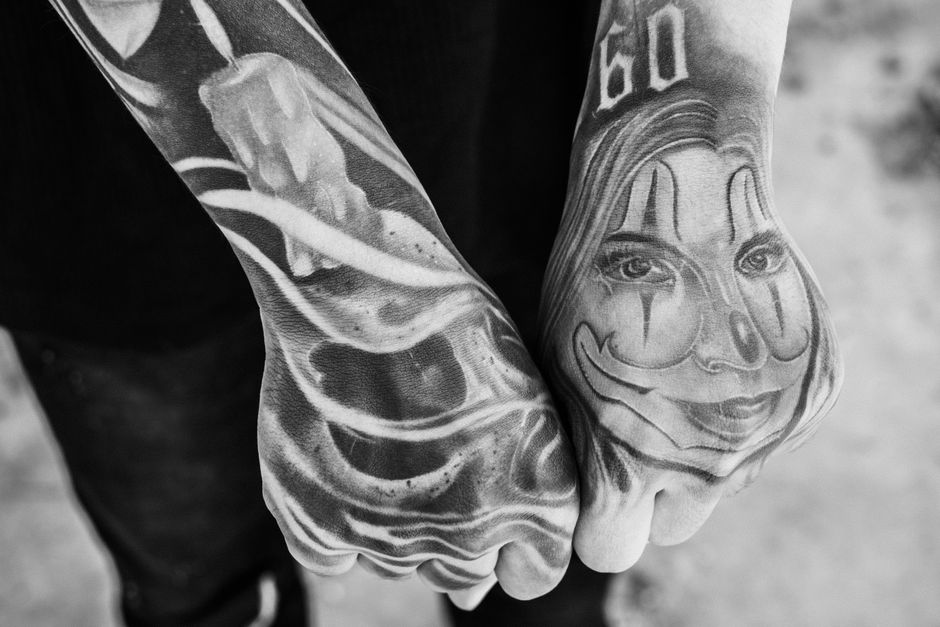
- Religious imagery: Praying hands, the Virgin of Guadalupe, rosaries, and clowns representing “smile now, cry later.”
- Portraits: Photorealistic faces of loved ones built entirely from grey tones and fine-line shading.
- Cultural symbols: Lowriders, roses, and payasa (clown) faces tied to barrio identity and personal stories.
Mastering these elements takes real instruction in shading, line control, and composition. That foundation is exactly what separates hobbyists from working professionals.
Why Does Chicano Tattooing Still Matter Today?
Chicano tattooing still matters because it preserves cultural identity, honors human stories, and represents a handmade craft that automation and AI cannot replicate.
As AI tools flood the creative world, the value of genuine human skill only rises. Craft and fine artists build careers on hand skills that machines struggle to imitate. A tattoo lives on human skin, applied by a human hand, carrying a human story.
We dig into that reality in our post on why tattoo artists are still essential. The short version: this craft is AI-proof. Your hands, your eye, and your empathy cannot be replaced.
Chicano tattooing also matters because it gives voice to a community and its history. When you learn it with respect, you become part of that ongoing story instead of just borrowing from it.

How Can You Learn to Tattoo in the Chicano Style?
You learn to tattoo in the Chicano style through a structured tattoo apprenticeship that teaches drawing fundamentals, single-needle technique, black-and-grey shading, and safe practice under a licensed Mentor.
- Build your foundation. Master drawing, shading, and grey-wash values on paper before you ever touch skin.
- Study the tradition. Learn the history, the icons, and the meaning so your work carries respect and depth.
- Learn machine control. Practice line work and smooth gradients on practice skin until your hand is steady and consistent.
- Master safety and hygiene. Understand cross-contamination and follow OSHA bloodborne pathogen standards for professional practice.
- Tattoo under supervision. Work on live clients with a mentor guiding every phase until you are job-ready and confident.
Before you dive in, avoid the common traps that stall beginners. Our guide on mistakes aspiring tattoo apprentices should avoid will save you time and frustration.
Get Serious About Chicano Tattooing With Become A Tattoo Artist
Ink Different Tattoos offers a Traditional Tattoo Apprenticeship built to take you from beginner to job-ready professional, with live mentorship, licensing support, and a supportive community behind you.
For 15 years, we have trained aspiring Tattoo Artists as a college alternative for people who want a real skill, not a pile of debt.
What You Can Expect from Our Traditional Tattoo Apprenticeship
Our Traditional Tattoo Apprenticeship runs 18 to 24 months across a four-phase structure, with hands-on, personalized training in professional tattoo studios. No prior art experience is required.
A Career That Comes With Confidence
You graduate with job-ready skills, a guaranteed job offer, and licensing support, ready to work as a professional Tattoo Artist. This is an AI-proof craft that puts income in your hands and control over your future.
Mentorship That Pushes Your Brand and Skills Further
Ready to go deeper into a specialty like Chicano black-and-grey? Our one-year, in-person Master Mentorship pairs you with award-winning Master Mentors including Al Fliction, Liz Cook, Kyle Dunbar, Boneface, and Jordi Pla. It is built for career growth, mastering a specific style, and business ownership.
Making Tattoo Training Accessible for Everyone
Because Chicano tattooing is rooted in Latino culture, accessibility matters deeply to us. We offer Spanish-speaking locations near Denver, in Orange County, near NYC, in Miami, in San Antonio, and near San Diego, so language never stands between you and your craft.
A general truth: Seats in a hands-on tattoo apprenticeship are limited by design, because live mentorship cannot be mass-produced.
Ready to Carry the Tradition Forward?
Chicano tattooing was born from resourcefulness, respect, and community. Those same values live inside every tattoo apprentice who chooses skill over shortcuts. Consider exploring a career change tattoo apprenticeship to shift your trajectory today.
Ready to become a tattoo artist? Apply now to Ink Different’s Traditional Tattoo Apprenticeship and start building an AI-proof career with licensing support along the way. Not sure yet? Fill out our quick questionnaire to get personalized support and find out if our tattoo apprenticeship is right for you.
Related reading: Tattoo apprenticeships as a college alternative and career change tattoo apprenticeship.
Frequently Asked Questions
What is Chicano tattooing?
Chicano tattooing is a black-and-grey fine-line tattoo style from Mexican-American culture featuring religious imagery, flowing script lettering, and photorealistic portraits.
Where did Chicano tattooing originate?
Chicano tattooing originated in Mexican-American prison systems and barrios of the American Southwest and Los Angeles during the 1940s and 1950s.
Do I need art experience to learn Chicano tattooing?
No. Ink Different’s apprenticeship teaches drawing, shading, and single-needle fundamentals from day one without requiring prior experience.
How long does a tattoo apprenticeship take?
Most apprenticeships take 18 to 24 months. Ink Different’s program uses a 4-Phase structure, starting remote and finishing hands-on in tattoo studios.
What makes Ink Different different?
We offer 15 years of experience, live mentorship, award-winning mentors, licensing support, and Spanish-speaking locations across the country.
Is tattooing a stable career in the age of AI?
Yes. Tattooing is a handmade craft applied to human skin, making it AI-proof and rewarding genuine skill and human judgment that machines cannot replicate.