How to Become a Tattoo Artist When You Grew Up Nowhere Near a Tattoo Shop
September 16, 2026
Where Chicano Tattooing Came From and Why It Still Matters
September 17, 2026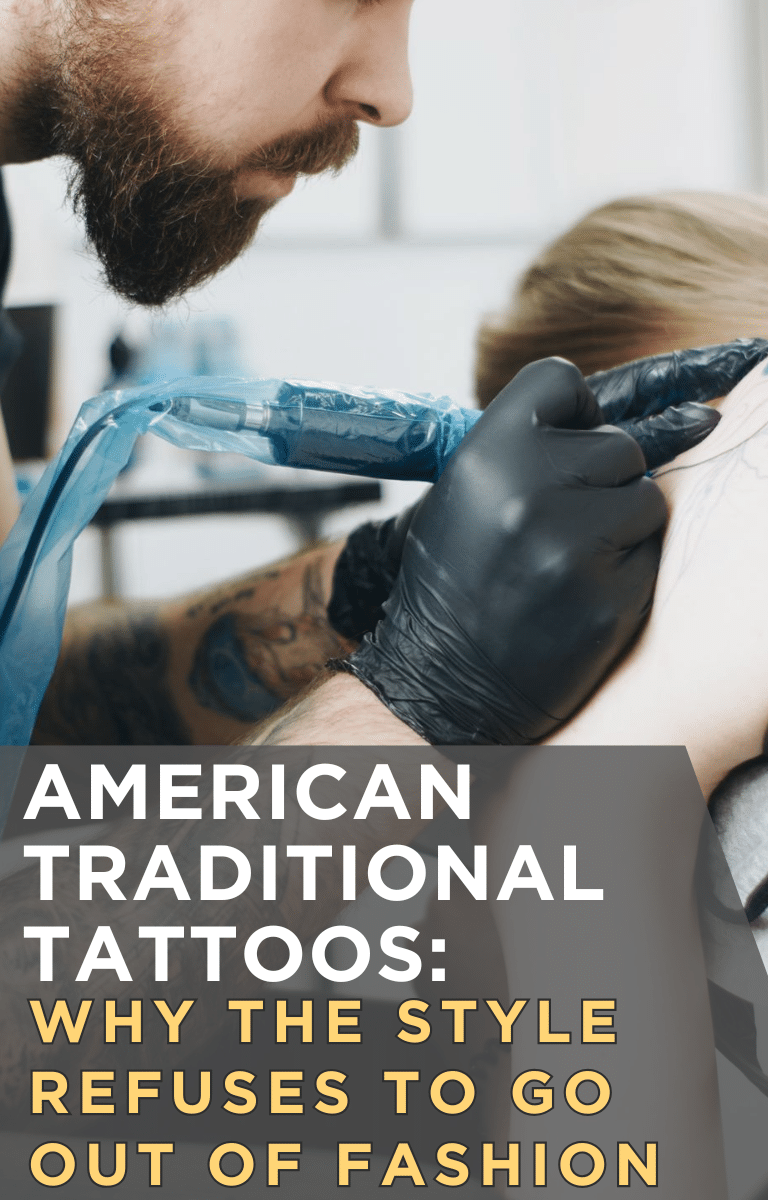
In This Article
- Key Takeaways
- What Are American Traditional Tattoos?
- Why Has the Style Refused to Go Out of Fashion?
- Where Did American Traditional Tattoos Come From?
- How Do You Recognize American Traditional Work?
- How Do You Learn to Tattoo in This Style?
- Why Is This Craft AI-Proof?
- How Does Ink Different Train You?
- Ready to Become a Tattoo Artist?
- FAQ
You have probably walked past a bold eagle, a dagger, or a red rose inked in thick black lines and felt something stir. American traditional tattooing is a bold, high-contrast tattoo style. It’s defined by thick black outlines, a limited color palette, and iconic imagery like eagles, roses, anchors, and daggers that refuses to fade from skin or culture.
At Ink Different Tattoos, we have spent 15 years training aspiring Tattoo Artists to master enduring styles like this one, turning creative passion into a sustainable, AI-proof career.
Key Takeaways
- Definition: American traditional is a bold style with thick outlines, limited colors, and iconic motifs like eagles and roses.
- Longevity: The style endures because bold lines and solid color heal and age better than delicate work.
- Origins: Sailors and pioneers like Norman “Sailor Jerry” Collins and Bert Grimm shaped American traditional tattooing in 20th-century ports.
- Career fit: Learning this foundational style through a hands-on tattoo apprenticeship builds an AI-proof craft you own for life.
- Training: Ink Different’s Traditional Tattoo Apprenticeship runs 18 to 24 months with real mentorship and licensing support.
What Are American Traditional Tattoos?
American traditional tattoos are a classic style. They’re built on thick black outlines, a limited palette of red, yellow, green, and black, and recognizable imagery such as eagles, roses, anchors, hearts, and pin-ups that read clearly from any distance. The look is bold, clean, and unmistakable from across a room.
This style is sometimes called “old school” tattooing. It prizes simplicity over fuss. Every element serves a purpose, and nothing is wasted. The result is a design that reads clearly whether you are standing two feet away or twenty.
Think of it as the foundation of the entire craft. Just as a musician learns scales before improvising, most working Tattoo Artists cut their teeth on traditional imagery. It’s because it teaches the fundamentals that everything else is built on.
Why Has the Style Refused to Go Out of Fashion?
American traditional refuses to fade because its bold lines and solid color saturation heal cleanly and stay readable for decades. That’s unlike delicate styles that blur as skin ages. The style was engineered for the long haul.
Human skin changes over time. It stretches, wrinkles, and loosens. A thin, faint tattoo can turn into a smudge within a decade, but a thick-lined traditional piece holds its shape. This is not nostalgia, but engineering. The pigment sits deeper, the lines stay crisp, and the colors remain saturated because traditional artists understood skin better than any trend-chaser.
There is also an emotional truth here. People crave images that mean something and last a lifetime. A traditional anchor, swallow, or heart carries the same weight today as it did a century ago. This durability is also why understanding why tattoo artists are still essential in a changing world matters: because human skill creates art that machines cannot replicate or improve upon.
Where Did American Traditional Tattoos Come From?
American traditional tattooing grew from early 20th-century port cities and military culture, popularized by pioneering artists like Norman “Sailor Jerry” Collins, Bert Grimm, and later Ed Hardy, who refined the palette and bold aesthetic we recognize today. Sailors carried these designs across oceans and back to shore, making each symbol a story.
Ports like Honolulu and San Diego became epicenters where sailors got inked before shipping out. Each symbol had meaning: an anchor for stability, a swallow for a safe return home, a nautical star to guide the way, a rose for love.
Norman Collins, better known as Sailor Jerry, refined the palette and pushed the craft toward the crisp, saturated look we recognize today. The Smithsonian Institution’s tattoo spotlight has documented how tattooing wove itself into American identity through these decades, making traditional tattooing not just an aesthetic but a cultural landmark.
Did you know? Many of the color pigments, needle configurations, and safe practices modern artists rely on trace directly back to innovations pioneered by early traditional tattooers experimenting in their studios during the 1920s and 1930s.
How Do You Recognize American Traditional Work?
You can spot American traditional work by its heavy black outlines, minimal shading, flat blocks of primary color, and instantly recognizable subjects like roses, eagles, panthers, and pin-up figures that look the same across a thousand tattoo studios.
- Bold outlines: Thick, confident black lines frame every element, never thin, always decisive.
- Limited palette: Red, yellow, green, and black do most of the heavy lifting; gray rarely appears.
- Flat color: Solid fills rather than soft gradients, ombre, or photorealism.
- Iconic subjects: Roses, eagles, daggers, anchors, hearts, swallows, pin-ups, panthers, and nautical themes appear again and again.
- Clear composition: Designs read well from a distance and never feel cluttered or overstuffed.
This clarity is why the style is so beginner-friendly to learn and so hard to master. The rules are simple, but executing them perfectly takes real practice under a skilled Mentor.
How Do You Learn to Tattoo in This Style?
You learn American traditional tattooing by mastering line work first, then color packing, then composition, all under the guidance of an experienced Mentor in a working tattoo studio where real clients trust you with their skin.
- Study the classics. Fill sketchbooks with roses, eagles, daggers, anchors, and swallows to internalize the language and proportions of the style.
- Drill your line work. Bold, smooth outlines are the backbone of every traditional piece. Practice until your lines are confident and consistent.
- Learn color packing. Solid, even color fills without patchiness or bleeding separate amateurs from working professionals.
- Understand skin and safety. Study OSHA bloodborne pathogen standards and proper aftercare guidance from the American Academy of Dermatology so your clients heal beautifully.
- Work under a Mentor. Real feedback on real skin, in person, in a real studio is where the craft truly clicks and becomes sustainable.
Before you dive in, it helps to know the pitfalls. Read our guide on mistakes aspiring tattoo apprentices should avoid, study the tools every beginner tattoo artist should know, and explore how to build your brand as an artist from day one.
Why Is This Craft AI-Proof?
Tattooing is AI-proof because it demands a human hand working on living, moving skin, reading a client’s comfort in real time, building trust, and adapting decisions on the fly, none of which a machine can replicate or automate away.
Craft and fine artists are a field grounded in hands-on skill, personal creativity, and direct client relationships. Tattooing sits squarely in this space, where human judgment, touch, and emotional intelligence are the entire point.
While so many desk jobs feel one software update away from disappearing, a working Tattoo Artist owns a skill that people will always want from another human being. If you are weighing whether this is a smarter investment than college debt, our post on tattoo apprenticeships as a college alternative lays out the case clearly.
How Does Ink Different Train You?
Ink Different’s Traditional Tattoo Apprenticeship is an 18 to 24 month, four-phase program that takes you from beginner to job-ready Tattoo Artist, with real mentorship, hands-on studio time, and licensing support built in.
You build your artistic foundations, learning to draw, understanding proportion, and studying the language of traditional imagery. Then you finish hands-on in real tattoo studios, working under experienced Mentors. No prior art experience is required.
What You Can Expect from Our Traditional Tattoo Apprenticeship
- Four-phase structure: Foundations (remote), supervised practice, live client work, and licensing prep.
- Personalized hands-on training: Real, honest feedback from experienced Mentors in person, not in a classroom.
- Beginner-friendly: Built for people starting from scratch with no art or tattoo experience.
- Licensing support: We guide you through state requirements and job-ready standards so you can legally and confidently tattoo.
- Multilingual options: Spanish-speaking locations in Denver, Orange County, NYC, Miami, San Antonio, and San Diego.
A Career That Comes With Confidence: By the time you finish, you carry job-ready skills and licensing support, not empty promises. Seats are limited because live mentorship cannot be mass-produced. To sharpen your online presence early, study these platforms to help tattoo artists build their brand.
Mentorship That Pushes Your Skills Further
If you want to accelerate your growth, our Master Mentorship is a one-year in-person track that puts you next to celebrity and award-winning Master Mentors. It is built for both beginners and experienced Tattoo Artists who want to master a specific style, like American traditional, and own their business.
Making Tattoo Training Accessible for Everyone
We offer Spanish-speaking locations in Denver, Orange County, NYC, Miami, San Antonio, and San Diego, so language never stands between you and your craft. Our “Good Humans” culture means you join a supportive, family-like community of fellow artists and mentors, not a lonely, competitive classroom. We believe that the best tattoo artists come from diverse backgrounds, and we actively recruit and support artists of color, LGBTQ+ artists, and people from working-class backgrounds who have historically been excluded from the industry.
Ready to Become a Tattoo Artist?
The bold lines of American traditional have survived a hundred years because they were built to last, and so can a career built on this craft.
Ready to become a Tattoo Artist? Apply now to Ink Different’s Traditional Tattoo Apprenticeship and start building an AI-proof career, with real mentorship and licensing support along the way. Prefer to test the waters first? Fill out our quick questionnaire to get personalized support and find out if our tattoo apprenticeship is right for you.
Frequently Asked Questions
What defines the American traditional tattoo style?
American traditional is defined by thick black outlines, a limited palette of red, yellow, green, and black, and iconic imagery like eagles, roses, anchors, and daggers that remain instantly recognizable across decades.
Why do American traditional tattoos age so well?
Bold outlines and solid color saturation heal cleanly and hold their shape as skin stretches and loosens over time, keeping traditional pieces readable for life.
Do I need art experience to learn this style?
No. Ink Different’s apprenticeship is built for complete beginners and teaches drawing, line work, color packing, and safety from the ground up with no prior experience required.
How long does the tattoo apprenticeship take?
Ink Different’s Traditional Tattoo Apprenticeship takes 18 to 24 months across four phases, beginning remotely for foundations and finishing hands-on in working studios.
What makes Ink Different different from a tattoo school?
Ink Different offers live, in-person mentorship from experienced artists, a supportive “Good Humans” culture, 15 years of proven experience, and built-in licensing support, functioning as a real alternative to college.
Is a tattoo career really AI-proof?
Yes. Tattooing requires a human hand on living skin, real-time client judgment, and personal trust, skills that automation cannot replicate or replace, making it a sustainable career.