
How to Open a Tattoo Shop: Licenses, Costs and the Path From Apprentice to Owner
November 27, 2026
Unique Jobs That Pay Well Without a Degree
November 27, 2026
In This Article
- Key Takeaways
- What are tattoo shop jobs besides tattooing?
- Why do non-tattooing roles matter in a studio?
- What does a tattoo shop manager do?
- What is the role of a front desk coordinator?
- Where does a Tattoo Apprentice fit inside the studio?
- What creative and business roles support a studio?
- How can you get a tattoo shop job with no experience?
- How does Ink Different train you for a studio career?
- Ready to step inside a Tattoo Studio?
- FAQ
Tattoo shop jobs go well beyond tattooing. Most tattoo studios rely on a front desk coordinator to handle bookings and deposits, a shop manager to run operations and compliance and often a licensed piercer, along with tattoo apprentices, social media help and bookkeeping. Front desk roles are a common way in for beginners. A tattoo apprenticeship is the path to becoming a Tattoo Artist.
These roles matter because a tattoo studio is a regulated business. In Florida, for example, every tattoo establishment needs a license, and the application includes a biomedical waste permit, according to the Florida Department of Health. Someone on the team has to keep all of that in order. Below, we break down the main roles, what they pay and how to get started with no experience.
Key Takeaways
- Core roles: Front desk coordinator, shop manager, piercer, tattoo apprentice and resident Tattoo Artists.
- Front desk pay: Receptionists earned a median of $38,010 a year in May 2025, according to the BLS.
- Piercers are regulated: States like California regulate piercing alongside tattooing.
- Best path to the chair: A tattoo apprenticeship is how you go from studio support to tattooing clients.
- No experience needed: Many support roles, and Ink Different’s Traditional Tattoo Apprenticeship, welcome beginners.
What are tattoo shop jobs besides tattooing?
Tattoo shop jobs besides tattooing include front desk coordinator, shop manager, piercer, tattoo apprentice, social media manager and bookkeeper. Each one keeps the studio running.
Most people only picture the Tattoo Artist and the client. Behind that chair, a team makes sure appointments happen, stations are clean and supplies are stocked.
Knowing these roles helps you find a way in. Many working Tattoo Artists started somewhere other than the chair.
Why do non-tattooing roles matter in a studio?
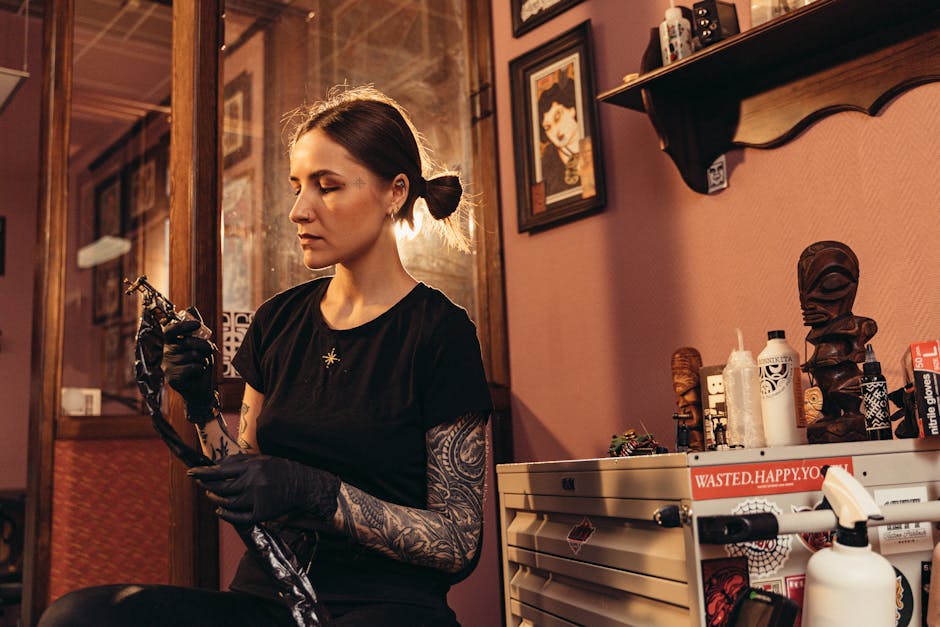
A tattoo studio is a business. Smooth scheduling, clean stations, compliance and happy clients let Tattoo Artists focus on their work.
A talented Tattoo Artist without support can get buried in scheduling, deposits, supply orders and sanitation records. Support staff protect the Tattoo Artist’s time and the studio’s reputation.
These roles are also a great way to learn. Working near the chair every day, you see how a tattoo studio really runs.
What does a tattoo shop manager do?
A tattoo shop manager handles scheduling, staffing, supply orders, client issues, licensing paperwork and day-to-day operations.
Compliance is a big part of the job. Tattoo studios must follow the OSHA Bloodborne Pathogens Standard, which requires employers to keep a written exposure control plan and train workers with occupational exposure when they start and at least once a year. Managers often track facility licenses, inspections and renewals too.
If you’re organized and calm under pressure, managing a shop teaches you the business side of tattooing. Some managers go on to run their own studios, and the path from tattoo apprentice to tattoo studio owner often runs through roles like this. Ink Different Master Mentor Liz Cook has spoken at the Shop Owners Success Summit about creating and leading a high-demand tattoo studio.
What is the role of a front desk coordinator?
A front desk coordinator is the first person clients meet. They manage bookings, deposits, consultations, messages and the overall client experience.
It’s one of the most common ways into a tattoo studio. You don’t need to draw well to do it. You need warmth, reliability and attention to detail. Receptionists in general typically need a high school diploma or equivalent and learn on the job, according to the U.S. Bureau of Labor Statistics, which reports a median of $38,010 a year in May 2025.
Front desk staff also shape how often clients come back, a big part of building a loyal client base for the whole studio. Many studios now manage scheduling with software, and choosing the right booking app can make the job much easier.
From the desk, you see everything: how Tattoo Artists talk to clients, how designs get approved and how deposits protect everyone’s time.
Where does a tattoo apprentice fit inside the studio?
A tattoo apprentice is training to become a Tattoo Artist under an experienced Mentor. Apprentices often help with studio tasks early on, then move through drawing, setup and eventually supervised tattooing.
The role and duties of a tattoo apprentice can include cleaning stations, preparing stencils and watching a Mentor work, all while building skills step by step.
This is where the biggest career change happens. Once you’re established as a Tattoo Artist, income can grow with your skills and client base. ZipRecruiter puts the average Tattoo Artist salary at $106,858 a year, though pay varies widely.
Many apprentices juggle a lot while they train. Ink Different apprentice Joe Kendall, for example, balances two jobs and kids with his tattoo training.

What creative and business roles support a studio?
Creative and business roles include piercers, social media managers, content creators, merchandise designers and bookkeepers.
Piercer
Many tattoo studios also offer piercing. It’s a regulated role in many states. California’s Safe Body Art Act covers tattooing, body piercing and permanent cosmetics, and requires practitioners to register with their local enforcement agency, according to a California Assembly analysis.
Other roles
- Social media manager: Grows the studio’s audience and books clients through content. Knowing the best platforms for building a brand helps here.
- Content creator: Captures healed photos, time-lapses and the studio’s story.
- Merchandise designer: Designs apparel, prints and other products.
- Bookkeeper: Tracks income, expenses and taxes.
Pay for these roles varies widely. Some studio careers can reach the level of jobs that pay $30 an hour without a degree, especially once you’re an established Tattoo Artist.
How can you get a tattoo shop job with no experience?
Start in a support role or a tattoo apprenticeship, show up reliably, build a drawing portfolio and commit to learning the craft properly.
- Build a basic portfolio. Fill a sketchbook with linework, lettering and designs.
- Visit tattoo studios in person. Be respectful and ask about front desk or apprentice openings. It helps to know how to ask for a tattoo apprenticeship without getting turned away.
- Know where to look. Understanding how tattoo shops hire apprentices helps you find real openings.
- Learn the basics of safety and aftercare. Study hygiene and client aftercare, such as the American Academy of Dermatology’s tips for caring for tattooed skin.
- Choose structured training. A tattoo apprenticeship with a dedicated Mentor removes the guesswork.
- Meet licensing requirements. Rules vary by state, as this state-by-state tattoo licensing map shows.
Pro Tip: Treat a front desk job like an audition. Reliability and professionalism get noticed, and they’re the same traits Mentors look for in tattoo apprentices. Showing up unprepared is one of the most common apprentice mistakes.
How does Ink Different train you for a studio career?
Ink Different’s Traditional Tattoo Apprenticeship runs 18 to 24 months across four phases, with in-person mentorship and licensing support.
For 15 years, Ink Different has trained aspiring Tattoo Artists as a college alternative. No prior art experience is needed.
What You Can Expect from Our Traditional Tattoo Apprenticeship
In the Traditional Tattoo Apprenticeship, you train with a Mentor at one of 60+ tattoo studios nationwide.
- Phase 1, Art and Design Principles: Drawing, shading, digital design and building a portfolio.
- Phase 2, Machine Mastery and Practice Tattooing: Hand-control exercises, machine operation, lining, shading and color packing.
- Phase 3, Supervised Tattoos: Tattooing real skin under a Mentor’s direct supervision.
- Phase 4, Junior Artist Externship: Building client relationships and refining your skills while you start earning.
- Interest-free payment plans: Flexible payments make training more accessible.
A Career That Comes With Confidence
You’ll finish with job-ready skills, licensing support and a guaranteed job offer at one of Ink Different’s own tattoo studios. Our “Good Humans” culture means you join a supportive, family-like community. Strong studio culture is something Master Mentor BillyJack Gunter builds through Thursday night critiques and team building.
Mentorship That Pushes Your Brand and Skills Further
The one-year, in-person Master Mentorship lets you train with celebrity and award-winning Master Mentors like Liz Cook and BillyJack Gunter, with a focus on mastering a specific style, growing your career and preparing to own a tattoo studio.
Making Tattoo Training Accessible for Everyone
We offer Spanish-speaking locations in Denver, Orange County, New York City, Miami, San Antonio and San Diego.
Ready to step inside a tattoo studio?
Every role in a tattoo studio is a way in, and a tattoo apprenticeship is the one that leads to the chair. For many people, it’s also a practical alternative to college. Each Mentor takes just two tattoo apprentices per tattoo studio, so seats fill up quickly.
Ready to become a Tattoo Artist? Apply now to Ink Different’s Traditional Tattoo Apprenticeship and start building a hands-on tattoo career with licensing support along the way.
Frequently Asked Questions
What jobs are there in a tattoo shop besides tattooing?
Front desk coordinator, shop manager, piercer, tattoo apprentice, social media manager, content creator, merchandise designer and bookkeeper.
How much does a tattoo shop front desk job pay?
Pay varies by studio and location. For reference, receptionists overall earned a median of $38,010 a year in May 2025, according to the BLS.
Do piercers need a license?
In many states, yes. California, for example, requires body art practitioners, including piercers, to register with their local enforcement agency. Check your state’s rules.
Can I work in a tattoo studio with no experience?
Yes. Front desk and support roles often welcome beginners, and the Traditional Tattoo Apprenticeship is built for people with no art background.
Is the front desk a good way to become a Tattoo Artist?
It’s a great way to learn how a studio runs, but a structured tattoo apprenticeship is the direct path to tattooing clients.
How long does a tattoo apprenticeship take?
Most take one to three years. Ink Different’s Traditional Tattoo Apprenticeship takes 18 to 24 months across four phases.
Sources (all checked November 25, 2026)
- Florida Department of Health: Tattoo Establishment Licensure Requirements
- OSHA: Bloodborne Pathogens Standard
- U.S. Bureau of Labor Statistics: Receptionists
- California Assembly Committee on Health: AB 223 (Safe Body Art Act) analysis
- American Academy of Dermatology: Caring for tattooed skin
- ZipRecruiter: Tattoo Artist Salary