6-Month Trade School Programs: What You Can Learn Fast
November 16, 2026
Tattooing for Beginners: What to Learn First
November 17, 2026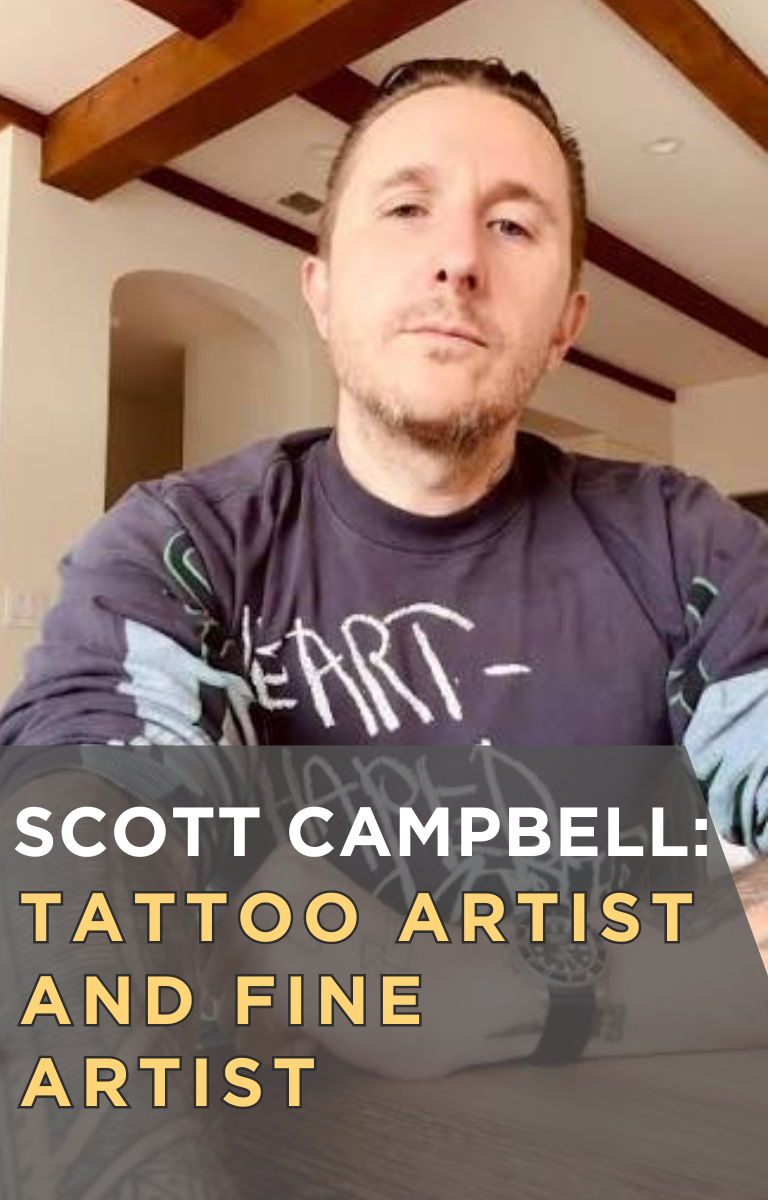
In This Article
- Key Takeaways
- Who Is Scott Campbell?
- How Did Scott Campbell Become a Tattoo Artist?
- What Makes Scott Campbell a Fine Artist Too?
- Why Does Scott Campbell’s Story Matter to You?
- What Can You Learn From His Path?
- How Do You Start Your Own Tattoo Career?
- What You Can Expect From Our Traditional Tattoo Apprenticeship
- How Does Master Mentorship Push You Further?
- Ready to Become a Tattoo Artist?
- FAQ
Scott Campbell is a Louisiana-born Tattoo Artist and fine artist, best known for founding Saved Tattoo in Williamsburg, Brooklyn. He left biochemistry studies at the University of Texas to learn tattooing in San Francisco. He has since tattooed well-known clients and built an international fine art career, with work ranging from sculptures carved out of U.S. currency to his “Whole Glory” tattoo performances.
His path shows how far strong tattooing fundamentals can take you, from the chair to galleries around the world. Here’s a look at his career, based on published profiles and interviews, and what aspiring Tattoo Artists can take from it.
Key Takeaways
- Who he is: Scott Campbell, a Tattoo Artist and fine artist born in Louisiana in 1977.
- How he started: He left biochemistry at the University of Texas, moved to San Francisco and learned tattooing at Picture Machine.
- Saved Tattoo: He opened Saved Tattoo in Williamsburg, Brooklyn, after moving to New York in 2005.
- Fine art: His work includes carved U.S. currency sculptures, watercolors and graphite drawings inside eggshells.
- Whole Glory: A project where participants put an arm through a hole in a wall and let him tattoo whatever he chose.
Who Is Scott Campbell?
Scott Campbell is an American Tattoo Artist and fine artist. He’s known both for his tattoo work and for bringing tattoo culture into galleries.
According to Artsy, Campbell was born in New Orleans in 1977. His Brooklyn tattoo studio, Saved Tattoo, has a client list that includes fashion designer Marc Jacobs and celebrities such as Heath Ledger, Josh Hartnett, Orlando Bloom, Helena Christensen and Penelope Cruz.
In a National Endowment for the Arts audio documentary, Campbell described himself as “an artist/tattoo artist/dad.” The NEA notes that he grew up in New Orleans and later Texas, and has worked in San Francisco, New York City, Mexico City, and Los Angeles.
How Did Scott Campbell Become a Tattoo Artist?
Campbell left a biochemistry path at the University of Texas, moved to San Francisco and learned tattooing at Picture Machine, one of California’s oldest tattoo studios.
Artsy reports that he began tattooing after abandoning a career as a biochemist, and learned the craft at Picture Machine. According to Dazed, he was a teenager when he left for California and found his way into that tattoo studio. Five years later, he crossed the country to open his own shop in New York.
It’s also noted that when he moved to New York in 2005, he opened his own tattoo studio, Saved Tattoo.
Takeaway: Campbell learned in a working tattoo studio, building his skills hands-on before opening his own.
What Makes Scott Campbell a Fine Artist Too?
Campbell brought the precision of tattooing into other mediums, earning recognition in the fine art world.
According to SHOWstudio, his work beyond skin includes:
- Carved sculptures made from U.S. currency.
- A series of watercolor paintings based on his experiences during a six-week stay in a maximum-security prison in Mexico City.
- Graphite drawings done on the insides of eggshells.
Whole Glory
One of his best-known projects is “Whole Glory.” It debuted in November 2015 at Milk Studios in New York City. It was later presented in other cities, including Los Angeles, Moscow and London. In the London version, it also included tattooed pig skins sewn together with his designs.
In the NEA documentary, Campbell explained the concept: for four days, anyone could put their arm through a hole in a wall, and he’d tattoo whatever he wanted on it. Participants didn’t see the tattoo until it was finished.
He has also worked with fashion brands. Dazed reports that he collaborated on Louis Vuitton’s Spring/Summer 2011 menswear collection.
Campbell’s career shows how far tattooing skills can travel. Strong linework, shading and composition carry over into many art forms. That human skill is part of why Tattoo Artists are still essential.
Why Does Scott Campbell’s Story Matter to You?
Campbell’s story shows that a serious tattoo career can start from an unexpected place, including a completely different field.
He began in the sciences, not art school. He chose tattooing, learned it in a working tattoo studio and kept building from there. Whatever your background, the path into tattooing starts with training and practice.
What Can You Learn From His Path?
A few lessons stand out from Campbell’s career:
- Commit to the craft: He left a different career path to learn tattooing.
- Learn in a real tattoo studio: He built his skills at Picture Machine before opening his own shop.
- Master the fundamentals: His precision carried over into sculpture, painting and drawing.
- Build a recognizable name: His reputation opened doors to galleries and fashion collaborations.
- Keep experimenting: Projects like “Whole Glory” pushed tattooing in new directions.
When you’re ready to share your work, explore these platforms to help new and aspiring Tattoo Artists build their brand.
How Do You Start Your Own Tattoo Career?
Start with structured, hands-on training, master the fundamentals under an experienced Mentor and meet your state’s licensing requirements.
- Step 1: Make the decision. Set a realistic plan for your time and finances.
- Step 2: Learn the fundamentals. Drawing, linework and machine handling come first. Start with the tools every beginner Tattoo Artist should know.
- Step 3: Train in a working tattoo studio. Move from practice to supervised work with a Mentor’s guidance.
- Step 4: Build safe habits. Learn hygiene and the OSHA Bloodborne Pathogens Standard, plus client aftercare based on the American Academy of Dermatology’s tips for caring for tattooed skin.
- Step 5: Get licensed. See how to get your tattoo license in Texas, tattoo license requirements in California and how long it takes to get a tattoo license in Colorado.
Before you start, read about the mistakes aspiring tattoo apprentices should avoid.
What You Can Expect From Our Traditional Tattoo Apprenticeship?
Ink Different’s Traditional Tattoo Apprenticeship runs 18 to 24 months across four phases, with personalized, hands-on training and licensing support.
For 15 years, Ink Different has trained aspiring Tattoo Artists as a college alternative. You train in person with a Mentor at one of 60+ tattoo studios nationwide, and no prior art experience is required.
- Phase 1, Art and Design Principles: Drawing, shading, digital design and building a portfolio.
- Phase 2, Machine Mastery and Practice Tattooing: Hand-control exercises, machine operation, lining, shading and color packing.
- Phase 3, Supervised Tattoos: Tattooing real skin under a Mentor’s direct supervision.
- Phase 4, Junior Artist Externship: Building client relationships and refining your skills while you start earning.
You’ll finish with job-ready skills, licensing support and a guaranteed job offer at one of Ink Different’s own tattoo studios. Interest-free payment plans help make training more accessible, and our “Good Humans” culture means you never grow alone. According to ZipRecruiter, the average Tattoo Artist in the United States earns $106,858 a year as of November 2026.
Note: Each Mentor takes just two tattoo apprentices per tattoo studio, so seats fill up quickly.
How Does Master Mentorship Push You Further?
Ink Different’s one-year, in-person Master Mentorship lets you train with celebrity and award-winning Master Mentors to master a specific style, grow your career, and build your own business.
If Campbell’s mix of skill and brand-building inspires you, this is where that ambition can grow. You’ll learn from Master Mentors including Al Fliction, Liz Cook, Kyle Dunbar, Boneface, Jordi Pla and Marcel Oliveira. It works for beginners and experienced Tattoo Artists alike.
We also offer Spanish-speaking locations in Denver, Orange County, NYC, Miami, San Antonio and San Diego.
Ready to Become a Tattoo Artist?
Scott Campbell’s career started with a decision to take tattooing seriously and learn it in a working tattoo studio. Yours can start with structured training and a Mentor in your corner.
Ready to become a Tattoo Artist? Apply now to Ink Different’s Traditional Tattoo Apprenticeship and start building an AI-proof career with licensing support along the way.
Frequently Asked Questions
Who is Scott Campbell the Tattoo Artist?
Scott Campbell is an American Tattoo Artist and fine artist born in Louisiana in 1977. He founded Saved Tattoo in Williamsburg, Brooklyn, and is known for fine art projects like “Whole Glory.”
Where did Scott Campbell learn to tattoo?
He learned at Picture Machine in San Francisco, one of California’s oldest tattoo studios, after leaving biochemistry studies at the University of Texas.
What is Scott Campbell’s “Whole Glory” project?
Participants put an arm through a hole in a wall, and Campbell tattooed whatever he chose without them seeing it until it was finished. It debuted in New York in 2015 and was later shown in other cities.
What fine art is Scott Campbell known for?
His work includes sculptures carved from U.S. currency, watercolors based on time in a Mexico City prison and graphite drawings inside eggshells.
Do I need art experience to become a Tattoo Artist?
No. Ink Different’s Traditional Tattoo Apprenticeship is built for beginners and starts with art and design principles.
Where can I do a tattoo apprenticeship near me?
Ink Different offers the Traditional Tattoo Apprenticeship at 60+ tattoo studios nationwide, including Spanish-speaking locations in Denver, Orange County, NYC, Miami, San Antonio and San Diego.
Related Posts: Plant the Seed: Start Your Tattoo Apprenticeship This Spring, 9 Tools Every Beginner Tattoo Artist Should Know, and Why Tattoo Artists Are Still Essential.