Stable Jobs, Lower Recidivism: The Case for Pennsylvania’s Tattoo Training Initiative
October 2, 2026
Tattoo License Exams: What to Study
October 2, 2026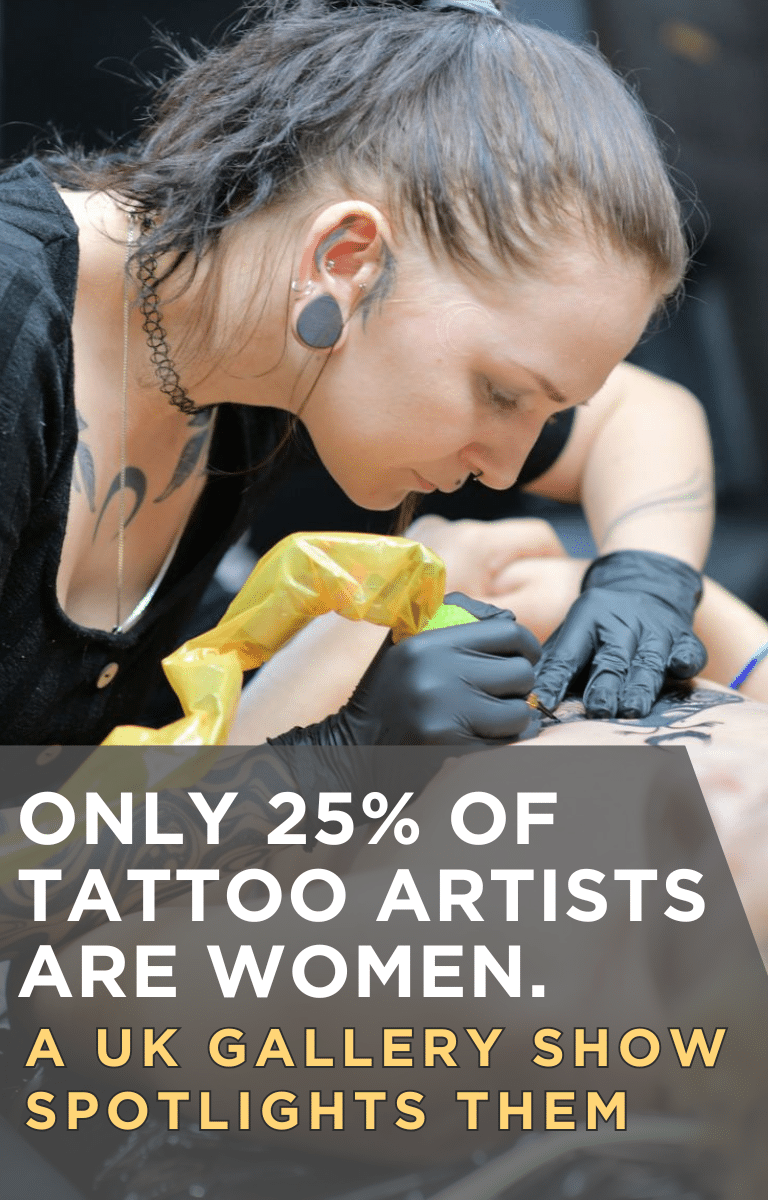
In This Article
- Key Takeaways
- What is the UK gallery show spotlighting women Tattoo Artists?
- Why are only 25% of Tattoo Artists women?
- Why does representation in the tattoo industry matter to you?
- Who are the women who shaped tattooing history?
- How can you break into a male-dominated industry?
- What steps lead to a career as a Tattoo Artist?
- What does Ink Different’s Traditional Tattoo Apprenticeship offer?
- How does the Master Mentorship push you further?
- Ready to claim your space at the table?
- Frequently Asked Questions
Only about one in four Tattoo Artists around the world is a woman. A new exhibition in Canterbury, England, wants people to see that number differently. It’s called Mark Making: Women making their mark in tattoo arts. The show follows three local women from their first sketches on paper to finished tattoos on skin.
At Ink Different Tattoos, we see this story as more than a headline. It shows what happens when talented women get the access they deserve. It might also be the nudge you’ve been waiting for. Let’s look at the show, the numbers behind it, and how you can build a career in this industry.
Key Takeaways
- The news: A free exhibition at the University for the Creative Arts in Canterbury showcases three local women in tattooing.
- The number: About 25% of Tattoo Artists worldwide are women, and that share is rising.
- The barrier: For decades, training depended on informal, invite-only mentorship that shut many women out.
- The fix: A structured tattoo apprenticeship gives everyone the same shot, regardless of gender or art background.
- The future: Tattooing is a human, AI-proof career built on skill, trust, and creativity.
What is the UK gallery show spotlighting women Tattoo Artists?
The show is a free group exhibition at the Herbert Read Gallery at the University for the Creative Arts (UCA) in Canterbury. It uses painting, photography, and collage to reveal the creative process behind body art.
Each of the three women featured shows a different side of the craft:
- MJ Smith displays early colour sketches on paper, showing how a tattoo design evolves long before it reaches skin.
- Amia Town, a Kent-based Tattoo Artist and university graduate, shows original paintings made for the exhibition. They reveal how fine art shapes her tattoo work. One piece is her digital design Shield Maiden.
- Katya Taylor, a Canterbury photographer, presents portraits taken inside local tattoo studios. Her subjects are female-presenting and female-identifying Tattoo Artists across the region.
The goal is to challenge old ideas about the industry. The exhibition presents Tattoo Artists as serious fine art creators first and foremost. For anyone who’s ever doubted whether tattooing counts as “real” art, this show is a clear answer.

Why are only 25% of Tattoo Artists women?
Access, not ability, has been the biggest barrier. Traditionally, you had to be personally taken on by a Tattoo Artist who knew you, liked you, and trusted you.
That informal system worked against outsiders, and women especially. If you didn’t know the right people, the door stayed closed no matter how talented you were.
Professor Charlotte Frost, Associate Dean of UCA’s Canterbury School of Art, Architecture & Design, puts the 25% figure in context. She says the number is rising. She also points out that beyond a few niche forums, we still don’t know enough about women’s work or their impact on the industry.
The same story is playing out in the US. InkedMag recently profiled a Tattoo Artist named Madison who faced those closed doors firsthand. She now runs Atelier Bloom in Spring City, Pennsylvania, where she gives up-and-coming women the chances she didn’t get.
The real problem: There was never a shortage of talented women. There was a shortage of open doors and structured training.
Why does representation in the tattoo industry matter to you?
Seeing someone like you succeed makes the career feel reachable. When the old barriers come down, more people step through the door.
If you’re stuck in a job that drains your creativity, you might hear a voice saying, “People like me don’t do that.” A gallery full of women’s tattoo work quiets that voice. It swaps doubt for evidence.
Representation also makes tattoo studios better. New perspectives bring new styles, new clients, and fresh ideas to the craft. Your voice isn’t a bonus. It’s part of what keeps the industry growing.
Who are the women who shaped tattooing history?
Women have been tattooing for well over a century. The Canterbury show builds on that legacy.
A few names worth knowing:
- Maud Wagner is widely known as the first female Tattoo Artist in the US. In the early 1900s, she learned hand-poked tattooing from her future husband, Gus Wagner.
- Mildred Hull tattooed in New York’s Bowery in the 1930s. She was one of the first women to run her own tattoo studio.
- Jessie Knight is often called Britain’s first female Tattoo Artist. She started in the 1920s, working alongside her father.
These women worked when tattooing was even harder to break into than it is now. Today’s rising number of women in tattooing isn’t really a new wave. It’s a continuation of their work.
At Ink Different, our Master Mentors include Liz Cook, an award-winning Tattoo Artist whose work shows that talent has no gender. Training under Mentors like her is how you write yourself into the next chapter.
How can you break into a male-dominated industry?
You break in with structured mentorship, strong fundamentals, and a portfolio that speaks for itself.
The old gatekeeping worked because training was scarce and hidden. A structured tattoo apprenticeship changes that. You don’t have to wait to be noticed or hope someone vouches for you. You choose your training and get started.

What steps lead to a career as a Tattoo Artist?
The path is clear: build your foundation, train under a Mentor, practice safely, work with clients, and get licensed.
- Step 1: Commit to the decision. Decide that your creative potential deserves more than a dead-end job. This choice is the seed everything else grows from.
- Step 2: Learn the fundamentals. Study drawing, line work, and how a Tattoo Machine actually behaves. You can start remote before you ever touch skin.
- Step 3: Train under a Mentor. Live, in-person guidance is what separates hobbyists from professionals. This is where feedback becomes fast growth.
- Step 4: Practice safely. Learn hygiene and safety to the standard set by OSHA bloodborne pathogen standards before working on clients.
- Step 5: Work with live clients. Under supervision, you start building the confidence and roster that carry your career.
- Step 6: Earn your license. Complete your training and pursue state licensing with support, so you can work as a professional.
Curious how long that final step takes? Licensing timelines vary by state, so it helps to check specifics like how long a tattoo license takes in Colorado.
What does Ink Different’s Traditional Tattoo Apprenticeship offer?
Ink Different’s Traditional Tattoo Apprenticeship takes 18 to 24 months across four phases. It takes you from beginner to job-ready professional.
We built it as a real college alternative for people who want to become professional Tattoo Artists. You don’t need any prior art experience. You train in real tattoo studios, where the craft actually happens.
Here’s what you get:
- Personalized hands-on training: Live, in-person mentorship that fits how you learn.
- Real tattoo studio experience: You learn in working tattoo studios alongside professional Tattoo Artists.
- Beginner-friendly structure: No experience required. We teach from the ground up.
- Job-ready skills and licensing support: You finish ready to work, not just hoping for a chance.
Tattooing is also an AI-proof career. Software can generate a design, but it can’t sit with a client and turn their story into a tattoo.
A career that comes with confidence: We’ve been training professional Tattoo Artists since 2011. You finish with job-ready skills, licensing support, and a guaranteed job offer at one of our tattoo studios.
How does the Master Mentorship push you further?
The Master Mentorship is a one-year, in-person experience where you train directly with award-winning Master Mentors. It’s built to help you master a style, grow your career, or prepare to open your own tattoo studio.
It’s open to beginners and experienced Tattoo Artists who want intensive skill-building. You learn from Master Mentors like Al Fliction, Liz Cook, and Kyle Dunbar, who’ve earned their reputations at the top of the craft.
If you want to build a brand and a business, this is where you sharpen every skill. There are no shortcuts to excellence. You get there by training with people who’ve already walked the path.
Ready to claim your space at the table?
The Canterbury exhibition proves women belong in tattooing, and the 25% figure is climbing. That number isn’t a ceiling. It’s a starting line.
Every Mentor at Ink Different takes on only two tattoo apprentices per tattoo studio, so seats are limited. Real mentorship can’t be mass-produced.
We also offer Spanish-speaking Tattoo Artist training in Miami, Brooklyn/NYC, Denver, Orange County, Naples, Oklahoma City, San Antonio, and San Diego. Language should never stand between you and this career.
Ready to become a Tattoo Artist? Apply now to Ink Different’s Traditional Tattoo Apprenticeship and start building an AI-proof career with licensing support along the way. Or fill out our quick questionnaire to get personalized support and find out if the tattoo apprenticeship is right for you.
Frequently Asked Questions
Is it too late for me to become a Tattoo Artist?
No. People of all ages and backgrounds start a tattoo apprenticeship. What matters is your commitment, not your age or starting point.
Do I need prior art experience to start a tattoo apprenticeship?
No. Ink Different’s Traditional Tattoo Apprenticeship teaches drawing and fundamentals from day one, so no formal art background is required to begin.
How long does the Traditional Tattoo Apprenticeship take?
It takes 18 to 24 months across four phases, with hands-on training in our tattoo studios and licensing support.
What makes Ink Different different from other training options?
You get live, in-person mentorship, a supportive “Good Humans” culture, and a guaranteed job offer at one of our tattoo studios. We’ve been training Tattoo Artists since 2011.
Is tattooing a good career for women entering a male-dominated field?
Yes. Only about 25% of Tattoo Artists worldwide are women, but that number is rising. Structured mentorship removes the old barriers, so your work defines your success.
Will robots or AI replace human Tattoo Artists?
No. Tattooing takes human connection, judgment, and hand skill. Software can’t honor a client’s story the way a Tattoo Artist can.