
How to Become a Tattoo Artist in Hawaii
August 17, 2026
How to Become a Tattoo Artist in Maine
August 18, 2026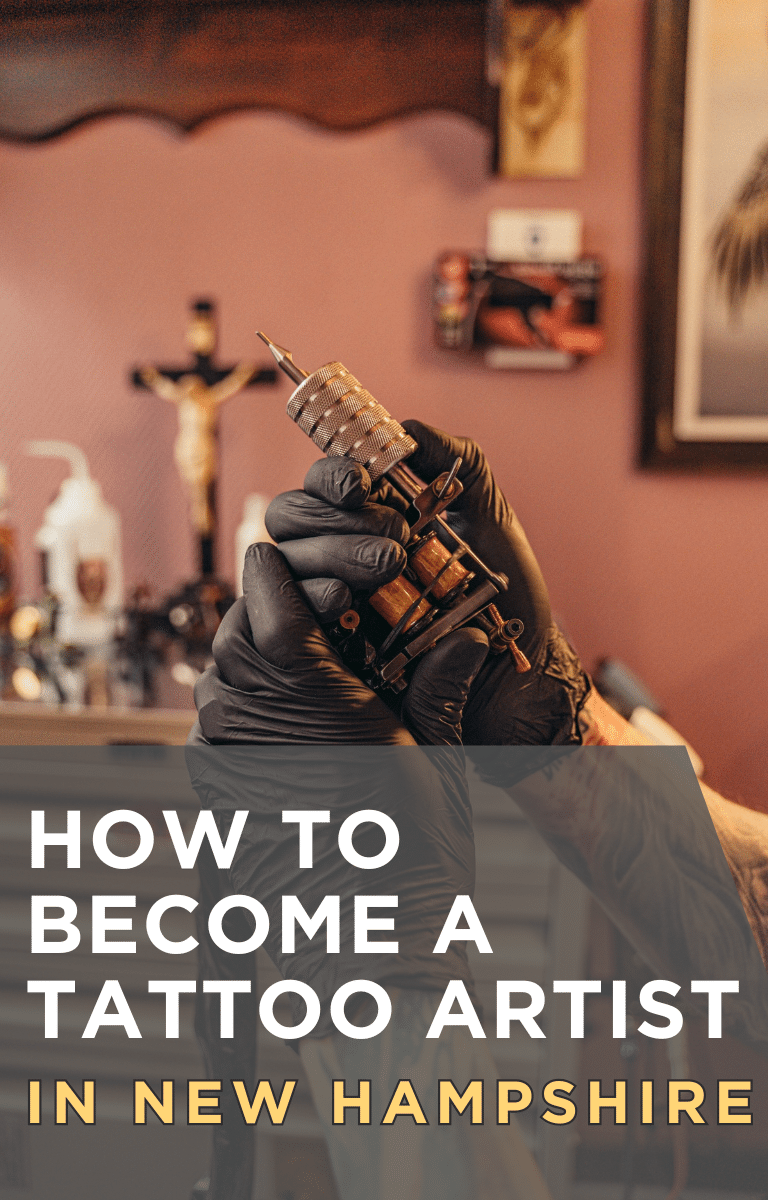
Tattooing is one of the few creative careers that artificial intelligence cannot automate, which makes it a durable, hands-on path to a professional income. This guide walks you through exactly how the state regulates the craft and how to build your career the right way.
Table of Contents
- How does New Hampshire regulate tattooing?
- What does that mean for you as an aspiring artist?
- How do you get a tattoo license in New Hampshire step by step?
- What does it cost to become licensed?
- Moving to New Hampshire from another state
- What mistakes should you avoid?
- How do you learn to tattoo with Ink Different?
- Frequently Asked Questions
Key Takeaways
- Regulator: The New Hampshire OPLC and its Advisory Board of Body Art Practitioners oversee tattoo licensing statewide.
- Model: New Hampshire uses a state-license system, so you earn one credential recognized across the state.
- Training: Expect 1,500 to 3,000 hours of tattoo apprenticeship depending on your track.
- Exam: An initial licensure exam is typically required before you can practice.
- Income: A Professional Tattoo Artist can earn over $106,000 a year according to ZipRecruiter.
How does New Hampshire regulate tattooing?
New Hampshire regulates tattooing through the Office of Professional Licensure and Certification and its Advisory Board of Body Art Practitioners under N.H. Rev. Stat. Ann. § 314. This is a statewide, state-license model, which means your credential is issued and recognized at the state level rather than by individual cities or counties.
The Advisory Board of Body Art Practitioners sets the standards that determine who may legally tattoo the public. Because the state controls licensing directly, you do not have to navigate a patchwork of separate local rules to get started.
New Hampshire is known for a high training-hour bar relative to most states. That reflects a serious commitment to skilled practice, and it means the credential carries real weight once you earn it.
What does that mean for you as an aspiring artist?
It means your route to working legally runs through a structured tattoo apprenticeship, substantial supervised training hours, and a licensure exam rather than a shortcut. New Hampshire expects you to prove both craft and safety knowledge before you tattoo clients on your own.
The verified requirements point to 1,500 to 3,000 hours of tattoo apprenticeship depending on whether your track is Tattoo or Esthetics. That is a significant investment of time, and it rewards artists who treat the trade like a genuine profession.
Think of this as a college alternative. Instead of accumulating student debt for a degree that AI may erode, you are building a hands-on, human-centered skill set that clients will always want performed by a person.
Tip: Choose your track early. The hours you need can vary between the Tattoo and Esthetics paths, so confirm which one matches your career goal with the OPLC before you begin.
How do you get a tattoo license in New Hampshire step by step?
You earn a tattoo license New Hampshire recognizes by completing a qualifying tattoo apprenticeship, logging the required training hours, passing the initial licensure exam, and applying through the OPLC. Here is the sequence to follow.
- Build your artistic foundation. Strengthen your drawing, shading, and design skills before you ever pick up a Tattoo Machine. A strong portfolio is what a good Mentor looks for.
- Find a Mentor and enroll in a Tattoo Apprenticeship. Learning under an experienced Tattoo Artist in a licensed Tattoo Studio is how you accumulate legitimate, supervised hours.
- Complete 1,500 to 3,000 training hours. The exact number depends on your track. Keep careful documentation of every hour, since the state relies on this record.
- Prepare for and pass the licensure exam. An initial licensure exam is typically required. Study bloodborne pathogen safety, sanitation, and the standards your Advisory Board sets.
- Submit your application to the OPLC. File with the Advisory Board of Body Art Practitioners and provide your documentation of training and exam results.
- Begin practicing legally. Once licensed, you can work in a New Hampshire Tattoo Studio and start building your client base.
Always confirm the current application forms, exam details, and any renewal steps directly with the OPLC, since specific procedures can change and you should never guess.
What does it cost to become licensed?
New Hampshire charges licensing fees through the OPLC, but the exact amounts are not listed in our verified facts, so you should confirm current costs directly with the state. Never rely on secondhand numbers for something as important as your credential.
Beyond state fees, budget for the real cost of learning the craft. That includes your tattoo apprenticeship, quality equipment, supplies, and study materials for the exam. These are investments in an AI-proof career, not throwaway expenses.
Compare this against the price of a traditional college degree. With a Professional Tattoo Artist able to earn over $106,000 a year according to ZipRecruiter, a focused tattoo apprenticeship can be a far more direct route to a strong income.
Warning: Do not trust unofficial fee figures floating around online. The OPLC website is the only authoritative source for current licensing costs in New Hampshire.
Moving to New Hampshire from another state
New Hampshire handles out-of-state artists through a documentation-based transfer process, meaning you must supply records of your training and credentials rather than automatically converting an existing license. The state reviews what you bring and decides how it applies.
If you already hold a license or have logged substantial hours elsewhere, gather thorough documentation: proof of your training hours, your existing credential, and any exam records. Organized paperwork makes the transition smoother.
Because New Hampshire sets a high training-hour bar, be prepared for the possibility that your prior hours may be evaluated against the state standard. Contact the OPLC early so you understand exactly what documentation the Advisory Board of Body Art Practitioners expects from you.
What mistakes should you avoid?
The most common mistakes are skipping documentation, choosing an unlicensed Mentor, and underestimating New Hampshire’s training-hour requirement. Each one can delay your license or force you to redo work.
- Not tracking your hours. With 1,500 to 3,000 hours on the line, meticulous records are essential. Log every session from day one.
- Learning outside a legitimate setting. Real training happens in a licensed Tattoo Studio under a qualified Mentor.
- Calling equipment the wrong thing. Professionals say Tattoo Machine, not gun, and Tattoo Studio, not parlor. Language signals seriousness.
- Ignoring the exam. An initial licensure exam is typically required, so prepare for it well in advance rather than treating it as an afterthought.
- Guessing at rules. When a detail is unclear, verify it with the OPLC instead of assuming. Bad information costs time and money.
How do you learn to tattoo with Ink Different?
Ink Different is a college alternative that trains you through a structured Traditional Tattoo Apprenticeship with real Mentors and licensing support along the way. We focus on turning artists into working professionals.
Our approach pairs you with experienced Tattoo Artists who guide you through the fundamentals of drawing, machine control, sanitation, and client care. You build the supervised hours and practical skill set that a state like New Hampshire expects.
We also help you understand the licensing path so you are not navigating the OPLC process alone. From documentation to exam preparation, our goal is to set you up to build an AI-proof career with confidence.
Ready to become a Tattoo Artist? Apply now to Ink Different’s Traditional Tattoo Apprenticeship and start building an AI-proof career, with licensing support along the way.
Frequently Asked Questions
Do I need a state license to tattoo in New Hampshire?
Yes. New Hampshire uses a state-license model administered by the OPLC and its Advisory Board of Body Art Practitioners, so you must be licensed before you tattoo the public legally.
How many training hours does New Hampshire require?
New Hampshire requires roughly 1,500 to 3,000 hours of tattoo apprenticeship depending on whether you follow the Tattoo or Esthetics track. Confirm your specific total with the OPLC.
Is there an exam to get a tattoo license in New Hampshire?
Yes. An initial licensure exam is typically required. Prepare by studying sanitation, bloodborne pathogen safety, and the standards set by the Advisory Board of Body Art Practitioners.
Can I transfer my tattoo license from another state?
New Hampshire uses a documentation-based transfer process. You submit records of your training and existing credentials for review rather than automatically converting a license, so contact the OPLC early.
How much can a Tattoo Artist earn?
According to ZipRecruiter, a Professional Tattoo Artist can earn over $106,000 a year. Income depends on skill, reputation, and how consistently you build your client base.
Where can I find official New Hampshire licensing information?
Use the New Hampshire OPLC website for the Advisory Board of Body Art Practitioners. It is the authoritative source for current fees, forms, exam details, and requirements.