
How to Become a Tattoo Artist in Colorado
August 7, 2026
How to Become a Tattoo Artist in South Carolina
August 7, 2026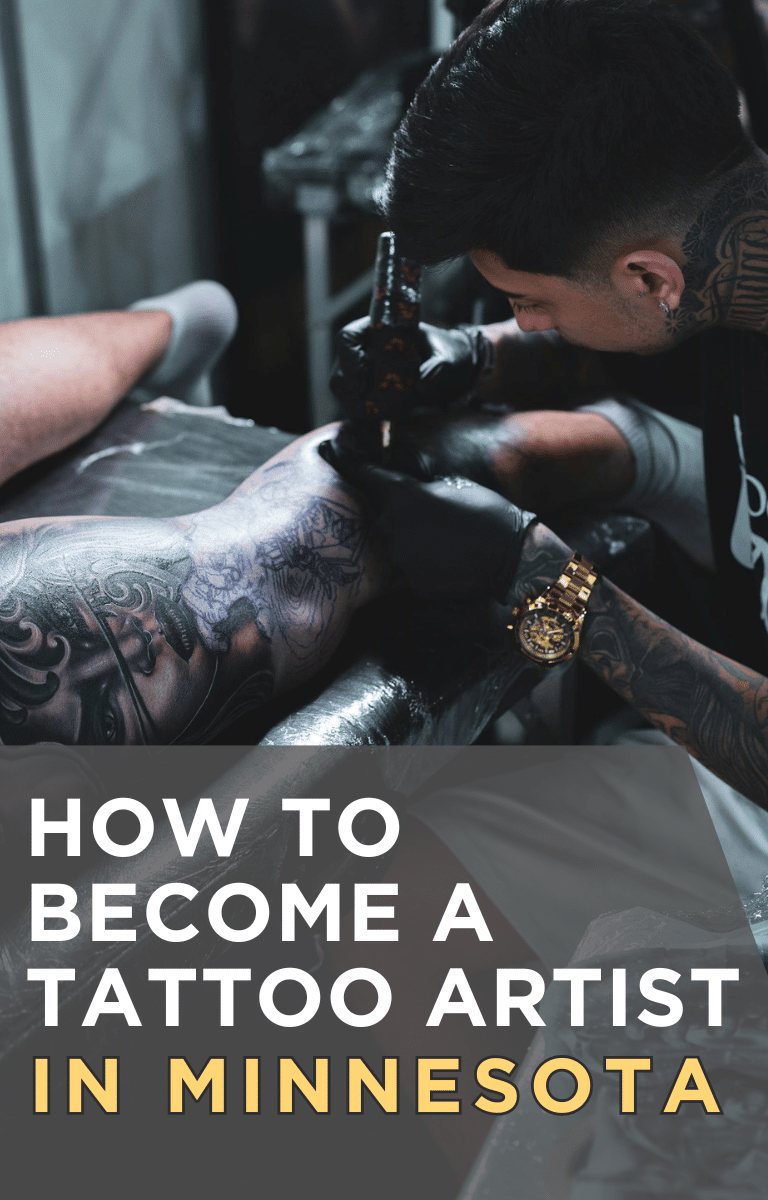
Getting a tattoo license in Minnesota starts with understanding what the Minnesota Department of Health expects from a working Tattoo Artist. A Minnesota tattoo license is the state-issued Body Art Technician credential that lets you tattoo clients legally under Minnesota Statutes 146B.07.
Tattooing is a hands-on, human craft that technology cannot replace. Learning the trade the right way sets you up for a stable, respected career. This guide walks you through the full path from beginner to licensed Tattoo Artist in Minnesota.
Key Takeaways
- Regulator: The Minnesota Department of Health (MDH) issues the Body Art Technician license under Minnesota Statutes 146B.07.
- Age: You must be at least 18 years old to hold a tattoo license in Minnesota.
- Supervised hours: Minnesota requires 200 hours of supervised tattooing, logged and verified by a notarized affidavit.
- Health training: A current bloodborne pathogens (BBP) certification, earned within the last year, is required.
- Earning power: A Professional Tattoo Artist can earn over $106,000 per year, according to ZipRecruiter.
Minnesota Tattoo Licensing at a Glance
Minnesota licenses tattooing at the state level through the Minnesota Department of Health, which issues a Body Art Technician license. Here are the core facts drawn directly from state requirements.
- Regulator: Minnesota Department of Health (MDH)
- Governing law: Minnesota Statutes 146B.07
- Licensing model: State license (Body Art Technician)
- Minimum age: 18 or older
- Health requirement: Current BBP certification within the last year
- Supervised hours: 200 hours of supervised tattooing, logged and verified by notarized affidavit
For the most current fee amounts and application details, always confirm directly with the Minnesota Department of Health. Fees are not listed here because they should be verified at the official source.
How Does Minnesota Regulate Tattooing?
Minnesota regulates tattooing through the Minnesota Department of Health, which issues a statewide Body Art Technician license under Minnesota Statutes 146B.07. This means the authority to tattoo comes from the state, not from individual cities or counties. That is good news for your career because a single, clear state standard makes the path predictable.
The Body Art Technician license is the credential that says you have met the state’s health, safety, and training expectations. Because the Minnesota Department of Health oversees the process, requirements like supervised hours and bloodborne pathogens training are consistent no matter where in the state you plan to work.
Regulating tattooing at the state level protects the public and raises the professional bar for everyone in the industry. It also means your credential carries true weight once you earn it.
What Does State Licensing Mean for You?
State licensing means you have one clear, official pathway to becoming a legal Tattoo Artist in Minnesota rather than a patchwork of local rules. You know exactly who the authority is and what they require.
It also means you cannot skip the fundamentals. The 200 hours of supervised tattooing exist to make sure you are safe, skilled, and ready before you work independently. This is why a structured tattoo apprenticeship with an experienced Mentor is the most reliable way to prepare.
The upside is that a licensed Tattoo Artist has a durable, respected profession. Tattooing is a hands-on craft built on human trust and skill, which is exactly why it cannot be automated away. It is one of the most genuinely AI-proof careers available.
How Do You Get a Tattoo License in Minnesota Step by Step?
To get a tattoo license in Minnesota, you must be 18, earn a current BBP certification, complete 200 supervised tattooing hours logged by notarized affidavit, and apply to the Minnesota Department of Health. Here is the path broken down.
Step 1: Confirm You Meet the Age Requirement
You must be at least 18 years old to hold a Body Art Technician license in Minnesota. This is a firm minimum set by the state.
Step 2: Earn Your Bloodborne Pathogens Certification
Minnesota requires a current BBP certification earned within the last year. This training covers safe handling of needles, cross-contamination prevention, and infection control, all of which align with OSHA safety principles.
Step 3: Complete 200 Hours of Supervised Tattooing
The heart of your preparation is 200 hours of supervised tattooing. These hours must be logged and verified by a notarized affidavit, so accurate record keeping matters from day one. The Minnesota Department of Health provides a Temporary Technician Hours Log to help you track this.
Step 4: Work Under a Qualified Supervisor
Your supervised hours need to happen under an approved supervisor. The Minnesota Department of Health publishes apprenticeship and supervisor information so you can confirm your Mentor meets state expectations before you begin logging time.
Step 5: Apply to the Minnesota Department of Health
Once your hours and BBP certification are in order, you submit your application and supporting documentation to the state. Use the official MDH Body Art Technician information page to confirm the current forms and submission steps.
Tip: Start your hours log correctly on your very first supervised session. A clean, notarized record is far easier than trying to reconstruct hours later.
What Does It Cost to Get Licensed?
The exact fees for a Minnesota Body Art Technician license should be verified directly with the Minnesota Department of Health, because fee amounts are not something to guess at. Costs generally fall into a few predictable categories.
- State license fees: Confirm the current amount on the official MDH Body Art Technician page.
- BBP certification: The cost of your bloodborne pathogens training course.
- Notary fees: A small cost to have your hours affidavit notarized.
- Training investment: The value of a quality tattoo apprenticeship that prepares you to actually earn a living.
When you weigh these costs against the earning potential, the math is compelling. A Professional Tattoo Artist can earn over $106,000 a year according to ZipRecruiter, which makes serious training a smart investment rather than an expense. This is a smart alternative to a four-year college degree and the debt that often comes with it.
What If You Are Moving to Minnesota From Another State?
If you are moving to Minnesota, expect a documentation-based transfer process, meaning you will need to prove your experience and credentials to the Minnesota Department of Health. Minnesota does not simply accept another state’s license automatically.
Gather everything you can that documents your training, your supervised hours, and your BBP certification. Because Minnesota requires 200 logged hours verified by a notarized affidavit, having thorough records from your prior work will make the transition smoother.
Before you assume anything about how your out-of-state experience will count, contact the Minnesota Department of Health directly. They can tell you exactly what documentation they will accept for your situation.
What Mistakes Should You Avoid?
The most common mistake is treating the licensing requirements as an afterthought instead of building your training around them from the start. Avoid these pitfalls to keep your path smooth.
- Skipping the hours log: Failing to record your 200 supervised hours accurately can force you to redo work. Log every session.
- Letting BBP certification lapse: The certification must be current within the last year, so time it correctly.
- Choosing an unqualified supervisor: Confirm your Mentor meets the state’s supervisor standards before you begin.
- Chasing a shortcut: Expert tattooing skill comes from supervised, hands-on work with a Mentor, not from shortcuts.
- Guessing at fees or forms: Always verify current details on the official Minnesota Department of Health pages.
Warning: A notarized affidavit is only as good as the record behind it. Keep your hours log detailed, dated, and honest.
How Ink Different Prepares You for a Tattoo Career
Ink Different offers a Traditional Tattoo Apprenticeship that builds expert tattooing skill while supporting you through Minnesota’s licensing requirements. Instead of shortcuts, you learn the craft the way skilled Tattoo Artists always have, through mentorship and hands-on practice. The Traditional Tattoo Apprenticeship runs 18 to 24 months across four phases and welcomes beginners.
The Traditional Tattoo Apprenticeship pairs you with an experienced Mentor who helps you develop technique, safety habits, and the professional judgment that clients trust. You build a portfolio, learn proper use of the Tattoo Machine, and gain the supervised experience that a state license is designed to verify.
Tattooing is a hands-on, human craft. That makes it a genuine AI-proof career and a strong alternative to traditional college. When you invest in proper training, you set yourself up for a profession with genuine earning power and creative freedom.
Ready to become a Tattoo Artist? Apply now to Ink Different’s Traditional Tattoo Apprenticeship and start building an AI-proof career, with licensing support and job-ready skills along the way.
Helpful official resources:
Frequently Asked Questions
How many supervised hours do you need for a tattoo license in Minnesota?
Minnesota requires 200 hours of supervised tattooing. These hours must be logged and verified by a notarized affidavit before you apply to the Minnesota Department of Health.
What is the tattoo license called in Minnesota?
The state credential is called a Body Art Technician license. It is issued by the Minnesota Department of Health under Minnesota Statutes 146B.07.
Do you need a bloodborne pathogens certification to tattoo in Minnesota?
Yes. Minnesota requires a current bloodborne pathogens (BBP) certification earned within the last year as part of qualifying for your Body Art Technician license.
Can you get a dual tattoo and piercing license in Minnesota?
Yes. A dual license requires 200 tattoo hours plus 500 piercings, including 250 direct and 250 indirect. Confirm current details with the Minnesota Department of Health.
How much can a Tattoo Artist earn in Minnesota?
A Professional Tattoo Artist can earn over $106,000 per year according to ZipRecruiter. Actual earnings vary based on skill, location, and clientele.
Does Minnesota accept a tattoo license from another state?
Minnesota uses a documentation-based process, so you must prove your credentials and experience. Contact the Minnesota Department of Health directly to confirm what documentation they will accept.