
How to Become a Tattoo Artist in Wisconsin
August 6, 2026
How to Become a Tattoo Artist in Minnesota
August 7, 2026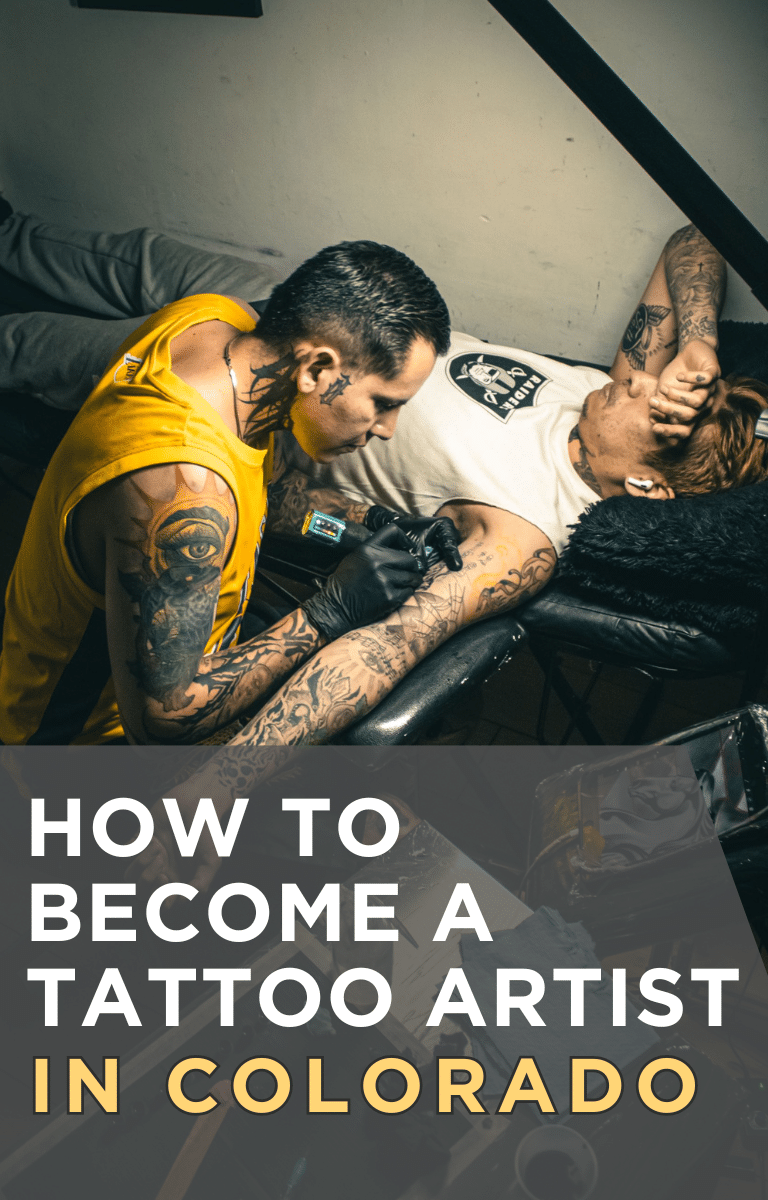
This guide walks you through how Colorado regulates tattooing and what it takes to build the skills behind a lasting, AI-proof career.
Table of Contents
- How does Colorado regulate tattooing?
- Colorado tattoo licensing at a glance
- What does the county-local model mean for you?
- How do you become a Tattoo Artist in Colorado step by step?
- What does a tattoo license in Colorado cost?
- What if you are moving to Colorado from another state?
- What mistakes should you avoid?
- How do you learn to tattoo with Ink Different?
- Frequently Asked Questions
Key Takeaways
- Regulator: Local boards of health oversee tattooing in Colorado, not a single state board.
- Governing law: Colorado Revised Statutes sections 25-4-2101 to 2103 set the state framework.
- Core requirements: Bloodborne pathogens certification, an annual facility permit in regulated counties, and no work on impaired clients.
- Check locally: Rules vary by county and city, so always confirm with your specific health department.
- Career upside: A Professional Tattoo Artist can earn over $106,000 a year, per ZipRecruiter.
How does Colorado regulate tattooing?
Colorado regulates tattooing through a decentralized model in which the state sets a framework and local boards of health carry out enforcement county by county. This means the rules you follow depend heavily on where you plan to work.
The governing law is found in Colorado Revised Statutes sections 25-4-2101 to 2103, and the state body art regulations appear in 6 CCR 1010-22. Together these establish the baseline standards for body art in Colorado.
Because execution happens at the county and city level, one health department may require paperwork or knowledge checks that a neighboring county handles differently. Denver, for example, expects aseptic-technique knowledge as part of its process. The takeaway is simple: understand the state framework, then verify the specifics with your local health department.
Colorado tattoo licensing at a glance
Colorado uses a county-local licensing model, so your obligations flow from both state statute and your local health department. Here are the verified essentials.
- Regulator: Local boards of health
- Governing law: Colorado Revised Statutes sections 25-4-2101 to 2103
- State regulations: 6 CCR 1010-22
- Licensing model: County-local (state framework, county execution)
- Facility requirement: Annual permit in regulated counties
- Certification: Bloodborne pathogens (BBP) certification
- Conduct rule: No procedures on noticeably impaired individuals
Fees and specific application steps are set locally and are not published in the state framework. Contact your county or city health department for exact costs and forms.
What does the county-local model mean for you?
The county-local model means your first move is to identify the exact health department that governs the city or county where you intend to tattoo. That department is your source of truth for permits, fees, and inspections.
In practice, this decentralization has a few consequences. A regulated county like Denver may require an annual facility permit and expect you to demonstrate aseptic-technique knowledge, while less regulated areas may have lighter requirements. You cannot assume the process in one Colorado county mirrors another.
Colorado’s transfer status for out-of-state credentials is unclassified in the verified framework, so do not assume your credentials from another state automatically carry over. Always confirm directly with the local board of health before you start working.
Tip: Write down the name, phone number, and website of your local health department before you do anything else. Every later step depends on their specific guidance.
How do you become a Tattoo Artist in Colorado step by step?
To become a Tattoo Artist in Colorado, you build tattooing skills through a tattoo apprenticeship, earn your bloodborne pathogens certification, and satisfy the local facility and conduct requirements before you tattoo clients. Here is a clear sequence.
- Learn the craft. Master drawing, design, machine handling, and sterile technique through a structured tattoo apprenticeship under an experienced Mentor. This is the foundation everything else rests on.
- Earn bloodborne pathogens certification. BBP certification is a core requirement in Colorado. It confirms you understand infection control and how to protect clients and yourself.
- Identify your local health department. Because Colorado is county-local, confirm exactly which board of health governs your Tattoo Studio.
- Secure the facility permit. In regulated counties, an annual permit for the facility is required. In places like Denver, be ready to show aseptic-technique knowledge.
- Follow the conduct rules. Colorado prohibits performing procedures on noticeably impaired individuals. Build this into your studio policies from day one.
- Verify everything locally. Before your first paid tattoo, confirm with your county or city health department that you have met every requirement they enforce.
Notice that skill comes first. A permit lets you operate legally, but the craft and safety habits from a strong tattoo apprenticeship are what make you employable and respected.
What does a tattoo license in Colorado cost?
Colorado does not publish a single statewide tattoo license fee because permits and costs are set locally by each board of health. That means the price you pay depends on your county or city.
The verified framework confirms that regulated counties require an annual facility permit, but it does not list a dollar amount. Rather than guess, ask your local health department for their current permit fee schedule and any inspection costs.
You should also budget for your bloodborne pathogens certification and for your training. When you weigh these costs, compare them against the earning potential of the career. A Professional Tattoo Artist can earn over $106,000 a year according to ZipRecruiter, which makes quality training a serious return on investment and a genuine alternative to a traditional college path.
Warning: Never assume a fee based on what another artist paid in a different county. Colorado’s decentralized system means amounts and requirements can differ across county lines.
What if you are moving to Colorado from another state?
If you are relocating to Colorado, treat your local health department as the deciding authority because Colorado’s credential transfer status is unclassified. Do not assume your existing certifications transfer automatically.
Start by contacting the board of health for the county or city where you plan to work. Ask whether your bloodborne pathogens certification meets their standard, what facility permit they require, and whether they expect any additional knowledge checks such as aseptic technique.
Keep documentation of your training and certifications organized and ready to present. When the rules are unclassified, being thorough and asking the right questions upfront saves you from delays and rework.
What mistakes should you avoid?
The most common mistake in Colorado is assuming statewide uniformity when the system is actually county-local. Avoid the following pitfalls to keep your path smooth.
- Skipping the local check. Never rely on general advice for a specific county. Confirm requirements with the exact health department that governs your studio.
- Treating the permit as the whole job. A facility permit and BBP certification are necessary, but skill built through a structured tattoo apprenticeship is what sustains a career.
- Ignoring the conduct rule. Performing procedures on noticeably impaired individuals is prohibited. Build clear intake and refusal policies.
- Guessing at fees or steps. If a detail is not confirmed by your local board of health, do not assume it. Ask directly.
- Choosing shortcuts over quality training. There is no substitute for learning under an experienced Mentor in a professional setting.
How do you learn to tattoo with Ink Different?
Ink Different is a Traditional Tattoo Apprenticeship built to be a serious alternative to a college degree. It focuses on the craft, safety, and professionalism that turn a permit into a career that lasts.
Our Traditional Tattoo Apprenticeship pairs you with an experienced Mentor who guides your growth from fundamentals through client-ready work. You learn machine control, design, and the sterile technique that health departments expect, while building a portfolio that shows employers what you can do. The Traditional Tattoo Apprenticeship runs 18 to 24 months across four phases and welcomes beginners.
Tattooing is a hands-on, human craft that cannot be automated, which makes it an AI-proof career with strong earning potential. As you train, we help you understand the licensing landscape so you can meet Colorado’s county-local requirements with confidence.
Ready to become a Tattoo Artist? Apply now to Ink Different’s Traditional Tattoo Apprenticeship and start building an AI-proof career, with licensing support and job-ready skills along the way.
Frequently Asked Questions
Do you need a tattoo license in Colorado?
Yes. Colorado regulates tattooing through local boards of health under state statute, so you must meet the permit and certification requirements set by your specific county or city.
Who issues a tattoo license in Colorado?
Local boards of health issue and enforce tattoo requirements in Colorado. The state provides the framework under Colorado Revised Statutes sections 25-4-2101 to 2103, while counties carry out the details.
What certification do Colorado Tattoo Artists need?
Colorado requires bloodborne pathogens certification. Regulated counties also require an annual facility permit, and areas like Denver expect knowledge of aseptic technique.
How much does a tattoo license cost in Colorado?
Costs are set locally, not statewide, so there is no single published fee. Contact your county or city health department for their current permit fee schedule.
Can I transfer my out-of-state tattoo credentials to Colorado?
Colorado’s transfer status is unclassified in the state framework, so do not assume automatic transfer. Confirm with the local board of health where you plan to work.
How much can a Tattoo Artist earn in Colorado?
A Professional Tattoo Artist can earn over $106,000 a year according to ZipRecruiter, which makes quality tattoo apprenticeship training a strong long-term investment.